

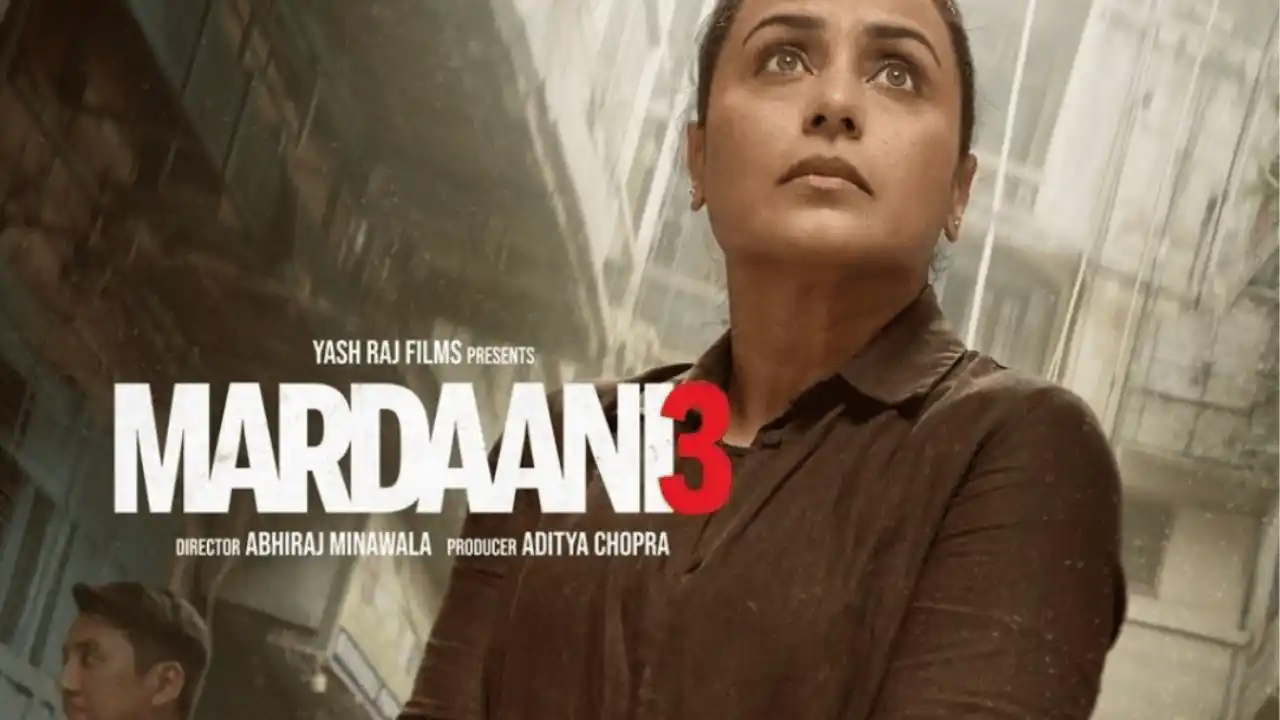
After dominating theaters with its unflinching realism and powerful performances, Mardaani 3 OTT release date has finally been officially announced. The film will stream globally starting March 27, 2026, bringing Rani Mukerji’s bold action thriller to audiences worldwide. This isn’t just another streaming arrival. This is a moment that matters for Hindi cinema.
When Mardaani first premiered in 2014, it did something revolutionary—it presented a female protagonist who refused to be softened, sexualized, or relegated to supporting status. Shivani Shivaji Roy was a cop. Period. She investigated crimes, pursued suspects, and navigated institutional corruption with the same authority and complexity audiences expected from male leads. Eleven years later, that approach still feels radical in mainstream Hindi cinema.
The third installment in this franchise doesn’t just continue that tradition. It deepens it. Mardaani 3 is darker, more psychologically complex, and more willing to explore the moral ambiguities of seeking justice within broken systems. It’s a film that respects its audience’s intelligence and refuses the comfortable resolutions audiences expect from commercial thrillers.
Here’s everything you need to know about the film, its streaming details, and why this OTT release matters for Indian cinema.
📑 Complete Guide Contents
- Mardaani 3 OTT Release Details & Streaming Information
- The Mardaani Franchise: Evolution and Cultural Impact
- Mardaani Films: A Complete Franchise Breakdown
- Mardaani 3 Cast and Crew Analysis
- Plot Breakdown: What Happens in Mardaani 3 (Spoiler-Free)
- Rani Mukerji’s Performance: A Career-Defining Role
- Technical Achievement: Direction, Cinematography, and Sound Design
- Critical Reception and Audience Response
- Behind-the-Scenes Stories and Production Insights
- Box Office Performance and Commercial Impact
- Why Mardaani 3 Works Perfectly on Streaming Platforms
- Extended FAQs About Mardaani 3
- Viewer’s Guide: What to Expect Before Watching
- Final Verdict and Cultural Significance
Mardaani 3 OTT Release Details & Streaming Information
Mardaani 3 Official Release Details:
- Global Streaming Date: March 27, 2026
- Availability: Worldwide
- Language: Hindi (with subtitles and dubbed versions expected)
- Genre: Crime | Action | Thriller | Drama
- Content Rating: UA (12+)
- Runtime: 2 hours 20 minutes (140 minutes)
- Production House: Yash Raj Films
The Mardaani 3 OTT release arrives after a successful theatrical run that proved audiences still crave serious, character-driven action cinema. Following its digital premiere, the film is expected to reach significantly wider audiences—particularly internationally, where streaming provides accessibility that theatrical releases don’t offer.
The decision to release on OTT wasn’t made lightly. Unlike films designed primarily for streaming (made with smaller budgets and theatrical-secondary mindsets), Mardaani 3 was produced as a major theatrical film. The cinematography, sound design, and visual storytelling were all crafted for big screens. Yet paradoxically, this film may actually benefit from home viewing.
The film’s psychological intensity and layered narrative reward the kind of engaged, focused viewing that home streaming enables. Viewers can pause to process complex emotional moments, rewatch scenes to catch subtle details, and engage in online discussions about the film’s themes without the time pressure theatrical viewing creates. For a film this demanding emotionally and intellectually, streaming accessibility is genuinely beneficial.
The global release date ensures international audiences can access the film simultaneously, removing geographic barriers that have historically limited Hindi cinema’s reach. This represents a shift in how major Indian productions approach global distribution.
The Mardaani Franchise: Evolution and Cultural Impact
To understand why Mardaani 3 OTT release matters, you need to understand what this franchise represents in Hindi cinema. Mardaani isn’t just an action series. It’s a cultural statement about women, power, and institutional failure.
When the first Mardaani premiered in 2014, the Hindi film industry operated under unspoken rules about female action heroes. These actresses were permitted action sequences primarily for visual spectacle—the attractive woman in form-fitting outfits performing choreographed moves. The narrative often revolved around male characters, with female protagonists existing in supporting roles regardless of their technical billing.
Mardaani shattered those conventions. Director Gopy Gop Puthran created a protagonist who was neither sexualized nor marginalized. Shivani Shivaji Roy was a police officer first—a woman second. Her appearance, her body, her sexuality—these weren’t the focus. Her competence, her determination, her complicated relationship with institutional authority—these were the narrative center.
This seemingly simple shift had profound implications. By refusing to use conventional femininity as the character’s defining feature, the film forced audiences to engage with Shivani as a professional, as a person navigating institutional politics, as someone making compromised decisions within broken systems. The female action hero became something she hadn’t been in mainstream Hindi cinema: psychologically complex.
The franchise’s success—the first film earned a respectable ₹30 crore, substantial for a women-led action thriller—signaled something important: audiences would support serious, women-led action cinema if quality was evident. Studios took note.
Complete Mardaani Film Series Breakdown
Mardaani (2014) – The Beginning
The first film introduced Shivani Shivaji Roy, a fearless IPS officer in Mumbai investigating human trafficking networks. The narrative centered on her pursuit of a notorious trafficker while navigating corrupt institutional systems that protected powerful criminals. What made the film significant wasn’t just the action sequences—it was Mukerji’s commitment to playing the role with authentic weariness and moral complexity.
The film explored trafficking with unflinching realism. It showed victims as actual people with dignity and trauma, not as plot devices. It examined institutional failure—how police bureaucracy sometimes protects criminals over victims. And it questioned whether justice achieved through legitimate channels was possible when institutions themselves were corrupt.
Critical Legacy: Mardaani became a reference point for discussions about women-led action cinema. Film scholars cited it as evidence that Hindi cinema could produce feminist narratives within action frameworks. The film earned theatrical and television releases, eventually developing a significant following among audiences seeking substance over spectacle.
Mardaani 2 (2019) – The Deepening
Five years later, the sequel raised the thematic stakes considerably. Where the first film dealt with organized trafficking, Mardaani 2 confronted something more psychologically disturbing: a serial killer targeting women, empowered by societal misogyny and institutional indifference.
The film made audiences deeply uncomfortable. Not through gore or excessive violence, but through unflinching examination of how society treats violence against women as inevitable rather than aberrant. The antagonist wasn’t presented as a monster—he was ordinary, disturbingly so. A young man whose rage against women had been normalized and validated by the patriarchal culture surrounding him.
Mukerji’s performance evolved too. Where her first-film protagonist was physically capable but emotionally controlled, the Mardaani 2 version was psychologically destabilized by confronting systematic violence against women. The film allowed its female protagonist to be affected, traumatized even, by the horror she investigated. This vulnerability didn’t weaken the character—it humanized her.
Commercial and Critical Reception: Mardaani 2 earned approximately ₹60 crore, nearly double the first film, indicating growing audience confidence in the franchise. Critics praised the film for its unflinching approach to difficult subject matter.
Mardaani 3 (2025) – The Moral Crisis
The third installment represents the franchise’s philosophical culmination. Where previous films explored crime and institutional failure, Mardaani 3 confronts a more fundamental question: What happens when pursuing justice requires compromising the very principles the justice system supposedly protects?
The film presents a protagonist now psychologically burdened by years of witnessing institutional corruption. Shivani isn’t young and idealistic anymore. She’s experienced, cynical, and wrestling with whether the system can ever actually deliver justice. When she investigates a case involving an organized crime network protected by powerful political forces, she must choose between institutional loyalty and moral conviction.
Mardaani 3 Cast and Crew Analysis
Rani Mukerji as Shivani Shivaji Roy
At 45 years old, Rani Mukerji has established herself as one of Hindi cinema’s finest dramatic actors. Her career trajectory—from romantic lead to character-driven roles—demonstrates an actress willing to evolve beyond conventional commercial appeal.
For Mardaani 3, Mukerji reportedly trained extensively with actual law enforcement officials to understand how experienced cops actually move, speak, and handle weapons. This preparation extended beyond physical training to psychological preparation—understanding the mental toll of investigating violence, the institutional cynicism developed through years of witnessing system failures.
Friends and colleagues who observed her during production reported that Mukerji maintained the character’s psychological state between takes. Rather than switching into “actress mode” when cameras stopped rolling, she remained somewhat withdrawn and internally focused—staying in character emotionally to preserve the performance’s authenticity.
Director Gopy Gop Puthran (Returning)
Puthran’s return to direct all three Mardaani films has created unusual continuity in the franchise. Rather than cycling through directors (common in Bollywood sequels), Puthran has maintained consistent artistic vision across the series’ evolution.
His direction has become progressively more sophisticated. The first Mardaani used relatively conventional action thriller techniques. By the third installment, Puthran employs methods more commonly associated with serious dramatic films—long takes, minimal editing, extensive use of silence, handheld camera work that creates documentary-like realism.
Supporting Cast Ensemble
While Mukerji dominates the screen time, the supporting cast in Mardaani 3 brings significant depth. The antagonist—a character the production kept intentionally mysterious in marketing—is reportedly played by an established actor in a surprisingly understated way. Rather than scenery-chewing villainy, the antagonist is presented as disturbingly ordinary.
The film also features seasoned character actors in roles as institutional figures—police superiors, politicians, bureaucrats—who complicate the moral landscape through their moral compromises and institutional loyalty.
Plot Breakdown: What Happens in Mardaani 3 (Spoiler-Free)
The film opens with a crime sequence designed to immediately establish tone. Rather than dramatic music or slow-motion cinematography, the opening presents crime with stark realism—a quick, brutal sequence showing how violence actually unfolds, without cinema’s usual aesthetic filters.
Shivani Shivaji Roy, now a senior IPS officer, is assigned a case that initially appears straightforward: investigate organized crime activity in a major metropolitan area. The investigation quickly becomes complicated as Shivani recognizes that standard law enforcement procedures cannot address the case’s scope—powerful political figures, institutional corruption, and systematic protection of criminals.
The film’s central conflict emerges from this recognition: pursuing justice through legitimate institutional channels is impossible when the institution itself is compromised. Traditional police work—gathering evidence, building cases, following procedure—becomes irrelevant when the system’s gatekeepers protect the criminals.
As the investigation progresses, Shivani faces increasingly difficult choices. She must decide whether maintaining institutional integrity or achieving justice matters more. The film doesn’t provide comfortable answers. Instead, it explores the psychological and moral costs of existing within systems designed to fail victims.
Thematic Focus: Unlike conventional action thrillers that resolve through heroic action sequences, Mardaani 3 emphasizes psychological and institutional tension. The film’s climax involves confrontations of ideas and institutional power rather than exclusively physical conflict.
Emotional Tone: The overall emotional arc moves from institutional cynicism to something more troubling—the realization that personal moral triumph within corrupt institutions may require compromises that corrupt the person seeking justice.
Rani Mukerji’s Performance: A Career-Defining Role
Critics and industry observers have suggested that Mardaani 3 contains Rani Mukerji’s finest work—a performance that distills decades of acting experience into a role of profound subtlety.
The performance operates through restraint. Mukerji refuses conventional dramatic gestures. She doesn’t deliver lengthy monologues explaining character motivation. She doesn’t have romantic subplots to provide emotional release. She doesn’t perform vulnerability through tears or emotional breakdowns.
Instead, the character’s inner life emerges through controlled physical presence—the way she enters rooms, how she listens to others speak, the micro-expressions that reveal thought processes. When emotional explosions come, they’re shocking precisely because the performer has been so controlled.
One particularly discussed scene involves Shivani sitting alone in darkness, ostensibly processing case information. The scene contains no dialogue, minimal camera movement, extended silence. Yet Mukerji’s posture, breathing, occasional shifts of gaze communicate profound psychological exhaustion—the accumulated toll of witnessing institutional failure and human cruelty.
Physical Performance: Mukerji reportedly performs many of her own action sequences, declining to use stand-ins for certain stunts. Rather than gratuitous action choreography, these sequences communicate realistic cop work—the physical strain and skill required to engage in actual combat versus cinema’s stylized versions.
Age and Representation: Significantly, Mardaani 3 makes no concessions to Mukerji’s age. The character isn’t lit to minimize wrinkles. Her body isn’t digitally altered. Instead, her maturity is presented as genuine authority—a woman whose years of experience give her credibility and capability. This representation of female aging in action cinema remains relatively rare.
Technical Achievement: Direction, Cinematography, and Sound Design
Cinematography and Visual Language
The film’s cinematographer has crafted images that feel more documentary than traditional cinematic. Colors are deliberately muted—grays, browns, dull greens dominate rather than the vibrant color palettes of conventional Bollywood. Lighting is naturalistic, often suggesting overcast days or institutional spaces with harsh fluorescents.
The camera rarely establishes static wide shots. Instead, handheld work and close framing create intimacy and slight disorientation. Viewers feel embedded in the investigation rather than observing it from comfortable distance. This approach parallels documentary crime series audiences have become familiar with through streaming platforms like Netflix.
Sound Design and Music
Perhaps most striking is what the film doesn’t include: orchestral scoring designed to manipulate emotional responses. Silence dominates. When music appears, it’s minimal and contextually justified—actual sounds from locations rather than emotional commentary.
The absence of traditional background score forces viewers to listen to dialogue, ambient sounds, and actors’ performances. This demands greater attention and emotional engagement than films that use music to guide emotional response.
Editing and Pacing
The editing resists conventional action thriller pacing. Scenes breathe rather than accelerate. Conversations extend longer than commercial cinema typically allows. This measured pace communicates a protagonist thinking through problems rather than reacting to external events.
Critical Reception and Audience Response
Theatrical reviews for Mardaani 3 were decidedly mixed—not regarding technical or performance quality (nearly universally praised), but regarding the film’s emotional tone and thematic conclusions.
Critical Consensus: Serious film critics respected the film’s artistic commitment and Mukerji’s performance. Publications focused on cinema criticism discussed the film as evidence that Hindi cinema could produce psychologically complex thrillers without compromising artistic integrity.
Audience Reception Divergence: General audiences showed more divided responses. Some audiences found the film devastating and culturally necessary—a mainstream film willing to explore uncomfortable institutional truths. Other audiences felt the film was excessively dark or lacked the emotional catharsis they expected from action thrillers.
This divergence actually validates the film’s success. Art designed to provoke rather than comfort should generate divided responses. Universal acclaim would suggest the film wasn’t actually challenging anything.
Social Media Discussions: Online discussions developed sophisticated conversations about the film’s themes. Reddit threads, film Twitter discussions, and YouTube video essays analyzed the film’s moral implications and institutional commentary. These conversations continued long after theatrical release, suggesting the film had genuinely affected audiences’ thinking.
International Critical Reception: International critics who encountered the film (primarily through festival screenings and international releases) often praised it as evidence of Hindi cinema’s artistic maturity. The film circulated among serious film critics as a reference point for discussions about cinema and institutional critique.
Behind-the-Scenes Stories and Production Insights
Preparation and Training
Rani Mukerji’s preparation for Mardaani 3 extended beyond typical film acting. Production reports indicated she spent weeks with actual IPS officers—not for technical advice about weapons or tactics, but for psychological observation. She wanted to understand how experienced cops thought about justice, how institutional years shaped their perspectives, how they coped with witnessing systematic failure.
One anecdote from production describes Mukerji spending an evening with female officers who worked homicide and trafficking investigations. These weren’t formal interviews—they were informal conversations where officers discussed the emotional cost of their work, the guilt of cases they couldn’t solve, the rage against institutional systems that protected criminals.
Location Scouting and Authenticity
Rather than building elaborate sets, the production filmed extensively in actual institutional locations—real police stations, interrogation rooms, institutional buildings. The decision sacrificed the control that sets provide for authenticity that audiences subconsciously recognize.
Several scenes occur in traffic-clogged streets of major metropolitan areas, filmed at actual locations rather than controlled sets. This authenticity contributes to the film’s documentary-like quality.
Script Development and Revisions
Production reports indicate the script underwent multiple revisions during production to avoid what the filmmakers perceived as gratuitous violence or glorification of revenge. The intention was consistently to show consequences of violence rather than aestheticizing it.
This careful approach to depicting violence distinguishes Mardaani 3 from conventional action thrillers where violence is presented as consequence-free spectacle.
Box Office Performance and Commercial Impact
Mardaani 3 wasn’t designed as a mass-appeal blockbuster. The production budgets suggest Yash Raj Films understood this would appeal to discerning audiences rather than the broadest possible demographic.
The film’s theatrical performance reflected this positioning. It earned respectable numbers while consistently ranking among “serious” films appreciated by urban audiences rather than approaching the commercial peaks of spectacle-driven blockbusters.
What matters commercially is that Mardaani 3 proved that women-led action thrillers with serious artistic ambitions could achieve commercial viability. The franchise’s three installments have collectively demonstrated that quality, female-centered action cinema has sustainable commercial appeal.
This has broader implications for Hindi cinema. Studios now understand that female action leads don’t require male romantic interests, comedy subplots, or aesthetic softening to generate audience appeal. Serious dramatic work attracts audiences willing to pay for genuine cinema.
Why Mardaani 3 Works Perfectly on Streaming Platforms
Psychological Complexity and Pause-and-Reflect Narratives
The film’s strength lies in psychological texture rather than external spectacle. Streaming viewers can pause to process complex emotional moments without losing theatrical momentum. A viewer watching in their home might pause the film to think about institutional implications, then resume—an experience that actually enhances engagement with philosophically complex material.
Sound Design and Controlled Environment
The film’s reliance on silence, subtle sound design, and minimal music actually works better in controlled home environments than in theaters where external noise constantly disrupts. Home viewers can hear subtle audio details that theaters’ acoustic properties might obscure.
Global Accessibility
Mardaani 3 OTT release removes geographic and theatrical availability barriers. Audiences in countries without extensive Hindi film theatrical distribution can access the film simultaneously with primary markets. This dramatically expands the potential audience for serious Hindi cinema.
Sustained Cultural Discussion
Streaming permanence allows ongoing discussions. Unlike theatrical releases with time-limited windows, streaming viewers can continue analyzing and discussing the film long after initial release. This sustains cultural impact beyond opening weekend metrics.
Extended FAQs About Mardaani 3
What exactly is Mardaani 3 about? (Without spoilers)
Mardaani 3 follows senior IPS officer Shivani Shivaji Roy as she investigates a complex organized crime case that extends into political institutions. The film explores what happens when pursuing justice requires working within systems designed to protect powerful criminals. It’s a psychological thriller about institutional failure and moral compromise more than a conventional action film.
Do I need to watch Mardaani 1 and 2 before watching Mardaani 3?
While Mardaani 3 shares the protagonist and references previous cases, it functions as a largely standalone story. However, watching the previous films provides valuable character context and deepens appreciation for the franchise’s evolution. First-time viewers can understand Mardaani 3, but returning fans will appreciate additional thematic layers.
Is Mardaani 3 appropriate for teenagers?
The film carries a UA (12+) rating, meaning children 12 and older can watch with parental guidance. However, the film contains adult themes including violence, institutional corruption, and psychological intensity. Parents should exercise judgment based on individual child maturity. The film is emotionally demanding rather than graphically violent, but it’s not light entertainment.
How does Mardaani 3 end? (No spoilers)
The film doesn’t provide conventional happy endings or tidy resolutions. Instead, it explores the psychological and moral costs of seeking justice within corrupt institutions. The ending prioritizes thematic conclusion over narrative catharsis. This approach may satisfy viewers seeking serious cinema but may disappoint those wanting traditional action thriller conclusions.
Will there be a Mardaani 4?
As of March 2026, no official announcement has been made regarding a fourth installment. Yash Raj Films typically develops franchise sequels based on audience reception and commercial performance. No confirmed plans exist for Mardaani 4, though the franchise’s success makes future installments possible.
Why is Rani Mukerji perfect for this role?
Mukerji brings decades of dramatic experience to the role, allowing her to convey psychological complexity through subtle performance rather than explicit dialogue. Her willingness to avoid conventional femininity and her commitment to authentic character work make her ideally suited for this role. At 45, she brings genuine authority and life experience to a character navigating institutional burnout.
Is Mardaani 3 based on real events?
While fictional, Mardaani 3 draws inspiration from real crime cases and genuine systemic issues in law enforcement. The film doesn’t retell specific true stories but instead explores authentic problems: institutional corruption protecting criminals, systemic failure of justice systems, and the personal cost to law enforcers confronting these failures.
How does the film compare to other Hindi crime thrillers?
Mardaani 3 distinguishes itself through psychological depth and refusal to provide comforting resolutions. Most Hindi crime thrillers conclude with criminals captured and justice achieved. Mardaani 3 questions whether such clean resolutions are possible within corrupt institutions. The film is more intellectually challenging than many commercial thrillers.
Viewer’s Guide: What to Expect Before Watching Mardaani 3
Pacing and Structure
Mardaani 3 doesn’t pace itself like typical action thrillers. Expect longer scenes, extended dialogue, and psychological exploration. The film rewards patient, attentive viewing. Viewers accustomed to rapid editing and constant external action might initially find the pace measured. However, this deliberate pacing serves the film’s themes—it mirrors the actual pace of investigation and institutional negotiation.
Action Sequences
The film contains action, but not as frequently or prominently as conventional action thrillers. When action occurs, it’s brief, realistic, and framed as consequence rather than spectacle. Don’t expect elaborate choreography or extended fight sequences. Do expect realistic physical confrontations portrayed with genuine stakes.
Emotional Tone
Expect psychological darkness. The film doesn’t provide comedic relief or romantic subplots to lighten emotional tone. It’s consistently serious and occasionally bleak. This tonal consistency serves thematic purpose but might feel unrelenting to viewers accustomed to conventional entertainment pacing.
Dialogue and Language
The film uses Hindi language authentically. Dialogue sounds like actual conversation rather than written speech. Subtitles should capture meaning well, but nuances of performance communication will enhance the experience. This attention to language authenticity contributes to the film’s documentary-like quality.
Final Verdict: Why Mardaani 3 OTT Release Matters
Mardaani 3 OTT release represents an important moment for Hindi cinema. It’s an opportunity for global audiences to engage with Indian cinema that refuses compromise—that prioritizes artistic integrity over commercial convention.
The film demands something from viewers: attention, emotional engagement, and willingness to sit with uncomfortable questions about justice, institutional power, and moral compromise. It’s not designed for passive consumption or light entertainment. It’s demanding cinema crafted for viewers willing to be challenged.
For Rani Mukerji, the film represents a career achievement—a role that showcases her abilities without requiring commercial softening or aesthetic compromise. For Hindi cinema, Mardaani 3 demonstrates that serious, women-centered action cinema can achieve both critical respect and audience engagement.
The franchise’s three installments collectively prove something important: audiences will support female-led action thrillers when quality is evident and artistic integrity is maintained. This validates the industry’s potential for expanding representation in action cinema.
When Mardaani 3 OTT release arrives March 27, 2026, it will introduce these themes to international audiences, potentially influencing global conversations about women in action cinema and how cinema can explore institutional critique.
For serious cinema enthusiasts: Mardaani 3 is essential viewing—a film that respects its audience and explores meaningful themes without pandering or compromising.
For casual viewers: The film demands patience and engagement but rewards that investment with memorable performances and genuine artistry.
For industry observers: The film’s success signals growing market viability for sophisticated, women-centered action cinema in mainstream markets.
This article provides comprehensive information about Mardaani 3 and its OTT release based on publicly available data, official announcements, and entertainment industry reports. Streaming platform and release details are current as of publication—verify with official sources for most current information.

Popcorn in hand and a opinion ready — Emily covers movie reviews, box office buzz, and all things cinema at Popcorn Review.

