

The BAFTA 2026 ceremony on February 22 at London’s Royal Festival Hall delivered one of the most genuinely surprising awards nights in recent memory — and not only because of the trophies.
Paul Thomas Anderson’s One Battle After Another dominated with six wins. A relatively unknown British actor beat Leonardo DiCaprio and Timothée Chalamet for Best Actor. Ryan Coogler made history. And in a moment that briefly overshadowed everything else, a Tourette’s campaigner’s involuntary outburst during a live broadcast triggered a national conversation about disability, inclusion, and institutional responsibility.
The BAFTA 2026 ceremony is now the defining moment of this year’s awards season — for better and worse. Here’s exactly what happened and why it matters.
Full BAFTA 2026 Winners List
The Big Categories
Best Film: One Battle After Another (Paul Thomas Anderson) Best Director: Paul Thomas Anderson — One Battle After Another Best Actor: Robert Aramayo — I Swear Best Actress: Jessie Buckley — Hamnet Best Supporting Actor: Sean Penn — One Battle After Another Best Supporting Actress: Wunmi Mosaku — Sinners Best Adapted Screenplay: Paul Thomas Anderson — One Battle After Another Best Original Screenplay: Ryan Coogler — Sinners Outstanding British Film: Hamnet EE Rising Star Award: Robert Aramayo
Craft Categories
Best Cinematography: One Battle After Another Best Editing: One Battle After Another Best Production Design: Frankenstein Best Costume Design: Frankenstein Best Make Up & Hair: Frankenstein Best Original Score: Ludwig Göransson — Sinners Best Sound: One Battle After Another Best Special Visual Effects: Avatar: Fire and Ash
Other Categories
Best Film Not in the English Language: Sentimental Value (Joachim Trier) Best Animated Film: Marty Supreme Best Documentary: Mr. Nobody Against Putin Best British Short Film: The Ceremony Outstanding Debut by a British Writer, Director or Producer: Akinola Davies Jr. — My Father’s Shadow Best Children’s & Family Film: Boong
One Battle After Another: Six Wins and an Oscar Frontrunner Confirmed
Going into the night, One Battle After Another had fourteen nominations — the most of any film. It ultimately won six BAFTAs: Best Film, Best Director, Best Supporting Actor for Sean Penn, Best Adapted Screenplay, Best Cinematography, and Best Editing.
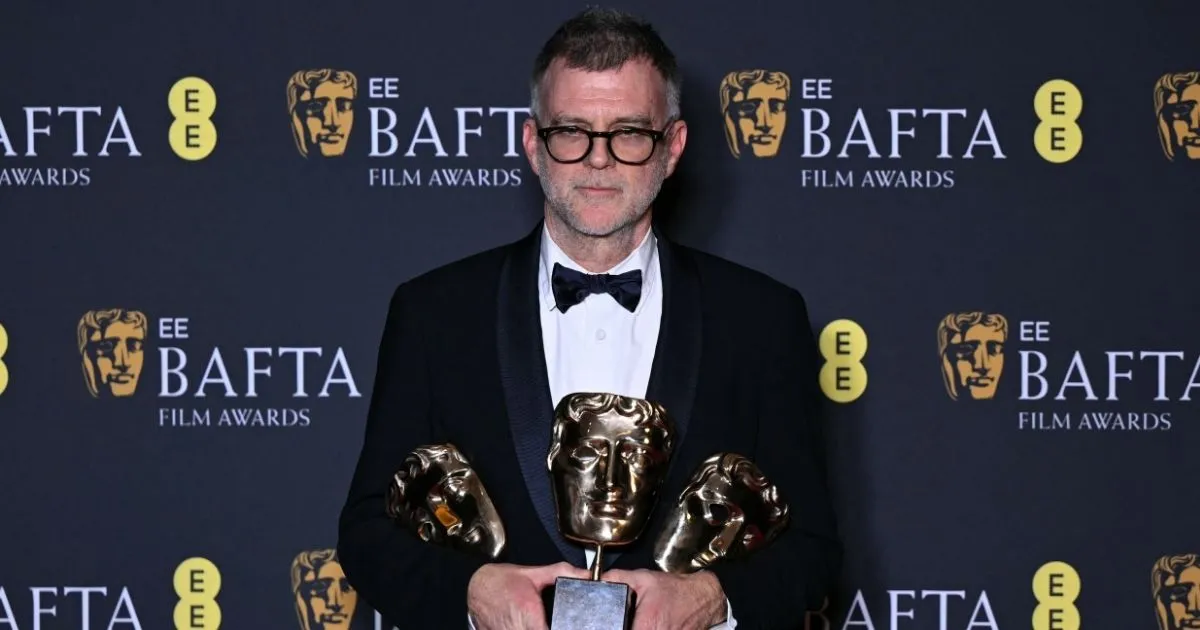
Paul Thomas Anderson’s political comedy-thriller is described by critics as one of his most accessible films — tightly plotted, politically sharp, and built around a central performance from Leonardo DiCaprio that most expected to win the night. DiCaprio didn’t win Best Actor. But that doesn’t diminish the film’s achievement: six BAFTA 2026 wins going into the final days of Oscar voting is exactly the kind of momentum that decides Academy Awards.
Sean Penn collected Best Supporting Actor but was notably absent from the ceremony.
The Biggest Upset of the Night: Robert Aramayo Beats DiCaprio and Chalamet
This is the result that genuinely shocked the room.
Robert Aramayo, playing John Davidson in the British indie drama I Swear, won Best Actor — beating Timothée Chalamet (Marty Supreme), Leonardo DiCaprio (One Battle After Another), Ethan Hawke (Blue Moon), Michael B. Jordan (Sinners), and Jesse Plemons (Bugonia).
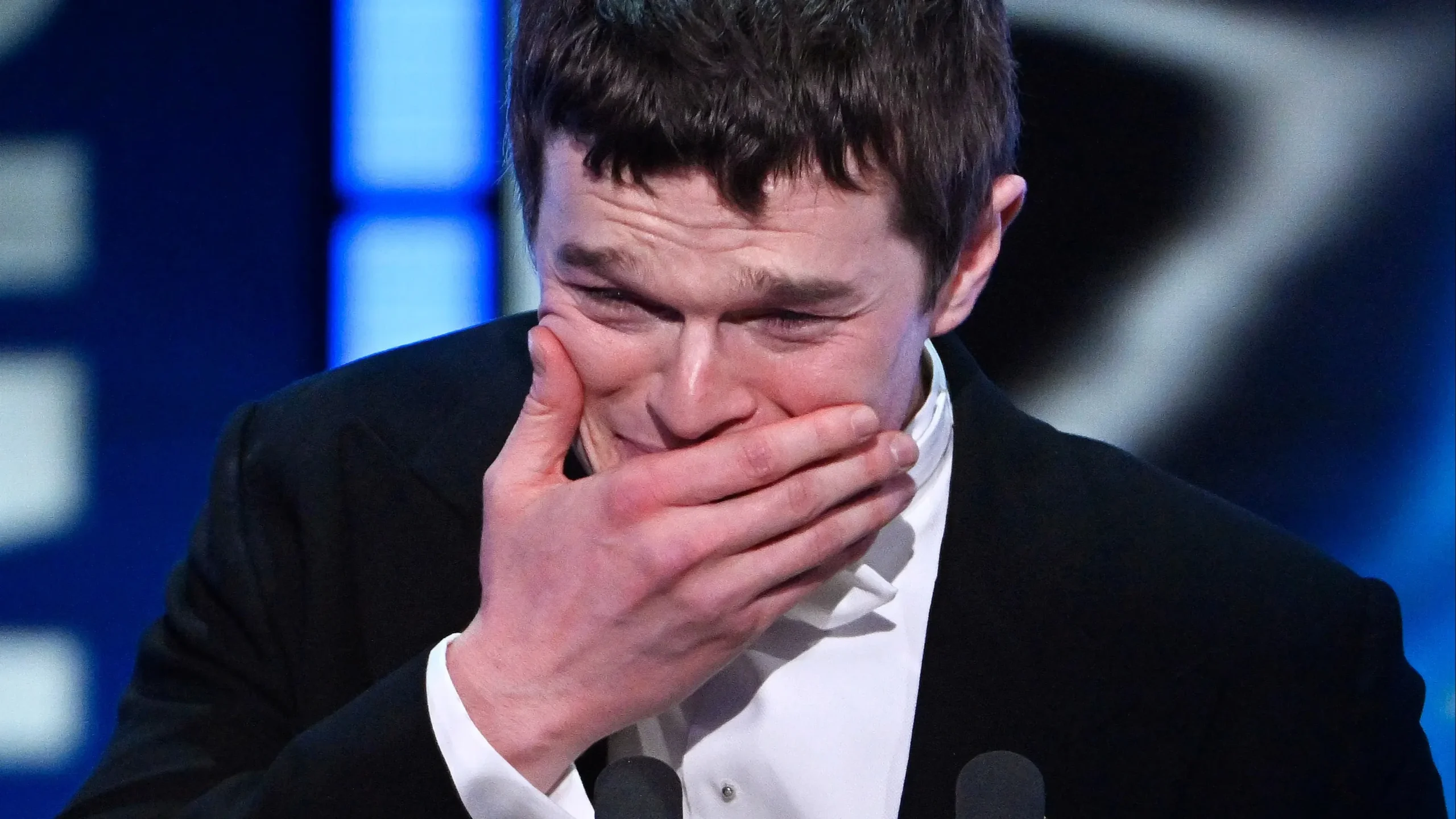
Aramayo plays Davidson — a Scotsman who developed Tourette syndrome at age 12, whose story first reached British audiences through a BBC documentary, and who has spent decades campaigning for public understanding of the condition. Aramayo studied Davidson closely in preparation, asking questions like “When you have a tic do you know where it comes from? What about tic triggers?”
Accepting the award, Aramayo said “I can’t believe I’m up here looking at people like you,” gesturing at Leonardo DiCaprio in the crowd, before telling an emotional Ethan Hawke how a talk the seasoned actor had given at Juilliard had changed his own outlook as a student.
I Swear also won Best Casting and gave Aramayo both the acting prize and the EE Rising Star Award in the same night. It has grossed £8 million at the UK box office and is set for US theatrical release in April.
Jessie Buckley Wins Best Actress for Hamnet
Chloé Zhao’s Hamnet — the adaptation of Maggie O’Farrell’s novel about Shakespeare’s son and the grief that followed his death — took Outstanding British Film and Best Actress for Jessie Buckley.
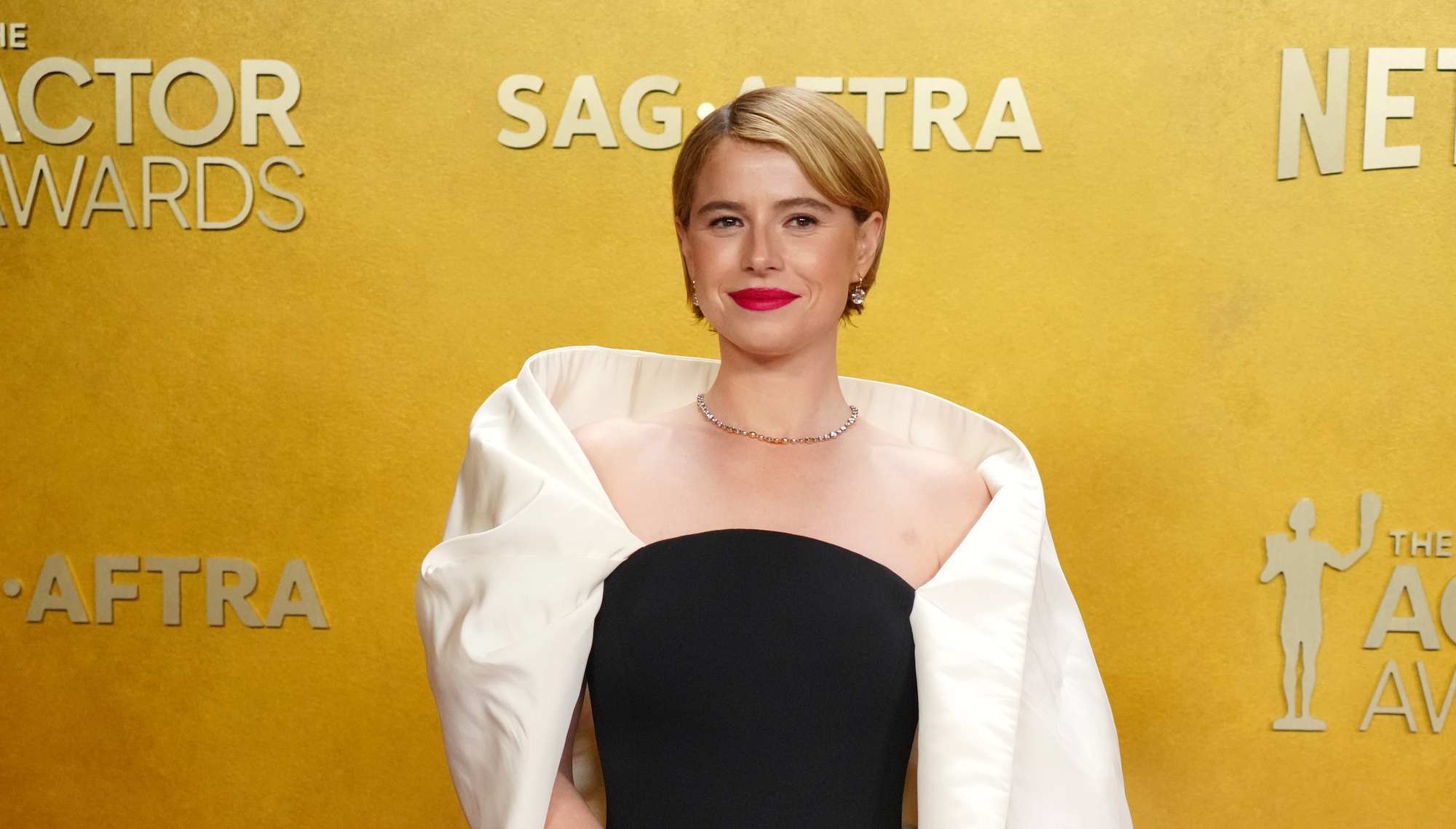
Buckley’s speech was, by multiple accounts, the warmest moment of the night. She forgot a few of her fellow nominees mid-speech, including Kate Hudson, prompting laughs from the crowd.
Hamnet had eleven nominations going in and walked away with two wins. It made history as BAFTA’s most-nominated film by a female director.
Sinners and Ryan Coogler Make History
Ryan Coogler’s vampire drama Sinners had thirteen nominations — second only to One Battle After Another. It won three BAFTAs: Best Original Screenplay for Coogler, Best Supporting Actress for Wunmi Mosaku, and Best Original Score for Ludwig Göransson.
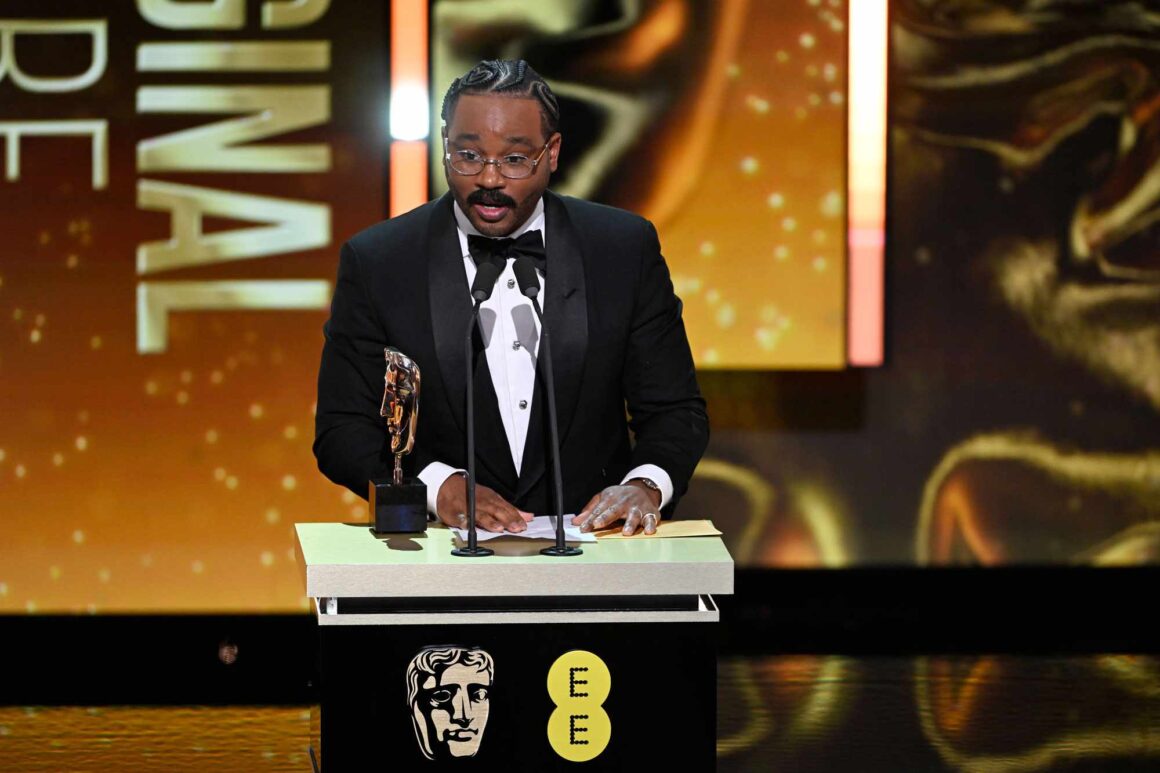
Coogler became the first Black winner of the Best Original Screenplay BAFTA. In his acceptance speech he said: “For all the writers out there, when y’all look at that blank page, think of who you love, think of anybody who you’ve seen in pain that you identify with and wish they felt better and let that love motivate you.”
Wunmi Mosaku’s supporting actress win was itself considered an upset. She beat out heavily watched contenders Teyana Taylor (One Battle After Another) and Inga Ibsdotter Lilleaas (Sentimental Value) in a category many assumed was Taylor’s to lose.
Frankenstein: Three Craft Wins
Frankenstein didn’t feature in the major categories but cleaned up technically. It won three BAFTAs: Costume Design, Make Up & Hair, and Production Design.
The BAFTA 2026 Ceremony Controversy: John Davidson, Tourette’s, and the BBC
This is the part of the BAFTA 2026 night that will be discussed longest — and it deserves a careful, factual account.
What Happened
John Davidson MBE — the real person whose life inspired I Swear — attended the ceremony as an executive producer of the film. He has severe Tourette syndrome, including a form called coprolalia, which causes involuntary vocal outbursts that can include profane, obscene, or socially inappropriate language.
Before the ceremony began, the floor manager introduced Davidson to the audience and explained that he had Tourette’s syndrome and that attendees might hear strong language, involuntary noises, or movements during the evening. The announcement was met with applause.
Several outbursts occurred throughout the evening — including “shut the fuck up” during BAFTA chair Sara Putt’s introductory remarks, and “fuck you” when the directors of Boong accepted their award for Best Children’s & Family Film.
The most serious moment: while Michael B. Jordan and Delroy Lindo were onstage presenting the Best Visual Effects award, Davidson involuntarily shouted a racial slur. The actors paused for a beat, then continued.
Davidson left the room around 25 minutes into the show of his own accord — not at BAFTA’s request — and watched the remainder of the ceremony on a monitor in a private room.
What BAFTA 2026 and the BBC Did
Host Alan Cumming addressed the room repeatedly. He reminded the crowd: “Tourette’s Syndrome is a disability and the tics you’ve heard tonight are involuntary, which means the person who has Tourette’s Syndrome has no control over their language. We apologize if you are offended tonight.”
The BBC broadcast the ceremony on a two-hour tape delay. Despite this delay, the BBC did not edit the racial slur from either the BBC One broadcast or the initial iPlayer version.
The BBC apologised the following day: “Some viewers may have heard strong and offensive language during the BAFTA 2026 Film Awards. This arose from involuntary verbal tics associated with Tourette syndrome, and as explained during the ceremony it was not intentional. We apologise that this was not edited out prior to broadcast and it will now be removed from the version on BBC iPlayer.”
BAFTA issued its own statement, saying: “We take full responsibility for putting our guests in a very difficult situation and we apologise to all. We would like to thank Michael B. Jordan and Delroy Lindo for their incredible dignity and professionalism.”
The BBC’s executive complaints unit announced a fast-tracked investigation, calling it a “serious mistake.” Culture Secretary Lisa Nandy also weighed in, saying she shared the “serious concerns raised by many people.”
John Davidson’s Own Statement
Davidson said: “I can only add that I am and always have been deeply mortified if anyone considers my involuntary tics to be intentional or to carry any meaning. I have spent my life trying to support and empower the Tourette’s community and to teach empathy, kindness and understanding from others and I will continue to do so.”
Davidson later apologised directly to both actors via Warner Bros., and said his tics had “ramped up” as he grew more nervous in the large, crowded environment.
The Jamie Foxx Backlash
Actor Jamie Foxx commented on Instagram that Davidson’s outburst was “unacceptable” and that “he meant that shit.” This was widely criticised as a fundamental misunderstanding of what Tourette syndrome is. Tourette’s Action UK, the Tourette Association of America, and disability advocates across social media pushed back hard.
Davidson has been a familiar figure to British audiences since his teenage years, when he first appeared in a BBC documentary about Tourette syndrome. He was made an MBE in 2019 for his decades of campaigning work. The suggestion that his involuntary tics reflected hidden beliefs ran directly counter to everything documented about his life and work.
The broader conversation that followed was arguably more useful than any moment in the ceremony itself: what does genuine inclusion look like when it requires protecting multiple communities simultaneously?
Snubs That Changed the Oscar Conversation
The BAFTA 2026 acting results reshuffled Oscar predictions significantly.
Michael B. Jordan was nominated for Best Actor but did not win — despite being considered a frontrunner in some Oscar prediction models for Sinners. After the BAFTA results, Oscar odds fully reset in the acting categories, with analysts noting that different voting bodies and priorities would now shape the Academy race differently.
Akinola Davies Jr. won Outstanding Debut for My Father’s Shadow — but a section of his acceptance speech was cut from the BBC broadcast, prompting further debate about the corporation’s editorial decisions that evening.
Frankenstein’s Jacob Elordi was nominated for Best Supporting Actor but lost to Sean Penn — a result that surprised many who had tracked Elordi’s critical momentum through the season.
What BAFTA 2026 Means for the Oscars
The ceremony confirmed a clear Oscar narrative: One Battle After Another is the film to beat in the major categories. Six BAFTA wins, broad industry respect, and a performance from DiCaprio that — even without individual acting recognition at BAFTA — is considered among the strongest of the season.
Jessie Buckley’s Best Actress win gives Hamnet genuine Oscar momentum in the acting race. Ryan Coogler’s historic screenplay win strengthens Sinners’ position. And Robert Aramayo’s Best Actor shock raises a genuine question: is the Academy watching?
I Swear was a £1.5 million British film. It won two BAFTAs, its lead took home two prizes in one night, and John Davidson’s presence at the ceremony became the most talked-about moment of the awards season. Whether the Academy voters respond to that story — or to the more conventional prestige of DiCaprio and Anderson’s film — is now the central question heading into Oscar night.
BAFTA 2026 at a Glance
| Category | Winner |
| Best Film | One Battle After Another |
| Best Director | Paul Thomas Anderson |
| Best Actor | Robert Aramayo — I Swear |
| Best Actress | Jessie Buckley — Hamnet |
| Best Supporting Actor | Sean Penn — One Battle After Another |
| Best Supporting Actress | Wunmi Mosaku — Sinners |
| Best Original Screenplay | Ryan Coogler — Sinners |
| Best Adapted Screenplay | Paul Thomas Anderson — One Battle After Another |
| Outstanding British Film | Hamnet |
| EE Rising Star | Robert Aramayo |
| Best Score | Ludwig Göransson — Sinners |
| Best VFX | Avatar: Fire and Ash |
| Best Production Design | Frankenstein |
| Best Costume Design | Frankenstein |
| Best Make Up & Hair | Frankenstein |
Related Reading
- 2026 Grammys: Every Historic Win and Controversy Fully Explained
- Celebrity Deaths 2026: Every Loss from January to March
- Most Watched Korean Series on Netflix: 10 K-Dramas Ranked
- OTT Versions vs Theatrical Cuts: Why Fans Are Angry
Follow us on Instagram and Pinterest.

Popcorn in hand and a opinion ready — Emily covers movie reviews, box office buzz, and all things cinema at Popcorn Review.

