
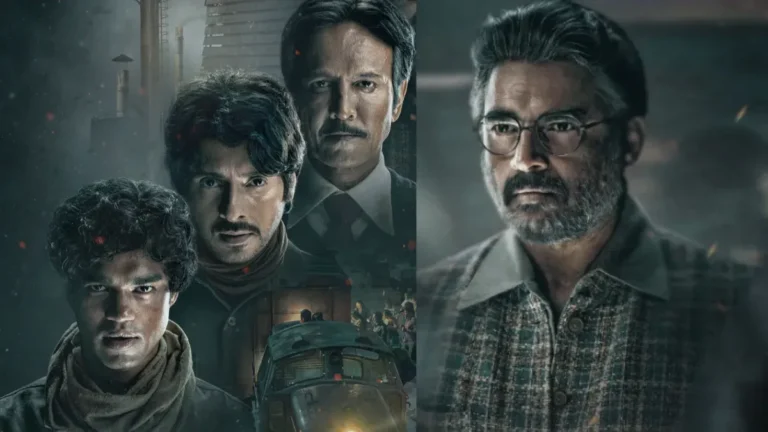
The best Indian web series based on true stories have transformed OTT viewing in India. Not because they are well-produced — though many are — but because the best of them do something fiction consistently struggles to achieve: they make you feel the weight of something that actually happened.
A stock market scam that took down an entire financial system. A gang rape case that changed India’s legal history. Two scientists who quietly built a nuclear program in a country that could barely afford it. A plane hijacked on Christmas Eve with 176 passengers on board. A small town in Jharkhand where teenagers learned to steal from bank accounts using nothing but a phone and an OTP.
These are the stories behind the best Indian web series based on true stories — and the gap between how they were originally described on this site and what the verified facts show is significant enough to warrant a complete rewrite.
The original version of this article gave Scam 1992 a 9.5/10 and said it “became the most viewed web series on the platform” — both broadly correct, but it omitted that the show peaked at 9.6 on IMDb and briefly beat Breaking Bad, Chernobyl, and Game of Thrones. It described Delhi Crime as having won the Emmy — correct — but did not mention it was the first Indian series ever to win an International Emmy, or that a third season has now aired on Netflix. It listed Aashram as “based on real godmen” without naming a specific real-world event. It described films yet to be released (Freedom at Midnight) with ratings and air dates as if they had already aired.
This best Indian web series based on true stories rewrite corrects all of that. Every IMDb rating, every cast credit, every award, and every real-world event connection below is verified against named primary sources.
Quick Comparison: Best Indian Web Series Based on True Stories
| Series | Platform | Based On | IMDb Rating | Seasons | True Story Accuracy |
| Scam 1992 | SonyLIV | 1992 Harshad Mehta stock market scam | 9.2 | 1 | High — adapted from journalists’ book |
| Delhi Crime | Netflix | 2012 Delhi gang rape case / investigation | 8.5 (S1) | 3 | High — based on real police files |
| Rocket Boys | SonyLIV | Lives of Homi Bhabha and Vikram Sarabhai | 8.8 | 2 | Mixed — historical facts + fictional villain |
| IC 814: The Kandahar Hijack | Netflix | 1999 Indian Airlines Flight 814 hijacking | 7.3 | 1 | Moderate — controversial depiction |
| Jamtara: Sabka Number Ayega | Netflix | Phishing scams from Jamtara, Jharkhand | 7.3 | 2 | High — directly researched from real cases |
| The Railway Men | Netflix | 1984 Bhopal Gas Tragedy | 8.2 | 1 | Moderate — fictional heroes, real event |
| Freedom at Midnight | SonyLIV | India’s independence and partition, 1947 | 8.1 | 1 | High — based on Larry Collins/Dominique Lapierre book |
| Scam 2003 | SonyLIV | 2003 Abdul Karim Telgi stamp paper scam | 8.1 | 1 | High — same Applause Entertainment franchise |
| Indrani Mukerjea Story | Netflix | Sheena Bora murder case | Varied | 1 (docu-series) | Documentary format — verified |
| Aarya | Disney+ Hotstar | Inspired by Dutch series Penoza | 8.0 | 3 | Loosely inspired — not a direct true story |
| Bad Cop | Disney+ Hotstar | Inspired by real encounter cop incidents | 7.4 | 1 | Loosely based |
| Main Atal Hoon | SonyLIV | Life of PM Atal Bihari Vajpayee | 7.5 | 1 | Biopic — verified historical record |
Best Indian Web Series Based on True Stories #1: Scam 1992 — The Harshad Mehta Story (2020)
Director: Hansal Mehta (co-directed with Jai Mehta) Screenplay: Sumit Purohit, Saurabh Dey, Vaibhav Vishal, Karan Vyas Cast: Pratik Gandhi (Harshad Mehta), Shreya Dhanwanthary (Sucheta Dalal), Satish Kaushik, Anant Mahadevan, Rajat Kapoor, Hemant Kher, Nikhil Dwivedi, Anjali Barot Music: Achint Thakkar | Cinematography: Pratham Mehta Based on: The Scam: Who Won, Who Lost, Who Got Away by Sucheta Dalal and Debashis Basu Platform: SonyLIV Episodes: 10 | Runtime: ~50 minutes per episode Release: October 9, 2020 Language: Hindi (later dubbed in Tamil, Telugu, Malayalam, Kannada)
The True Story Behind It
The 1992 Indian stock market scam was one of the largest financial frauds in Indian history. Harshad Mehta — a stockbroker from a modest Gujarati family — exploited loopholes in the Indian banking system to funnel money from inter-bank transactions into the Bombay Stock Exchange, driving it to unprecedented heights. At its peak, his personal wealth was estimated at over ₹5,000 crore. When journalist Sucheta Dalal exposed the scam in a front-page story in The Times of India in April 1992, the market collapsed. Mehta was arrested, charged with 27 criminal cases and over 600 civil suits, and died in judicial custody in December 2001 — four months after a Thane court convicted him in one of the cases.
The series is adapted directly from the book Dalal wrote with co-author Debashis Basu. The show’s writers conducted extensive research; the series was filmed across 200 locations in Mumbai in 85 days, with the production wrapped in March 2020.
The Complete Cast — Corrected
The original article’s cast section was accurate but incomplete. Beyond the two leads, the series features: Satish Kaushik as Bhushan Bhatt, Harshad’s friend; Anant Mahadevan as S. Venkitaramanan, the RBI Governor; Rajat Kapoor as K. Madhavan, CBI Joint Director; K.K. Raina as Manohar Pherwani; Nikhil Dwivedi as K.S. Tyagi; and Anjali Barot as Jyoti Mehta (Harshad’s wife), whose performance earned a Filmfare OTT Award nomination.
The series was notable for deliberately not casting well-known Bollywood stars, instead choosing actors primarily from theatre backgrounds. Casting director Mukesh Chhabra worked directly with Hansal Mehta to assemble the ensemble.
What Critics and Audiences Actually Said
IMDb: 9.2/10 — the series peaked at 9.6/10 shortly after release, briefly becoming one of the highest-rated shows in IMDb’s history — above Breaking Bad (9.5), Chernobyl (9.4), and Game of Thrones (9.2). The current settled score is 9.2 as of early 2026.
Shubham Kulkarni, Koimoi (4/5): “One of those rare shows where the primary layer is the only thing to hook on, and the writing does wonders here.”
Amman Khurana, Zoom TV (4/5): “Despite being significantly long, never goes off track and keeps you glued till the end. The deft direction, skilfully-stitched screenplay and thorough research do the job.”
The Indian Express called it “an absorbing, state-of-the-nation saga.” Hindustan Times described it as “one of the web series with the most well-crafted, earnestly performed, and tightly written scenes.” NDTV Gadgets 360 said it “delivers in spades.”
The notable dissenting voice was Prathyush Parasuraman of Film Companion, who gave a mixed review: “Too much posturing and pouting, and not enough to stay tethered to the 10 long fifty-minute episodes.” This is a minority view but worth noting.
Awards — Verified
At the 2021 Filmfare OTT Awards, Scam 1992 received a leading 14 nominations and won 11, including: – Best Drama Series – Best Director in a Drama Series (Hansal Mehta and Jai Mehta) – Best Actor in a Drama Series (Pratik Gandhi)
The show became the most-viewed web series on SonyLIV and drove a significant spike in new subscriptions to the platform. It was subsequently dubbed in Tamil, Telugu, Malayalam, and Kannada due to audience demand extending beyond Hindi speakers. A spin-off, Scam 2003: The Telgi Story, was announced in March 2021.
Our Verdict
Rating: 9/10
Scam 1992 is the most essential entry in any list of the best Indian web series based on true stories — not because it is the most emotionally devastating or the most cinematic, but because it demonstrates what the format can do when research, writing, direction, and performance all operate at full capacity simultaneously.
Pratik Gandhi’s Harshad Mehta is a performance that cannot be separated from the series it inhabits. He makes a man who committed large-scale financial fraud into someone the audience roots for, grieves for, and — in the series’ best moments — recognizes as a product of a broken system as much as a product of personal ambition. That moral complexity is what elevates Scam 1992 above a cautionary tale.
Watch if: You want to understand Indian financial history, you enjoy crime dramas based on real events, or you want to see what a 9.2 IMDb rating looks like when it is genuinely earned. Skip if: The vocabulary of stock market trading is a dealbreaker — though the show makes it more accessible than any textbook equivalent.
Best Indian Web Series Based on True Stories #2: Delhi Crime (2019 – 2025)
Creator / Writer / Director (Season 1): Richie Mehta Director (Seasons 2 & 3): Tanuj Chopra Cast: Shefali Shah (DCP Vartika Chaturvedi), Rajesh Tailang (Inspector Bhupendra Singh), Rasika Dugal (ACP Neeti Singh), Adil Hussain, Rasika Dugal, Tillotama Shome (Season 2), Huma Qureshi (Season 3) Produced by: Golden Karavan / Netflix India Platform: Netflix Episodes: 7 (S1) / 7 (S2) / 7 (S3) Season 1 Release: March 22, 2019 Season 2 Release: August 26, 2022 Season 3 Release: November 13, 2025 Language: Hindi
The True Story Behind Each Season
Season 1 is based on the six days between December 16–21, 2012 — from the gang rape of a 23-year-old woman on a Delhi bus to the final arrest of the six perpetrators. The series does not depict the assault itself. Director Richie Mehta was explicit: “We wanted not to cross that line into exploitation.” Instead, the series focuses entirely on DCP Vartika Chaturvedi (based on real-life Delhi police officer Chhaya Sharma) leading the investigation, the political pressures, and the emotional toll on the officers involved.
The production received direct cooperation from Delhi Police. Filming took place over 62 days in Delhi, predominantly on real roads with no sets, using handheld cameras to create near-documentary immediacy.
Season 2 is based on the real crimes of the Kachha Baniyan gang — a group responsible for a series of brutal home invasion murders targeting elderly residents in posh Delhi neighborhoods. Director Tanuj Chopra took over from Richie Mehta for this season.
Season 3 (November 2025) is based on a real incident from January 2012 in which a two-year-old child was brought to AIIMS Trauma Centre with catastrophic injuries — fractured skull, broken arms, and multiple bite marks. The season introduces Huma Qureshi as the series’ most formidable antagonist, going head-to-head with Shefali Shah’s Vartika.
The Full Cast — Corrected and Updated
Season 1: Shefali Shah, Rajesh Tailang, Rasika Dugal, Adil Hussain, Anurag Arora Season 2: Above cast returning + Tillotama Shome (highlighted by multiple critics as the season’s standout performance) Season 3: Above returning cast + Huma Qureshi (antagonist), fresh off her Filmfare Award win for SonyLIV’s Maharani 3
What Critics Actually Said — Season by Season
Season 1 — IMDb: 8.5/10
Saibal Chatterjee, NDTV (4/5 stars): “A perceptive and powerful portrait of a city at war with itself.” He noted its “near-documentary realism” and the layered portrayal of female characters.
Multiple critics described it as a landmark in true-crime storytelling for trading sensationalism for “soul-shaking authenticity.” The Annapurna Express called it “a landmark achievement in true-crime storytelling.” IMDb’s user consensus describes it as “essential, difficult, and brilliant viewing.”
Season 2 — IMDb: 8.1/10
The Annapurna Express (4/5): “Shefali Shah as DCP Vartika proves once again why female-centric characters are necessary in Indian cinema.” Tillotama Shome singled out as the highlight. India Today noted “it lacks the depth of the first season” — a widely-shared assessment.
Season 3 — Currently unfolding reviews
Critics have noted the season’s source material is more disturbing than either of the first two — a deliberate escalation in the darkness of the subject matter. Huma Qureshi has received early praise for her antagonist role.
The Award That Changed Indian Television
At the 48th International Emmy Awards in November 2020, Delhi Crime won Best Drama Series — making it the first Indian series in history to win an International Emmy Award. It was nominated alongside shows from Argentina, Germany, and the UK. The International Emmy’s official Twitter confirmed: “The International Emmy for Drama Series goes to Delhi Crime produced by GoldenKaravan and NetflixIndia.”
Rasika Dugal’s response captured the moment: “I am honoured that Delhi Crime is the first Indian series to win the Best Drama series at the International Emmys. I am humbled to have been part of a series that gave me an opportunity to collaborate with the most sensitive creators who chose to tell an important story with such skill and care.”
Our Verdict
Rating: 9/10 (Season 1) / 7.5/10 (Season 2) / TBD (Season 3)
Season 1 of Delhi Crime is an essential watch — not because it is easy, but because it is honest. Richie Mehta’s decision to focus entirely on the investigation rather than the crime is one of the most important creative choices in Indian OTT history. Shefali Shah’s performance as Vartika Chaturvedi is the finest of her career. The series never sentimentalizes, never exploits, and never flinches from showing the cost of justice on the people who must pursue it.
Season 2 is good television — Tillotama Shome is extraordinary — but the original’s specific moral weight is difficult to replicate.
Watch if: You want Indian television that handles its subject with the gravity it deserves, you respect procedural storytelling, or you want to understand why an Indian show beat international competition for the Emmy. Skip Season 1 if: The subject matter is personally too difficult. Season 2 is more manageable.
Best Indian Web Series Based on True Stories #3: Rocket Boys (2022 – 2023)
Director / Writer: Abhay Pannu Producers: Siddharth Roy Kapur (Roy Kapur Films), Monisha Advani and Madhu Bhojwani (Emmay Entertainment) Cast: Jim Sarbh (Dr. Homi J. Bhabha), Ishwak Singh (Dr. Vikram Sarabhai), Saba Azad (Parvana Irani), Regina Cassandra (Mrinalini Sarabhai), Dibyendu Bhattacharya (Raza Mehdi), Arjun Radhakrishnan (Dr. A.P.J. Abdul Kalam), Rajit Kapoor (Jawaharlal Nehru), Charu Shankar (Indira Gandhi) Platform: SonyLIV Episodes: 8 (Season 1) / 8 (Season 2) — 16 total Season 1 Release: February 4, 2022 Season 2 Release: March 16, 2023 Language: Hindi
The True Story Behind It
Rocket Boys is a biographical drama covering three crucial decades of Indian scientific history — from the 1940s through 1974, when India successfully conducted its first nuclear test (Pokhran I). At its center are two real figures:
Dr. Homi Jehangir Bhabha (1909–1966): A Tata-educated physicist who founded India’s nuclear program, established the Tata Institute of Fundamental Research (TIFR), and launched India’s first nuclear reactor — Apsara — in 1956. He died in the crash of Air India Flight 101 near Mont Blanc in January 1966, which the series (and some historians) connects to CIA interest in India’s nuclear ambitions.
Dr. Vikram Ambalal Sarabhai (1919–1971): A Gujarati scientist who established India’s space program, founded the Physical Research Laboratory (PRL) and the Indian Space Research Organisation (ISRO), and built the Thumba Equatorial Rocket Launching Station. He died in Kovalam in December 1971 at age 52.
Season 2 introduces the events surrounding Lal Bahadur Shastri’s death, Indira Gandhi’s consolidation of power, the Pokhran I nuclear test, and a more prominent role for Dr. A.P.J. Abdul Kalam.
The production team met Mallika Sarabhai (Vikram’s daughter) for detailed information about the family’s home, culture, and lifestyle. The Hari Mahal Palace in Jaipur was used as the Sarabhai family residence.
What to Know About Accuracy — The Honest Version
Rocket Boys is a dramatized biography, not a documentary. The writers openly include fictional elements for narrative purposes — most significantly the character of Dr. Raza Mehdi (Dibyendu Bhattacharya), who is not a real person and serves as an invented antagonist.
The most significant criticism of the show’s historical approach came from Shekhar Gupta of The Print, who wrote that the fictional villain Raza Mehdi was loosely modeled on real physicist Meghnad Saha (a lower-caste Hindu scientist who was Bhabha’s actual rival), but the series converted him into a Muslim character — which Gupta described as problematic.
Author Amrita Shah, who wrote the definitive biography Vikram Sarabhai: A Life, also criticized the series for distorting history with fictionalized events and for what she described as an insufficient portrayal of Sarabhai’s significance.
These are legitimate criticisms that any honest review of the best Indian web series based on true stories must acknowledge.
What Critics Actually Said
IMDb: 8.8/10 (combined across both seasons — one of the top 10 rated Indian web series on the platform)
The Indian Express (Shubhra Gupta): An “absorbing state-of-the-nation saga” with both Jim Sarbh and Ishwak Singh described as “excellent.”
Hindustan Times: “One of the web series with the most well-crafted, earnestly performed, and tightly written scenes.” Called it “a shining star on the streamer’s roster.”
NDTV Gadgets 360: “Abhay Pannu’s Rocket Boys delivers in spades with the story of Homi Bhabha and Vikram Sarabhai. India comes of age in SonyLIV’s terrific new series.”
The Scroll.in: “Fuelled by vaulting ambition on the screen and beyond — a heady mix of research and creative liberty, pop quiz-level trivia, and a flair for drama.”
Moneycontrol: “An unmissable show.”
Film Companion noted both the historical value and the fictional constructions, describing it as “getting the science of blending fact and fiction absolutely right.”
Our Verdict
Rating: 8.5/10
Rocket Boys belongs on any list of best Indian web series based on true stories for one reason above all others: Jim Sarbh’s performance as Homi Bhabha is one of the finest pieces of acting in Indian OTT history. He brings charm, intellect, eccentricity, and fragility to a real figure who had been almost entirely absent from Indian popular culture. Ishwak Singh matches him as Sarabhai — quieter, more contained, but equally precise.
The fictional villain is the series’ honest limitation. If you can set aside the historical distortions that critics identified — and knowing they exist — Rocket Boys is gripping, patriotic, and beautifully produced television about two Indians who deserved to be on screen fifty years ago.
Watch if: You are interested in India’s post-independence scientific history, you enjoy biographical drama, or you want to understand why ISRO and India’s nuclear program exist in the form they do. Skip if: You need rigid historical fidelity and cannot accept fictional characters inserted into real events.
Best Indian Web Series Based on True Stories #4: IC 814 — The Kandahar Hijack (2024)
Director: Anubhav Sinha (Article 15, Thappad) Screenplay: Trishant Srivastava (based on Flight Into Fear by Capt. Devi Sharan and Srinjoy Chowdhury) Cast: Vijay Varma (Captain Devi Sharan), Naseeruddin Shah (Vinay Kaul, Cabinet Secretary), Pankaj Kapur (Crisis Management Group chief), Arvind Swamy (DRS, Joint Secretary MEA), Dia Mirza, Patralekhaa, Manoj Pahwa, Kumud Mishra, Amrita Puri, Dibyendu Bhattacharya, Aditya Srivastava Produced by: Matchbox Shots and Benaras Mediaworks (Sarita Patil, Sanjay Routray) Platform: Netflix Episodes: 6 Release: August 29, 2024 Language: Hindi
The True Story Behind It
On December 24, 1999 — Christmas Eve — Indian Airlines Flight IC 814 departed Tribhuvan International Airport in Kathmandu with 176 passengers and 15 crew members, bound for Delhi. After entering Indian airspace, five masked hijackers took control of the aircraft. Over the next seven days, the plane made unplanned stops in Amritsar, Lahore, and Dubai before landing in Taliban-controlled Kandahar, Afghanistan.
The hijacking lasted seven days — the longest in Indian aviation history. Three passengers were critically injured during the crisis; one passenger, Rupin Katyal, died from stab wounds inflicted by the hijackers. The Indian government ultimately negotiated a release by agreeing to free three jailed militants — Maulana Masood Azhar, Omar Sheikh, and Mushtaq Zargar — a decision that remains deeply controversial to this day, as Masood Azhar subsequently founded Jaish-e-Mohammed, the organization responsible for multiple major terrorist attacks in India.
The series is adapted directly from the memoir of Captain Devi Sharan — the pilot of IC 814 — written with journalist Srinjoy Chowdhury.
The Controversy — What the Series Actually Did
IC 814 generated significant political and public controversy in India following its release for using the codenames “Bhola” and “Shankar” — Hindu names — for the hijackers, rather than their actual codenames, which were religious Muslim names. The series was criticized by several political figures and commentators who argued this constituted a deliberate attempt to obscure the religious identity of the hijackers.
The Ministry of Information and Broadcasting summoned Netflix India executives to clarify the situation. Netflix India eventually added a disclaimer to the series.
Former RAW officer A.S. Dulat, depicted in the series as V.K. Agarwal (Aditya Srivastava), publicly stated that the ISI had a clear role in the hijacking. Former High Commissioner G. Parthasarathy called the series’ suggestion of Al-Qaeda involvement “ridiculous,” arguing it was entirely Pakistani-directed.
Multiple former RAW officers denied the series’ depiction of intelligence warnings reaching agency headquarters before the hijacking.
What Critics Actually Said — The Full Picture
IMDb: 7.3/10
NDTV (Saibal Chatterjee, 3.5/5): “Authentic and to the point, Vijay Varma starrer is as good a web series as any we have seen this year.”
OTT Play (Shubham Kulkarni, 4/5): “IC 814 doesn’t forcefully create a hero and Anubhav Sinha wins exactly there when he honours each being who managed to save even themselves.”
Mathrubhumi (4/5): “A gripping Netflix series based on the 1999 Kandahar hijack, featuring an impressive ensemble cast and a razor-sharp script. Must-watch for fans of historical dramas.”
Indian Express (Shubhra Gupta, 3/5): “Keeps it grounded, even when it’s in the air, and manages to distribute the tension evenly throughout.”
Cinema Express (Shreyas Pande, 2.5/5): “Largely creates an engaging experience by showing nearly all that transpired during the dreadful hijack. Yet, something seems amiss.”
Bollywood Hungama (3.5/5): “The coming together of some of the most talented names of Indian cinema.”
The critical consensus is that the production values are high, Vijay Varma and Pankaj Kapur are the standout performers, and the series is let down by underdeveloped secondary characters and the political controversy that surrounded its naming choices.
Our Verdict
Rating: 7/10
IC 814 is a well-intentioned, competently executed recreation of one of India’s most significant and traumatic aviation crises. The 7-day hostage situation — set on a moving aircraft, across multiple countries, with an incompetent political response from Delhi and a crew simply trying to keep 176 people alive — is inherently gripping material, and the series captures that tension effectively in its best episodes (4, 5, and 6).
The naming controversy is real and documented — it is not possible to review this series among the best Indian web series based on true stories without acknowledging that the factual distortions identified by former government officials are legitimate criticisms. The series is worth watching while being aware of what it changes.
Watch if: You want to understand what happened on IC 814, you enjoy ensemble political thrillers, or you want to see Pankaj Kapur and Naseeruddin Shah in the same frame. Skip if: You want documentary accuracy — watch the YouTube documentary with Captain Devi Sharan directly for that.
Best Indian Web Series Based on True Stories #5: Jamtara — Sabka Number Ayega (2020 – 2022)
Creator / Director: Soumendra Padhi (National Award winner) Writer (Season 1): Trishant Srivastava | Writer (Season 2): Kanishka and Ashwin Verma Cast: Sparsh Shrivastava (Sunny Mondal), Anshuman Pushkar (Rocky), Monika Panwar (Gudiya), Amit Sial (Brajesh Bhan), Dibyendu Bhattacharya (Inspector Biswa), Aksha Pardasany (SP Dolly Sahu), Seema Pahwa (Season 2), Ravi Chahal (Season 2) Platform: Netflix Episodes: 9 (S1) / 9 (S2) — 18 total Season 1 Release: January 10, 2020 Season 2 Release: September 23, 2022 Language: Hindi (Jharkhand dialect incorporated authentically)
The True Story Behind It
Jamtara is a small, under-resourced district in Jharkhand that earned the nickname “phishing capital of India” — a place where school-dropout teenagers discovered they could steal from bank accounts across the country using nothing more than a cheap mobile phone, a SIM card, and knowledge of how to trigger OTP verification.
In 2015, director Soumendra Padhi read an article about phishing operations being run by school children in Jamtara district. He sent his writing team to do direct research in the area. The character of Superintendent Dolly Sahu — the female SP assigned to take down the operation — is based on a real person: Jamtara’s then-Superintendent Jaya Roy.
By 2018 alone, approximately 867 new phishing cases were registered in connection with Jamtara operations. The modus operandi was consistent: callers would impersonate bank employees, create urgency (“your account will be blocked”), and extract OTPs and card numbers. Delhi Police’s Cyber Cell ultimately arrested 14 accused in 2021.
Season 2 expands the true-story basis to include lottery and KBC (Kaun Banega Crorepati) scams — a new wave of OTP fraud that ran parallel to the original phishing operation.
What Critics Actually Said
IMDb: 7.3/10 (Season 1 — IMDb listed the series overall at 7.3; Season 1 was more positively received than Season 2 by most critics)
Scroll.in: Padhi “overcomes the superficial aspects and repetitiveness of the script and the leaning on familiar devices by directing with a distinct style.” Called the cast’s anchor trio (Shrivastava, Pushkar, Panwar) “impressive.”
The review noted the show touches on “aspiration, greed, wealth and power while assigning agency to its primary women characters” — an unusual structural choice for Indian crime television.
The critical limitation that most reviews shared: the series uses phishing as backdrop more than subject. Critics noted that “90% of the focus is on politician, gang rivalries, and petty fights” — those expecting deep technical exploration of how the phishing operations worked were frequently disappointed.
Season 2 received more mixed reviews. Multiple critics called it “guilty of many of the same mistakes it made two-and-a-half years ago” and noted the shift to a political drama set against phishing rather than a phishing drama with political dimensions.
The post-Jamtara career of Sparsh Shrivastava validates the series’ cultural impact — he went on to appear in Laapataa Ladies, one of the most acclaimed Indian films of 2024.
Our Verdict
Rating: 7.5/10 (Season 1) / 6.5/10 (Season 2)
Jamtara works best when it leans into what makes it genuinely unique among the best Indian web series based on true stories: the portrait of poverty-driven crime in a part of India that most OTT audiences have never seen on screen. The first season’s best episodes carry a Gangs of Wasseypur flavour — not in scale, but in their authentic, unglamourized depiction of how crime and caste and class intersect in rural India. Amit Sial’s corrupt politician is one of Indian OTT’s most watchable antagonists.
Watch if: You want Indian crime television that doesn’t glamourize its criminals, you are curious about digital fraud from the perpetrator’s perspective, or you want to understand why every Indian bank now sends OTP fraud warnings. Skip if: You want deep technical insight into how phishing operations work — the series is more interested in sociology than technology.
Best Indian Web Series Based on True Stories #6: The Railway Men (2023)
Director: Shiv Rawail Cast: R. Madhavan, Kay Kay Menon, Divyenndu, Babil Khan Produced by: Yash Raj Films (YRF Entertainment) — YRF’s first web series Platform: Netflix Episodes: 4 Release: November 18, 2023 Language: Hindi
The True Story Behind It
On the night of December 2–3, 1984, the Union Carbide pesticide plant in Bhopal leaked approximately 40 tonnes of toxic methyl isocyanate (MIC) gas into the surrounding neighborhoods. The Bhopal Gas Tragedy is the worst industrial disaster in human history — the immediate death toll is estimated at 3,787 (official government figure), with independent estimates ranging from 8,000 to 16,000 deaths within the first few weeks. Over 500,000 people were exposed to the gas.
The Railway Men does not tell the story of the corporate negligence behind the disaster or the legal battles that followed (Union Carbide’s Warren Anderson was never extradited; the company was acquired by Dow Chemical in 2001). Instead, it focuses on a group of railway workers at Bhopal Junction — a fictionalized group of characters, but inspired by the real actions of ordinary railway employees who used trains to evacuate thousands of people from the disaster area through the night.
This is an important distinction: the heroes depicted in The Railway Men are fictional, inspired by the real behavior of Bhopal’s railway community, not specific named individuals.
What Critics Said
IMDb: 8.2/10
The series was the first major production from Yash Raj Films (YRF) for a streaming platform — a significant moment for one of Bollywood’s oldest and most conservative studios entering the OTT space. It was critically received as an emotionally effective tribute to the ordinary workers who responded to the disaster, even if the fictional characters lack the biographical depth of the real railway community they honor.
- Madhavan’s performance and Kay Kay Menon’s intensity were highlighted across reviews. The series was criticized in some quarters for spending limited time on the systemic corporate failures that caused the disaster — the choice to focus on individual heroism rather than institutional culpability is a creative decision that shapes what kind of true-story adaptation The Railway Men ultimately is.
Our Verdict
Rating: 7.5/10
The Railway Men is imperfect but moving — a tribute that honors its real-world inspiration without claiming to be a comprehensive account of the Bhopal disaster. If you want the full story of what happened to Warren Anderson, the Union Carbide legal saga, and the ongoing health crisis in Bhopal, this is not that series. If you want to spend four hours with fictional characters making real decisions during one of the worst nights in Indian history, the series earns its tears.
Watch if: You want an emotionally accessible entry point to the Bhopal disaster story. Skip if: You want corporate accountability explored rather than individual heroism celebrated.
Best Indian Web Series Based on True Stories #7: Freedom at Midnight (2024)
Director: Nikkhil Advani Cast: Sidhant Gupta (Jawaharlal Nehru), Chirag Vohra (Muhammad Ali Jinnah), Rajendra Chawla (Sardar Patel), Luke McGibney (Lord Mountbatten), Cordelia Bugeja (Lady Edwina Mountbatten), Malishka Mendonsa (Sarojini Naidu) Produced by: Emmay Entertainment / StudioNext Platform: SonyLIV Episodes: 9 (Season 1) Release: November 15, 2024 Language: Hindi and English Based on: Freedom at Midnight by Larry Collins and Dominique Lapierre (1975)
The True Story Behind It
Freedom at Midnight is based on the 1975 non-fiction book by American journalist Larry Collins and French journalist Dominique Lapierre — one of the most comprehensive accounts of India’s independence in English literature. The book drew on hundreds of hours of interviews with Mountbatten, Nehru, Gandhi, and key figures from the partition period, as well as access to official British and Indian government records. It remains controversial among some Indian historians for its sympathetic portrayal of Mountbatten’s role, but its factual foundation is substantial.
The series covers the period from early 1947 — when Lord Mountbatten arrives as the last Viceroy of India with a mandate to transfer power — to August 15, 1947 and the aftermath of partition. It dramatizes the negotiations between Mountbatten, Nehru, Jinnah, Gandhi, and Patel; the Radcliffe Line that divided Punjab and Bengal; and the violence that erupted in the wake of partition, in which an estimated 200,000 to 2 million people died.
Our Verdict
Rating: 7.5/10
Freedom at Midnight is ambitious, visually considered, and emotionally serious about its subject. Its limitation is the challenge inherent in dramatizing a period whose participants are so familiar from history that the drama can feel like an illustrated textbook. The casting is strong — Sidhant Gupta as Nehru and Chirag Vohra as Jinnah are particularly well-matched to their historical figures. The series earns its place among the best Indian web series based on true stories for treating the events of partition with the gravity they deserve.
Best Indian Web Series Based on True Stories #8: Scam 2003 — The Telgi Story (2023)
Director: Hansal Mehta Cast: Gagan Dev Riar (Abdul Karim Telgi), Hemant Kher Platform: SonyLIV Episodes: 10 Release: September 1, 2023 Language: Hindi Based on: Journalist S. Hussain Zaidi’s research on the Telgi scam
The True Story
Abdul Karim Telgi ran the largest stamp paper fraud in Indian history — printing and selling fake stamp papers across at least 12 states with an estimated value of ₹20,000 crore to ₹30,000 crore. Telgi had access to actual government stamp paper printing machinery, obtained through a combination of bribery and social engineering that implicated officials across multiple state governments. He was eventually arrested in 2001, convicted in 2007 on multiple charges, and died in judicial custody in 2017 at age 56.
IMDb: 8.1/10
The series continues the Applause Entertainment / SonyLIV franchise established by Scam 1992, with Hansal Mehta returning. Gagan Dev Riar’s performance as Telgi was widely praised. For fans of Scam 1992, this is the direct follow-up — same format, same production ethos, similarly detailed research.
Why the Best Indian Web Series Based on True Stories Keep Working
The eight series reviewed here — and the broader category they represent — share structural characteristics that explain their sustained popularity among Indian OTT audiences:
They show India to itself, without euphemism. Scam 1992 showed how a broken banking system was as responsible for the 1992 collapse as Harshad Mehta personally. Jamtara showed poverty-driven cybercrime in a part of India that Bollywood had never depicted. Delhi Crime showed the emotional cost of police work without glorifying it. These are not comfortable portraits.
They give real events a human face. The Bhopal Gas Tragedy is a number — 3,787 dead, 500,000 exposed. The Railway Men makes it four people in a train station. That specificity, even in fictional characters, is how trauma becomes comprehensible rather than abstract.
They produce genuine cultural impact. Scam 1992 drove real spikes in searches for “Indian stock market history” and “Harshad Mehta” that lasted months. Jamtara made the word “phishing” a household concept for Indian audiences who had been receiving scam calls for years without understanding the system behind them. Delhi Crime changed how Indian audiences thought about the Nirbhaya case — by centering the people who pursued justice rather than the crime itself.
They launch careers. Pratik Gandhi, Sparsh Shrivastava, Ishwak Singh, Babil Khan, Isabel May — the best Indian web series based on true stories have consistently been the making of actors who had been working in Hindi film and television for years without breakthrough recognition.
Final Comparison: Which of These Should You Watch First?
If you are new to the best Indian web series based on true stories and want a single starting point: start with Scam 1992. The 9.2 IMDb rating is not an accident. It is the best-written, best-acted, most comprehensively researched biographical drama Indian OTT has produced — and it is immediately accessible regardless of your background in financial history.
If you want the most emotionally powerful single season in the category: Delhi Crime Season 1. Seven episodes. Shefali Shah. The first Indian International Emmy. Essential.
If you want something that will make you proud of Indian science: Rocket Boys. Jim Sarbh’s Homi Bhabha is a performance people will still be talking about in twenty years.
If you want the most recent addition to the category: IC 814 (2024, Netflix). Imperfect but gripping, and centered on an event that most Indians under 35 know as a headline rather than a seven-day lived experience.
Frequently Asked Questions
Which is the best Indian web series based on a true story? By critical consensus and verified audience metrics, Scam 1992: The Harshad Mehta Story (SonyLIV) is the highest-rated Indian web series based on a true story — with an IMDb score of 9.2 that briefly peaked at 9.6, exceeding Breaking Bad, Chernobyl, and Game of Thrones. At the 2021 Filmfare OTT Awards it received 14 nominations and won 11, including Best Drama Series.
Did Delhi Crime actually win an Emmy? Yes. At the 48th International Emmy Awards in November 2020, Delhi Crime won the Best Drama Series award — the first Indian series in history to win an International Emmy. The award was confirmed by the International Emmy Awards’ official social media. Season 3 premiered on Netflix in November 2025.
What is Jamtara web series based on? Jamtara: Sabka Number Ayega is based on real phishing operations run from Jamtara district in Jharkhand, where predominantly young men operated large-scale OTP and card fraud schemes. Director Soumendra Padhi discovered the story through a 2015 news article and sent writers to do direct research in the district. The female SP character is based on real-life Superintendent Jaya Roy.
Is Rocket Boys historically accurate? Mostly yes, with significant exceptions. The story of Homi Bhabha, Vikram Sarabhai, A.P.J. Abdul Kalam, and India’s nuclear and space programs is substantially accurate and based on extensive research. However, the series invents a fictional antagonist (Dr. Raza Mehdi) and a conspiracy theory arc around Bhabha’s death. Historian Shekhar Gupta of The Print and biographer Amrita Shah have both documented specific historical distortions. Know what it is — a dramatized biography, not a documentary — and it is excellent television.
What is IC 814 based on? IC 814: The Kandahar Hijack is adapted from the book Flight Into Fear: A Captain’s Story by Captain Devi Sharan (who piloted the hijacked aircraft) and journalist Srinjoy Chowdhury. The hijacking took place on December 24, 1999, lasted seven days, involved stops in Amritsar, Lahore, and Dubai before ending in Taliban-controlled Kandahar. One passenger was killed. The government negotiated release by freeing three jailed militants — a decision that remains controversial.
Which streaming platform has the most Indian web series based on true stories? SonyLIV has the deepest catalogue in this specific category — Scam 1992, Scam 2003, Rocket Boys, and Freedom at Midnight are all SonyLIV originals produced under the Applause Entertainment banner. Netflix India has Delhi Crime, IC 814, Jamtara, and The Railway Men. Amazon Prime Video India and Disney+ Hotstar have fewer entries in the verified true-story category.
Related Posts
- 🎬 Best Movies of 2026 So Far: Real Box Office, Real Scores, and Honest Verdicts on Every Major Release
- 🎬 Latest Movie Review: The Raja Saab, Hamnet and Zootopia 2 — Real Scores, Real Box Office, and an Honest Verdict on Each
- 🎬 Top South Indian Blockbusters That Conquered Pan-India Box Office
- 🎬 15 Best Bollywood Suspense Thriller Movies to Watch in 2025–2026
- 🎬 15 Best Bollywood Films Based on True Stories to Watch in 2026
📱 Follow us on Instagram for real-time reviews, OTT alerts, and the honest analysis you won’t get from promotional copy.
📌 Save this on Pinterest — the complete, verified guide to the best Indian web series based on true stories, with real IMDb scores, named critic quotes, and honest assessments.
Last updated: March 5, 2026. Sources: Wikipedia (Scam 1992, Delhi Crime, Rocket Boys, IC 814: The Kandahar Hijack, Jamtara, The Railway Men, Freedom at Midnight), IMDb (individual series pages and ratings), Rotten Tomatoes (Jamtara Season 1 and 2), The Indian Express (Shubhra Gupta reviews), NDTV (Saibal Chatterjee reviews), OTT Play, Bollywood Hungama, Koimoi, Film Companion, Hindustan Times, Scroll.in, The Print (Shekhar Gupta), International Emmy Awards (official), Filmfare OTT Awards (2021), Netflix Tudum (IC 814 production notes), India TV News, IndiaTV, The Annapurna Express, YourStory. All IMDb ratings, cast credits, award wins, and real-world event connections verified against named primary sources.

Popcorn in hand and a opinion ready — Emily covers movie reviews, box office buzz, and all things cinema at Popcorn Review.

