
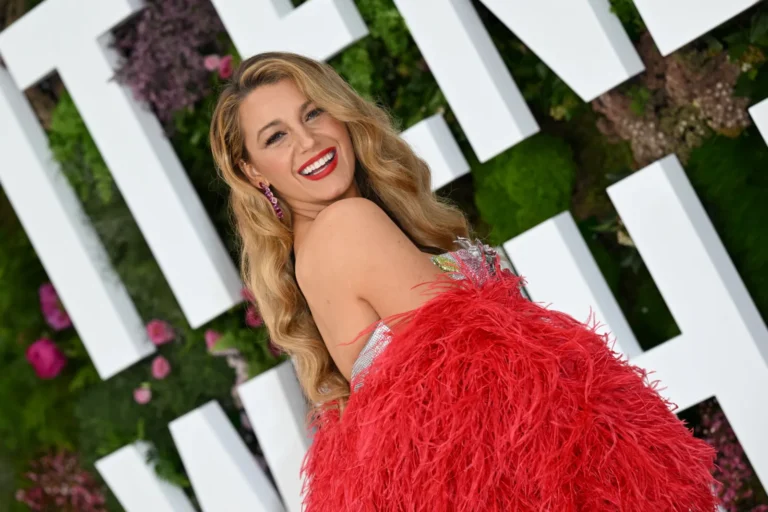
At some point in the afternoon of May 4, 2026, Blake Lively and Justin Baldoni settled their lawsuit. No money changed hands. No winner was declared. After nearly two years of legal filings, counter-filings, leaked texts, PR firm revelations, Reddit threads, TikTok analyses, celebrity takes, and a cultural conversation that had divided Hollywood and the internet into armed camps — it simply stopped. A joint statement. An acknowledgement that “concerns raised by Ms. Lively deserved to be heard.” A hope for “closure.” And nothing else.
That evening, Blake Lively walked into the Metropolitan Museum of Art in New York City wearing an archival 2006 Atelier Versace gown with a 13-foot train inspired by Venetian Rococo art. She was seated at Anna Wintour’s table. She smiled. She posed. She acted, as one observer put it, “as if nothing had ever happened.”
The internet — which had spent two years deciding it hated her — did not know what to do with this. And in that confusion, something happened that the internet always does when it cannot decide: it became completely, helplessly obsessed.
This is the complete story of why Blake Lively is the name everyone is saying in May 2026 — the lawsuit, the settlement, the Met Gala, the viral clip, the debate that still hasn’t resolved, and what comes next for one of Hollywood’s most complicated public figures.
First: The Two-Year Story You Need to Know
To understand why May 4 was so explosive, you need the context of the past two years.
The Met Gala Entrance: What Actually Happened
Blake Lively’s 2026 Met Gala appearance was, by any fashion measure, extraordinary. The gown — an archival 2006 Atelier Versace design in pastel tones — featured a 13-foot train inspired by Venetian Rococo art. Fashion outlets immediately hailed it as one of the evening’s standout looks. Her first Met Gala since 2022. Her first major public fashion event since the lawsuit consumed her public image.
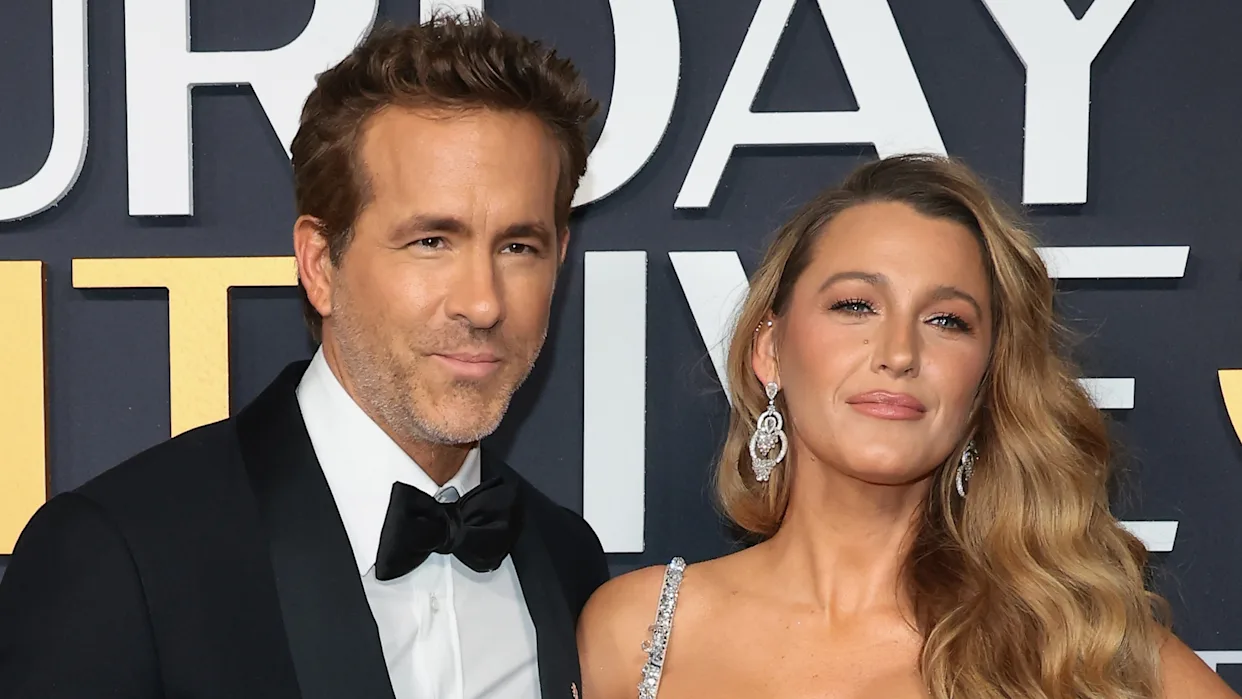
She arrived solo — without Ryan Reynolds, who has attended previous Met Galas with her. In what several observers noted as a deliberate touch, she reportedly carried photos of her children in her clutch, so that she was, in a sense, not entirely alone.
Then came the clip.
The Viral Clip: “Bossy” or “Like a Boss”?
A short video from the red carpet captured Blake Lively interacting with her team as she managed her enormous train. In the clip, she appears to be directing the people around her — assistants adjusting the gown, photographers positioning themselves — with a manner that some viewers described as imperious, commanding, and dismissive. Others described the same clip as a woman confidently managing a complex logistical situation on one of the world’s most scrutinised red carpets.
The internet immediately split into two irreconcilable camps. The clip’s description says everything about the viewer’s pre-existing disposition toward Blake Lively: if you already disliked her, the clip showed exactly who you believed she was. If you were willing to give her benefit of the doubt, you saw a professional managing her moment.
“I think she wanted to clog the internet with stories about her at the Met Gala and what she was wearing — it was an attempt to try to drown all the negative news.” — Kjersti Flaa, Norwegian journalist, speaking to the Daily Mail
Others pushed back hard on that framing. Was the Met Gala appearance calculated? Possibly. But the attendance had been planned for weeks — Anna Wintour invited her well before the settlement was reached, and she was seated at Wintour’s own table. She would have attended whether the trial was still looming or the settlement had just happened. The timing was coincidence compounded by her team’s refusal to quietly disappear.
The Two Sides of the Internet: Fairly Presented
One of the things that has made Blake Lively the internet’s most contested celebrity of the past two years is that neither side of the debate is entirely unreasonable. Here is the honest version of both.
What the Settlement Actually Means (Legally and Otherwise)
The most misleading framing of the settlement has been the “Blake Lively got nothing” vs “Blake Lively wins” binary. The reality is more nuanced and less satisfying to either side.
| What the settlement means | What it doesn’t mean |
|---|---|
| The jury trial is cancelled | The case is not completely over — fee disputes continue |
| No money changed hands publicly | Lively’s team continues pursuing legal fees under California retaliation protections |
| No admission of guilt from either side | No vindication of either side’s version of events |
| Both parties expressed desire for “closure” | Baldoni’s team continues to contest how the case has been publicly framed |
| Joint statement acknowledged concerns “deserved to be heard” | Baldoni’s supporters — including co-star Adam Mondschein — say he feels he has a story to tell |
The most important undercurrent: Justin Baldoni is reportedly weighing a tell-all. Adam Mondschein, a co-star who appeared in the film as a doctor, told Radar Online: “I think he really wants to tell his story, and he deserves to be heard.” Another source said: “Justin feels vindicated by how much of the case changed before settlement talks began.”
If Baldoni releases a book or sits for a major interview, the internet conversation about Blake Lively will immediately reignite — at a scale that could be significantly larger than anything that has come before. That possibility is why the story, despite the settlement, genuinely has not ended.
Blake Lively’s Career: Where She Goes From Here
At times during the past two years, Blake Lively has described feeling like she was “the most hated woman in Hollywood” — a description that, while clearly reflecting genuine pain, also reveals something about the specific psychological cost of a cancellation attempt at this scale.
She is now, reportedly, planning her comeback with deliberate care. Sources close to her team describe two specific projects as her primary focus:
The Survival List — A romantic action-comedy set up at Lionsgate, in which Lively plays a TV producer who ends up stranded on a remote island with a celebrity survival expert, romance ensues. The project is described as intentionally light — specifically designed to return her to the “mass appeal romantic comedy leads” that made her a star before the It Ends With Us era consumed everything. Think The Age of Adaline tone, not It Ends With Us weight.
The Husband’s Secret — A book-to-screen adaptation of Liane Moriarty’s bestselling novel (Moriarty also wrote Big Little Lies) that Lively has been developing for several years. For a woman who wants to be taken seriously as a producer and creative force, the Moriarty adaptation is the prestige project — the signal that her ambitions extend beyond romantic leads into the kind of serious drama that generates awards attention and critical credibility.
The combination — a light commercial project and a prestige production — is exactly the right two-track strategy for a public figure trying to rebuild simultaneously with mass audiences and industry respect. Whether it works depends almost entirely on two factors: whether Baldoni’s potential tell-all materialises, and whether the films themselves are good enough to shift the conversation.
Ryan Reynolds: The Silent Partner
Through all of this — the lawsuit, the settlement, the Met Gala — Ryan Reynolds has been conspicuously, deliberately quiet. He did not attend the Met Gala with Blake. He has not spoken publicly about the case. On Mother’s Day, just days after the settlement, he posted a tribute to Blake Lively praising her as a mother — a warm, personal post that was also a very specific kind of public statement. Not about the lawsuit. Not about Baldoni. Just: she is a good mother. I am here.
The Deadpool star’s famous social media wit — which he typically deploys in all directions — has been entirely absent from any content adjacent to this situation. That restraint, from a man known for his irrepressible public personality, is itself communicative. He is present. He is loyal. He is not engaging.
The Bigger Question: What Are We Actually Watching?
The Blake Lively story of 2024–2026 is, at its core, about something that extends far beyond the specific facts of a Hollywood lawsuit. It is about how the internet processes female celebrity. It is about what happens when a woman who has spent two decades carefully constructing a public image is suddenly, violently exposed to the mechanisms by which that construction is maintained and dismantled. It is about the way “cancellation” works — how it begins with genuine criticism, accumulates momentum that goes far beyond the original grievance, and eventually becomes a cultural phenomenon that is more about the audience’s relationship to celebrity than about anything the celebrity actually did.
The New Statesman’s analysis put it plainly: a significant portion of the Blake Lively pile-on drew from left-wing feminist communities who found her “girlboss” brand politics insufficiently progressive, right-wing pundits like Megyn Kelly who covered the lawsuit unfavourably, Reddit gossip communities with various motivations, and people who simply enjoy watching famous women fall. These groups were not united by a coherent view of what happened on the set of It Ends With Us. They were united by a shared object of attention.
Blake Lively’s return to the Met Gala — in Versace, with a 13-foot train, the day the lawsuit settled — is the most perfectly Lively response imaginable to two years of that attention. Not defiant. Not conciliatory. Simply present. Simply spectacular. Refusing to be diminished by the story being told about her, while also refusing to tell a different one directly.
Whether you read that as manipulation or resilience says more about you than it does about her.
New Statesman — The Internet Wants You to Hate Blake Lively
Eastern Herald — Blake Lively’s Viral Met Gala Entrance Sparks Internet Firestorm
Yahoo / TMZ — Blake Lively’s 2026 Met Gala Appearance Was Planned ‘For Weeks’
IBTimes UK — Journalist Calls Blake Lively Met Gala Move ‘Manipulation’
TMZ — Blake Lively Team Emails Show Them Spiraling Over It Ends With Us Backlash
Reality Tea — Blake Lively May Face Bombshell Tell-All by Justin Baldoni
CinemaBlend — Career Moves Blake Lively Allegedly Wants After Justin Baldoni Settlement
Frequently Asked Questions (FAQ)
The Final Word: She Showed Up
Whatever you think of Blake Lively — whatever you believe about what happened on the set of It Ends With Us, whatever your read on the lawsuit, whatever you made of the promotional press tour and the Betty Booze bottles and the Kjersti Flaa clip and the Sony filings and the $0 settlement — she showed up.
To the Met Gala. Same day. 13-foot train. Archival Versace. Anna Wintour’s table. Carrying her children’s photos in her clutch. Posing. Smiling. Present.
That decision — to appear rather than retreat, to dress rather than disappear, to claim the room that was offered rather than hide from the room that was watching — is the most definitively Blake Lively thing she could possibly have done. Whether it was manipulation or resilience, strategy or genuine defiance, the instinct it reflects is consistent with everything she has done in public life: she performs. She shows up. She refuses to be erased by the story being told about her.
The internet is obsessed with her again because she keeps being impossible to resolve. Not clearly guilty. Not clearly innocent. Not clearly the victim. Not clearly the villain. Just there. In Versace. Dragging a 13-foot train through one of the most photographed rooms on the planet.
The conversation about her will continue — especially if Baldoni’s tell-all materialises. But for now, in this particular week, in this particular May, Blake Lively is the most talked-about person in Hollywood.
She always was good at commanding a room.
What do you think — is Blake Lively’s Met Gala return an act of confidence and resilience, or calculated image management? Drop your honest take in the comments. 👇

Popcorn in hand and a opinion ready — Emily covers movie reviews, box office buzz, and all things cinema at Popcorn Review.

