
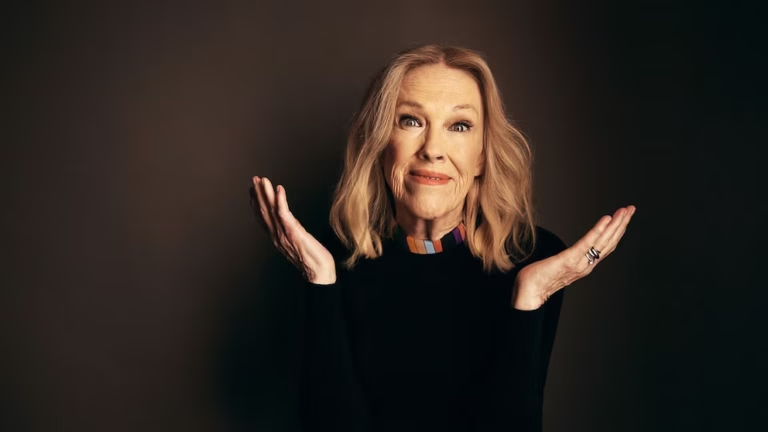
Catherine O’Hara death news broke on January 30, 2026, and for millions of fans around the world, it landed like a punch in the chest. The Emmy Award-winning actress — best known as Moira Rose in Schitt’s Creek, Kate McCallister in Home Alone, and Delia Deetz in Beetlejuice — passed away at Saint John’s Health Center in Santa Monica, California. She was 71.
Her agency CAA confirmed she died following a brief illness at her home in the Brentwood area of Los Angeles. On February 9, the Los Angeles County Department of Public Health released her death certificate, which listed the cause of death as a pulmonary embolism — a blood clot in the lungs — with rectal cancer as the underlying cause. She is survived by her husband, production designer Bo Welch, and their two sons, Matthew and Luke.
The Catherine O’Hara death news initially spread on social media as confused rumour — many fans assumed it was another celebrity death hoax, the kind that circulates every few months. It wasn’t. Within hours, Variety, NPR, ABC News, and TMZ had all confirmed what nobody wanted to believe.
She was genuinely gone. And the tributes that followed said everything about what kind of person, and what kind of artist, she had been.
A Career That Spanned Six Decades and Never Lost Its Edge
Catherine O’Hara wasn’t just a great actress. She was a specific kind of great — the kind that makes everyone around her better, that finds the exact human truth inside a ridiculous character, that you could watch for five seconds and immediately understand everything you needed to know about who that person was.
Her career began in Toronto in the mid-1970s, when she got her start as an understudy for Gilda Radner at Second City. That detail alone tells you something — she was operating at that level from the very beginning. She joined Second City Television (SCTV) in 1976, and the show became one of the most celebrated sketch comedy programmes in North American television history. O’Hara won her first Emmy for her writing on SCTV. She was 28.
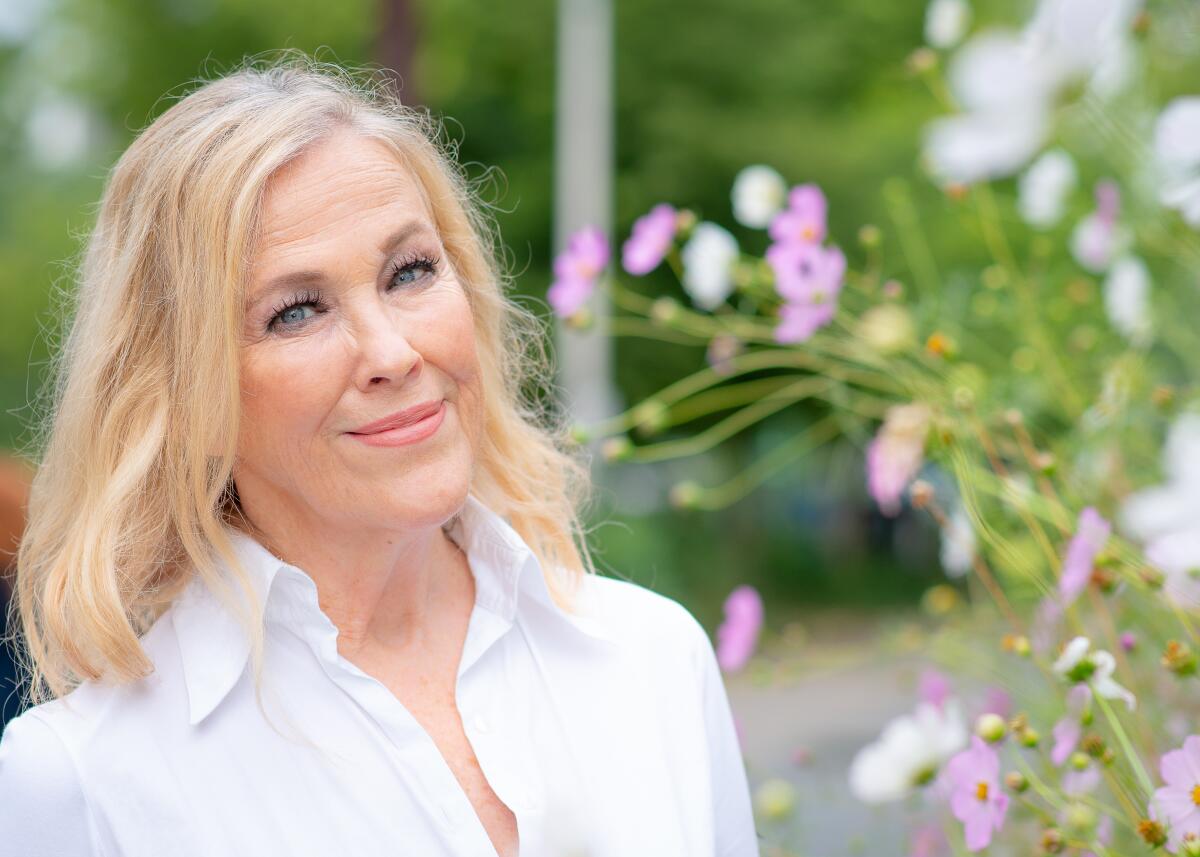
Over the next five decades, she built a filmography that spans genres, tones, and formats in a way very few actors manage. Horror comedy (Beetlejuice). Christmas family film (Home Alone). Indie mockumentary (Best in Show, A Mighty Wind, Waiting for Guffman). Animated voice work (Sally in The Nightmare Before Christmas — a role so beloved it has its own cultural afterlife). Prestige television drama (The Last of Us). Satirical comedy (The Studio, her final major role).
What connected all of it was her. The specificity she brought to every character. The commitment. The complete absence of vanity about how a role made her look.
Home Alone and the Scream That Became a Christmas Tradition
For a huge portion of the world, Catherine O’Hara will always be Kate McCallister — the frantic, guilt-ridden mother who leaves her eight-year-old son behind while flying to Paris for Christmas.
The “KEVIN!” scream is one of the most quoted moments in 1990s cinema. It gets replayed every holiday season, used in memes, referenced in interviews, shouted affectionately at people named Kevin. It has become completely embedded in pop culture in the way that only a handful of moments from any generation of films ever manage.
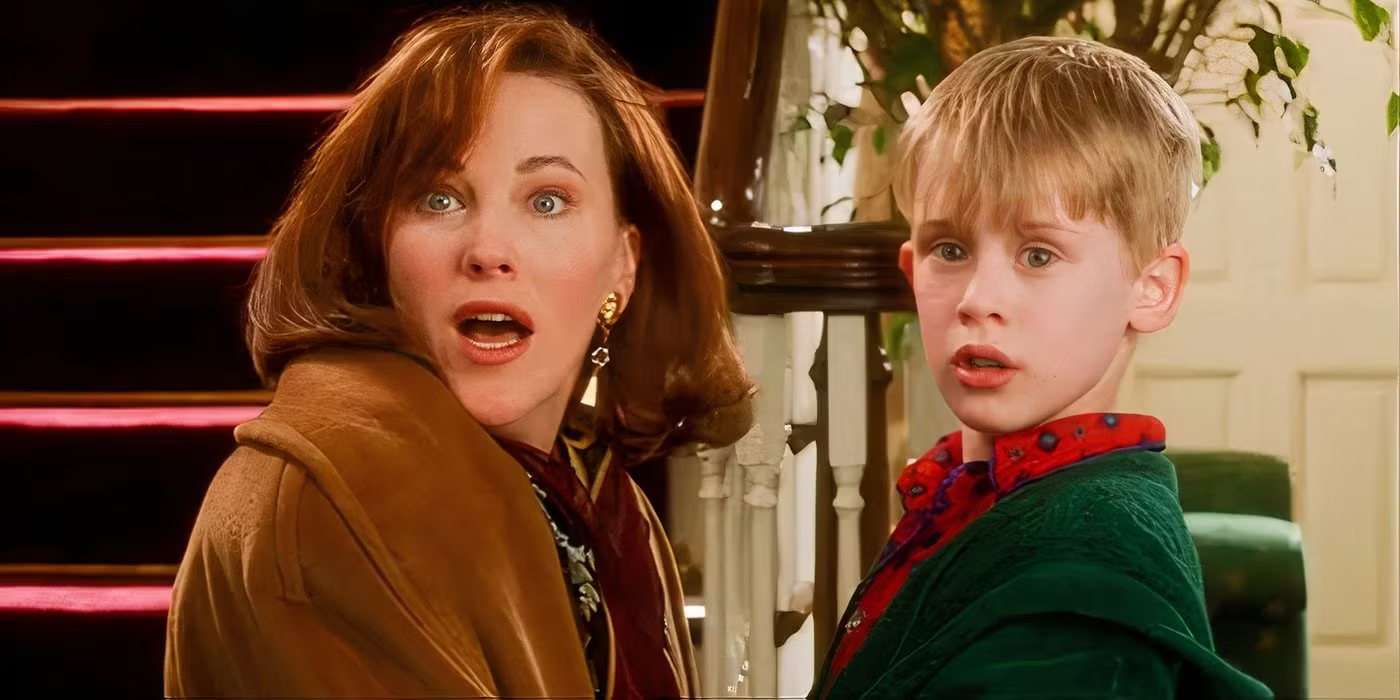
But what made Kate McCallister genuinely memorable wasn’t the scream. It was everything around it. The way O’Hara played the fear underneath the comedy. The guilt that Kate carries through the entire film. The quiet devastation on her face when she realises what’s happened — before the chaos kicks in and she has to start problem-solving. O’Hara turned what could have been a purely functional comedy role into something you actually felt.
Macaulay Culkin, who played Kevin, posted a black-and-white still from the film after news of her passing broke. He wrote: “Forever my mom on screen. I will cherish every funny memory I was fortunate enough to make with her. My heart goes out to Bo, Matthew, Luke and every member of her big, beautiful family.”
Schitt’s Creek and Moira Rose: The Role That Defined a Generation
If Home Alone made O’Hara beloved, Schitt’s Creek made her iconic for a completely new audience.
Moira Rose is one of the great comedy creations of 21st-century television. The wigs — dozens of them, each with a name, each with a distinct personality. The accent, which appears to come from no country on earth. The vocabulary, which seems to have been assembled from the complete works of Shakespeare and then put through a blender. The absolute unshakeable conviction that Moira’s problems are the most significant problems anyone has ever experienced.
And underneath all of it — underneath every ridiculous hat and theatrical exit and mispronounced word — genuine love for her family. Genuine fear of irrelevance. Genuine vulnerability that O’Hara let you see in the smallest moments, just enough to make Moira feel real rather than cartoonish.
She won her second Emmy for the role in 2020. She won a Golden Globe in 2021. The show ended in 2020 and people are still discovering it, still quoting it, still posting the “fold in the cheese” scene as if it’s the first time they’ve seen it.
Dan Levy, who created Schitt’s Creek alongside his father Eugene Levy and starred in it, wrote after her passing: “Having spent over fifty years collaborating with my Dad, Catherine was extended family before she ever played my family. It’s hard to imagine a world without her in it.”
The Final Chapter: The Studio and a Posthumous Award
Catherine O’Hara’s last major role was in The Studio, an Apple TV+ satirical comedy created by Seth Rogen, in which she played a veteran Hollywood executive pushed aside by a younger generation taking over the studio. The casting was perfect — O’Hara playing someone whose experience and talent were being dismissed by an industry that had moved on felt layered in ways the show’s creators may not have fully anticipated.
The role earned her a Primetime Emmy nomination. It also earned her a posthumous win at the 32nd Actor Awards on March 1, 2026 — making her the first woman to win an individual Screen Actors Guild Award trophy posthumously. Seth Rogen accepted the award on her behalf and described her as a dedicated collaborator who regularly sent thoughtful emails the night before filming with suggested scene revisions. He said O’Hara “showed that you could be a genius and you could be kind.”
She had been nominated for a Golden Globe for The Studio earlier in January 2026 but did not attend the ceremony. At the time, nobody commented publicly on her absence. In hindsight, she was already seriously ill.
Her most recent interview, given to Variety in 2025 while promoting The Studio, ended with a reflection on Hollywood that feels especially resonant now: “Most people are trying to do and want to do good work. And most people want to be entertained.”
What Her Collaborators Said
The tributes that came in after the Catherine O’Hara death news broke were remarkable not just for their warmth but for their specificity. People didn’t just say she was wonderful. They remembered particular moments, particular qualities, particular things she said.
Michael Keaton, her costar in both Beetlejuice films: “We go back before the first Beetlejuice. She’s been my pretend wife, my pretend nemesis and my real life, true friend. This one hurts. Man am I gonna miss her.”
Meryl Streep called her “one of the funniest — and kindest — people I’ve ever known.”
Steve Martin and Martin Short, longtime friends, shared memories of late-night laughter and what they described as her quiet, consistent generosity toward everyone she worked with.
Pedro Pascal, who worked with her on The Last of Us Season 2, described her as “a light that never dimmed.”
What comes through across all of them is the same thing: that she was as good a person as she was an actress, which is saying quite a lot.
The Rumour Problem and Why It Matters
In the hours after her passing, many fans initially dismissed the news as a hoax. Celebrity death hoaxes are common enough that the automatic response for a lot of people when they see a famous name trending is scepticism. Several sites ran articles framing the death as unconfirmed rumour even after CAA had formally confirmed it.
This matters because misinformation about someone’s death is genuinely harmful — to their family, to their fans, and to the public’s ability to trust what they read online. Catherine O’Hara did pass away on January 30, 2026. Her cause of death was confirmed by the Los Angeles County Department of Public Health as pulmonary embolism, with rectal cancer as the underlying cause. This is not a rumour. It has been confirmed by Variety, NPR, ABC News, TMZ, and Wikipedia.
If you came to this article searching for clarity on whether the news was real — it was. She is gone. And the hole she leaves in film, television, and comedy is genuinely significant.
A Timeline of Her Most Important Work
| Year | Project | Role | Why It Matters |
| 1976–1984 | SCTV | Various | Where it all started — Emmy-winning sketch comedy |
| 1988 | Beetlejuice | Delia Deetz | First major film role alongside Keaton and Ryder |
| 1990 | Home Alone | Kate McCallister | One of the most iconic maternal roles in cinema |
| 1993 | The Nightmare Before Christmas | Sally (voice) | Beloved animated character still celebrated today |
| 2000 | Best in Show | Cookie Fleck | Cornerstone of Christopher Guest’s mockumentary universe |
| 2015–2020 | Schitt’s Creek | Moira Rose | Career-defining role, Emmy and Golden Globe winner |
| 2025 | The Last of Us (Season 2) | Gail Lynden | Emmy-nominated dramatic turn |
| 2025 | The Studio | Patty Leigh | Final major role — posthumous Emmy win |
Why She Mattered Beyond the Roles
It would be easy to write about Catherine O’Hara purely in terms of the characters she played. Moira Rose. Kate McCallister. Delia Deetz. Cookie Fleck. They’re extraordinary creations, each one.
But what made her genuinely special was something harder to quantify. She had a quality that very few performers have — the ability to make you feel like you were watching a real person, even when that person was completely, gloriously absurd. Moira Rose is an outrageous cartoon on paper. On screen, because of O’Hara, she feels like someone you might actually know. Someone you might actually love, despite everything.
That’s a rare gift. And it operated consistently across fifty years of work, across wildly different genres and formats and collaborators. She never phoned it in. She never played it safe when she could be braver. She never stopped finding new things to do with a character.
In her 2024 interview with Elle Canada, she talked about turning 70 and how she was thinking about the years ahead. She said the advice she’d read was to imagine you’re going to live another 20 years, and then decide what you want to do with them. She described it as looking at ageing as a challenge rather than a retreat. “What are you going to do?” she asked. “If you look at it that way, you look at it as a challenge.”
She was still taking on that challenge when she died. Still working. Still nominated. Still making people laugh and feel things at the same time.
That’s the career. That’s the legacy.
Related Articles
- 2026 Grammy Awards: Every Historic Win, Shocking Moment, and Controversy You Need to Know
- Top South Indian Blockbusters That Conquered Pan-India Box Office
- February 2026 Streaming Releases: Who Won, Who Disappointed
- Bollywood Actors in South Indian Films: The Surprising Reason Hindi Stars Are Going South in 2026
Catherine O’Hara was one of the finest comic performers of her generation. She made six decades of work look effortless, which is the hardest thing to do. She was kind, according to everyone who knew her. She was a genius, according to the same people.
She was 71. She deserved more time.
Follow our Instagram and Pinterest for ongoing tributes and coverage of the artists who shaped cinema and television.

Popcorn in hand and a opinion ready — Emily covers movie reviews, box office buzz, and all things cinema at Popcorn Review.

