
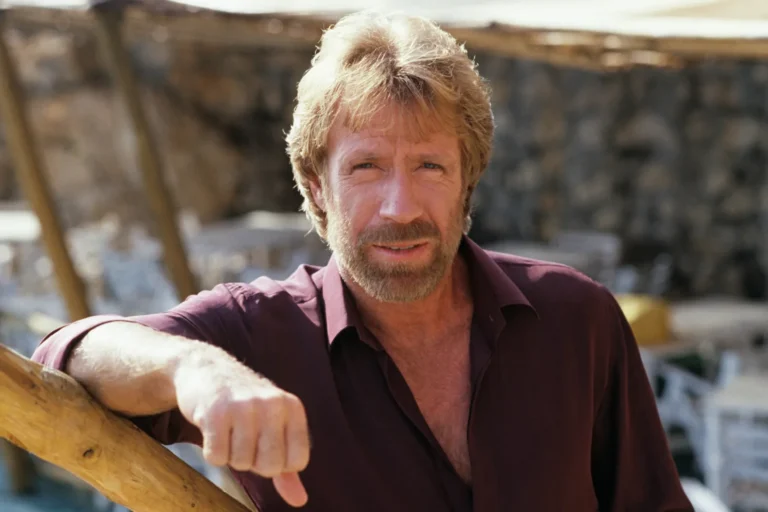
Chuck Norris dead. He passed away on March 19, 2026, at the age of 86 in Hawaii, surrounded by his family. And even as you read that sentence, something about it feels wrong — almost physically impossible — because Chuck Norris was the man the internet decided could never die. The man who counted to infinity. Twice. The man death itself was afraid to face.
But this isn’t just a tribute. This is the story most entertainment sites won’t tell you — the full, psychologically honest picture of a man who built himself from nothing, became a global symbol of toughness, and then had to quietly live up to that myth for the rest of his life. It’s more complicated than any roundhouse kick, and far more interesting.
⚡ Quick Facts: Chuck Norris
- Full Name: Carlos Ray Norris
- Born: March 10, 1940 — Ryan, Oklahoma
- Died: March 19, 2026 — Hawaii (age 86)
- Cause: Sudden medical emergency (family kept details private)
- Spouses: Dianne Holechek (1958–1989), Gena O’Kelley (1998–2026)
- Children: 5 — including actor Mike Norris & NASCAR driver Eric Norris
- Estimated Net Worth at Death: ~$70 million (₹580 crore)
- Notable For: Walker, Texas Ranger, Missing in Action, The Delta Force, Bruce Lee fight scene
- Last Social Media Post: March 10, 2026 (his 86th birthday) — sparring in Hawaii, captioned “I don’t age… I level up.”
Who Was Chuck Norris, Really? The Origin Story Nobody Talks About
Chuck Norris didn’t come from privilege. He didn’t have an agent, a famous family, or a lucky break handed to him on a silver platter. He came from a broken home in rural Oklahoma, with an alcoholic father who disappeared early, a mother holding the family together on almost nothing, and a son who described himself as “the shy kid who never excelled at anything in school.”
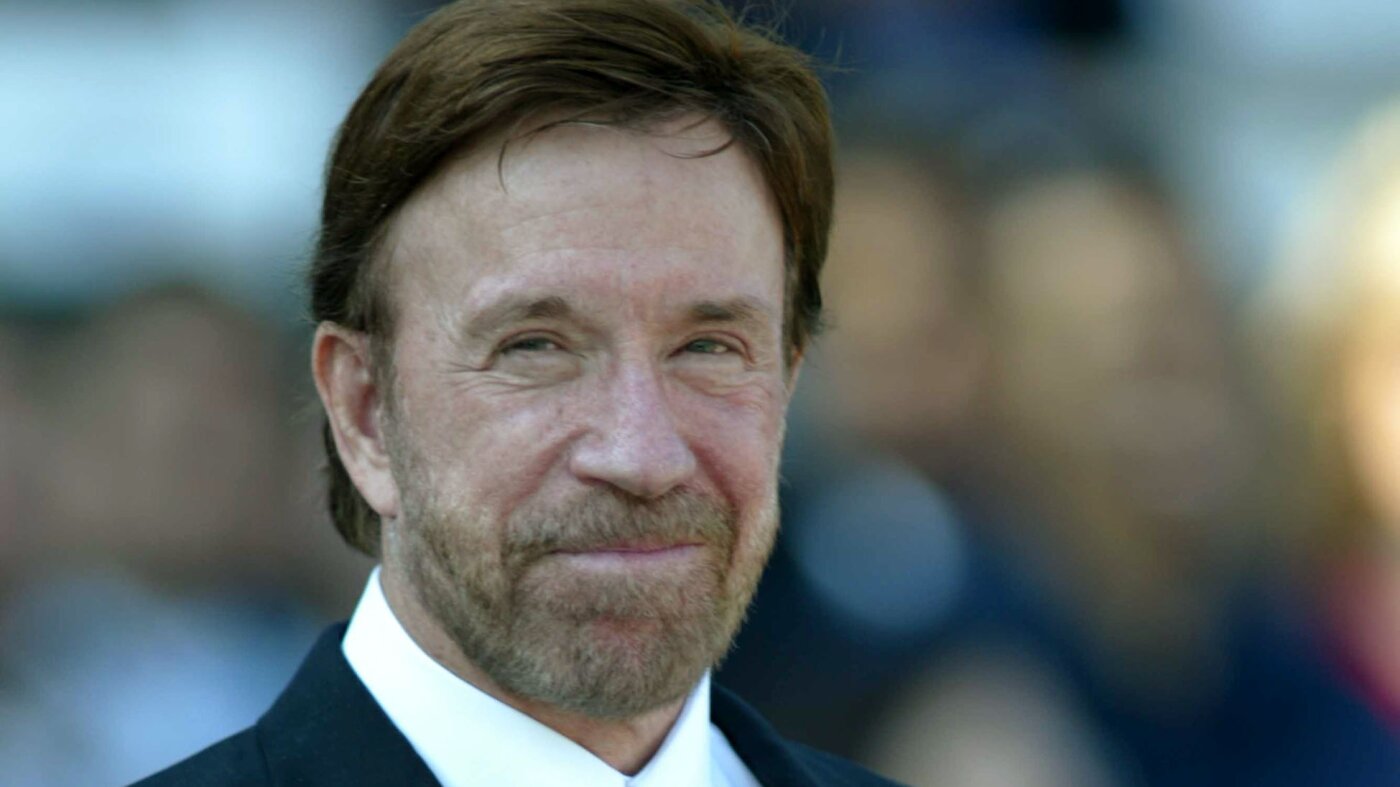
That kid — Carlos Ray Norris — would go on to become the most memed human being in internet history. But between those two points is a real story about discipline, reinvention, and a quiet man who turned his insecurities into a superpower.
At 18, he joined the US Air Force — not out of patriotic bravado, but because he needed direction. While stationed at Osan Air Base in South Korea in the late 1950s, he discovered Tang Soo Do, a Korean martial art. That moment was the pivot point of his entire life. He wasn’t naturally gifted. He lost his first two competitive bouts. He kept training anyway. That discipline — not talent, discipline — is what Chuck Norris was actually made of.
“In school I was shy and inhibited. If the teacher asked me to recite something aloud in front of the class, I would just shake my head no.” — Chuck Norris, Against All Odds: My Story (2005)
By 1968, that same quiet kid was the World Professional Middleweight Karate Champion — a title he defended five more times before retiring undefeated in 1974. He had built a chain of over 30 martial arts studios across the US. His celebrity students included Priscilla Presley and Steve McQueen.
This is the psychological core of Chuck Norris that most people miss: he was never the born tough guy. He built the tough guy, from scratch, on sheer will.
The Bruce Lee Moment — How Chuck Norris’ Career Really Began
In 1972, Bruce Lee — already one of the biggest stars in Asian cinema — cast Chuck Norris as the villain in The Way of the Dragon. The film’s climax, a one-on-one fight scene staged in the actual Roman Colosseum, is considered one of the greatest martial arts sequences ever filmed.
Here’s what most people don’t know about it: Chuck Norris lost that fight on screen. He was the villain. He got defeated. And yet — that scene launched him into international consciousness. Why? Because even in defeat, his presence was undeniable. His physical skill, his hairy-chested intensity opposite Bruce Lee’s fluid grace, his ability to hold the screen next to cinema’s greatest martial artist — audiences noticed.
What happened next was the classic Chuck Norris story: his own student gave him his break. Steve McQueen, who had been training under Norris, encouraged him to take acting classes at MGM. Norris did. And within three years, he had his first starring role in Breaker! Breaker! (1977) — a film shot in just 11 days on a tiny budget that somehow turned a profit.
That scrappy, improbable success was the blueprint for everything that followed.
Chuck Norris Career Timeline — From Dojo to Global Icon
His Best Movies, Ranked — A Genuine Critic’s Guide
Not all Chuck Norris movies are equal. Some are campy 80s cheese. A few are genuinely great films. Here’s the honest breakdown:
1. Code of Silence (1985) — His Best Film, Full Stop
Most people expect Walker or Missing in Action at the top of this list. But critics who study Chuck Norris’ body of work consistently point to Code of Silence as his finest acting performance. Directed by Andrew Davis (who later made The Fugitive), it’s a Chicago cop thriller that demanded actual acting — not just kicking. Norris delivered. This is the film that showed what he could have been with better scripts.
2. Lone Wolf McQuade (1983) — The Template for Everything
Before Walker, before the TV stardom, there was McQuade — a lone Texas Ranger who operated outside the rules. This film essentially gave Chuck Norris his identity. The character he played for the next two decades started here. The action is excellent, the tone is perfect, and Norris is completely in control of the screen.
3. The Way of the Dragon (1972) — The Scene That Started Everything
You cannot talk about Chuck Norris without this film. The Rome Colosseum fight with Bruce Lee remains one of the most technically precise martial arts sequences in cinema history. Watch it now, 50+ years later — it still holds up.
4. Missing in Action (1984) — Peak 80s Chuck
Gloriously of its time. Norris as Colonel Braddock, a POW who escapes Vietnam and returns to rescue soldiers left behind. It made him the defining American action hero of the Reagan era — a deliberate cultural product of its political moment. Understanding that context makes it a more interesting film than it first appears.
5. The Delta Force (1986) — The Most Commercially Important Film
Loosely based on the real TWA Flight 847 hijacking, this film was Norris at his box-office peak. It’s bombastic, jingoistic, and enormously entertaining on its own terms. Historically, it represents the pinnacle of the Cannon Films action era.
The Meme Phenomenon — A Business and Psychology Deep Dive
In 2005, a college student named Ian Spector started collecting “Chuck Norris Facts” — absurdist one-liners treating Norris as a supernatural force. “Chuck Norris doesn’t do push-ups. He pushes the Earth down.” “Death once had a near-Chuck-Norris experience.”
Within months it was a global viral sensation — and this was before modern social media. Pre-Twitter. Pre-Instagram. The memes spread through early internet forums and email chains. It was one of the first examples of a celebrity-as-meme at scale.
Here’s the part that fascinates me psychologically: Chuck Norris could have hated it. He chose to own it. He appeared on talk shows to recite the jokes. He endorsed products built around the meme. He co-wrote a book called The Official Chuck Norris Fact Book. He turned cultural mockery into a multi-million dollar second act.
That response tells you everything about the man. Insecure people fight their public image. Secure people weaponise it. Chuck Norris was deeply secure in who he was — because he’d built himself from scratch and he knew exactly what that process had cost.
From a pure business perspective, the meme extended his commercial viability by at least 15 years. Total Gym infomercials. Branded merchandise. Book deals. A new generation who had never seen Walker, Texas Ranger knew who he was because of a joke about counting to infinity twice.
🧠 Myth vs Fact: What Most Articles Get Wrong About Chuck Norris
MYTH: “Chuck Norris was a naturally gifted fighter.”
FACT: He lost his first two competitive karate bouts. He built his skills through years of grinding discipline, not innate talent.
MYTH: “He was always the cocky, confident tough guy.”
FACT: By his own account, he was painfully shy as a child and a below-average student. Martial arts gave him the confidence he never had naturally.
MYTH: “Bruce Lee discovered him.”
FACT: Bruce Lee cast him in a film, but it was Steve McQueen — Norris’s own martial arts student — who pushed him to take acting seriously and take classes at MGM.
MYTH: “The memes embarrassed him.”
FACT: He co-wrote a book about them, appeared on shows to recite them, and openly said they delighted him. He monetised them brilliantly.
MYTH: “He was mostly a B-movie guy.”
FACT: Code of Silence was reviewed by serious film critics as a genuinely strong thriller. Roger Ebert praised it. Norris was capable of real acting — he just rarely got the scripts to prove it.
The World Reacts — Chuck Norris Dead -Tributes
The tributes that poured in after the news broke said as much about his impact as any career retrospective. Sylvester Stallone, his co-star from The Expendables 2, called him “All American in every way.” Jean-Claude Van Damme, often seen as a rival from the same era, said he had “always respected the man he was” and that Norris “will never be forgotten.”
Texas Governor Greg Abbott wrote that the state had “lost a legend.” Israel’s Prime Minister Netanyahu called him “a great friend of Israel and a close personal friend.” President Trump described him as “a great man.” Whatever you think of his politics — and Norris was openly conservative in his later years — the breadth of the tributes was striking.
Perhaps the most fitting tribute came from the internet itself. Within hours of the news, social media filled with Chuck Norris Facts — the same jokes that had kept him culturally alive for two decades. His fans weren’t just mourning an actor. They were mourning a character they’d built together with him. That’s rare. That almost never happens.
What Chuck Norris Actually Leaves Behind — The Real Legacy
Here’s the honest, unromantic answer: Chuck Norris wasn’t the greatest actor of his generation. He wasn’t a technical innovator in filmmaking. His movies were often made quickly, cheaply, and with scripts that treated character development as optional.
And none of that matters, because his actual legacy operates on a completely different level.
Chuck Norris was the proof of concept for a specific kind of American dream: that a genuinely shy, broke, not-particularly-gifted kid from a broken home could build himself, through discipline alone, into something the whole world recognised. He didn’t inherit that. He made it. Kick by kick, bout by bout, role by role.
He also — and this is underrated — kept martial arts cinema alive in the West during the 1980s. After Bruce Lee’s death in 1973, there was a real vacuum. No Western star had the authentic martial arts background to fill it. Norris did. He brought Lee’s cinematic tradition to American audiences, blended it with the Western and war-hero archetypes those audiences already loved, and created something new. Without him, the genre evolves very differently. Jackie Chan’s American crossover in the 1990s is harder without Norris having prepared the ground.
And then there’s Walker. Eight seasons. Hundreds of episodes. A show that ran in 80 countries. An entire generation of kids grew up watching a man be principled on television every week. That kind of consistent cultural presence is worth more than any single blockbuster.
“He lived his life with faith, purpose, and an unwavering commitment to the people he loved. Through his work, discipline, and kindness, he inspired millions around the world.” — The Norris Family Statement, March 20, 2026
The Final Chapter — His Last Days
On March 10, 2026 — his 86th birthday — Chuck Norris posted a video on social media from Hawaii. He was sparring with an opponent, moving with surprising ease for a man his age, and captioned it with the words: “I don’t age… I level up.”
Nobody who saw that post imagined it would be the last one.
Nine days later, he suffered an unidentified medical emergency in Hawaii. A source who had spoken to him the day before described him as “working out and in an upbeat, jovial mood.” His family confirmed his death the following morning, asking for privacy and saying that he had been “surrounded by family and at peace.”
It is, when you think about it, exactly the exit the myth demanded. Still training at 86. Gone suddenly, not slowly. Surrounded by people who loved him. At peace.
Chuck Norris died the way the internet always said he would — on his own terms.
🎬 Love deep-dive entertainment content like this?
Follow us for daily reviews, OTT updates & cinema analysis:
Frequently Asked Questions About Chuck Norris
How did Chuck Norris die?
Chuck Norris died on March 19, 2026, in Hawaii following a sudden medical emergency. He was 86. His family confirmed the news the following morning but kept the specific cause private, saying only that he was “surrounded by family and at peace.”
How old was Chuck Norris when he died?
Chuck Norris was 86 years old. He had just celebrated his birthday on March 10, 2026 — nine days before he passed away.
What is Chuck Norris most famous for?
He is best known for the TV series Walker, Texas Ranger (1993–2001), his 1980s action films including Missing in Action and The Delta Force, his fight scene with Bruce Lee in The Way of the Dragon (1972), and the “Chuck Norris Facts” internet meme phenomenon.
Was Chuck Norris a real martial artist?
Yes — and one of the most accomplished in history. He held black belts in karate, taekwondo, Tang Soo Do, Brazilian jiu-jitsu, and judo. He was the six-time undefeated World Professional Middleweight Karate Champion from 1968 to 1974, and founded his own martial arts discipline called Chun Kuk Do.
Did Chuck Norris and Bruce Lee actually fight?
Not in real life — they were close friends and trained together in the mid-1960s. Their famous on-screen fight in The Way of the Dragon (1972) was choreographed together and is widely considered one of the greatest martial arts film sequences ever made.
Where can I watch Chuck Norris movies in India?
Walker, Texas Ranger is available on Amazon Prime Video in India. Several of his 1980s films including Missing in Action and The Delta Force are available on YouTube (some free, some rental). The Expendables 2 is on Netflix India.
What was Chuck Norris’ net worth?
At the time of his death, Chuck Norris’ net worth was estimated at approximately $70 million (around ₹580 crore), accumulated through his acting career, martial arts schools, Total Gym fitness endorsements, book deals, and merchandise.
Did Chuck Norris have a film coming out after his death?
Yes. Zombie Plane, an Australian action-comedy, was in post-production at the time of his death and is expected to be released posthumously as his final film appearance.
Final Word
Chuck Norris is dead. The phrase still reads like a contradiction. But here’s what isn’t a contradiction: the man earned everything his legend became. Not because he was born tough — but because he chose to be, every single day, for eight decades.
The memes got one thing exactly right. Not the supernatural powers or the absurdist feats of strength — but the core idea underneath all of them. That some people are simply built differently. Not from birth. From choice. Chuck Norris was the walking proof of that.
He left behind five children, a body of work that spans six decades, a martial arts discipline practiced around the world, and a level of cultural immortality that most movie stars only dream of. The internet will keep the jokes alive. The films will keep streaming. Walker will keep kicking bad guys on TV.
The man may be gone. But you don’t get to retire from being Chuck Norris.
Rest well, Carlos Ray.
💬 Which Chuck Norris movie defined your childhood — and do you think the memes actually helped or hurt his serious legacy as a martial artist? Tell us in the comments.
CNN — Chuck Norris Dies at 86 | Variety — Chuck Norris, Action Icon, Dies at 86 | TMZ — Chuck Norris Dead at 86 | Wikipedia — Chuck Norris | Biography.com — Chuck Norris | Rolling Stone — Chuck Norris Essential Movies | Al Jazeera — Chuck Norris Dies at 86

Popcorn in hand and a opinion ready — Emily covers movie reviews, box office buzz, and all things cinema at Popcorn Review.
