

When Dhurandhar released on December 5, 2025, the early tracking wasn’t predicting a phenomenon. The film had faced genuine pre-release anxiety — a 214-minute runtime with an adult certificate, a spy thriller set partly in Pakistan, a lead actor in Ranveer Singh whose last few films had underperformed. The industry expected a decent opening and a steep second-week fall. What happened instead is one of the most remarkable theatrical runs Indian cinema has seen in the post-pandemic era, and the OTT chapter that followed it rewrote the economics of Hindi film streaming deals in a single transaction.
This is the complete account of Dhurandhar box office — what happened at the box office week by week, what the Netflix deal actually looked like, what records it holds, and what the sequel situation means going into March 2026.
What Dhurandhar Actually Is — The Setup Before the Numbers
Before the numbers, the context matters. Dhurandhar is a spy action thriller directed by Aditya Dhar — the same director behind Uri: The Surgical Strike — and produced by Jio Studios and B62 Studios. The film follows an undercover Indian intelligence operative who infiltrates Karachi’s criminal syndicates as part of a covert counter-terrorism mission. The narrative draws loose inspiration from real geopolitical events: the 1999 IC-814 hijacking, the 2001 Indian Parliament attack, and the 2008 Mumbai attacks, weaving them into a fictional intelligence operation.
The ensemble cast is one of the strongest assembled for a Hindi film in recent years — Ranveer Singh leads, with Akshaye Khanna, Sanjay Dutt, Arjun Rampal, R. Madhavan, and Sara Arjun in significant roles. The adult (A) certificate from the CBFC for strong violence was considered a commercial liability going in, as A-rated films typically lose a significant portion of family audiences and face restrictions on show timings.
The film was also banned in Gulf countries before release, which its foreign distributor Pranab Kapadia estimated cost the film approximately ₹90 crore in potential earnings. Despite that handicap, Dhurandhar became the highest-grossing A-rated Indian film ever made.
Dhurandhar box office Run: Week by Week
Week 1 — The Cautious Start
Dhurandhar opened to ₹28 crore on Day 1 — a strong but not extraordinary opening by top-tier Bollywood standards. What surprised the industry was the pattern that followed. Rather than declining sharply after the first weekend, the film held its numbers through the weekdays with unusual consistency.
| Day | Collection (India Net) |
| Day 1 (Friday) | ₹28.00 crore |
| Day 2 (Saturday) | ₹32.00 crore |
| Day 3 (Sunday) | ₹43.00 crore |
| Days 4–7 (Mon–Thu) | ₹27–23.25 crore/day |
| Week 1 Total | ₹207.25 crore |
A ₹207 crore first week for a Hindi film with an A certificate, released only in the Hindi belt without a Telugu or Tamil version, was something nobody had predicted. The single-screen performance was particularly strong — the film was drawing footfalls from Tier-2 and Tier-3 cities that hadn’t responded to Hindi films this consistently in years.
Week 2 — The Jump That Changed Everything
The second week is where the story shifted from “strong performer” to “phenomenon in progress.” Dhurandhar box office second weekend was bigger than its first — something that almost never happens for Hindi films, which typically fall 40–60% in Week 2.
| Week | Collection (India Net) |
| Week 1 | ₹207.25 crore |
| Week 2 | ₹253.25 crore (+22%) |
| Week 3 | ₹172.00 crore |
A Week 2 that exceeded Week 1 by 22% told the industry that word of mouth was operating at a level that overrode the normal theatrical decay curve. People who had seen it were sending their friends. Second and third viewings were contributing meaningfully to the daily numbers. By the end of Week 3, the film had crossed ₹600 crore in India alone — a number no Hindi film released only in Hindi had ever approached.
The Full Theatrical Run
Dhurandhar ran for 70 days in theatres before its OTT release. The final theatrical numbers:
| Category | Collection |
| India Net Collection | ₹894.49 crore |
| India Gross Collection | ₹1,002.75 crore |
| Overseas Collection | ₹298.75 crore |
| Worldwide Gross Total | ₹1,349.65 crore |
To put those numbers in context: Dhurandhar became the highest-grossing Hindi film of all time in India, surpassing Pushpa 2’s Hindi version (₹836 crore) and Animal. It finished as the fourth highest-grossing Indian film ever worldwide, behind only Dangal, Baahubali 2: The Conclusion, and Pushpa 2: The Rule — all of which had multi-language releases across Telugu, Tamil, and other regional markets. Dhurandhar achieved its total entirely in Hindi.
It also became the most-watched Bollywood film of the post-pandemic era by footfalls, with 3.6 crore tickets sold across its theatrical run — a number that reflects actual people in seats rather than inflated ticket pricing.
The Records: 25 of Them
Rather than listing all 25 in full, here are the records that actually matter in terms of what Dhurandhar box office represent for Indian cinema :
Domestic records: – Highest-grossing Hindi film in India (all time) – Highest-grossing film in Hindi language alone (worldwide) – Only Bollywood film ever in the ₹800 crore club for domestic net – Highest-grossing A-rated Indian film ever – Most-watched Bollywood film post-pandemic (footfalls: 3.6 crore) – Longest-trending film on BookMyShow (59 days, breaking Chhaava’s 58-day record) – Highest-ever 9th-week theatrical collection despite OTT release
Overseas records: – Highest-grossing Indian film of 2025 at overseas box office – 8th highest Bollywood grosser of all time overseas – Highest-grossing Bollywood film in North America ($20.65 million)
All-time rankings: – 4th highest-grossing Indian film worldwide – Behind only Dangal (₹2,070 crore), Baahubali 2 (₹1,790 crore), and Pushpa 2 (₹1,742 crore)
The comparison to those three films is important context. Dangal’s ₹2,070 crore includes enormous China business and a multi-language run. Baahubali 2 was a pan-India release in Telugu, Tamil, Hindi, and multiple other languages. Pushpa 2 was a Telugu film that ran in dubbed versions across all languages. Dhurandhar did what it did in one language, for adult audiences only, without Gulf markets, in 70 days.
The Netflix Deal: What Actually Happened
The original article on this page described the OTT deal using vague “insider” language about a “silent bidding war” and platforms “overbidding beyond internal limits.” The actual reported figures are more interesting than the speculation.
Netflix acquired Dhurandhar for a digital rights fee of ₹85 crore. For context, that number reflects the post-theatrical reality of the deal — the film had already earned nearly ₹900 crore in India by the time it landed on the platform, meaning Netflix wasn’t buying an untested property. They were buying the most-watched Bollywood film of the year with a built-in audience that already knew they wanted to see it again, plus a second audience of people who hadn’t seen it theatrically and were now willing to pay for a Netflix subscription partly on its basis.
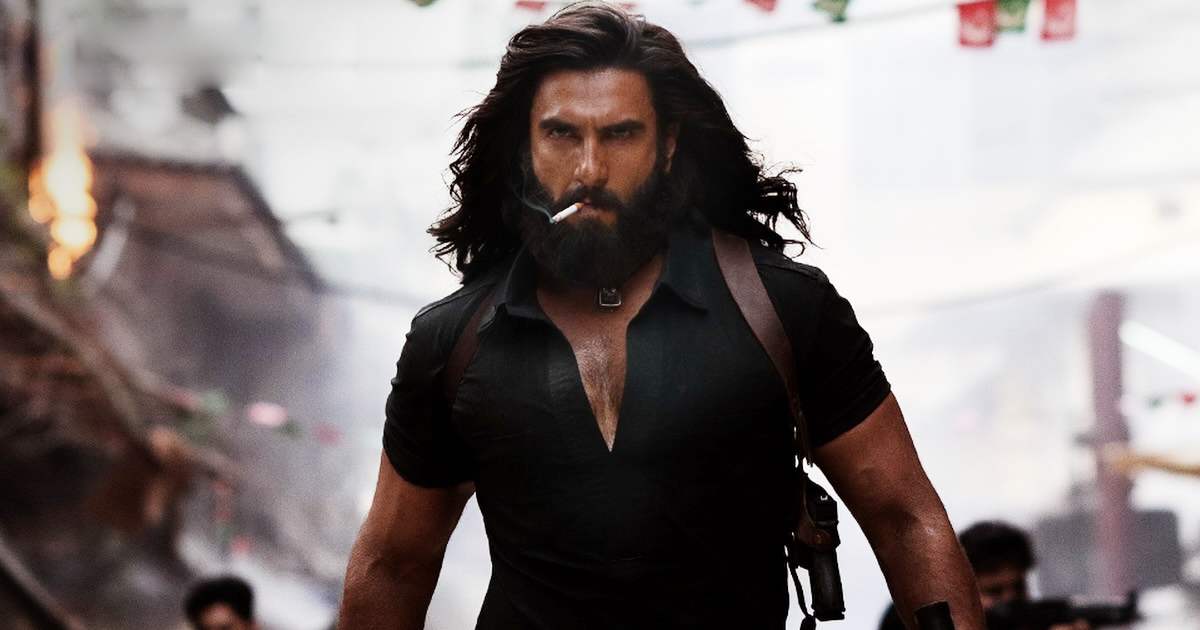
The OTT performance confirmed that calculation immediately. Dhurandhar recorded 7.6 million views within its first three days on Netflix — the highest ever for an Indian film in its opening digital weekend. In its fifth weekend on the platform, it scored 1.3 million views. By that point, Dhurandhar had become the most-watched Indian film on Netflix since the previous year, and the most-watched Indian title of 2026 across all digital platforms.
It currently holds the number one spot in the Non-English films category worldwide on Netflix and has reached 22 million total views in 31 days on the platform.
The theatrical legs held even after the Netflix release — the film added ₹1.6 crore in its ninth week in theatres, the highest-ever ninth-week collection for a Bollywood film despite being simultaneously available for streaming. That number reflects a specific segment of the audience that genuinely wanted the theatrical experience for a film with this kind of scale, regardless of home viewing availability.
What Made the Word-of-Mouth Work
The conventional explanation for Dhurandhar’s performance — “strong content wins” — is true but incomplete. Several specific factors drove the unusual hold and repeat viewing that produced these numbers.
The film’s connection to real events played a significant role that’s easy to underestimate from outside the core audience. R. Madhavan, in interviews, described a moment during production when a scene depicting the IC-814 hijacking caused a crew member — someone who had actually lived through that time — to break down emotionally. The recreation of those real events, handled with what the cast described as extreme seriousness, gave the film a texture of authenticity that spy thrillers usually don’t have. For a large portion of the Indian audience that remembers those events, this wasn’t an abstract action movie. It was a dramatisation of things that actually happened.
The morally complex protagonist also worked in the film’s favour in ways the pre-release tracking didn’t capture. Ranveer Singh’s character isn’t a clean hero — he operates in moral grey zones, makes decisions that have serious costs, and the film doesn’t offer easy resolution. That kind of protagonist drives discussion, debate, and re-viewing in a way that straightforward heroism doesn’t.
The A certificate, initially seen as a liability, functioned as a quality signal with the core male demographic the film was targeting. An adult certificate for a spy thriller about real terrorist attacks communicates seriousness of intent. The audience that came for the film came ready for something demanding, and the word-of-mouth they generated reflected that preparation.
The Controversy the Article Didn’t Mention
Any honest account of Dhurandhar needs to acknowledge the controversy that accompanied its success. The film attracted criticism for its blending of fictional elements with real historical events, with some commentators describing it as propagandistic. The dramatisation of the IC-814 hijacking, the Parliament attack, and the Mumbai attacks within a single fictional counter-terrorism narrative raised questions about the responsibilities that come with fictionalising recent tragedies and real geopolitical events.
There was also the separate controversy during promotion: Ranveer Singh received backlash for mimicking a sacred deva ritual at the 56th International Film Festival of India in Goa, which some found disrespectful towards the Bhoota Kola tradition of the Tulu people. He later issued a formal apology. In January 2026, an FIR was filed against Singh for allegedly hurting religious sentiments.
Neither controversy significantly impacted box office performance, but both are part of the complete picture of what Dhurandhar’s cultural moment looked like.
Dhurandhar 2: The Revenge — What We Know
A direct sequel, Dhurandhar: The Revenge, is scheduled for theatrical release on March 19, 2026. The sequel will clash with Yash’s Toxic: A Fairytale for Grown-Ups, which is a significant test — the first film had no major competition in its opening weeks, and the sequel arrives into a crowded March window.
The OTT deal for the sequel has already been struck: Dhurandhar 2 has secured a ₹150 crore digital rights deal with Jio Hotstar — nearly double the ₹85 crore Netflix paid for Part 1. That price reflects the sequel’s pre-release standing: it’s the follow-up to the biggest Bollywood film ever made, with a confirmed audience and franchise momentum.
Whether Dhurandhar 2 can match Part 1’s performance is genuinely unknown. Sequels to massive original hits carry both the advantage of an established audience and the disadvantage of impossibly high expectations. The theatrical competition from Toxic is real. And the absence of the underdog narrative — nobody betting against Dhurandhar 2 the way they underestimated Part 1 — changes the psychological dynamic around the film.
What Dhurandhar’s Performance Actually Means for Bollywood
The broader conversation around Dhurandhar tends toward grand proclamations about the death of OTT and the return of theatrical cinema. That framing overstates the case. OTT platforms aren’t declining — Dhurandhar’s own Netflix performance confirms that healthy theatrical runs and strong streaming numbers reinforce each other rather than cannibalise each other.
What Dhurandhar genuinely demonstrated is that the theatrical window still has substantial commercial value when the content justifies the audience making the trip. The film gave people something they couldn’t replicate at home — scale, shared experience, the specific texture of watching something with 500 other people in a darkened hall. Not every Hindi film can do that, and Dhurandhar benefited from a specific combination of subject matter, production quality, and genuine craft that isn’t replicable by formula.
The more durable lesson might be about the A certificate specifically. For years, the industry treated adult certification as a commercial death sentence for mainstream Hindi films. Dhurandhar’s 3.6 crore footfalls prove that a Hindi film with an adult certificate can draw the largest audience in post-pandemic history, provided it earns that certificate through genuine creative ambition rather than gratuitous content. The audience for serious, demanding cinema exists. It just hadn’t been given enough to show up for.
Dhurandhar box office Complete Numbers at a Glance
| Metric | Figure |
| Release Date | December 5, 2025 |
| Director | Aditya Dhar |
| Certificate | A (Adults Only) |
| Runtime | 214 minutes |
| Day 1 India Net | ₹28 crore |
| Opening Weekend India Net | ₹106.50 crore |
| Week 1 India Net | ₹207.25 crore |
| Week 2 India Net | ₹253.25 crore |
| India Net (Lifetime) | ₹894.49 crore |
| India Gross (Lifetime) | ₹1,002.75 crore |
| Overseas Gross | ₹298.75 crore |
| Worldwide Gross Total | ₹1,349.65 crore |
| Theatrical Run | 70 days |
| Total Footfalls | 3.6 crore |
| Netflix Deal Value | ₹85 crore |
| Netflix Views (First 3 days) | 7.6 million |
| Netflix Total Views (31 days) | 22 million |
| All-Time India Rank | Highest-grossing Hindi film |
| All-Time Worldwide Rank | 4th highest-grossing Indian film |
| Sequel | Dhurandhar 2: The Revenge — March 19, 2026 |
| Sequel OTT Deal | ₹150 crore (Jio Hotstar) |
Related Articles
- Dhurandhar Theatrical Cut vs OTT Cut: What Netflix Changed and Why Fans Are Angry
- Pan-India Films 2026: The Movies That Could Dominate the Box Office
- Most Watched Korean Series on Netflix: The Complete Guide to K-Dramas Worth Your Time
- Bollywood Actors in South Indian Films: The Surprising Reason Hindi Stars Are Going South in 2026
Dhurandhar: The Revenge opens March 19, 2026. Follow our coverage on Instagram and Pinterest.

Popcorn in hand and a opinion ready — Emily covers movie reviews, box office buzz, and all things cinema at Popcorn Review.

