
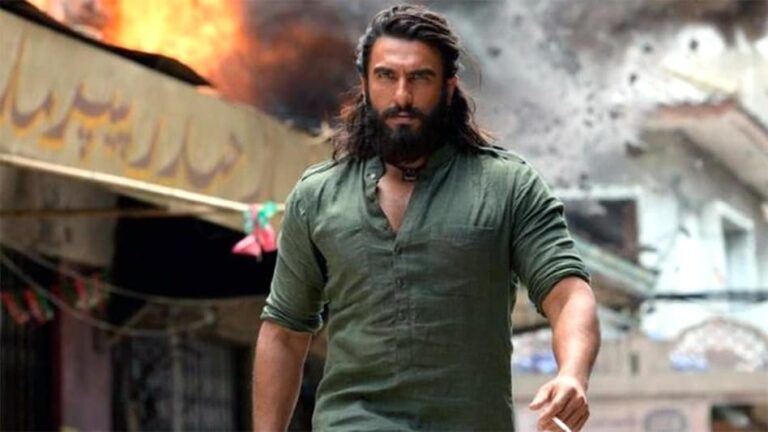
When Dhurandhar hit Netflix in early 2026, a significant number of people who had already watched it in theatres noticed something was wrong within the first hour of streaming. Scenes they remembered Dhurandhar OTT cut, had their dialogue muted, or were simply missing. By the time they’d finished watching, many of them were on social media comparing notes with other viewers and asking the same question: is this actually the same film?
The short answer, according to widespread fan analysis and industry reporting, is no — it isn’t. The Netflix version of Dhurandhar is reportedly around nine minutes shorter than the theatrical cut. Those nine minutes aren’t just runtime. They include specific dialogue exchanges, at least one extended action sequence, and several scenes that contributed to the film’s moral ambiguity and political charge. Their absence changes what the film feels like, and in some cases, what it actually means.
This has turned into one of the more sustained streaming controversies in recent Bollywood history — not because nine minutes is an enormous amount of footage, but because of what those nine minutes contained, who made the decision to remove them, and what that decision says about how OTT platforms handle the films they acquire.
What Dhurandhar Actually Is — And Why the Edits Matter More for This Film Than Most
Directed by Aditya Dhar — who previously made Uri: The Surgical Strike — and starring Ranveer Singh, Dhurandhar was positioned as a dark, politically charged spy thriller that was deliberately uncomfortable. The film didn’t aim to be crowd-pleasing. It aimed to be unsettling, to sit with moral complexity in a way that most mainstream Bollywood productions avoid.
That context matters enormously for understanding why the OTT edits generated the reaction they did.
A film like Dhurandhar relies on specific things to work — the escalation of tension before a violent act, the ambiguity in a character’s political beliefs, the weight of dialogue that doesn’t offer easy exits. These aren’t decorative elements. They’re load-bearing walls. Remove them and the structure still stands, technically, but something has shifted in ways that are hard to immediately identify and impossible to fully explain to someone who hasn’t seen both versions.
Ranveer Singh’s performance in the theatrical cut was widely praised as one of his most committed and physically intense in years. Several critics specifically called out scenes involving prolonged confrontation and morally grey decision-making as the film’s best moments. Multiple reports suggest those are among the scenes that were altered or cut for the Netflix version.
That’s not a coincidence. Those were precisely the scenes most likely to generate content complaints on a global streaming platform.
What Was Actually Changed — The Specific Complaints
Based on detailed comparisons made by viewers who watched both versions — many of whom documented their findings with timestamps on social media — the Dhurandhar OTT cut appears to differ from the theatrical version in several specific ways:
Certain dialogue exchanges involving political ideology were muted or replaced with softer alternatives in the dubbed or cleaned audio tracks. Fans noticed this particularly in scenes where characters articulate positions that are deliberately extremist or morally indefensible — which, in the theatrical cut, was the entire point. The film was asking you to sit with the discomfort of hearing those positions argued coherently. The Netflix version, according to viewers, softens the edges of those arguments in ways that undercut the dramatic tension.
At least two extended sequences — one involving a confrontation between Ranveer Singh’s character and a government official, and another in the film’s second half that deals with the consequences of a decision made early in the story — appear to have been shortened. Viewers who noticed the cuts described them as abrupt, as though scenes ended before their natural conclusion.
Several scenes described by early theatrical reviewers in their coverage were simply absent from the Netflix version entirely, which is how the nine-minute discrepancy is largely accounted for.
What makes this more charged than a typical streaming edit is the reporting — backed by multiple industry sources — that director Aditya Dhar was not consulted about these changes before they appeared on the platform. If accurate, that’s a significant professional violation. A director’s relationship with their final cut is one of the most important creative and contractual elements of filmmaking, and altering that cut without involvement or consent is not a minor administrative decision.
Aditya Dhar has not made a public statement confirming or denying his involvement in the changes. That silence has been interpreted by most observers as meaningful, given that a director who approved the changes would typically have little reason to stay quiet about it.
Why Netflix Made These Changes — The Honest Explanation
Netflix has not issued a formal statement specifically addressing the Dhurandhar cuts. But the reasons behind this kind of editing are not mysterious — they follow a predictable logic that has driven similar decisions at streaming platforms for years.
Global streaming platforms operate across more than 190 countries. Content that is legally permissible in India — where Dhurandhar received its theatrical certification — may trigger different regulatory requirements or content standards in other markets. Platforms routinely build localised compliance into their content acquisition contracts, which can give them the right to make edits for specific regional versions of a film.
The more common driver, though, is simpler: platforms make risk calculations about content that might generate complaints, lead to removal requests from regulators, or attract the kind of sustained negative media attention that damages the platform’s reputation in key markets. A politically charged Bollywood thriller with morally ambiguous dialogue about extremist ideology is exactly the kind of content that registers high on that risk calculation, particularly in markets outside India where the political and cultural context is less well understood by viewers and regulators alike.
This doesn’t make the decision right. It makes it predictable and commercially motivated — which in some ways is more frustrating, because it means the editing wasn’t a misunderstanding or an error. It was a choice.
Netflix has used its contractual position to make that choice without visible accountability. That’s what has genuinely angered both audiences and industry professionals in this situation — not just that the film was changed, but that it was changed quietly, without announcement, and apparently without the director’s participation.
This Isn’t the First Time — The Broader Pattern
The Dhurandhar controversy didn’t emerge in isolation. It’s the most visible recent example of a pattern that filmmakers and audiences in India have been noticing for several years.
Multiple films that received theatrical releases with strong content — including action sequences, political dialogue, and morally complex characterisation — have appeared in different forms on streaming platforms. The changes are rarely announced. They’re discovered by viewers who watched the theatrical version and noticed discrepancies, or by journalists who requested comment from filmmakers.
The directors who have spoken about this publicly tend to describe the same dynamic: OTT contracts give platforms significant latitude to make content decisions, and most filmmakers sign those contracts because the streaming rights deal is a significant portion of a film’s revenue model. The leverage sits firmly with the platform.
What’s different about the Dhurandhar situation is the scale of the reaction. The film had a large enough theatrical audience that the discrepancy between the two versions was noticed immediately and loudly. The social media conversation was sustained and specific — not just “something feels different” but “here is the exact scene, here is the timestamp, here is what’s missing.” That specificity made the controversy harder to dismiss and harder for Netflix to remain silent about without that silence itself becoming the story.
What Aditya Dhar and Ranveer Singh’s Silence Actually Means
Neither Aditya Dhar nor Ranveer Singh has spoken publicly about the controversy since it broke. In Bollywood, where actors and directors routinely respond to criticism within hours on social media, extended silence on a question directly involving your own work is unusual enough to warrant attention.
There are several possible explanations. The most benign is contractual — both may have been advised by legal counsel not to make public statements while any dispute or negotiation with Netflix is ongoing. That would be standard professional practice if there is an active conversation about the cuts happening behind closed doors.
The less benign explanation is that the silence reflects a power dynamic familiar to anyone who has worked with major streaming platforms: filmmakers who depend on those platforms for distribution deals, development financing, and future projects are in a structurally weak position when it comes to publicly criticising them. Saying “Netflix edited my film without my knowledge” closes doors. Staying silent keeps options open.
Neither explanation reflects well on the situation. One suggests a dispute that the public deserves to know about but is being handled privately. The other suggests a creative professional being unable to defend their own work publicly for fear of commercial consequences. Both are legitimate grievances the industry needs to address structurally rather than on a case-by-case basis.
The Larger Question: What Does OTT Actually Do to Indian Cinema?
The Dhurandhar OTT cut controversy is worth taking seriously beyond the specific film because it surfaces a question that the Indian film industry has been quietly circling for years without directly confronting: when a streaming platform acquires a film, what rights does it actually have over the creative work?
The legal answer is: it depends entirely on the contract. Most OTT acquisition contracts in India include content compliance clauses that give platforms the right to make edits for specific markets or regulatory requirements. Whether those clauses are understood in full by the filmmakers signing them is a different question. Whether those clauses should be standard practice is yet another.
The cultural stakes are real. Indian cinema has a long and complicated relationship with censorship — the Censor Board, regional certification bodies, political pressure on distributors. OTT platforms were initially welcomed partly because they seemed to offer an escape from that framework. Content that couldn’t get a theatrical certificate could find an audience on streaming. Stories that were too difficult for mainstream theatrical exhibition had a home online.
If streaming platforms are now applying their own version of the same content pressure — quiet, contractually protected, commercially motivated — then the escape route turns out to lead to the same destination by a different road.
That doesn’t mean streaming is bad for Indian cinema. The evidence overwhelmingly suggests the opposite — OTT has opened enormous opportunities for filmmakers, writers, and actors who would never have found mainstream audiences in the purely theatrical model. But it does mean the industry needs clearer, more transparent standards about what platforms can and cannot change in acquired content, and filmmakers need better contractual protections for their final cuts.
Comparing the Two Versions: What Viewers Are Saying
The most useful documentation of the Dhurandhar cuts has come from viewers themselves rather than from official sources — which is itself a significant detail about how this controversy has been handled.
Several cinema accounts on Instagram and YouTube published detailed comparison videos within days of the Netflix release, with specific timestamps showing scenes that existed in the theatrical version and were absent or altered in the streaming version. These videos circulated widely and were how most people who hadn’t personally noticed the discrepancy found out about it.
The reaction in the comments of those videos was consistent: anger from people who had seen the theatrical cut and felt the OTT version was a lesser film, and genuine surprise from people who had only seen the Netflix version and hadn’t realised they were watching something different from what played in cinemas.
That second group is actually the more troubling audience for this controversy. Most viewers globally who watch Dhurandhar will watch it on Netflix. They will have no reference point for what the theatrical cut contained. They will form their opinions of the film, Ranveer Singh’s performance, and Aditya Dhar’s direction based on a version of the film that neither the director nor — apparently — the key creative stakeholders approved as the definitive version of their work.
That’s a problem worth naming clearly, regardless of how the specific contractual dispute between the filmmakers and Netflix resolves.
What Needs to Change Going Forward
The Dhurandhar situation has generated a lot of anger online but relatively few concrete proposals for what should change. Here are the ones that actually make sense:
Streaming platforms should be required to disclose when a film available on their platform differs from the certified theatrical release, and by how much. This is not an unreasonable transparency standard. Viewers have a right to know whether they are watching the film as the director intended it or a version that has been commercially modified.
Filmmaker contracts should include explicit protections for the theatrical final cut, limiting platform editing rights to specific technical requirements — aspect ratio, subtitles, language tracks — rather than content changes. These protections exist in some international co-production agreements but are not standard in Indian OTT acquisition deals.
Directors should have the right to publicly identify themselves as not having approved an altered version of their work, without that triggering breach of contract clauses. The current situation, where silence is the safest legal response to a dispute about creative integrity, is not one that serves cinema or audiences.
None of these changes will happen quickly. All of them are worth pushing for.
Where Things Stand Now
As of the time of writing, the Netflix version of Dhurandhar remains online as the version available to streaming subscribers. No official statement has been made by Netflix, Aditya Dhar, or Ranveer Singh’s teams about the specific changes or the process by which they were made.
The theatrical cut is no longer in wide release. For most audiences globally, the Netflix version is the only version they will ever see.
The controversy has not forced any immediate changes to how Netflix handles Indian content acquisitions. Whether it contributes to longer-term industry discussion about filmmaker protections in OTT contracts is a question that will be answered over the next year or two as other films inevitably surface similar issues.
What the Dhurandhar OTT cut controversy has done — usefully, despite the frustration surrounding it — is make visible a dynamic that was previously mostly invisible. Films were being changed for streaming without public knowledge. Now audiences know to look for it. Filmmakers know that if their work is altered, people will notice and people will talk. Platforms know that quiet edits are no longer as quiet as they used to be.
That shift in awareness, even if it doesn’t immediately change the contracts, matters.
Related Articles
- Pan-India Films 2026: The Movies That Could Dominate the Box Office
- February 2026 Streaming Releases: Who Won, Who Disappointed
- Bollywood Actors in South Indian Films: The Surprising Reason Hindi Stars Are Going South in 2026
- 2026 Grammys Controversy: Every Debate, Snub, and Political Firestorm Explained
The Dhurandhar OTT cut controversy is uncomfortable because it doesn’t have a clean resolution. The film was changed. The people who made it are not talking about it publicly. The platform that changed it hasn’t explained why. And most of the people who will ever watch Dhurandhar will watch the altered version without knowing there’s another one.
That’s not a satisfying ending. But it’s an honest one, and it’s probably more useful than pretending this is a story that wraps up neatly.
Follow our OTT and Bollywood coverage on Instagram and Pinterest for ongoing updates on this and every other streaming controversy worth paying attention to.

Popcorn in hand and a opinion ready — Emily covers movie reviews, box office buzz, and all things cinema at Popcorn Review.

