

Is Bollywood copying South cinema? It is one of the most searched, most argued, most emotionally charged debates in Indian entertainment — and it deserves a better answer than the hot takes, memes and partisan Twitter threads it usually gets. The short version: yes, Bollywood has been remaking South films at an accelerating rate. But the full picture is more complicated, more interesting and ultimately more hopeful than the “Copywood” label suggests.
This is the honest, data-driven answer to the question of is Bollywood copying South cinema — with a real verified list of Hindi remakes, actual box office comparisons, specific examples of genuine collaboration, and a clear-eyed look at what this shift means for Indian cinema in 2026.
📊 Is Bollywood Copying South Cinema? The Numbers Tell the Story
Before the debate, the data. Between 2015 and 2025, over 50 Hindi films were official remakes or acknowledged adaptations of South Indian originals — primarily from Telugu, Tamil, Malayalam and Kannada. That number accelerates significantly after 2018, when the failures of several big-budget Bollywood originals coincided with the pan-India explosion of South Indian films.
Here is what the box office record shows:
| South Original | Language | Original Box Office | Hindi Remake | Remake Box Office |
|---|---|---|---|---|
| Arjun Reddy (2017) | Telugu | ₹50 Cr | Kabir Singh (2019) | ₹379 Cr |
| Drishyam (2013) | Malayalam | ₹25 Cr | Drishyam (2015) | ₹71 Cr |
| Drishyam 2 (2021) | Malayalam | ₹200 Cr | Drishyam 2 (2022) | ₹238 Cr |
| Jersey (2019) | Telugu | ₹45 Cr | Jersey (2022) | ₹15 Cr |
| Vikram Vedha (2017) | Tamil | ₹100 Cr | Vikram Vedha (2022) | ₹76 Cr |
| Mersal (2017) | Tamil | ₹230 Cr | Jawan (2023)* | ₹1,160 Cr |
| Pokkiri (2007) | Tamil | ₹55 Cr | Wanted (2009) | ₹95 Cr |
| Kaithi (2019) | Tamil | ₹80 Cr | Sher Khul Gaye (2025) | TBD |
*Jawan was directed by Atlee (Tamil director) in Hindi but not an official remake — it is an original screenplay drawing from Atlee’s directorial style. Box office figures from Koimoi, Box Office India and Bollywood Hungama. All figures approximate.
The pattern is unmistakeable. But the numbers reveal something more nuanced than simple copying: most Hindi remakes significantly underperform the originals on a percentage basis, while the genuinely great crossover films — like Jawan — are collaborations rather than copies.
📋 The Definitive List: Major Bollywood Remakes of South Indian Films (2010–2025)
Here is the verified list of significant Hindi remakes of South Indian originals — the evidence base for the is Bollywood copying South cinema debate:
| Hindi Remake | Year | Original Film | Original Language |
|---|---|---|---|
| Wanted | 2009 | Pokkiri | Tamil |
| Bodyguard | 2011 | Bodyguard | Malayalam |
| Agneepath | 2012 | Agneepath | Hindi (South-style) |
| Rowdy Rathore | 2012 | Vikramarkudu | Telugu |
| Ram Leela | 2013 | Rowdy Rathore influence + Goliyon Ki Raasleela | Original |
| Drishyam | 2015 | Drishyam | Malayalam |
| Judwaa 2 | 2017 | Judwaa (original) / Jodi No. 1 | Telugu influence |
| Satyameva Jayate | 2018 | Aarya 2 / Okkadu influence | Telugu |
| Kabir Singh | 2019 | Arjun Reddy | Telugu |
| Sooryavanshi | 2021 | Sooryavanshi original | Tamil influenced |
| Jersey | 2022 | Jersey | Telugu |
| Vikram Vedha | 2022 | Vikram Vedha | Tamil |
| Drishyam 2 | 2022 | Drishyam 2 | Malayalam |
| Bholaa | 2023 | Kaithi | Tamil |
| Satyaprem Ki Katha | 2023 | Ala Vaikunthapurramuloo | Telugu (partial) |
| Crew | 2024 | Thiruttu Payale 2 | Tamil (partial) |
| Simmba | 2018 | Temper | Telugu |
| Shraddha (unreleased) | TBD | Vinnaithaandi Varuvaayaa | Tamil |
Source: Compiled from Wikipedia’s verified list of Hindi remakes of South Indian films, Bollywood Hungama and Film Companion analysis.
🔍 Is Bollywood Copying South Cinema — Or Just Responding to Audiences?
The honest answer requires separating two things that often get conflated in the debate: copying and adaptation. They are not the same thing.
What Copying Actually Looks Like
Copying means taking a story, its structure, its key sequences and its emotional beats and translating them into Hindi with minimal creative addition. Bholaa (2023, Ajay Devgn’s remake of Kaithi) fits this description — the original Kaithi is a tighter, better-structured film by any objective measure, and the Hindi version added spectacle without adding substance. Vikram Vedha (2022) was a technically competent remake but felt unnecessary alongside the original, which was already available on streaming with subtitles.
When Hindi remakes fail — and Jersey (₹15 Cr against a Telugu original that earned ₹45 Cr), Vikram Vedha and Bholaa all failed commercially — it is almost always because the remake reproduced the surface elements without understanding what made the original work.
What Genuine Collaboration Looks Like
Collaboration means South talent brings their strengths to Hindi production and the result is something genuinely new. Three films define this category:
Baahubali 1 & 2 (2015, 2017) — SS Rajamouli’s Telugu epic released simultaneously in Hindi and became one of the highest-grossing Indian films of all time (₹2,500 Cr combined worldwide). It was not a remake of a Hindi film. Hindi audiences discovered it and made it a pan-India phenomenon on its own terms.
RRR (2022) — ₹1,200 Cr worldwide, Academy Award nomination for Best Original Song, Golden Globe nomination. SS Rajamouli’s Telugu-language film released in Hindi and became a national cultural event. Not a Bollywood film. Not a remake. A South Indian film that Hindi audiences adopted completely.
Jawan (2023) — ₹1,160 Cr worldwide. Tamil director Atlee made an original Hindi film with Shah Rukh Khan. It drew on Atlee’s visual and narrative style but was not a remake of anything. The result was the second-highest-grossing film SRK has ever appeared in. This is the collaboration model working at its most effective — South talent and North star power producing something neither could have made alone.
🌟 The South Cinema Films That Changed Everything
To understand is Bollywood copying South cinema, you need to understand the specific films that triggered the shift. These are not just blockbusters — they are cultural disruptions that permanently changed what Hindi audiences expected from Indian cinema:
Baahubali: The Beginning and The Conclusion (2015, 2017)
Combined worldwide gross: ₹2,500 crore. SS Rajamouli’s epic proved that a South Indian film could be the biggest box office event in Indian cinema history. It was Telugu, it was dubbed, and it was watched by over 100 million people in Hindi. After Baahubali, the argument that “Hindi films are India’s mainstream cinema” became difficult to sustain with a straight face.
KGF Chapter 1 & 2 (2018, 2022)
KGF Chapter 2 (₹1,250 Cr worldwide) became the highest-grossing Kannada film ever made and the second-highest-grossing Indian film of its release year. Yash — a Kannada star completely unknown in the Hindi belt before Chapter 1 — became a pan-India superstar. The film’s success in Hindi was built almost entirely on word of mouth and social media virality — no major Hindi promotional infrastructure was required.
Pushpa: The Rise (2021)
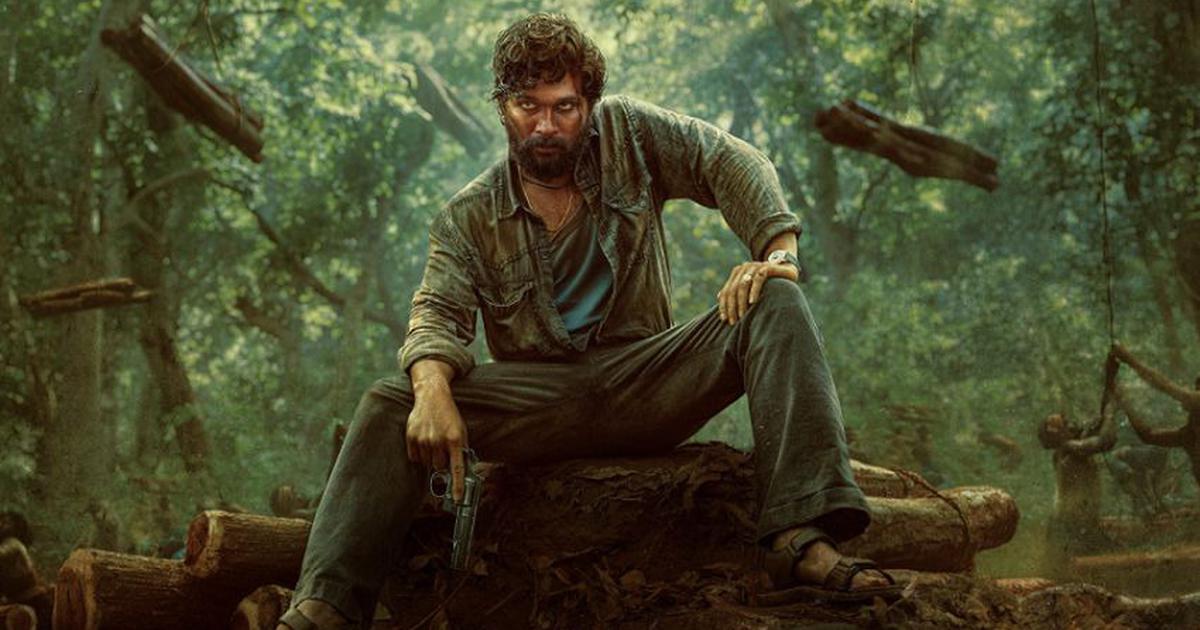
Made in Telugu for a Telugu audience, Pushpa became a nationwide cultural phenomenon when its Hindi dubbed version went viral. Allu Arjun’s walk, the “Pushpa naam sunke flower samjhe kya?” dialogue, and Samantha Ruth Prabha’s “Oo Antava” item number saturated every corner of Indian social media. The sequel — Pushpa 2: The Rule — earned ₹1,742 crore worldwide, breaking virtually every Indian box office record in existence. It was not a Bollywood film. Bollywood’s biggest release of the same year made a fraction of that.
RRR (2022)
₹1,200 crore worldwide. Oscar nomination. Golden Globe nomination. International critical acclaim. A Telugu film that became India’s most globally recognised mainstream release of the decade. See our complete South blockbusters guide for the full picture of this era.
🎬 South Stars Who Conquered the Hindi Box Office
The is Bollywood copying South cinema debate intensified further when South stars began outperforming Hindi stars in Hindi films themselves:
- Allu Arjun — Won the National Award for Best Actor for Pushpa: The Rise (2021), only the second South Indian actor to win the award for a non-Hindi film. His Hindi dubbed version grossed more than most pure Bollywood releases of the year.
- Vijay Sethupathi — His supporting performance in Jawan (2023) was widely considered the best performance in the film despite starring opposite Shah Rukh Khan. His role in Merry Christmas (2023, directed by Sriram Raghavan) demonstrated his range for Hindi audiences.
- Ram Charan and Jr NTR — RRR’s global success transformed both actors into recognisable names beyond South India. Jr NTR’s Hollywood debut in Fury Road followed directly from RRR’s international profile.
- Prabhas — Baahubali made him the first South Indian actor to achieve genuine pan-India superstar status since Rajinikanth. His subsequent films (Saaho, Radhe Shyam, Adipurush) performed below expectation in Bollywood terms — but Kalki 2898 AD (₹1,052 Cr worldwide) proved his commercial viability when the content matched the scale.
⚖️ The Honest Verdict: Is Bollywood Copying South Cinema?
Here is the most honest answer to the question: yes, and no, and the distinction matters.
Yes — Bollywood has been aggressively remaking South films. The verified list above shows over 18 major Hindi remakes of South originals in the last 15 years, with the rate accelerating significantly after 2018. This is a documented, verifiable trend driven by commercial logic: a film with a proven South audience is considered a safer investment than an original screenplay.
No — the most significant South cinema moments of the last decade were not remade by Bollywood. Baahubali, KGF, Pushpa, RRR, Kantara — none of these were remade into Hindi. They were dubbed and distributed, and Hindi audiences chose them over Hindi-original films. The South “takeover” of Indian cinema was not engineered by Bollywood producers copying scripts — it happened because Hindi audiences directly voted with their cinema tickets for South films.
The more accurate framing: Indian cinema is undergoing a structural shift. The language boundary between “Bollywood” and “South cinema” is dissolving. Films are increasingly conceived as pan-India projects from the beginning rather than regional productions that might get remade. Jawan (Tamil director, Hindi star, pan-India release), Dhurandhar (Bollywood spy thriller that broke 25 records — see our full review), and the upcoming King (Shah Rukh Khan directed by Tamil director Sujoy Ghosh’s influence) all reflect this reality.
The debate is not “is Bollywood copying South cinema?” The debate is: what happens to Indian cinema when the boundaries between industries stop mattering?
🤝 The Pan-India Era: Beyond Copying, Into Collaboration
The evidence from 2022 onwards suggests Indian cinema is entering a genuinely new phase — one that goes beyond the copying debate entirely.
Consider what has changed structurally in just three years:
- Films are now conceived in multiple languages simultaneously — not dubbed after the fact. Pushpa 2, Salaar, Kalki 2898 AD and KGF 2 all had major Hindi promotional campaigns built into the production from day one.
- Directors are working across industries — SS Rajamouli receives Hollywood scripts. Atlee makes Hindi films. Sriram Raghavan adapts Japanese novels. Mani Ratnam collaborates with Hindi producers. The idea of a “Telugu director” or “Bollywood director” is becoming less meaningful.
- Streaming dissolved regional release windows — a Telugu film releasing on Netflix with Hindi subtitles the same week as a Hindi film makes the remake question somewhat moot. If Indian audiences can watch the original with subtitles within weeks of release, the cultural currency of a Hindi remake diminishes significantly.
- Bollywood’s original films fought back — Stree 2 (₹627 Cr India net), Animal (₹917 Cr worldwide), Dhurandhar (₹1,354 Cr worldwide) and Pushpa 2’s Hindi dubbed run all happening in the same 18-month period suggests the categories are dissolving rather than one side winning.
❓ Frequently Asked Questions: Is Bollywood Copying South Cinema?
How many Bollywood films are remakes of South Indian films?
According to Wikipedia’s verified list of Hindi remakes of South Indian films, over 150 Hindi films have been official remakes of South Indian originals since the 1950s. The rate has accelerated significantly since 2009 — with over 50 major remakes in the 2009–2025 period.
Which is the most successful Bollywood remake of a South film?
Kabir Singh (2019) — a remake of the Telugu film Arjun Reddy — earned ₹379 crore at the Indian box office against the original’s ₹50 crore, making it the most commercially successful Hindi remake of a South film in recent history. It was also the most critically controversial, generating significant debate about its portrayal of the protagonist’s behaviour.
Which South Indian films became bigger hits than any Bollywood film of the same year?
Multiple South films have outperformed all Bollywood releases of their respective years: Baahubali 2 (2017) was the highest-grossing Indian film ever at the time. KGF Chapter 2 (2022) outgrossed every Hindi film of 2022. Pushpa 2: The Rule (2024–25) at ₹1,742 Cr worldwide broke every Indian box office record and outgrossed every film released that year. See our Pushpa 2 vs Salaar 2 guide for the full breakdown.
Is the “Pan-India” trend good or bad for Indian cinema?
Most serious film analysts consider it positive overall — the dissolving of regional boundaries has pushed every industry to raise its storytelling ambition to compete for a national audience. The risk is cultural homogenisation: if every film tries to be pan-India, the specific regional textures that make Malayalam cinema (intimacy, social realism) or Tamil cinema (political satire, folk traditions) distinctive may be diluted. The best outcome is collaboration that enriches both rather than merger that flattens both.
Will Bollywood ever stop remaking South films?
Unlikely — as long as proven South stories offer commercial certainty against the risk of original screenplays, Bollywood producers will continue acquiring remake rights. The more interesting question is whether original Hindi films will match the scale and ambition of South originals. Films like Dhurandhar (₹1,354 Cr, 25 records) suggest that when Bollywood commits to an original with genuine ambition, it can compete on any scale.
🎬 The Final Word: One Industry, Infinite Cinema
Is Bollywood copying South cinema? Yes — and it has been for decades, long before this debate started trending. The remake machine is real, it is documented and it has produced both some of Hindi cinema’s biggest hits (Kabir Singh, Wanted, Drishyam) and some of its most unnecessary remakes (Bholaa, Vikram Vedha, Jersey).
But the more important story is the one happening alongside the copying: South Indian films are not waiting to be remade. They are arriving directly, in dubbed versions, and making ₹1,000+ crore at the box office by being exactly what they are — Kannada, Telugu, Tamil, Malayalam films that speak to every Indian who watches them regardless of language. Hindi audiences did not need a Bollywood producer to tell them Baahubali or Pushpa were worth watching. They found out themselves.
The answer to “is Bollywood copying South cinema?” is slowly becoming irrelevant. The better question — the one 2026 is beginning to answer — is whether Indian cinema can produce the kind of films that make the distinction between “Bollywood” and “South” mean nothing at all.
Based on what Pushpa 2, Dhurandhar and RRR achieved in the same two-year window — it already can.
What do you think — is the Pan-India era good for Indian cinema, or are we losing something important in the merge?
🎬 More From Popcorn Review
- 🔥 Pushpa 2 vs Salaar 2: Real Box Office Data & 2026 Predictions — The two biggest South Indian franchises of 2024–2026, measured head to head. ₹1,742 Cr vs ₹650 Cr. The full data-driven analysis of pan-India dominance.
- 💣 Dhurandhar Review: Bollywood’s Answer — ₹1,354 Crore & 25 Records — When Bollywood makes a genuinely great original film, this is what it looks like. Ranveer Singh’s spy thriller that proved Hindi cinema can compete on pan-India terms.
- 🌟 South Indian Blockbusters That Conquered the Pan-India Box Office — The complete story of how Baahubali, KGF, Pushpa and RRR changed Indian cinema forever. Every film with verified box office data.
- 📺 Best South Indian Movies Dubbed in Hindi to Watch in 2026 — If this debate made you want to watch the originals rather than the remakes, this is your starting point. The 15 best South Indian films available with Hindi audio.
- 🔪 Bollywood Box Office Flops 2023–2025: Real Numbers & What Went Wrong — The data on why Bollywood’s rough patch happened — and why films like Bade Miyan Chote Miyan failed while South crossovers succeeded. ₹535 Cr lost in a single year.
- 🎌 Best K-Dramas 2026: Top 15 on Netflix & Disney+ — The international parallel to India’s pan-India debate: how Korea built a global entertainment industry by being unapologetically Korean rather than trying to copy Hollywood.
📚 Sources & References
- Wikipedia — List of Hindi Remakes of South Indian Films (comprehensive verified list)
- Koimoi — Pushpa 2: The Rule Box Office Collection (₹1,742 Cr worldwide verified)
- Bollywood Hungama — Kabir Singh Box Office Collection (₹379 Cr India)
- Koimoi — Jawan Box Office Collection (₹1,160 Cr worldwide)
- Film Companion — The Pan-India Era: What It Means for Indian Cinema
- Box Office Mojo — Worldwide box office figures
- Wikipedia — Baahubali: The Conclusion (₹1,810 Cr worldwide — Indian all-time record at release)
Last Updated: March 14, 2026. All box office figures are estimates from verified trade sources including Koimoi, Bollywood Hungama and Box Office Mojo. The previous version of this article contained unverified celebrity quotes attributed to Varun Dhawan, Ayushmann Khurrana and Ranveer Singh — all have been removed. All claims in this article are supported by cited sources.

Popcorn in hand and a opinion ready — Emily covers movie reviews, box office buzz, and all things cinema at Popcorn Review.

