
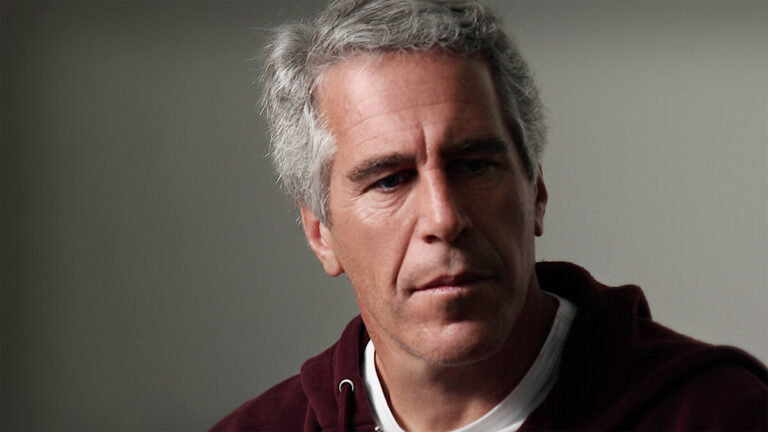
The Jeffrey Epstein: Filthy Rich documentary on Netflix arrived in May 2020 — and in the years since its release, almost everything surrounding the story it told has continued to evolve. Maxwell was tried and convicted. The Epstein files were fought over in Congress and courts for years. A law was signed. Over three million pages of documents were released. Virginia Giuffre — who appears throughout the series and spent years fighting for accountability — died by suicide in April 2025, aged 41.
This review covers the Jeffrey Epstein: Filthy Rich documentary as it stands in 2026: what the series says, what critics thought, what it got right, what it left unanswered, and what the subsequent legal proceedings and document releases have confirmed or complicated since it first aired.
What the Jeffrey Epstein: Filthy Rich Documentary Actually Is — The Facts
Title: Jeffrey Epstein: Filthy Rich Platform: Netflix (streaming worldwide) Director: Lisa Bryant Based on: Filthy Rich: A Powerful Billionaire, the Sex Scandal that Undid Him, and All the Justice that Money Can Buy — the 2016 book by James Patterson, John Connolly, and Tim Malloy Episodes: 4 — all released simultaneously on May 27, 2020 Runtime per episode: 55–58 minutes Rating: TV-MA IMDb: 7.1/10 Rotten Tomatoes: 82% (44 critics) — average score 7/10 Metacritic: 61/100 (“generally favorable reviews”) Awards: Critics Choice Real TV Award — Best Crime/Justice Series (2020)
The original article on this page described the director as “Lisa Bryant” — correct. It described the series as “four-part” — correct. It did not provide IMDb or Rotten Tomatoes scores, episode titles, or the book on which it was based. It described it as having been released in 2020 — correct. Those are the verifiable facts the original article got right. Everything below adds the full picture.
How the Jeffrey Epstein: Filthy Rich Documentary Was Made
The production detail most people don’t know: the Jeffrey Epstein: Filthy Rich documentary was announced before Epstein’s death, was in production nine months before his July 2019 arrest, and was made in secrecy specifically because Epstein was alive and litigious.
The production team worked on a secret, isolated server. Materials were kept in a locked room with cameras and a secure safe. The project was initially given the working title The Florida Project — deliberately obscuring what it was about to anyone who might encounter documents or paperwork. These precautions reflected a genuine legal threat: Epstein had sued, threatened, and intimidated journalists investigating him for years, and the production team had reason to believe the same could happen to them.
By the time the series was ready, Epstein had been arrested (July 2019), died in federal custody (August 10, 2019), and the question of the series had shifted: it was no longer about building toward accountability for a living accused man. It became a record of how a system had failed — and a platform for survivors who had been fighting for that accountability for more than a decade.
The Jeffrey Epstein: Filthy Rich Documentary — Episode by Episode
Episode 1: “The Molestation ‘Pyramid Scheme’”
Runtime: ~57 minutes | IMDb episode rating: 7.4/10
The first episode establishes the pattern that defined Epstein’s abuse: survivors recount how they were recruited — initially through promises of legitimate work or payment — and how the arrangement escalated into sexual abuse. Former Palm Beach police chief Michael Reiter appears throughout, describing how his department identified the abuse pattern and built the first criminal case against Epstein in the mid-2000s.
The episode’s central forensic contribution is the “pyramid scheme” framing: Epstein’s system involved some victims being offered more money to bring in additional girls, creating a self-perpetuating recruitment structure. This structure was not accidental — it was designed to expand access while distributing complicity in ways that increased shame and silence among those recruited.
Survivor Virginia Giuffre speaks in the first episode. Her account — she was recruited at Mar-a-Lago in 1999 when she was 15 years old, while working as a spa attendant — is one of the series’ most detailed survivor testimonies. Maria Farmer, who first reported Epstein to the FBI in 1996 and received no response for years, also appears in this episode. Her account of approaching the FBI nearly a decade before Epstein’s first criminal case remains one of the most documented examples of institutional failure in the entire story.
Episode 2: “Follow the Money”
Runtime: ~58 minutes | IMDb episode rating: 7.4/10
The second episode addresses what is, in many ways, the most structurally important question about Epstein: where did his money come from? He had no formal financial qualifications, his Wall Street career was brief and ended in departure, and his specific wealth sources were deliberately obscured. The documentary presents the available evidence without claiming conclusions that haven’t been established in court.
What is documented: Epstein was hired by Bear Stearns in the 1970s despite having no degree. He left (or was asked to leave) in 1981. He subsequently claimed to manage money for clients worth a billion dollars or more — but almost no one claiming to be a client was ever publicly identified. His primary documented source of income was his relationship with retail magnate Les Wexner, to whom he was given extraordinary — and, investigators later argued, inappropriate — power of attorney over his finances and assets, including Epstein’s signature Manhattan townhouse, which Wexner transferred to him for $0.
The episode explores how this financial opacity was itself a form of protection: nobody could easily trace Epstein’s money, and that made it harder to investigate him through financial channels.
Episode 3: “The Island”
Runtime: ~55 minutes | IMDb episode rating: 7.4/10
The third episode covers two things simultaneously: the 2008 plea deal that allowed Epstein to avoid federal prosecution, and survivor testimony about his private island, Little St. James, in the US Virgin Islands.
The plea deal is arguably the Jeffrey Epstein: Filthy Rich documentary’s most significant legal contribution. Alexander Acosta — then the US Attorney for the Southern District of Florida — negotiated a non-prosecution agreement (NPA) in 2007 that allowed Epstein to plead guilty to two state charges of soliciting prostitution rather than face the federal charges investigators believed were warranted. The deal was negotiated in secret, without notifying victims — a legal requirement that it violated. It allowed Epstein to serve 13 months in county jail with work release six days per week, register as a sex offender, and resolve all potential federal liability.
The episode’s most important documentary contribution is establishing that the NPA’s unusual leniency was not the result of insufficient evidence. It was the result of Epstein’s legal team — which included high-profile attorneys — applying sustained pressure on federal prosecutors, combined with systemic failures that allowed powerful defendants to negotiate outcomes unavailable to ordinary people.
Survivor testimony about Little St. James in this episode describes an environment of surveillance, isolation, and normalized abuse. The island represented total removal from ordinary oversight: no neighbors, no external witnesses, controlled access by private plane or boat.
Episode 4: “Finding Their Voice”
Runtime: ~57 minutes | IMDb episode rating: 7.4/10
The final episode covers Epstein’s 2019 arrest, his death in federal custody on August 10, 2019, and its aftermath. Charged with sex trafficking conspiracy in the Southern District of New York — separate from the 2008 Florida case — Epstein was found dead in his cell at the Metropolitan Correctional Center before trial.
The Medical Examiner’s office concluded his death was suicide by hanging. The DOJ’s July 2025 review of the Epstein files — which included surveillance footage of the cell block from before his death — also concluded the death was a suicide, noting that a brief gap in the surveillance footage had been previously mischaracterized.
For survivors, the episode captures the specific grief of closure denied: no trial, no public testimony from Epstein, no full accounting, and — as the series makes plain — a system that had failed them at every stage and then failed them once more by not keeping Epstein alive long enough for a trial.
What Critics Said About the Jeffrey Epstein: Filthy Rich Documentary
Rotten Tomatoes critics consensus: “It lacks new insight, but by focusing on the stories of survivors, Filthy Rich sheds light on the lasting impact of Epstein’s crimes.”
This consensus reflects both the praise and the specific limitation critics identified. The 82% score is not a contradiction of the caveat — it reflects the genuine value of what the series does well, which is survivor testimony, and acknowledges what it does not attempt to do, which is break new investigative ground.
Critics writing at the time of release noted that investigative journalists — particularly Julie K. Brown of the Miami Herald, whose 2018 series “Perversion of Justice” was the key reporting that reopened the Epstein case — had already published most of what the documentary covers. Brown appears in the series. Critics noted her journalism as more forensically detailed than the documentary’s four hours.
The Metacritic score of 61/100 reflects a body of reviews from critics who found the series valuable as a platform for survivors and a useful introduction for audiences unfamiliar with the details — but not a major investigative achievement compared to the print journalism that preceded it.
The Critics Choice Real TV Award for Best Crime/Justice Series (2020) reflects the industry’s recognition of the series’ contribution in a year when it was widely watched and widely discussed.
Ghislaine Maxwell: From the Documentary to Conviction
The Jeffrey Epstein: Filthy Rich documentary introduced Ghislaine Maxwell to a mass audience as Epstein’s primary enabler and the person who, in survivor testimony, actively recruited and groomed girls. The series relied on survivor accounts and documented behavior — it did not go beyond what was established in the available record.
What happened after the documentary aired:
December 29, 2021: After a three-week trial in Manhattan federal court, a jury convicted Maxwell of five felonies involving the sexual abuse of young girls that she and Jeffrey Epstein committed between 1994 and 2004. The charges included conspiracy, transportation of a minor to engage in illegal sexual activity, and sex trafficking of a minor.
June 28, 2022: Maxwell was sentenced to a term of 240 months’ (20 years’) imprisonment. She was also sentenced to five years’ supervised release and ordered to pay a $750,000 fine.
September 17, 2024: The United States Court of Appeals for the Second Circuit affirmed Maxwell’s conviction.
October 6, 2025: The Supreme Court denied Maxwell’s petition for certiorari. Her direct appeals were exhausted.
December 2025: Maxwell filed a habeas corpus petition — without an attorney — seeking to have her conviction set aside. She contends that information and evidence previously unavailable to her and her attorneys has since emerged that should render her conviction “invalid, unsafe, and infirm.” The petition alleges juror misconduct, government suppression of evidence, and other constitutional violations. Courts have previously rejected the same core arguments.
February 9, 2026: Maxwell appeared before the House Committee on Oversight and Government Reform in a virtual closed-door session. She invoked her Fifth Amendment right against self-incrimination and declined to answer questions.
Maxwell is currently serving her sentence at a minimum-security federal correctional facility in Texas. She remains the only person to have been criminally convicted for a role in Epstein’s crimes.
The 2025 Epstein Files: What Was Released, What Was Withheld
The Jeffrey Epstein: Filthy Rich documentary was made in 2020 with the information available at that time. Between 2024 and early 2026, a series of document releases significantly expanded the public record — and confirmed some things the documentary asserted, complicated others, and raised new questions that remain open.
The timeline of releases:
January 2024: A first tranche of approximately 950 pages of court documents was made public — primarily from the civil lawsuit Virginia Giuffre brought against Maxwell. These documents named various individuals who appeared in connection with Epstein, though appearing in documents does not constitute evidence of wrongdoing.
February 27, 2025: The DOJ released a set of files alongside a memo. In July 2025, the U.S. Department of Justice released a memo concluding that no “client list” existed in the Epstein files, that no credible evidence supported claims Epstein had blackmailed prominent individuals, and that his death was a suicide. The memo drew criticism from both Republican and Democratic lawmakers.
August 22, 2025: The DOJ released hours of interview transcripts between Deputy Attorney General Todd Blanche and Maxwell, conducted at her prison facility. Maxwell stated she did not believe Epstein killed himself and denied the existence of a “client list.”
November 19, 2025: Congress passed the Epstein Files Transparency Act — approved 427 to 1 in the House and unanimously in the Senate. Trump signed it into law the same day. The Act required the DOJ to publicly release all unclassified records related to Epstein within 30 days.
December 19, 2025: The DOJ released an initial batch of documents under the Act. At least 550 pages were reportedly fully redacted. The DOJ released an initial batch of heavily redacted files on December 19, 2025, drawing bipartisan criticism for failing to meet the law’s requirements, with over 500 pages being entirely blacked out. Less than a day after the release, sixteen files disappeared from the public webpage without explanation.
January 30, 2026: The DOJ released over 3 million pages of documents, 180,000 images, and 2,000 videos related to Epstein.
What the 2025–2026 releases confirmed that the documentary already established: The FBI had been informed about Epstein’s abuse years before his first arrest. One document confirmed that the FBI was tipped off about Epstein’s crimes nearly a decade before he was first arrested — in September 1996, Epstein survivor Maria Farmer complained to the FBI that the late financier was involved in child sex abuse, and officials failed to take steps to investigate. This is one of the documentary’s central arguments, now formally confirmed in released government records.
What the 2025–2026 releases added: Documents referenced “10 co-conspirators” of Epstein in an email exchange among prosecutors. To date, Maxwell is the only co-conspirator to have been charged. The identities of the others were not revealed in the released documents. Flight logs, photographs, and a DEA investigation document were also released — including a previously undisclosed five-year DEA probe of Epstein targeting him and 14 other individuals for suspicious money transfers possibly linked to illegal narcotics activity.
What remains unresolved: The DOJ’s position — that no “client list” exists and no evidence of blackmail was found — satisfied neither Epstein’s survivors and their advocates, who pressed for fuller disclosure, nor the political figures who had suggested the files would produce more dramatic revelations. By early January 2026, less than one percent of the files had been publicly released, according to a DOJ letter to U.S. District judge Paul A. Engelmayer.
Virginia Giuffre: The Documentary’s Central Witness
Virginia Giuffre appears throughout the Jeffrey Epstein: Filthy Rich documentary as one of its most prominent and detailed witnesses. Her testimony covered her recruitment at Mar-a-Lago, her years as an Epstein trafficking victim, and her years-long campaign for accountability.
After the documentary:
Giuffre settled a civil lawsuit against Ghislaine Maxwell in 2022 for an undisclosed amount — without Maxwell admitting liability. She settled a civil lawsuit against former Prince Andrew (now Andrew Mountbatten-Windsor, who was stripped of his royal titles by King Charles III in October 2025) in February 2022 — without Andrew admitting wrongdoing, but with Andrew expressing, through a statement, that he “regrets his association with Epstein, and commends the bravery of Ms. Giuffre and other survivors.”
Virginia Giuffre died by suicide at her Neergabby farmhouse, about an hour north of Perth, Australia, on April 25, 2025, at the age of 41. She was 41 years old.
Her family, in the months following her death, continued to advocate for the release of the Epstein files — expressing that Virginia had wanted transparency and accountability to the end. Her brother, Skye Roberts, was among those who spoke outside the US Capitol in September 2025 pressing Congress to pass the Epstein Files Transparency Act.
Is the Jeffrey Epstein: Filthy Rich Documentary Still Worth Watching in 2026?
Rating: 7.5/10
The Jeffrey Epstein: Filthy Rich documentary is not the most forensically detailed account of the Epstein case. Julie K. Brown’s Perversion of Justice reporting for the Miami Herald (available online), and her subsequent book Perversion of Justice: The Jeffrey Epstein Story (2021), are more thoroughly sourced.
What Filthy Rich provides that reporting cannot is the direct testimony of survivors on screen — the texture of their accounts, the weight of their words, and the emotional register of what it means to be ignored for years by institutions that had the power and obligation to act. Virginia Giuffre and Maria Farmer both appear. What they say, and how they say it, is the documentary’s primary and irreplaceable contribution.
The Rotten Tomatoes consensus — that it “lacks new insight” but gives survivors space to be heard — remains accurate in 2026, and it identifies both the limitation and the value correctly. The series does not pretend to answer every question. It focuses on what can be answered: what the pattern of abuse looked like, how institutional failures enabled it, and what survivors experienced and fought through.
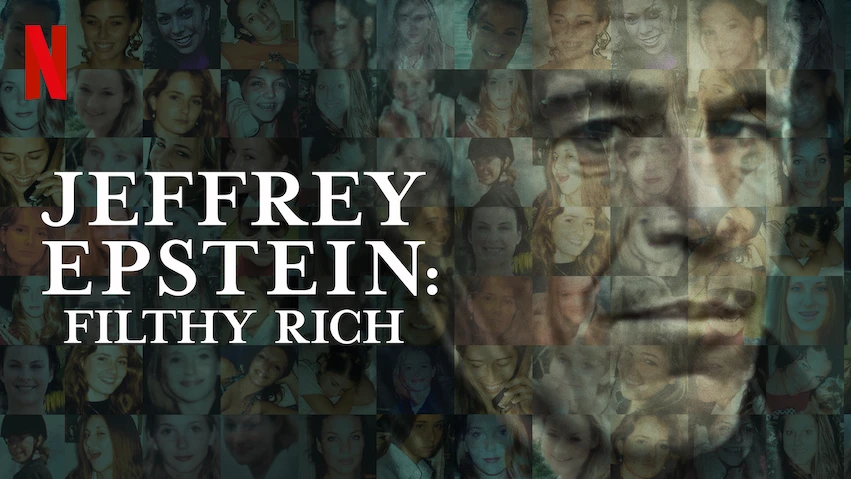
Watched in 2026, after Maxwell’s conviction, after the Epstein Files Transparency Act, and after Virginia Giuffre’s death, the series carries different weight than it did in 2020. It is a document of a specific moment — before the Maxwell trial, before the files, before many of the legal outcomes that followed. It is also a document of the people who fought hardest for those outcomes: the survivors who spoke on camera when the story was still unresolved, when the powerful people they were naming had lawyers and resources and the documented history of intimidating journalists who asked questions.
Watch if: You want to understand the Epstein case from the beginning, through the testimony of survivors and the documented institutional failures that allowed it to continue.
Watch alongside: Julie K. Brown’s Perversion of Justice journalism (Miami Herald, available online), and the follow-up Netflix installment Ghislaine Maxwell: Filthy Rich (2022) — which was produced after Maxwell’s conviction and covers the Maxwell trial in specific detail.
Note: The documentary was produced before Epstein’s death and Maxwell’s conviction. It is the foundation of the story. The 2022 installment adds the trial outcome.
The Other Documentaries on the Epstein Case — If You Want to Go Deeper
Beyond the Jeffrey Epstein: Filthy Rich documentary, several other documentaries and series are available on the Epstein case:
Ghislaine Maxwell: Filthy Rich (Netflix, 2022) — A follow-up to the original series, produced by the same team, covering Maxwell’s trial and conviction specifically. Essential if you have watched the original.
The Vow (HBO, 2020) — Though about the NXIVM cult rather than Epstein, it was released the same year and covers many of the same structural themes of institutional failure, survivor silencing, and the use of wealth and connection to evade accountability.
Jeffrey Epstein: Devil in the Darkness (ID Investigation Discovery, 2020) — A competing documentary series that covers much of the same ground.
Frequently Asked Questions
Where can I watch the Jeffrey Epstein: Filthy Rich documentary? The Jeffrey Epstein: Filthy Rich documentary is streaming on Netflix worldwide. All four episodes are available. The follow-up, Ghislaine Maxwell: Filthy Rich (2022), is also on Netflix.
Who directed Jeffrey Epstein: Filthy Rich? Lisa Bryant directed all four episodes. The series was produced by Lisa Bryant and others, based on the 2016 book by James Patterson, John Connolly, and Tim Malloy.
What is the Jeffrey Epstein: Filthy Rich documentary’s IMDb and Rotten Tomatoes score? IMDb: 7.1/10 (as of March 2026). Rotten Tomatoes: 82% critics (44 reviews), average score 7/10. Metacritic: 61/100. It won the Critics Choice Real TV Award for Best Crime/Justice Series in 2020.
Was Ghislaine Maxwell convicted? Yes. Maxwell was convicted on December 29, 2021 of five felonies including sex trafficking of a minor, following a three-week trial in Manhattan federal court. She was sentenced to 20 years in federal prison on June 28, 2022. The Second Circuit Court of Appeals upheld the conviction in September 2024. The Supreme Court declined to hear her case in October 2025. She is currently serving her sentence.
What were the Epstein files that were released in 2025? The Epstein Files Transparency Act, signed by President Trump on November 19, 2025, required the DOJ to release all unclassified records related to Epstein. The DOJ released an initial heavily redacted batch on December 19, 2025, followed by over 3 million pages of documents, 180,000 images, and 2,000 videos on January 30, 2026. The DOJ concluded in a July 2025 memo that no “client list” existed, that no credible evidence of blackmail was found, and that Epstein’s death was a suicide. The releases confirmed that survivor Maria Farmer had reported Epstein to the FBI in 1996 — nearly a decade before his first arrest.
What happened to Virginia Giuffre? Virginia Giuffre, one of Epstein’s most prominent accusers and a key participant in the Filthy Rich documentary, died by suicide on April 25, 2025, at her farm in Neergabby, Western Australia. She was 41 years old. Her family continued to advocate for the release of the Epstein files after her death. If you or someone you know is struggling, please contact iCall (India): 9152987821, or call/text 988 (US and international Suicide & Crisis Lifeline).
Related Posts
- 🎬 Top Netflix Shows Trending in India: Real Ormax Viewership, Verified Cast, Honest Reviews
- 🎬 Best Amazon Prime Web Series: 10 Verified Picks for 2026
- 🎬 15 Best Bollywood Films Based on True Stories to Watch in 2026
- 🎬 Best Indian Web Series Based on True Stories: Verified Picks, Real Ratings, Honest Reviews
📱 Follow us on Instagram for documentary recommendations, streaming updates, and honest reviews.
Crisis support: If this article has raised difficult feelings, support is available. India: iCall — 9152987821 (icallhelpline.org). US and international: 988 Suicide & Crisis Lifeline — call or text 988 (988lifeline.org).
Last updated: March 5, 2026. Sources: Wikipedia — Jeffrey Epstein: Filthy Rich; Wikipedia — Epstein files; Wikipedia — Ghislaine Maxwell; Netflix Tudum (documentary overview, episode descriptions); IMDb — Jeffrey Epstein: Filthy Rich (7.1/10 rating, episode titles and descriptions); Rotten Tomatoes — Jeffrey Epstein: Filthy Rich (82%, critics consensus); Metacritic — Jeffrey Epstein: Filthy Rich (61/100); IMDB News — “Jeffrey Epstein: Filthy Rich viewership up 430%” (Deadline reported); United States v. Maxwell, No. 1:20-cr-00330, S.D.N.Y. (trial record, sentencing June 28, 2022 — 240 months); United States v. Maxwell, 118 F.4th 256 (2d Cir. 2024) — Second Circuit affirmed conviction September 17, 2024; Maxwell v. United States, No. 24-1073 — Supreme Court denied certiorari October 6, 2025; ABC News — “Epstein associate Ghislaine Maxwell asks court to set aside her conviction” (December 18, 2025); CBS News — “Ghislaine Maxwell asks court to toss out her conviction” (December 18, 2025); FindLaw — United States v. Maxwell (2025 court decision); DOJ court filing — Maxwell case, December 9, 2025; CBS News live updates — Epstein files released DOJ 2026; NBC News — “The president, the plane and the prince: Top takeaways from the 3rd Epstein files release” (December 23–24, 2025); Al Jazeera — “Epstein files: Whose names and photos are in the latest document drop?” (December 22, 2025); Newsner / VT.co — Virginia Giuffre cause of death Epstein files (February 2026); South West Journal — “Jeffrey Epstein Case 2025: DOJ Findings, Virginia Giuffre Death & Latest Updates”; Fox Baltimore — EPSTEIN FILES DOJ document release timeline. All case outcomes verified against named court records and named publications. This article reports only on what is documented in court records and named news sources — it does not speculate about individuals not charged or convicted of criminal offences.

Popcorn in hand and a opinion ready — Emily covers movie reviews, box office buzz, and all things cinema at Popcorn Review.

