
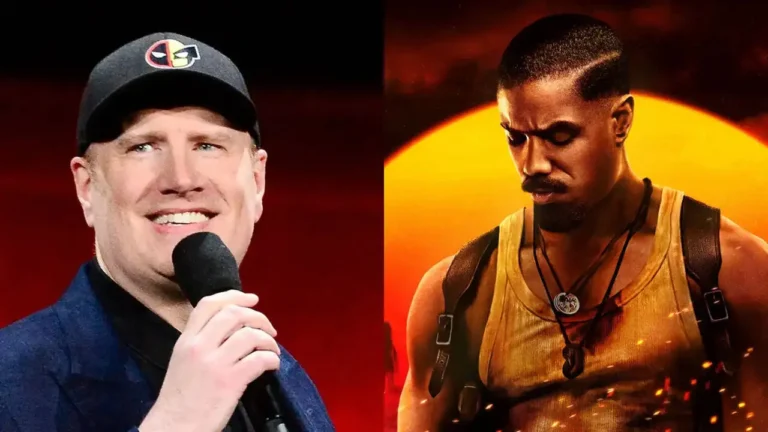
When the Kevin Feige Sinners Oscars story broke on February 14, 2026, the internet treated it as though the Marvel boss had made a bold, provocative prediction. In reality, he was simply saying what most of the film industry had been quietly thinking since Sinners opened in April 2025 and proceeded to detonate every expectation placed on it.
Feige’s exact words — published in The Hollywood Reporter as part of a profile of director Ryan Coogler — were:
“The music was incredibly meaningful to me, and I told Ryan that my jaw was on the floor. It should win best picture for that alone.”
And then, addressing the Academy’s complicated history with commercially resonant films:
“The Academy doesn’t always, in my opinion, recognize the movies that are most relevant for audiences today. But, boy, did they hit it with this one.”
Two sentences. Forty-three words. And the entire entertainment press had a story for Valentine’s Day.
But the real story of the Kevin Feige Sinners Oscars moment is not about those forty-three words. It is about the extraordinary film they describe — a record-breaking, culture-shifting, genre-redefining horror movie that became the most nominated film in Oscar history while simultaneously grossing $370 million worldwide and winning over audiences across every demographic. It is about Ryan Coogler, who negotiated the most filmmaker-friendly deal in modern Hollywood history and then made exactly the film he wanted to make. It is about Michael B. Jordan playing twin brothers in 1932 Mississippi while vampires descend on a juke joint. And it is about what happens on March 15, 2026, when the Academy finally decides whether Feige’s jaw-dropping prediction turns out to be right.
Here is every single thing you need to know.
Kevin Feige’s Exact Words: What He Said, Where He Said It, and Why It Matters
The Kevin Feige Sinners Oscars statement did not emerge from a press conference or a social media post. It came from a deeply reported Hollywood Reporter profile of Ryan Coogler by journalist David Canfield — a long-form piece examining Coogler’s creative evolution, his relationship with the film industry, and what Sinners represents in the context of his career.
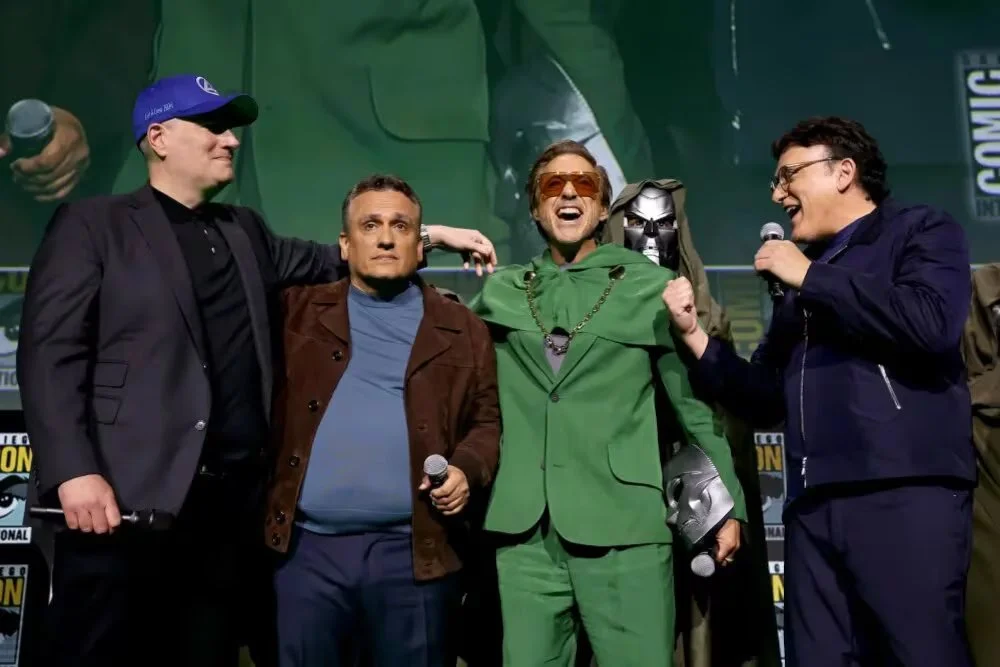
Feige was interviewed as part of that profile in his capacity as a longtime collaborator of Coogler’s — he produced both Black Panther (2018) and Black Panther: Wakanda Forever (2022) with Coogler directing, making them one of the most commercially successful director-producer partnerships in Hollywood history.
In the piece, Feige specifically singled out a sequence in the film’s second act — the juke joint musical sequence, which has become one of the most discussed and celebrated individual scenes in any film of 2025 — as the source of his jaw-dropping reaction. He did not provide a detailed spoiler-level breakdown in the published version of the profile, but the scene he referenced is well-known to anyone who has seen the film: a transcendent, music-driven sequence in which blues, gospel, African griot tradition, Irish folk music, and Choctaw chant all converge in a single sustained moment that critics have described as one of the most visually and aurally spectacular sequences in American cinema in decades.
Feige told Coogler directly that his jaw was on the floor. He was not being diplomatic. And when he wrote about the Kevin Feige Sinners Oscars comment subsequently, he was not performing for the press. He was telling the truth about a film that had already made him feel something in a way that very few films — and he watches a great many films — manage to do.
The second part of his statement carries a different kind of significance. When Feige said “The Academy doesn’t always, in my opinion, recognize the movies that are most relevant for audiences today,” he was making a pointed observation with a clearly personal subtext. Marvel’s superhero films — commercially the most successful franchise in cinema history — have never won Best Picture, despite receiving enormous audience support. Black Panther, which Feige produced and which became the first superhero film nominated for Best Picture in 2019, did not win. The comment was not accidental.
His closing line — “But, boy, did they hit it with this one” — is therefore notable precisely because it signals that Sinners represents something he believes the Academy is capable of recognising in a way it has not historically recognised films of comparable cultural reach.
What Is Sinners? The Complete Plot, Cast & Context
To fully understand the Kevin Feige Sinners Oscars story, you need to understand the film itself — because the original article on this URL never once explained what Sinners actually is.
Sinners is a 2025 horror film written and directed by Ryan Coogler, distributed by Warner Bros. Pictures. It is set in 1932 in the Mississippi Delta — specifically in the town of Clarksdale, Mississippi, the historical birthplace of the Delta blues — during the Jim Crow era.
Michael B. Jordan plays both lead roles: twin brothers Elijah “Smoke” Moore and Elias “Stack” Moore — criminal entrepreneurs who have survived the World War I trenches and the Chicago gangland before returning to their Mississippi hometown with cash, a truck full of liquor, and a plan to open a juke joint. They recruit a small group to help run the joint for its opening night, including their young cousin Sammy (played by Miles Caton in his film debut) — a gifted young blues musician whose talent is, as the film reveals, literally supernatural in its power.
The opening night of the juke joint becomes the party of a lifetime. And then, as night falls, a vampire named Remmick (played by Jack O’Connell) arrives with a group of the undead — drawn specifically to Sammy’s music, to the transcendent power of the blues, and to what the juke joint represents: a space of Black freedom, Black joy, and Black cultural creation in a world designed to deny all three.
What follows is both a visceral horror film — the vampires are genuinely terrifying — and an extended metaphor about cultural appropriation: the way Black art, Black music, and Black culture have historically been consumed, extracted, and repackaged by outside forces while the creators themselves were denied the fruits of what they produced.
The rest of the cast includes:
- Hailee Steinfeld as Mary, Stack’s love interest
- Jayme Lawson as Pearline, Sammy’s love interest
- Delroy Lindo as Delta Slim, a veteran blues musician
- Wunmi Mosaku as Annie, a hoodoo practitioner
- Omar Benson Miller as Cornbread, the juke joint’s cook
- Li Jun Li as Grace, one of the joint’s workers
The score was composed by Ludwig Göransson — Coogler’s longtime collaborator and the Academy Award-winning composer of Black Panther and Oppenheimer. He drew from Robert Johnson and Tommy Johnson records, from Delta blues tradition, from West African griot music, and from Irish folk traditions. The result is one of the most celebrated film scores in recent memory. The original songs include “I Lied to You” (written by Göransson and Raphael Saadiq) and “Last Time (I Seen the Sun)” (written by Göransson, Alice Smith, and Miles Caton).
The film was shot on a combination of Ultra Panavision 70 and IMAX formats by cinematographer Autumn Durald Arkapaw — a technical choice that created extraordinary visual scale while also becoming the subject of Coogler’s widely viewed pre-release educational video about aspect ratios and optimal theatrical presentation.
The Juke Joint Musical Sequence: The Scene That Made Feige’s Jaw Drop
The Kevin Feige Sinners Oscars statement was specifically triggered by one scene — the juke joint musical sequence that occurs in the film’s second act, before the vampires arrive and the horror begins.
In this sequence, Sammy begins playing the blues at the juke joint. As he plays, something extraordinary happens: the music opens a temporal and spiritual portal. Figures from across centuries and traditions begin to appear — African griots, Irish filídh, Choctaw singers, future musicians who haven’t been born yet. The scene suggests that the blues is not merely a musical genre but a living spiritual force: the convergence of all human musical traditions into a single moment of transcendence that exists outside of time.
The sequence lasts approximately eight to ten minutes. It has been described by critics as:
- “One of the most visually extraordinary sequences in American cinema in recent memory” — multiple outlets
- “A sequence of almost unbearable beauty that seems to exist outside the laws of normal filmmaking” — Rolling Stone
- A moment that demonstrates “Coogler swinging wide and far beyond the boundaries of franchise fare” — Rolling Stone critic A.A. Dowd
It is this sequence that Feige was referencing when he said his jaw was on the floor. And it is this sequence that has become the most frequently discussed element of the film in the awards season context — not because it is the only remarkable thing in Sinners, but because it represents the film at its most ambitious, most original, and most cinematically unprecedented.
The Oscar Nominations: All 16, By Category
The Kevin Feige Sinners Oscars endorsement exists within the context of an unprecedented Academy Awards performance. When nominations were announced on January 22, 2026, Sinners received 16 nominations — the most nominations in Oscar history, breaking the previous record of 14 shared by All About Eve (1950), Titanic (1997), and La La Land (2016).
Ryan Coogler also became only the seventh Black director to receive a Best Director nomination in Academy history — a fact that, as SlashFilm noted, “is both astounding and embarrassing for the Academy.”
Here is the complete nomination list:
| Category | Nominee |
| Best Picture | Ryan Coogler, Sev Ohanian, Zinzi Coogler (producers) |
| Best Director | Ryan Coogler |
| Best Actor | Michael B. Jordan |
| Best Original Screenplay | Ryan Coogler |
| Best Cinematography | Autumn Durald Arkapaw |
| Best Film Editing | Michael P. Shawver |
| Best Original Score | Ludwig Göransson |
| Best Production Design | Hannah Beachler, Clayton Hartley |
| Best Costume Design | Ruth E. Carter |
| Best Sound | (nominated) |
| Best Visual Effects | (nominated) |
| Best Original Song | “Last Time (I Seen the Sun)” — Göransson, Alice Smith, Miles Caton |
| Best Supporting Actor | Delroy Lindo |
| Best Supporting Actress | Wunmi Mosaku |
| Best Makeup and Hairstyling | (nominated) |
| Best Casting | Francine Maisler (inaugural category) |
The nomination in Best Casting is historically significant: this is the inaugural year that the Academy has recognised casting as an Oscar category, and Sinners was nominated in its very first edition — a recognition of Francine Maisler’s work in assembling the film’s extraordinary ensemble.
The breadth of nominations across every single category in which the film competed — technical, performance, writing, directing — indicates, as NPR noted, “strong support across every single group of Oscar voters,” since each Academy branch nominates independently in their own category.
The Box Office Story: $370 Million and a Historic Opening
The Kevin Feige Sinners Oscars conversation gains further dimension when you understand how extraordinary Sinners’ commercial performance was — because the film simultaneously achieved critical acclaim and box office success in a way that almost never happens in Hollywood.
Sinners opened on April 18, 2025 — Easter weekend — and immediately upset every projection. Warner Bros. had targeted a $35–40 million opening. Tracking services predicted $40–45 million. The actual opening weekend: $48 million domestically, making it the best debut for an original film since Jordan Peele’s Us ($71 million, 2019) — and Us is a simpler, lower-budget film than Sinners.
The film was shot for $90 million (plus approximately $50–60 million in global marketing) — a significant production cost for an original, R-rated, period horror film with no pre-existing IP. In its opening weekend, it also took in $15.4 million internationally for a global debut of $63.5 million. It eventually grossed $370 million worldwide — ranking seventh among the highest-earning films in the United States in 2025.
Audience response was extraordinary. Sinners received:
- 97% on Rotten Tomatoes (the critics’ score) — Coogler’s best ever
- 84/100 on Metacritic — “Universal Acclaim”
- A CinemaScore — the highest audience exit poll grade, and the best grade for any horror film in over 35 years
- 92% positive score on PostTrak, with 84% saying they would “definitely recommend”
The audience demographic breakdown was also significant: Black moviegoers accounted for 38% of opening weekend ticket buyers, white moviegoers 35%, Latinos 18%, Asians 5%. The film crossed demographics in a way that relatively few films achieve.
Approximately 45% of opening weekend ticket sales came from premium large-format screens — IMAX alone accounting for 20% of revenue. Coogler’s pre-release educational video about aspect ratios, in which he explained the difference between Ultra Panavision 70 and IMAX formats and told audiences which screens to seek out, was widely credited with driving this premium format uptake.
Ryan Coogler’s 25-Year Ownership Deal: The Most Filmmaker-Friendly Contract in Modern Hollywood
One of the most remarkable and underreported aspects of the Kevin Feige Sinners Oscars story is the deal Ryan Coogler negotiated with Warner Bros. before a single frame of Sinners was shot.
When Sinners was announced in January 2024, it triggered a bidding war between Sony Pictures, Warner Bros. Pictures, and Universal Pictures — all three major studios competing for the distribution rights to an untitled Ryan Coogler film with a budget of approximately $90 million.
Coogler’s negotiating position was extraordinary. He demanded:
- First-dollar gross — meaning he receives a percentage of revenue from the very first dollar the film earns, before the studio has recouped any costs. Even Steven Spielberg does not have this arrangement.
- Final cut privilege — complete creative control over the finished film, with no studio interference.
- Ownership of the film rights after 25 years — meaning that in 2050, Ryan Coogler will personally own Sinners, the most nominated film in Oscar history.
Warner Bros., under co-chairs Michael De Luca and Pamela Abdy, won the bidding war by agreeing to all three conditions. It was described by industry observers as the most filmmaker-friendly deal in modern Hollywood — a contract that would not have been offered to virtually any other director working in contemporary studio cinema.
The deal reflects Warner Bros.’s assessment that Coogler’s track record — Fruitvale Station, Creed, Black Panther, Black Panther: Wakanda Forever — made him worth whatever concessions were necessary to secure his first entirely original feature. Their assessment proved correct.
The connection to the Kevin Feige Sinners Oscars story is also direct: Feige was aware of this deal. He had worked with Coogler on both Black Panther films and was familiar with his creative philosophy. His public endorsement of Sinners for Best Picture is also, implicitly, an endorsement of Warner Bros.’ decision to trust Coogler with full creative autonomy — and of what happens when a studio gives a filmmaker of genuine talent complete freedom.
Sinners vs One Battle After Another: The Real Oscars Race
The Kevin Feige Sinners Oscars story would be incomplete without discussing Sinners’ primary competition in the Best Picture race: One Battle After Another, directed by Paul Thomas Anderson.
One Battle After Another — PTA’s 2025 film, which received 13 Oscar nominations including Best Picture — has been the dominant precursor award winner of the season, having effectively run the table at the major precursor ceremonies going into Oscar night. The film is described as “incredibly and nakedly political, making strong points about the state of the world and the beauty in resisting evil forces.” It stars Teyana Taylor in what is reportedly a career-defining performance.
The SAG Awards — the Screen Actors Guild’s annual ceremony and one of the most reliable predictors of Best Picture — provided a significant data point in early March 2026: Sinners won the SAG Award for Outstanding Performance by a Cast, the top prize at that ceremony. Delroy Lindo accepted on behalf of the ensemble, saying: “This project is anointed, and from that standpoint, we are all anointed to be on this incredible journey created by the incredible genius Ryan Coogler.”
This win matters because the SAG Award for Outstanding Cast has historically gone to the eventual Best Picture winner at the Oscars — with exceptions including Conclave winning SAG in 2025 before Anora took Best Picture. The Producers Guild Award, which One Battle After Another won, is considered equally predictive.
The race is, genuinely, a race. As SlashFilm put it: “It is, truthfully, a safe bet that the Academy will soundly reward Paul Thomas Anderson… Both of these movies, like many of 2025’s best movies, are incredibly and nakedly political… They’re also both really, really good, and in my estimation, either would make a truly great Best Picture winner.”
The 98th Academy Awards ceremony is scheduled for March 15, 2026. By the time you read this, the question Feige’s statement raised may already be answered.
Ryan Coogler: The Director Who Made It All Possible
The Kevin Feige Sinners Oscars story is, at its heart, a story about Ryan Coogler — and understanding who he is explains why both Feige’s endorsement and the Academy’s historic response carry the weight they do.
Ryan Coogler was born in 1986 in Oakland, California. He is currently 39 years old — and is being widely noted as on the verge of becoming the first Black director to win the Academy Award for Best Director before the age of 40. He is only the seventh Black director to receive a Best Director nomination in the Academy’s nearly century-long history.
His filmography is one of the most consistently acclaimed in contemporary American cinema:
- Fruitvale Station (2013) — Sundance Grand Jury Prize winner, 97% RT, made for approximately $900,000
- Creed (2015) — CinemaScore A, 97% RT, $173 million worldwide
- Black Panther (2018) — CinemaScore A+, 96% RT, $1.347 billion worldwide, first superhero film nominated for Best Picture
- Black Panther: Wakanda Forever (2022) — CinemaScore A, 84% RT, $859 million worldwide
- Sinners (2025) — CinemaScore A, 97% RT, $370 million worldwide, record 16 Oscar nominations
Every film Coogler has directed has received an A or A+ CinemaScore. His combined worldwide box office across five films: approximately $2.9 billion. He is 39 years old.
Coogler has spoken about Sinners as his most personally vulnerable creative experience. “I did feel more vulnerable,” he said in an interview. “Everything was coming from my own heart and mind.” Without an existing IP to reference, every creative decision in Sinners was purely Coogler’s — the setting, the mythology, the music, the metaphor about cultural appropriation, the visual language. It is the first entirely original film he has made since Fruitvale Station.
After Sinners, Coogler will direct a reboot of The X-Files before returning to the MCU for Black Panther 3.
The Costume Design Connection: How Sinners Literally Wore Marvel’s Past
One of the stranger and more charming footnotes to the Kevin Feige Sinners Oscars story is a direct connection between Marvel and Sinners that goes beyond Feige’s quotes.
Sinners’ costumes — designed by the legendary Ruth E. Carter, who won the Oscar for Best Costume Design for Black Panther — were originally created for an entirely different film: the long-delayed Marvel Cinematic Universe adaptation of Blade.
When the Blade reboot was moved away from its planned Prohibition-era setting, the elaborate period costumes Carter had already designed became unused. Coogler — aware that both films shared a 1930s period setting — approached Carter about repurposing the research and physical costumes for Sinners. Feige confirmed that Marvel no longer needed the costumes after the setting change and was happy for Carter to use them.
The result: Sinners is literally wearing the clothes that were made for a Marvel film. And those clothes are now nominated for the Academy Award for Best Costume Design, with Ruth E. Carter potentially earning her third Oscar in the category.
Frequently Asked Questions About Kevin Feige Sinners Oscars
What exactly did Kevin Feige say about Sinners and the Oscars? In a profile of Ryan Coogler published in The Hollywood Reporter, Feige said: “The music was incredibly meaningful to me, and I told Ryan that my jaw was on the floor. It should win best picture for that alone.” He added: “The Academy doesn’t always, in my opinion, recognize the movies that are most relevant for audiences today. But, boy, did they hit it with this one.”
Which scene was Feige specifically referring to? The juke joint musical sequence in the film’s second act — a transcendent, visually extraordinary scene in which blues, gospel, African griot, Irish folk music, and Choctaw chant converge in a single sustained moment, described by critics as one of the most remarkable sequences in recent American cinema.
How many Oscar nominations did Sinners receive? A record-breaking 16 nominations — the most in Oscar history, surpassing the previous record of 14 shared by All About Eve, Titanic, and La La Land. Key nominations include Best Picture, Best Director (Ryan Coogler), Best Actor (Michael B. Jordan), Best Original Screenplay, Best Cinematography, Best Score, and Best Casting (inaugural category).
What is Sinners about? Set in 1932 Mississippi Delta, Sinners follows twin brothers Smoke and Stack (both played by Michael B. Jordan) who return to their segregated hometown to open a juke joint. On opening night, Irish vampire Remmick arrives with a group of the undead, drawn to the supernatural talent of young blues musician Sammy. The film is both a horror movie and a metaphor about the cultural appropriation of Black art and music.
How did Sinners perform at the box office? It opened to $48 million domestically — the best debut for any original film since Jordan Peele’s Us in 2019 — and grossed $370 million worldwide, ranking seventh among the highest-earning US films of 2025.
What is Ryan Coogler’s unique deal with Warner Bros.? Coogler negotiated first-dollar gross (revenue share before studio breaks even), final cut privilege, and ownership of the film’s rights after 25 years. Warner Bros. agreed to all three conditions to win the bidding war with Sony and Universal. It is described as the most filmmaker-friendly major studio deal in modern Hollywood.
What are Sinners’ main Oscar competitors? Its primary competition is One Battle After Another directed by Paul Thomas Anderson (13 nominations), which won the Producers Guild Award. Sinners won the SAG Award for Outstanding Cast — historically one of the strongest predictors of Best Picture.
When are the 2026 Oscars? The 98th Academy Awards ceremony is scheduled for March 15, 2026.
What is Kevin Feige’s connection to Ryan Coogler? Feige produced both Black Panther (2018) and
Black Panther: Wakanda Forever (2022) with Coogler directing. Their partnership has generated approximately $2.2 billion in worldwide box office across two films, making it one of the most successful director-producer relationships in Hollywood history.
Related Posts You’ll Enjoy
- 🎬 Britney Spears Music Catalog Sale: $200M, Primary Wave & Every Song Explained
- 🎬 Simu Liu Kid Rock Halftime Controversy: Super Bowl LX Full Story
- 🎬 Rihanna Viral Shopping Moment: Bristol Farms, Stolen Cart & Full Story
- 🎬 Kangana Ranaut Akshaye Khanna Viral Video: The Full Story Explained
- 🎬 Rajpal Yadav Legal Crisis: ₹9 Crore Case, Tihar Jail & Full Story
- 🎬 Netflix Best Movies List 2026: 30 Brilliant Films You Must Watch
- 🎬 Top South Indian Blockbusters That Conquered the Pan-India Box Office
📱 Follow us on Instagram for live Oscar night coverage on March 15, 2026 — results, reactions, and analysis as the winners are announced.
📌 Save this article on Pinterest — we will update this page with the full Oscar results for Sinners on the night of March 15.
Last updated: March 2026. The 98th Academy Awards ceremony is scheduled for March 15, 2026. This article will be updated with results after the ceremony. Sources: The Hollywood Reporter, Variety, SlashFilm, NPR, Britannica, Rotten Tomatoes, IMDb, CinemaScore, PostTrak.

Popcorn in hand and a opinion ready — Emily covers movie reviews, box office buzz, and all things cinema at Popcorn Review.

