
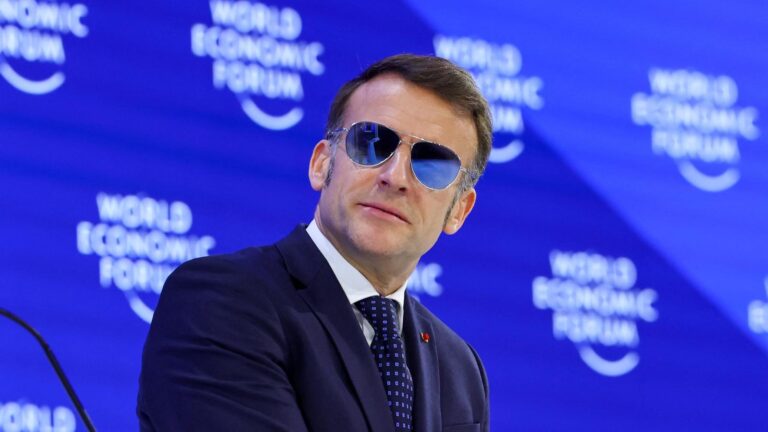
When photographs of Emmanuel Macron at the World Economic Forum in Davos circulated showing the French president in aviator sunglasses, something unexpected happened: the internet forgot about economics and focused on eyewear. Within hours, a formal global summit became secondary to fashion analysis, memes, and psychological speculation.
But this wasn’t just about sunglasses. This was about how modern leadership operates at the intersection of politics, entertainment, and celebrity culture. This was about the psychology of virality, the semiotics of fashion, and what happens when political figures become content.
Understanding why Macron’s sunglasses at Davos became a global phenomenon reveals deeper truths about 21st-century power, image management, and the entertainment-ification of politics.
📑 Deep Analysis Overview
- Why Did This Go Viral? The Psychology Behind the Moment
- Fashion Semiotics: What the Sunglasses Actually Communicate
- Power Dressing in the Age of Instagram: Modern Leadership Aesthetics
- Is It Accidental or Strategic? The Truth About Political Image Management
- When Presidents Become Celebrities: The Blurring of Politics & Entertainment
- The Mechanics of Virality: Why This Moment, Why This Image?
- Historical Context: How Political Figures Use Fashion as Power
- The Psychology of Visual Engagement in Digital Culture
- Gender Politics: Why Men’s Fashion Choices Differ From Women Leaders
- Macron’s Brand Identity: Sunglasses as Political Statement
- What This Reveals About Modern Power & Entertainment
Why Did This Go Viral? The Psychology Behind the Moment
A simple answer: humans are visual creatures, and we’re currently living through an unprecedented moment where visual literacy directly determines cultural power. But the deeper answer involves psychological principles psychologists and marketers spend millions studying.
Visual Incongruity: Davos is formal, serious, and typically austere. Sunglasses—especially aviators—suggest casual confidence, movie-star mentality, even rebellion. The juxtaposition between Davos’s gravity and sunglasses’ nonchalance created cognitive friction—exactly what makes something memorable and shareable.
The Halo Effect: Humans unconsciously attribute multiple positive qualities to physically attractive things. Macron is positioned as relatively young for a European leader (he’s 48). The sunglasses enhanced this by creating modern, cool associations. Audiences didn’t consciously think “sunglasses make him seem cool”—they felt it, then shared it.
When you see an image repeatedly, you automatically like it more (even if you initially didn’t). The sunglasses image went viral, which meant repeated exposure, which created positive association through pure repetition. The more people saw it, the more they unconsciously liked it—not because it was objectively better, but because familiarity breeds preference.
Permission to Comment: People love analyzing fashion because it feels safe—unlike political disagreement, fashion critique doesn’t seem partisan. Macron’s sunglasses allowed people to engage with a political figure without the emotional baggage of policy disagreement. It was permission to play in celebrity culture rather than debate global economics.
Meme-ability: The image perfectly aligned with existing cultural templates. Bond villain? Top Gun pilot? International spy? The sunglasses image could be quickly manipulated, captioned, and remixed. This technical shareability amplified virality exponentially.
Fashion Semiotics: What the Sunglasses Actually Communicate
Fashion isn’t random. Every choice communicates through a complex language of symbols. Understanding what Macron’s sunglasses communicated reveals strategic thinking—whether conscious or intuitive.
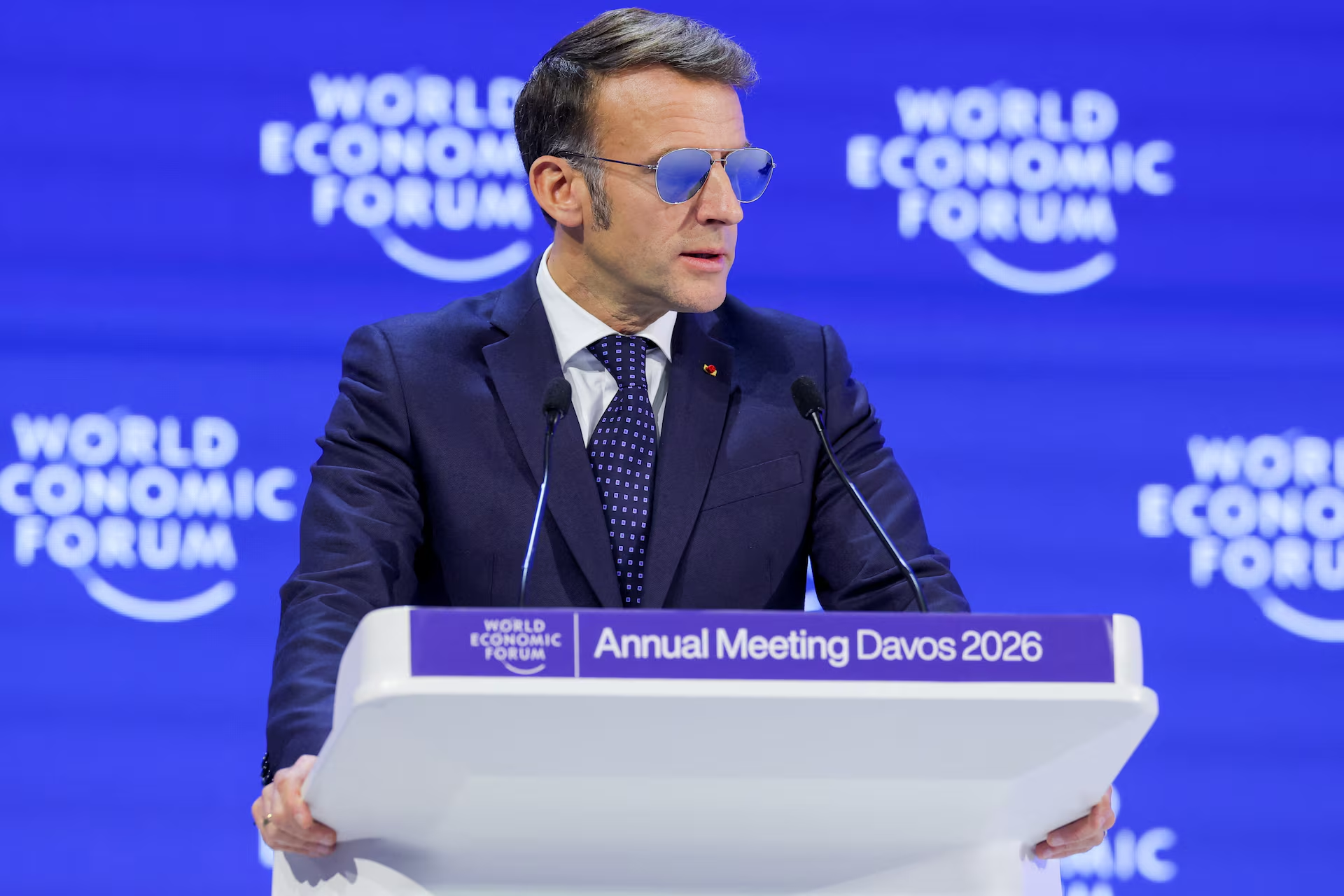
What Aviators Traditionally Signal:
- Military/Authority: Aviators originated with pilots in the 1930s. They signal command, control, trained expertise
- Dangerous Competence: James Bond wore them. Top Gun pilots wore them. Immediately communicates: “I know what I’m doing and I’m not worried”
- Classic American Cool: Jazz musicians, Hollywood icons, and cultural rebels adopted aviators. They signal cultural sophistication
- Approachable Power: Unlike completely formal eyewear, aviators suggest casual confidence—powerful but not intimidating
What This Communicated About Macron:
Rather than “I am the formal leader of France,” the sunglasses communicated: “I am a confident, modern, perhaps even dangerous operator who doesn’t need to prove authority through conventional formality.” This is strategically powerful for a younger European leader navigating global tensions.
The Davos Code Breaking: Davos traditionally demands unspoken compliance with formal presentation codes. Breaking these codes slightly—adding sunglasses rather than abandoning them entirely—communicates insider status (“I’m important enough to break minor rules”) while maintaining respectability (“but not too much”).

Power Dressing in the Age of Instagram: Modern Leadership Aesthetics
Power dressing used to mean sharp suits, formal accessories, and visible hierarchy markers. Modern power dressing means something different: calculated casualness that signals confidence bordering on indifference.
Consider contemporary leadership trends: rolled-up sleeves (Bill Gates), casual hoodies (Mark Zuckerberg), and athleisure (younger tech CEOs). These deliberate “anti-power-dress” choices actually demonstrate ultimate power: the confidence to ignore conventional presentation rules.
In previous eras, power required constant formality. Now, power can afford casualness. The ability to dress down and still command respect demonstrates security in your position—you don’t need external markers to prove authority. Macron’s sunglasses at a formal summit actually communicate: “My position is secure enough that I can add modern style elements.”
This shifts the psychology of leadership. Rather than “look formal, therefore important,” modern leaders telegraph “I’m important enough to look how I want.” The aviators fit this emerging aesthetic perfectly.
Is It Accidental or Strategic? The Truth About Political Image Management
This is the crucial question: Did Macron deliberately choose sunglasses knowing they’d create positive optics? Or was it spontaneous, and we’re retroactively imposing narrative meaning?
The Reality: High-level political figures have image consultants managing every detail. Jacket color, tie choices, facial expressions—all analyzed. It’s implausible Macron selected sunglasses without understanding the visual implications.
Supporting Strategic Choice:
- Macron previously showed awareness of visual presentation (rolled sleeves, casual blazers)
- France internationally markets Macron as “modern European leader”—sunglasses fit this brand positioning
- The styling aligned perfectly with current fashion trends (vintage aviators are currently fashionable)
- Davos presentation involved calculated image choices (tailored suit, specific accessories)
Supporting Spontaneity:
- Sometimes leaders simply wear sunglasses outdoors (it was daytime at Davos)
- Overthinking every accessory could indicate insecurity, not confidence
- The virality surprised most observers—if it was planned, strategic intent would be unclear
Most Likely: Hybrid Approach
Macron probably has general grooming principles (look modern, stylish, confident) provided by image consultants. Within those parameters, he makes choices. The sunglasses fit those parameters—modern, stylish, confident. Did he wear them specifically knowing they’d trend? Maybe not. But did his team notice the positive reception and reinforce the aesthetic? Definitely.
The Larger Point: In modern leadership, the distinction between “accidental” and “strategic” blurs. Leaders operate within image management frameworks even when making spontaneous choices. It’s not manipulation; it’s professional awareness that your appearance communicates.
When Presidents Become Celebrities: The Blurring of Politics & Entertainment
Macron’s sunglasses moment reveals something profound: we’ve entered an era where political figures must compete in entertainment value, not just policy excellence.
Historical Shift: Previous generations evaluated leaders primarily through policy knowledge and governance track record. Modern audiences increasingly evaluate leaders through visual presentation, personal brand, and entertainment value.
Most people consume political information through social media clips and images, not through detailed policy analysis. In this environment, a striking visual—like sunglasses at a formal summit—reaches more people and generates more engagement than policy speeches. This isn’t new (JFK’s charisma mattered), but the degree has intensified. Leaders now explicitly compete for entertainment dominance.
Celebrity Aesthetics Applied to Politics: Macron at Davos reads like celebrity styling—careful attention to silhouette, accessories, and overall vibe. This would have seemed inappropriate for a president decades ago. Now it’s expected.
The consequence: Leaders who understand entertainment culture (visual literacy, meme culture, social media dynamics) have structural advantages over those treating politics as purely policy-driven.
The Mechanics of Virality: Why This Moment, Why This Image?
Why did sunglasses trend while thousands of other political moments go unnoticed? Understanding viral mechanics explains cultural power distribution.
| Viral Ingredient | Traditional Political News | Macron’s Sunglasses |
|---|---|---|
| Emotional Accessibility | Requires policy knowledge to engage | Everyone has fashion opinions; zero expertise required |
| Shareability | Complex statements don’t fit social media formats | Single image, instantly shareable, zero context needed |
| Meme Potential | Policy requires nuance; hard to mock | Visual element easily manipulatable, remixable, meme-ready |
| Entertainment Value | Politics itself has become tiresome for many | Fashion commentary feels lighter, more fun |
| Universality | National politics; different relevance per country | Fashion is globally understood; transcends borders |
| Contrast to Expectation | Politicians performing politics as expected | Formal setting + casual accessory = cognitive surprise |
The Algorithm Factor: Social media algorithms prioritize engagement (comments, shares, reposts). Sunglasses generate engagement because they’re non-threatening, opinion-generating without being polarizing. Algorithms boost engaging content, which increases visibility, which increases engagement further—viral loops.
Historical Context: How Political Figures Use Fashion as Power
Macron’s moment isn’t new; it’s evolution of long tradition where leaders use fashion strategically.
JFK’s Hatlessness (1961): Kennedy famously didn’t wear hats—previously required for formal occasions. This single choice communicated modernization and generational change. It became iconic.
Margaret Thatcher’s Handbags (1980s): Thatcher’s choice of handbags became symbolic of her authority. Leather, substantial bags communicated strength in an era when women had to prove capability.
Barack Obama’s “Mom Jeans” (2008): Obama’s casual jeans signaled “man of the people” while his formal settings maintained authority. The juxtaposition created relatability.
Macron’s Sunglasses (2026): Following this trajectory, sunglasses communicate modern European leadership—confident, stylish, unburdened by formal expectation.
Each generation’s political leaders use fashion innovations to signal departure from previous eras. These small style choices communicate “we’re different now” more effectively than policy speeches. Macron’s sunglasses fit this pattern: style choice that signals modern leadership aesthetics.
The Psychology of Visual Engagement in Digital Culture
Brain Processing Speed: Humans process images 60,000 times faster than text. A sunglasses image reaches cognitive processing instantly. Policy explanations require effort and sustained attention. The brain preferentially engages with images.
Emotional Congruence: We prefer consuming content matching our emotional state. Many people scrolling social media are fatigued by heavy news. Sunglasses = light, fun, entertainment. The brain gravitates toward content matching current emotional capacity.
Dopamine Hits: The algorithm provides instant social validation (likes, shares, comments). This triggers dopamine reward loops, making engagement with images more immediately satisfying than reading policy analysis.
When we see appealing images, mirror neurons fire—we unconsciously simulate wearing the sunglasses, embodying the confidence. This creates positive association. We like the image because our brain experiences wearing those sunglasses as aspirational. This happens unconsciously, driving shares before conscious thought occurs.
Gender Politics: Why Men’s Fashion Choices Differ From Women Leaders
Consider: Would Angela Merkel or Jacinda Ardern wearing sunglasses create equivalent virality? Likely not—because gender dynamics shape how fashion is interpreted.
Women Leaders & Fashion Scrutiny: Female political figures face different standards. Their fashion choices are frequently criticized (too formal = stern, too casual = unprofessional, too trendy = distracted from serious work). They navigate impossible standards.
Male Leaders & Fashion Freedom: Male leaders like Macron enjoy relative freedom. Small style innovations read as “modern” rather than “frivolous.” This is gender inequality embedded in visual culture.
Macron’s sunglasses worked partly because male leaders have cultural permission to play with fashion. This same choice by a female European leader would likely generate different reactions—possibly including criticism about distraction from serious work.

Macron’s Brand Identity: Sunglasses as Political Statement
Understanding Macron’s broader brand helps contextualize the sunglasses moment.
Macron’s Brand: Young-for-his-age European leader. Pro-EU integration. Forward-thinking. Stylish. Somewhat detached from traditional French political aesthetics. The sunglasses fit this brand perfectly—they communicate “modern Europe” rather than “tradition.”
Fashion as Brand Consistency: The sunglasses weren’t random. They reinforced Macron’s existing positioning. Each fashion choice either reinforces or contradicts established brand. Macron’s sunglasses reinforced.
International Optics: France internationally markets itself as fashion capital, style arbiter, aesthetic authority. Macron, as French president, has structural incentive to demonstrate stylistic sophistication. Sunglasses at Davos communicate: “France still sets aesthetic standards.”
What This Reveals About Modern Power & Entertainment
Macron’s sunglasses moment crystallizes a shift in how power operates in digital culture. Political authority no longer rests solely on policy expertise or governance competence. It also requires entertainment literacy—understanding visual culture, virality mechanics, celebrity dynamics, and audience engagement.
Key Insights:
- Visual culture shapes political reality more than policy. The sunglasses generated more engagement than economic discussions at the same summit.
- Leaders must compete as celebrities. Political authority increasingly depends on entertainment value, not just governance.
- Fashion is semiotics, not frivolity. Every choice communicates something; style choices carry political meaning.
- Virality favors simplicity and visual accessibility. Complex policy doesn’t trend; striking images do.
- Gender shapes reception. The same choice receives different interpretation based on presenter gender.
- Modern power operates through narrative construction. What audiences perceive matters more than objective reality.
The Deeper Truth: When Politics Became Entertainment
Macron’s sunglasses at Davos went viral because they crystallize modern cultural reality: political authority is increasingly mediated through entertainment and visual culture. The sunglasses themselves matter less than what they reveal about how power operates now.
Previous eras had clear separation between politics (serious, formal, policy-driven) and entertainment (frivolous, casual, image-focused). That separation no longer exists. Modern leaders must simultaneously be policy experts and entertainment performers.
The sunglasses themselves? A simple accessory. What they represent? A fundamental shift in how political power functions in digital culture. Leaders who understand viral mechanics, visual storytelling, and entertainment psychology have structural advantages over those treating politics as exclusively policy-driven.
The question isn’t whether Macron’s sunglasses were accidental or strategic. The question is: In an era where visual culture shapes political narrative, can any high-level political choice truly be accidental?
Methodology Note: This analysis applies principles from fashion semiotics, viral psychology, celebrity culture studies, and political communication research. While Macron’s specific intent remains unknowable, the frameworks used here represent established research on how visual culture shapes political perception and how virality mechanisms operate in digital environments. The analysis examines larger patterns rather than claiming definitive causation.

Popcorn in hand and a opinion ready — Emily covers movie reviews, box office buzz, and all things cinema at Popcorn Review.

