

If you’ve never watched a Korean drama and you’re trying to figure out where to start, the honest answer is that the hardest part isn’t finding something good — it’s narrowing down what to watch first. Netflix’s Korean catalogue has grown from a handful of imported titles to one of the most diverse and consistently high-quality libraries on the entire platform. Several of these series have become genuine cultural phenomena, watched by hundreds of millions of people across countries that have no particular connection to South Korean culture or language.
That global reach is the thing worth understanding before we get into the individual recommendations. K-dramas haven’t just found a niche international audience. They have, in the space of about five years, become mainstream viewing for people who have never previously watched subtitled content, who didn’t grow up with any exposure to Korean entertainment, and who came to these shows through a single recommendation from a friend or an algorithm push on a Sunday night. Squid Game is the most famous example, but the pattern predates Squid Game and continues well beyond it.
This guide covers the most watched Korean series on Netflix right now — not just the numbers leaders, but the ones actually worth recommending based on what they do well, who they’re suited for, and what to expect if you go in fresh. It also covers some newer titles that haven’t yet hit the same view counts but are building the kind of sustained word-of-mouth that tends to outlast a viral moment.
Why Korean Dramas Became the Most Watched Content on Netflix Outside English-Language Markets
Before getting into the specific shows, it helps to understand why this happened — because the success of Korean content on Netflix wasn’t inevitable. It required a specific combination of factors coming together at a specific moment, and understanding those factors helps explain why the quality has remained consistent rather than declining as the genre scaled up.
The foundation is production quality. Korean drama production values improved dramatically across the 2010s as the domestic streaming market grew and international co-productions became more common. By the time Squid Game launched in 2021, the production quality of the best Korean series was genuinely comparable to prestige American television — cinematography, production design, costume, and visual effects that would have been impossible to achieve on Korean broadcasting budgets a decade earlier.
The storytelling conventions are different from Western television in ways that actually work better for streaming. Most Korean dramas are written as complete, contained stories with a defined beginning, middle, and end — typically 12 to 16 episodes with no open-ended seasons designed to run for years. This means you can watch a K-drama the way you watch a very long film: it has a proper conclusion, emotional payoff is built into the structure, and you don’t need to commit to five years of ongoing storyline to get a satisfying ending.
The emotional register is different too. K-dramas are not subtle about feelings. Characters express love, grief, betrayal, and joy with an intensity that Western television has largely moved away from in favour of irony and understatement. For viewers who are tired of detached, sardonic characters and want something that actually makes them feel things, that directness is genuinely refreshing. The cultural specificity — the particular dynamics of Korean family relationships, workplace hierarchies, class consciousness, and social obligation — adds texture rather than creating distance, because the underlying emotional experiences are recognisable even when the specific cultural context isn’t.
Netflix’s investment has been the commercial engine behind the recent growth. The platform has put significant production funding into Korean originals, improved its subtitle and dubbing quality substantially over the past four years, and built recommendation algorithms that push Korean content to viewers who have shown interest in emotionally intense or character-driven series regardless of language. The result is that new viewers find Korean dramas through the platform rather than through deliberate seeking.
The Most Watched Korean Series on Netflix — Ranked and Reviewed
1. Squid Game (Seasons 1 and 2)
Squid Game is still the most watched non-English language series in Netflix history by a significant margin, and Season 2 — which launched in late 2024 — performed strongly enough to confirm that the audience for this franchise hadn’t diminished. The numbers are genuinely staggering: Season 1 was watched by over 140 million households in its first four weeks, a record that has not been beaten by any other non-English series.
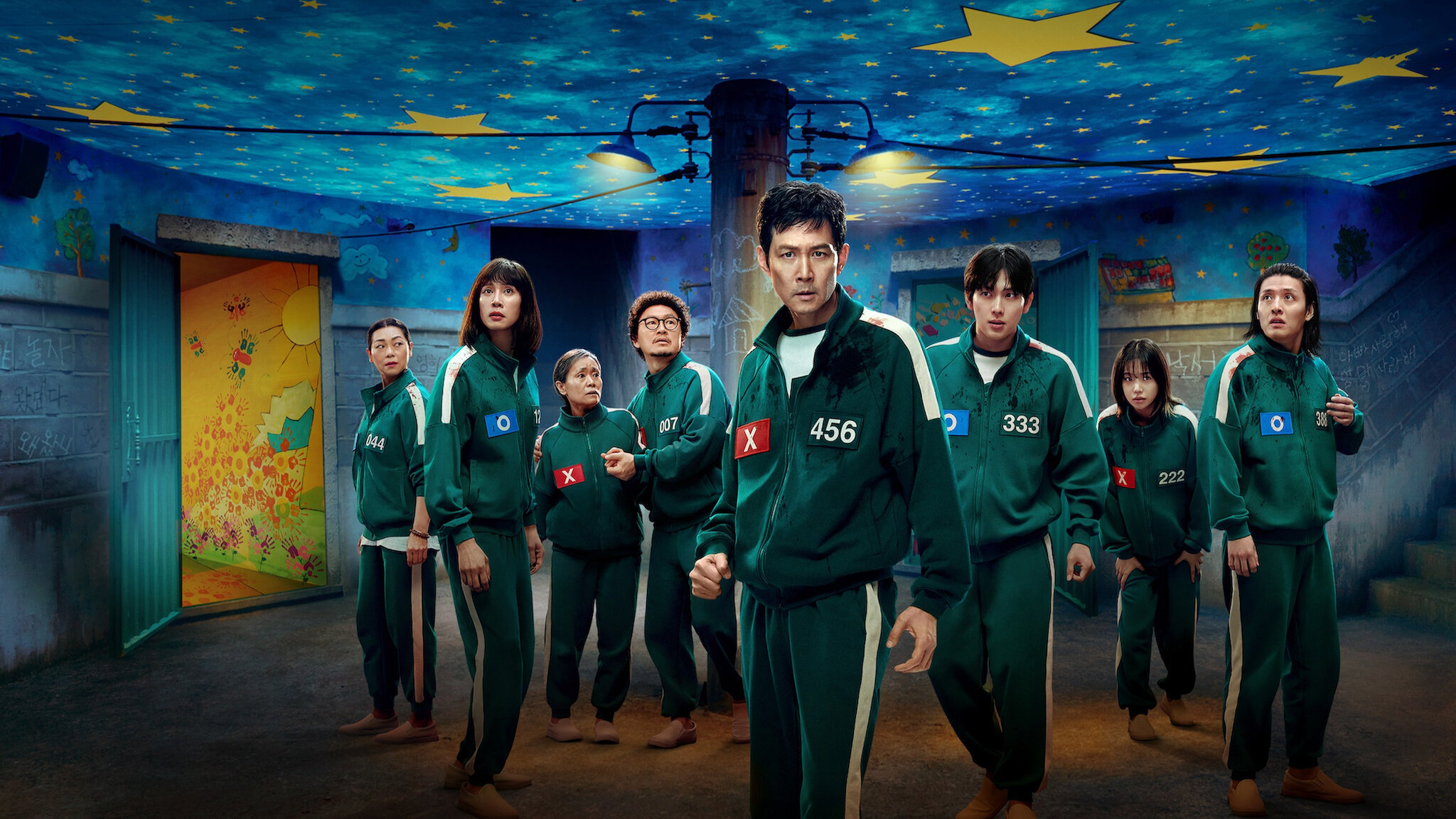
The premise — desperate people competing in children’s games for a massive cash prize, with elimination meaning death — sounds straightforwardly violent, and it is violent. But the reason it worked as more than just a shock-value spectacle is that creator Hwang Dong-hyuk used the format to make a sustained argument about economic desperation, class mobility, and what capitalism does to people at its margins. The games are a metaphor that works because it isn’t subtle about being a metaphor. The show trusts viewers to understand what it’s saying without spelling it out in dialogue.
Season 2 received more divided reviews than Season 1 — not because it was bad but because it was bridging to a third season rather than being a complete story, which frustrated viewers who expected the same self-contained structure. If you’re watching for the first time, Season 1 works as a standalone. Season 2 requires commitment to whatever Season 3 delivers.
Best for: Viewers who want social commentary wrapped in genuinely tense thriller plotting. Not for people who are sensitive to violence.
Episodes: Season 1: 9 episodes. Season 2: 7 episodes.
2. The Glory (Parts 1 and 2)
The Glory is the show that most effectively demonstrates the K-drama approach to long-form revenge narrative, and it remains one of the most emotionally intense viewing experiences on the Netflix platform in any language.
The story follows Moon Dong-eun, a woman who endured severe bullying and physical abuse in school and spent decades engineering a meticulous, patient revenge against her abusers — all of whom have moved into comfortable adult lives with families, careers, and social standing. Song Hye-kyo’s performance in the lead role is extraordinary — still, controlled, with an intensity that comes through in small gestures rather than large displays, which makes the rare moments of emotion land with enormous force.
What makes The Glory more than a standard revenge thriller is the attention it pays to the psychological cost of Dong-eun’s plan. She has organised her entire adult life around revenge to the point where she has surrendered most other possibilities. The show doesn’t romanticise this. It asks what it costs a person to live for a single purpose, and whether the satisfaction of the outcome justifies what it takes to get there.
The pacing is slow in the first half of Part 1 — deliberately, as it establishes the full geography of the revenge before beginning to execute it. If you commit past episode three, the payoff across the remaining episodes is extraordinary.
Best for: Viewers who can handle dark subject matter and want a psychologically complex story rather than action-driven entertainment.
Episodes: 16 total across 2 parts.
3. Queen of Tears
Queen of Tears launched in early 2024 and immediately became one of the most watched Korean series on Netflix globally, breaking the platform’s records for Korean drama viewership in multiple regional markets simultaneously.
The premise sounds familiar — wealthy heiress from a chaebol family marries a man from a small town, the marriage has deteriorated to the brink of divorce, and then a terminal illness diagnosis reshapes everything. On paper this is a formula. In practice, Queen of Tears executes the formula with such emotional commitment and such well-developed central performances from Kim Soo-hyun and Kim Ji-won that the familiarity of the structure stops mattering very quickly.
What Queen of Tears does particularly well is give both leads genuine interiority. You understand why the marriage broke down without either character being villainised, which makes the question of whether they can find their way back to each other carry real dramatic weight rather than feeling like manufactured obstacle-clearing. The show is also genuinely funny in its lighter moments — the tonal range is wide, and the writing manages the transitions between comedy, romance, and grief without the tonal whiplash that sinks a lot of similarly ambitious K-dramas.
It is unashamedly melodramatic and entirely comfortable with that. If melodrama done well is something you enjoy, this is one of the best examples of it on the platform.
Best for: Viewers who enjoy romance with emotional depth and don’t mind crying at a television show. Also genuinely accessible for K-drama first-timers.
Episodes: 16 episodes.
4. All of Us Are Dead
All of Us Are Dead takes a premise — zombie apocalypse contained within a high school — and uses it to do something genuinely interesting with Korean adolescent social dynamics. The horror elements are well-executed and often brutal, but the show’s real subject is the social hierarchies of Korean school life: bullying, academic pressure, class consciousness, and the particular cruelty of teenage social organisation.
The zombies are the external pressure that forces all of these existing social fractures into open conflict. It’s not subtle genre commentary, but it’s effective. The show also has a notable structural quality that sets it apart from a lot of zombie content: the characters are competent. They think, they problem-solve, they make decisions that make sense given what they know. The frustration of watching horror characters make obviously stupid choices is largely absent here.
Season 1 covers a defined story arc and is worth watching as a standalone. Season 2 was announced and is in development as of early 2026.
Best for: Horror fans who also want strong character development. Students and young adult viewers tend to connect with this one particularly strongly.
Episodes: 12 episodes in Season 1.
5. Sweet Home (Seasons 1–3)
Sweet Home is the most ambitious Korean horror series Netflix has produced to date. The three-season run covers an extended story about a world in which people are transforming into monsters driven by their deepest desires — a premise that functions as both body horror and psychological allegory simultaneously.
The visual effects work across all three seasons is remarkable, particularly given the speed at which K-drama production typically operates. Each monster design reflects a specific human psychological state, which gives the creature design a conceptual coherence that elevates it well above standard genre fare.
The series has flaws. The pacing in Season 2 is uneven, and some of the mid-series character decisions feel pulled in directions that the earlier storytelling hadn’t established. But the ambition is real and the execution is more consistent than a project this complex has any right to be. It rewards patience across all three seasons in a way that individual episodes sometimes make difficult.
Best for: Horror viewers who want something visually inventive and thematically serious. Not a casual recommendation — this one requires investment.
Episodes: Season 1: 10 episodes. Season 2: 8 episodes. Season 3: 10 episodes.
6. My Demon
My Demon operates in a lighter register than most of the titles on this list and is entirely comfortable with being a warm, funny, well-crafted romantic fantasy. A demon who draws power from contracts encounters a chaebol heiress and their initially transactional relationship develops genuine emotional depth.
Song Kang and Kim Yoo-jung have strong on-screen chemistry and the show is smart enough to let the relationship develop through character rather than manufactured misunderstandings. The fantasy mechanics are internally consistent, which matters more than it might seem — shows in this genre often use supernatural elements as convenient plot devices that don’t hold up to attention. My Demon’s world-building is coherent enough to take seriously.
It’s not a weighty show. It doesn’t ask difficult questions or create sustained discomfort. It’s well-made romantic entertainment with a fantasy layer, and there’s genuine value in that category.
Best for: Viewers who want a romantic K-drama with a supernatural element and don’t need heavy drama. Excellent K-drama entry point.
Episodes: 16 episodes.
7. Marry My Husband
Marry My Husband is built on a premise that shouldn’t work as well as it does: a woman who dies betrayed by her husband and best friend wakes up ten years earlier and decides to redirect both of their futures away from her own life. The time-manipulation mechanic is used thoughtfully rather than as a gimmick — the show understands that its real subject is agency, specifically what it means for a woman who was never given choices to finally have the ability to make them.
Park Min-young gives a performance that balances the bitter clarity of someone who knows exactly how things went wrong with the tentative emotional reopening of someone who is allowing themselves to hope again. The revenge elements are satisfying without being the only thing the show is interested in.
Best for: Viewers who like romance plots but want the emotional context to come from something more substantive than will-they-won’t-they tension.
Episodes: 16 episodes.
8. Crash Landing on You
Crash Landing on You is included here because even though it’s a few years old at this point, it continues to generate new viewers every month and regularly appears in Netflix’s most-watched charts. A South Korean businesswoman paragliding in Switzerland accidentally crosses the border into North Korea and lands at the feet of a North Korean officer. The show uses that premise to tell a romance that is genuinely moving while also being surprisingly thoughtful about the human realities of the Korean divide.
What makes it work — beyond the exceptional chemistry between Hyun Bin and Son Ye-jin, who subsequently married in real life — is the warmth with which it treats the North Korean characters. They’re not caricatures or political symbols. They’re people with their own lives, relationships, and concerns, which gives the cross-border romance its emotional weight.
If you’ve been meaning to watch this and keep putting it off, just start it. Episode 2 is when most people stop being able to stop.
Best for: Viewers who want a complete, emotionally satisfying romance with some genuine substance. One of the best K-dramas ever made.
Episodes: 16 episodes.
9. Vincenzo
Vincenzo is the show for people who want K-drama romance and emotion but also want genuinely impressive action and a lead character who is unambiguously, entertainingly villainous. Song Joong-ki plays an Italian-Korean mafia consigliere who returns to Korea and gets drawn into a conflict over a building where tenants are resisting corporate displacement.
The tonal combination — dark comedy, legal thriller, romance, mafia action — should not work as well as it does. The show has an internal logic that keeps the genre-switching from feeling chaotic, and Song Joong-ki’s performance anchors all of it. The supporting cast, particularly the building tenants, are among the most memorable ensemble characters in recent K-drama.
Best for: Viewers who want something with more edge and moral complexity than a standard romance K-drama.
Episodes: 20 episodes.
10. Nineteen to Twenty (2025)
The most recent title on this list and one worth watching before the cultural conversation moves on. A reality dating series rather than a scripted drama — young people who are still 19 years old meeting and forming relationships before they turn 20 and the dynamic changes. The show is notable for its emotional honesty and the genuine complexity of the relationships it documents.
Reality content from Korea has grown significantly on Netflix alongside scripted content, and Nineteen to Twenty represents the best of what that format can do when it’s given space to observe rather than manufacture drama.
Best for: Viewers who enjoy unscripted content and want something recent.
Episodes: Ongoing series format.
A Comparison Table: Which Korean Series Should You Watch First?
| Series | Genre | Tone | Episodes | Difficulty Level | Best If You Like |
| Squid Game | Thriller / Social Commentary | Dark, intense | 9 + 7 | Easy to start | Black Mirror, Hunger Games |
| The Glory | Revenge Drama | Heavy, slow-burn | 16 | Moderate | Succession, Sharp Objects |
| Queen of Tears | Romance / Drama | Emotional, warm | 16 | Easy | Any romance drama |
| All of Us Are Dead | Horror / Teen Drama | Tense, brutal | 12 | Easy | Train to Busan, The Walking Dead |
| Sweet Home | Horror / Fantasy | Dark, complex | 28 total | Challenging | The Walking Dead, dark fantasy |
| My Demon | Romantic Fantasy | Light, fun | 16 | Very easy | Fantasy romance, chick flicks |
| Marry My Husband | Romance / Revenge | Warm with dark edges | 16 | Easy | Time travel romance |
| Crash Landing on You | Romance / Drama | Warm, emotional | 16 | Easy | Classic romance films |
| Vincenzo | Action / Dark Comedy | Stylish, bold | 20 | Easy | Crime thrillers, dark humour |
| Nineteen to Twenty | Reality / Romance | Real, emotional | Ongoing | Very easy | Love Island, reality dating |
What to Watch After You Finish These — Building Your K-Drama List
Once you’ve worked through the titles above, there are several directions worth going depending on what you responded to.
If Squid Game’s social commentary was what hooked you, look at Hellbound (apocalyptic horror with religious criticism) and DP (military desertion drama with sharp commentary on Korean conscription culture). Both are Netflix originals with the same willingness to make audiences uncomfortable in service of a larger point.
If The Glory’s revenge structure was what kept you watching, Money Heist: Korea (Netflix’s Korean adaptation of the Spanish original) and Mask Girl (a dark, layered story about identity and consequence) cover similar tonal territory.
If Queen of Tears or Crash Landing on You were your entry points and you want more romance, Something in the Rain, It’s Okay to Not Be Okay (a romance with genuine psychological depth about mental health), and Our Beloved Summer are all worth your time.
If Sweet Home or All of Us Are Dead drew you in, Kingdom — a Netflix original historical zombie series set in the Joseon period — is one of the best things Netflix has ever produced in any language and is almost criminally underwatched outside dedicated K-drama audiences.
Why Korean Dramas Age Better Than Most Streaming Content
One thing worth noting about the most watched Korean series on Netflix is that the viewership numbers for older titles don’t collapse the way equivalent English-language content does. Squid Game Season 1 is still pulling significant monthly views four years after its release. Crash Landing on You is still regularly appearing in regional charts. The Glory hasn’t left the top 10 most-discussed K-dramas despite being two years old.
This happens for a few reasons. The contained story structure means rewatches are genuinely satisfying in a way that open-ended series aren’t — you can go back knowing the payoff is there. The emotional intensity creates strong word-of-mouth referrals that don’t fade. And the cultural specificity that might seem like a barrier to entry actually creates sustained curiosity — viewers who enjoy one Korean drama tend to want to understand the cultural context better, which leads them to seek out more content.
For a streaming platform, content that generates sustained viewership years after its release is significantly more valuable than content that spikes in its first week and disappears. This is part of why Netflix’s investment in Korean content has been so consistent — the return profile is different from most of their other content investment.
Related Articles
- February 2026 Streaming Releases: Who Won, Who Disappointed
- Upcoming Netflix Series and Movies 2026: A Deep Dive into What’s Next
- Dhurandhar Theatrical Cut vs OTT Cut: What Netflix Changed and Why Fans Are Angry
- Pan-India Films 2026: The Movies That Could Dominate the Box Office
The most watched Korean series on Netflix aren’t popular because of algorithmic manipulation or because Netflix has marketed them aggressively, though both of those things are also true. They’re popular because the shows are genuinely good — emotionally honest, visually accomplished, and structured in ways that reward the viewer rather than string them along. That’s the simple reason this wave has lasted as long as it has, and why there’s no obvious sign it’s slowing down.
If you haven’t started yet, Queen of Tears or Crash Landing on You are the easiest entry points. If you’ve been watching for a while and want a challenge, The Glory or Sweet Home are worth the commitment.
Either way, clear your weekend.
Follow our ongoing OTT and streaming coverage on Instagram and Pinterest.

Popcorn in hand and a opinion ready — Emily covers movie reviews, box office buzz, and all things cinema at Popcorn Review.

