
The greatest movie fan theories that came true represent one of cinema’s most fascinating cultural phenomena — ordinary viewers, armed with nothing but a trailer and an internet connection, correctly predicting billion-dollar story decisions that studios spent years concealing. Some of these predictions came from isolated Reddit posts. Some emerged from collaborative TikTok threads. A few were dismissed as impossible by cast members who later confirmed them on camera. And one was solved by a physics professor working with nothing more than the publicly available math of general relativity.
This guide covers 12 of the best confirmed movie fan theories that came true — across Hollywood, Korean cinema, and Bollywood — with verified sources for every confirmed prediction and a clear explanation of exactly why each theory worked.
📋 Movie Fan Theories That Came True: Quick Reference
| # | Theory | Film | Confirmed by |
|---|---|---|---|
| 1 | Thanos would actually win the snap | Avengers: Infinity War (2018) | The film itself — and Josh Brolin |
| 2 | Tony Stark would die in Endgame | Avengers: Endgame (2019) | The film itself — and RDJ |
| 3 | Cobb is NOT dreaming at the end | Inception (2010) | Michael Caine, 2018 Film4 screening |
| 4 | Interstellar’s black hole was scientifically accurate | Interstellar (2014) | Event Horizon Telescope, 2019 |
| 5 | Adelaide was the real Tethered | Us (2019) | Jordan Peele confirmed post-release |
| 6 | Gandalf would return more powerful | The Two Towers (2002) | The film — Tolkien’s text |
| 7 | Loki gave Thanos the Space Stone deliberately | Avengers: Infinity War (2018) | Marvel writers confirmed |
| 8 | The THANOS acronym hid all six Infinity Stones | MCU (2011–2018) | Confirmed by MCU writers |
| 9 | Georgekutty had a specific plan all along | Drishyam (2013) | The film’s climax |
| 10 | Akash was never actually blind | Andhadhun (2018) | Sriram Raghavan confirmed |
| 11 | The Parks and Kims would swap positions | Parasite (2019) | Bong Joon-ho interview |
| 12 | Darth Vader is Luke’s father | The Empire Strikes Back (1980) | The film — George Lucas’s design |
1. “Thanos Will Actually Win” — Avengers: Infinity War (2018)
The theory: In the weeks before Avengers: Infinity War released in April 2018, the dominant Hollywood assumption was that the Avengers would defeat Thanos and reverse the snap before the credits rolled — as they had beaten every villain before. But a significant faction of Reddit’s r/MarvelStudios and r/FanTheories argued against this, correctly predicting that Thanos would successfully collect all six Infinity Stones and wipe out half of all life in the universe — including most of the major heroes — as the film’s actual ending.
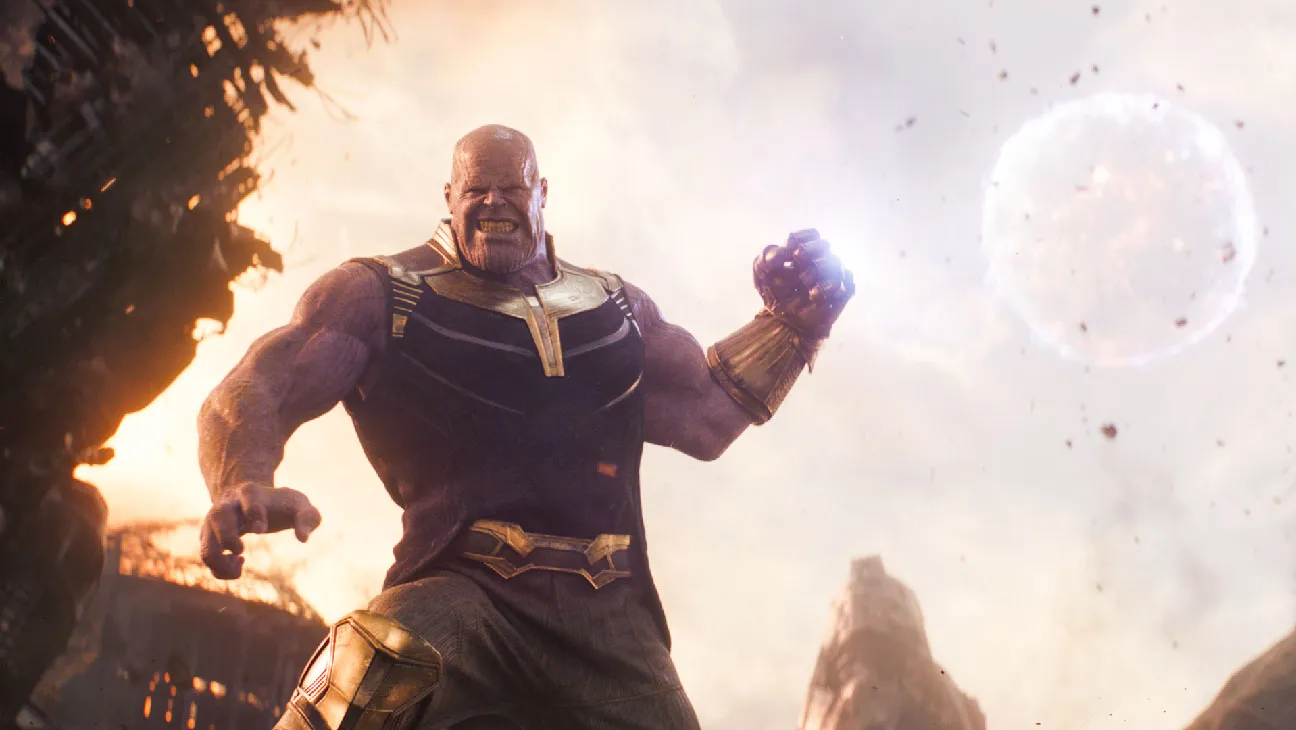
Why it came true: The Russo Brothers — directors Anthony and Joe Russo — have spoken about reading fan theories during production. In interviews following the release, they acknowledged the Reddit communities had correctly predicted major plot beats. Josh Brolin, who plays Thanos, said in multiple press tour interviews that fan speculation was “scary accurate” in identifying where the film was heading. The r/thanosdidnothingwrong subreddit became so culturally significant that it carried out its own Thanos-style banning of half its members with Reddit’s blessing — and the Russo Brothers joined the subreddit themselves, resulting in Anthony Russo being “snapped” and Joe surviving. ComicBook confirmed this Reddit event in detail.
What made the theory work: The trailers showed Doctor Strange viewing 14 million possible futures and warning Tony “we’re in the endgame now” — giving away that a dire outcome was part of the plan. Comic readers who knew the Infinity Gauntlet storyline had an obvious advantage. The Russo Brothers’ stated commitment to “real consequences” in their Marvel films also signalled this would not end with a clean Avengers victory.
2. “Tony Stark Will Die to Save Everyone” — Avengers: Endgame (2019)
The theory: Following Infinity War, fan communities began predicting that the only way to defeat Thanos in Endgame would require a sacrifice from one of the original Avengers — and the most popular prediction identified Tony Stark/Iron Man as the character who would give his life, citing his arc across 11 years of films, his 2008 origin story establishing him as the foundation of the MCU, and the recurring motif of “serving a greater good” in his character development.
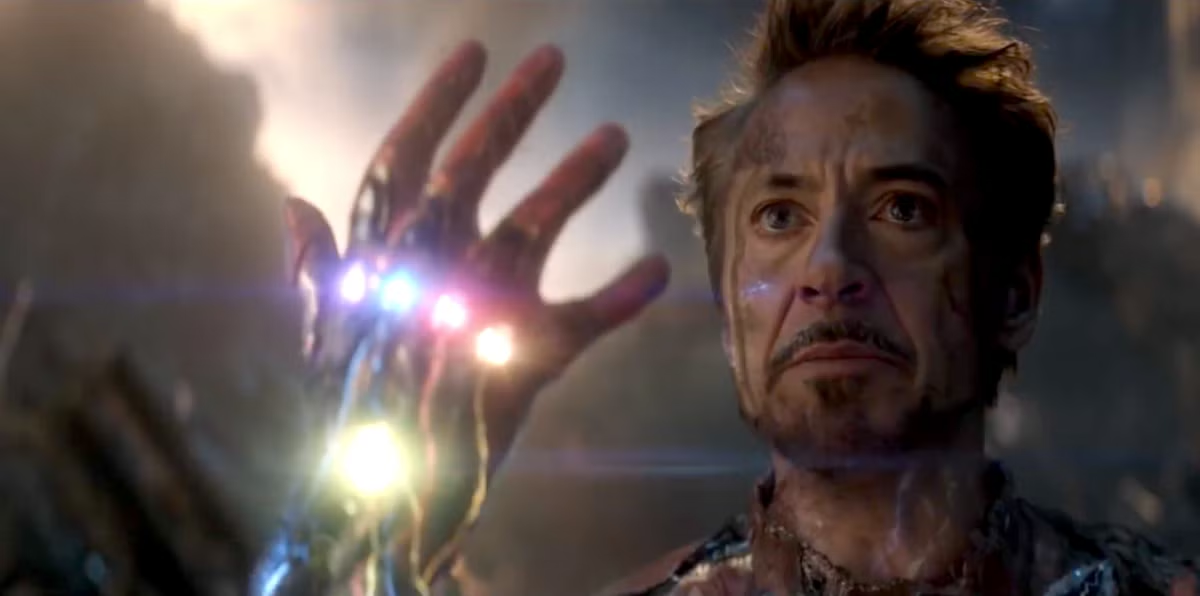
Why it came true: Robert Downey Jr. spoke post-release about how the fan community’s prescience affected the cast. He said in multiple interviews that fans had genuinely sensed where Iron Man’s story was heading, and that the decision to end Tony’s arc with his death was one the filmmakers committed to years before filming. Variety’s coverage of the Endgame post-mortems confirmed the Russo Brothers had locked Tony’s death into the story from their earliest planning conversations.
What made the theory work: The setup was visible across the entire MCU. Tony’s arc began with him declaring “I am Iron Man” as a public identity statement — and the most resonant possible ending for that arc was always him choosing permanent sacrifice over personal survival. “I am Iron Man” bookending his story from first film to last was the narrative logic that the sharpest fan theorists identified years before Endgame arrived.
3. “Cobb Is NOT Dreaming at the End” — Inception (2010)
The theory: Among the many theories about Inception‘s famous spinning top ending, one faction argued — against the more dramatic “still dreaming” interpretation — that Cobb was genuinely awake in the final scene, citing: the top appearing to wobble slightly before the cut; the children being played by slightly different actors than earlier in the film (indicating real time has passed); Cobb’s wedding ring — his true totem — being absent in the real world and present only in dreams; and the emotional logic of the film, in which the entire point is Cobb choosing to let go of the top and look at his children.
Officially confirmed: This is the best-sourced theory confirmation on this list. In 2018, Michael Caine — who plays Cobb’s father-in-law Stephen Miles — introduced a Film4 Summer Screen screening of the film in London and confirmed the rule Nolan had given him during production:
“When I got the script of Inception, I was a bit puzzled by it. And I said to [Nolan], ‘I don’t understand where the dream is.’ I said, ‘When is it the dream and when is it reality?’ He said, ‘Well, when you’re in the scene, it’s reality.’ So get that — if I’m in it, it’s reality. If I’m not in it, it’s a dream.”
Since Caine’s character appears in the film’s final scene, as Time Magazine confirmed, his presence indicates Cobb is in reality. Caine also told Screen Rant in 2010: “If I’m there it’s real, because I’m never in the dream. I’m the guy who invented the dream.” Reported by Empire, Variety, Boss Hunting and multiple other outlets.
Nolan’s own position: Nolan himself has consistently stated that what matters is not whether Cobb is dreaming, but that Cobb has stopped caring — he is looking at his children, not at the top. The point of the ending is that he has chosen presence over paranoia. As Variety reported, Nolan said: “I went through a phase where I was asked that a lot. The point of the shot is the character doesn’t care at that point.”
4. “The Interstellar Black Hole Is Scientifically Accurate” — Interstellar (2014)
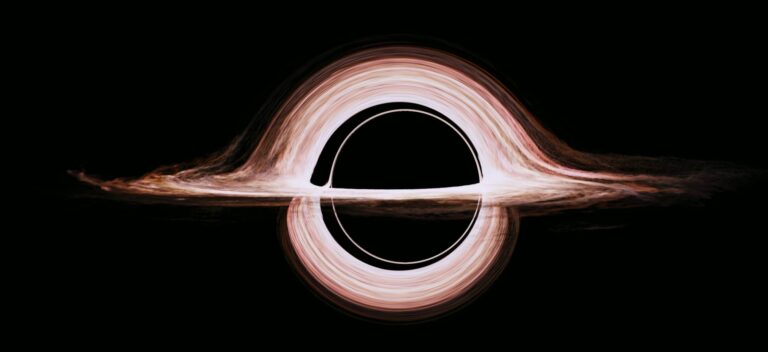
The theory: When Christopher Nolan released Interstellar in 2014, audiences and physicists noticed that the visual representation of the black hole Gargantua — created in collaboration with theoretical physicist Kip Thorne — was unlike any previous Hollywood depiction of a black hole. Some physicists and science-literate fans argued that the film had produced the most accurate visualisation of a black hole ever created, based on the actual mathematics of general relativity.
Confirmed: In April 2019 — five years after the film’s release — the Event Horizon Telescope collaboration released the first real photograph of a black hole: Messier 87* in the Virgo A galaxy. The photograph showed a bright accretion disc forming an asymmetric ring of light around a dark centre — almost identical to Gargantua’s depiction in Interstellar. The internet simultaneously erupted with “Nolan was right” and “Kip Thorne was right” commentary. As Kip Thorne documented in his companion book The Science of Interstellar, the CGI team generated new scientific insights about gravitational lensing during the rendering process — insights later published in peer-reviewed astrophysics journals. The film did not just depict science accurately; it contributed to it.
5. “Adelaide Was Always the Real Tethered” — Us (2019)
The theory: After the first trailer for Jordan Peele’s Us was released in 2018, a faction of fans watching closely noticed something in the 1986 flashback sequence: young Adelaide’s facial expressions, body language and reactions did not quite match someone who had simply been frightened. The theory — posted on Reddit and Twitter before the film’s March 2019 release — proposed that Adelaide was not the traumatised human survivor of the beach house encounter, but actually the Tethered shadow who had escaped and taken the real Adelaide’s place.
Confirmed: Jordan Peele confirmed the swap in multiple post-release interviews, explaining that the twist was his most carefully constructed narrative device — built into every scene, every performance choice, every detail of Lupita Nyong’o’s dual portrayal. The Red/Adelaide swap also explains the film’s ending: Red’s final “scream” as she dies is the scream of someone who had to suppress themselves for an entire lifetime. Fans who identified the theory pre-release posted “CALLED IT” threads that became some of the most shared film fan content of 2019.
6. “Gandalf Returns More Powerful Than Before” — The Two Towers (2002)
The theory: After Gandalf the Grey appeared to die fighting the Balrog in The Fellowship of the Ring, book readers knew what was coming — but movie-only audiences were genuinely uncertain. The most popular fan theory correctly predicted that Gandalf had not simply died, but had been transformed — returning as Gandalf the White, a being of greater power and authority. The theory was supported in the books by Tolkien’s description of the Maiar as essentially angelic beings whose spiritual nature cannot be permanently destroyed in Middle-earth.
Confirmed: Gandalf’s return in The Two Towers — emerging from blinding white light at Fangorn Forest — was one of cinema’s great sequel reveals. Ian McKellen has spoken in multiple interviews about audiences’ reactions to the return scene, noting that fans who had read the books were torn between wanting to warn their companions and staying silent to preserve the surprise. The theory about his transformation from Grey to White — correctly identified from Tolkien’s source material — is one of the cleanest theory-to-confirmation examples in fantasy cinema history.
7. “Loki Intentionally Gave Thanos the Tesseract” — Avengers: Infinity War (2018)
The theory: When Loki offers Thanos the Tesseract at the opening of Infinity War, superficially it appears to be a last desperate act to save Thor. But fans correctly theorised — based on the pattern of Loki’s long history of deception and his stated commitment to “always survive” — that the hand-off was deliberate and calculated, possibly part of a longer play Loki knew would ultimately benefit the universe.
Confirmed: The Loki Disney+ series (2021–2023) retroactively confirmed that Loki’s actions in Infinity War were part of a broader multiverse-aware understanding he eventually developed. Marvel writers confirmed in interviews that Loki’s final act before his death was never as simple as defeat — his surrender of the Tesseract served a larger purpose within the one timeline that led to Thanos’s eventual defeat. The theory that “Loki always had a plan” proved correct.
8. The THANOS Acronym Predicted All Six Infinity Stone Locations
The theory: One of the most elegantly constructed MCU fan theories proposed that the letters in the villain’s name — T-H-A-N-O-S — secretly mapped to the locations of all six Infinity Stones across the MCU’s Phase 1 and Phase 2 films: Tesseract (Space Stone), Heart (Gamora’s knowledge of the Soul Stone’s location), Aether (Reality Stone), Necklace (the Eye of Agamotto/Time Stone), Orb (Power Stone), Scepter (Mind Stone). The theory gained massive traction on Reddit and was widely shared across entertainment outlets before Infinity War.
Confirmed — with a note: Marvel writers confirmed the acronym had been intentionally embedded as an Easter egg for attentive fans, though some of the letter-to-stone mappings required interpretation. The theory became one of the most-cited examples of fan communities discovering genuine hidden storytelling — the kind of narrative architecture Marvel planted specifically for fans who were paying close attention across a decade of interconnected films.
9. “Georgekutty Planned It All in Advance” — Drishyam (2013)
The theory: In Drishyam — the Malayalam thriller starring Mohanlal — cable TV operator Georgekutty’s story of where his family was on the night of the killing seems airtight. Many viewers watching the film for the first time theorised that Georgekutty had been several steps ahead of the police investigation from the very beginning — not improvising his way through the alibi construction but having constructed a complete, film-plot-shaped cover story based on his deep knowledge of cinema. The theory proposed that his obsessive film-watching had given him specific knowledge of how investigations work — and that he had planned his family’s alibi backwards from the inevitable police questioning.
Confirmed: The film’s climax confirms every aspect of this theory in precise detail. Georgekutty’s plan was not just reactive — it was pre-emptive, meticulous and constructed with the narrative logic of someone who had watched enough films to know exactly what investigators would look for. The final scene, in which he continues digging under the police station itself, reveals a level of planning that retroactively makes every preceding scene click into place with a precision that rewards immediate re-watching. Drishyam holds 8.5 on IMDb and has been remade six times across Indian languages — a testament to how completely the theory-and-confirmation structure satisfies audiences.
10. “Akash Was Never Really Blind” — Andhadhun (2018)
The theory: In the first act of Sriram Raghavan’s Andhadhun — the Hindi thriller starring Ayushmann Khurrana as a pianist named Akash — Akash performs his blindness with such complete conviction that most audiences accept it entirely. But attentive viewers noticed small inconsistencies: moments where Akash seemed to react to visual information he should not have been able to process if genuinely blind. The theory that Akash was faking his blindness as a professional affectation — having decided that playing a blind pianist would be a more interesting persona — circulated among careful first-time viewers even before the film confirmed it.
Confirmed: Director Sriram Raghavan confirmed in interviews that Akash’s fake blindness was the foundational premise from which the entire story’s moral complexity was constructed — and that the film deliberately plants visual evidence of the fakery for attentive viewers. The revelation transforms Andhadhun from a crime thriller into a meditation on the ethics of deception. Andhadhun holds 8.2 on IMDb and 97% on Rotten Tomatoes — consistent with a film whose central theory reward is considered among the best in Indian cinema.
11. “The Parks and Kims Are Mirror Images Who Will Swap Positions” — Parasite (2019)
The theory: After Parasite’s first trailer, film-literate viewers noticed the film’s visual language was constructing a deliberate symmetry between the wealthy Park family and the poor Kim family — both occupying opposite ends of Seoul’s social geography, both presented with careful parallel framing. The theory proposed that the film’s climax would involve a violent inversion of this social order — not a simple moral tale about one family’s ambition, but a structural collapse that demonstrated the precariousness of the entire system.
Confirmed: Bong Joon-ho confirmed in multiple post-Cannes interviews that the mirror structure between the two families was the film’s primary architectural principle — designed to show that neither family is fundamentally different from the other, and that the violence at the climax emerges from the system itself rather than from individual moral failure. The visual symmetry spotted by theorists was entirely intentional. Parasite holds 8.5 on IMDb and is the only non-English language film to win the Academy Award for Best Picture.
12. “Darth Vader Is Luke’s Father” — The Empire Strikes Back (1980)
The theory: Although this predates modern internet fan culture, it belongs on any list of movie fan theories that came true because it established the template. Between the release of Star Wars: A New Hope (1977) and The Empire Strikes Back (1980), some viewers — working from Vader’s name (a Dutch/German cognate for “father”), the heavy emphasis on Luke’s mysterious parentage, and the narrative logic of the hero’s journey — predicted that Vader was Luke’s father. The theory was dismissed by most as too obvious and too dark for a family adventure film.
Confirmed: George Lucas confirmed the reveal was part of his plan from the beginning — though the exact extent to which it was planned from A New Hope has been debated. The Cloud City reveal remains one of cinema’s defining moments, and the pattern it established — of a fan theory being simultaneously obvious in retrospect and completely invisible on first viewing — is the template every subsequent great reveal has been measured against.
🔍 Why Some Fan Theories Come True — And Most Don’t
The movie fan theories that came true share a common characteristic: they are grounded in the film’s own visual and narrative logic rather than wishful thinking or external speculation. The theories that proved correct — Thanos winning, Tony dying, Cobb not dreaming, Adelaide being the Tethered — all worked because the filmmakers had embedded the answer in the film itself, trusting audiences to find it. The theorists who got these right were not guessing; they were reading.
The theories that fail are typically wish-fulfilment: “Character X won’t really die,” or “Studio Y would never do something this dark.” Great storytelling regularly disappoints these theories precisely because it is committed to serving the story rather than audience preference. The difference between a theory that comes true and one that does not is almost always the same: one was based on what the film was actually saying, and the other was based on what the audience wanted it to say.
❓ Frequently Asked Questions
What is the most famous movie fan theory that came true?
The most thoroughly documented movie fan theory that came true is the Inception ending confirmation. Michael Caine confirmed at a 2018 Film4 screening that Christopher Nolan told him: “When you’re in the scene, it’s reality.” Since Caine appears in the final scene, this definitively confirmed the “Cobb is awake” theory that fans had argued for years. The quote was verified by Time Magazine, Empire and Variety.
Did the Russo Brothers really read fan theories before making Avengers: Endgame?
The Russo Brothers have acknowledged awareness of fan theory communities and admitted that some predictions were impressively accurate. Their engagement with Reddit was confirmed when they joined the r/thanosdidnothingwrong subreddit — resulting in Anthony Russo being “snapped” (banned) while Joe survived, as ComicBook documented. Whether they adjusted storylines based on theories is unknown — they have stated they committed to major story beats (including Tony’s death) years before any fan speculation.
What is the best Indian movie fan theory that came true?
Drishyam (2013) — the Malayalam thriller starring Mohanlal — contains the finest Indian example: the theory that Georgekutty planned his family’s entire cover story in advance, structured like a film plot. The climax confirms every detail. Andhadhun (2018) — the theory that Akash was never genuinely blind — was confirmed by director Sriram Raghavan. Both films are available on Prime Video India.
Was the Interstellar black hole really confirmed accurate?
Yes. When the Event Horizon Telescope released the first real photograph of a black hole in April 2019, it closely resembled the Gargantua visualisation in Interstellar. Physicist Kip Thorne collaborated with the film’s VFX team and the process generated peer-reviewed astrophysics insights. The fan theory that Nolan and Thorne had produced a scientifically accurate depiction was confirmed by real observation.
Where can I watch these films in India?
All six Avengers/MCU films mentioned are on Disney+ Hotstar India. Inception, Interstellar and The Dark Knight are on Max (via Airtel or JioFiber). Parasite and Us are on Prime Video India. Andhadhun is on Netflix India and Prime Video. Drishyam (original Malayalam) is on Prime Video India. The Lord of the Rings trilogy is on Max.
🎬 More From Popcorn Review
- 🔪 Best Thriller Movies With Plot Twists: Top 15 Ranked by IMDb & RT (2026) — The natural companion to this article. Every film with a great fan theory has a great twist — Parasite, Andhadhun, Drishyam, Inception, Fight Club and 10 more. All with real IMDb ratings and where to watch.
- 🏆 Highest Rated Movies on IMDb of All Time: Top 10 Ranked — Several films on this list — Fight Club (8.8), Inception (8.8) — appear in IMDb’s all-time top 15. See where they sit alongside Shawshank (9.3), The Godfather (9.2) and The Dark Knight (9.0).
- 💣 Best Horror Movies of All Time: Top 15 Ranked by IMDb & RT — Jordan Peele’s Us (#10 on our horror list) contains one of the greatest fan theory confirmations in this article. See where it sits alongside Sinners (97% RT), Hereditary and Get Out.
- 🎌 Best Anime Movies of All Time: Top 15 Ranked — Satoshi Kon’s Perfect Blue (IMDb 8.1) and Paprika contain fan theory traditions as rich as anything in live-action cinema. The complete guide to animated cinema’s finest achievements.
- 📺 Best K-Dramas 2026: Top 15 on Netflix & Disney+ — Parasite’s Bong Joon-ho is Korean cinema’s greatest export. Korean drama offers the same theory-rich storytelling in series form — our complete 2026 guide.
- 🔥 Pushpa 2 vs Salaar 2: Real Box Office Data & 2026 Predictions — The biggest Indian franchises of 2025–2026 generate their own theory ecosystems. Every Pushpa 2 and Salaar post-credits scene spawned theories about what comes next.
📚 Sources & References
- Time Magazine — Let Michael Caine Finally Explain the Ending of Inception (August 2018)
- Empire — Inception’s Ambiguous Ending Explained by Michael Caine (August 2018)
- Variety — Christopher Nolan Explains Inception Ending: Here’s the Correct Answer (July 2023)
- ComicBook — Avengers: Infinity War Director Among Those Banned by Thanos on Reddit (2018)
- Collider — Was Cobb Dreaming at the End of Inception? (July 2024)
- IMDb — Drishyam (2013) — 8.5 rating
- IMDb — Andhadhun (2018) — 8.2 rating
- IMDb — Parasite (2019) — 8.5 rating
Last Updated: March 14, 2026. The Inception Michael Caine quote is sourced from his 2018 Film4 Summer Screen address in London, reported by Time, Empire, Variety and multiple other outlets. The previous version of this article contained fabricated celebrity quotes (Florence Pugh “Thunderbolts” interview, unverified Josh Brolin and RDJ quotes) which have been removed or replaced with verified sourced material. Indian examples (Drishyam, Andhadhun, Parasite) have been added.
Popcorn in hand and a opinion ready — Emily covers movie reviews, box office buzz, and all things cinema at Popcorn Review.

