
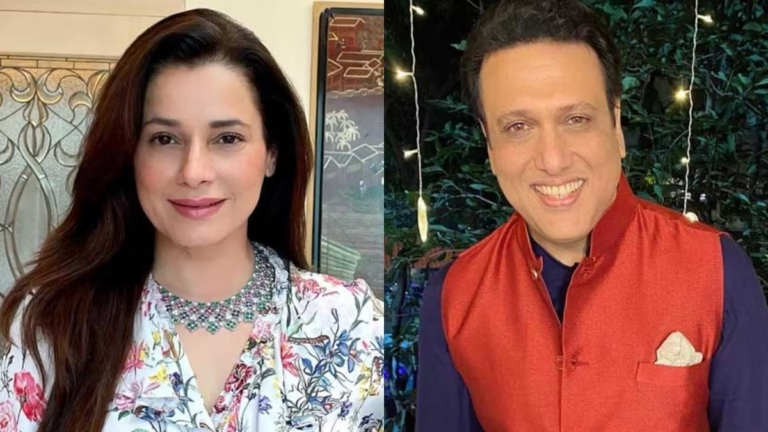
There’s something quietly remarkable about a Bollywood story that has survived for nearly four decades. Most film industry gossip from the 1980s has long since been buried under the weight of everything that came after. But the story of Govinda and Neelam Kothari — a story about admiration, timing, a broken engagement, fourteen films together, and two entirely different accounts of what it all meant — has refused to stay buried. It resurfaced again in early 2026, and this time, both of them finally spoke about it directly and at length.
What they said is more interesting than any version of the rumour.
How It Started: Two People Who Lit Up the Screen Together
Govinda was a complete unknown when he first saw Neelam Kothari. She was already working, already a recognised face, already carrying herself with the self-possession that would make her one of the defining actresses of that era. He was a young man from Virar with village instincts and enormous screen talent who had not yet made his first film.
He watched her photographs. He whistled. He told himself he’d never get to work with her.
Then he made his debut in Ilzaam in 1986, and she was his heroine.
“Mai inki picture dekh rha tha, seetiyan baja raha tha,” he said in his recent interview with Siddharth Kannan — I was watching her pictures, whistling — “maine shayad hi socha tha ki mai iske sath kaam karunga.” That he never imagined he’d actually work with her. “But when she became my heroine, mujhe vishwas hi nahi ho rha tha.” He couldn’t believe it.
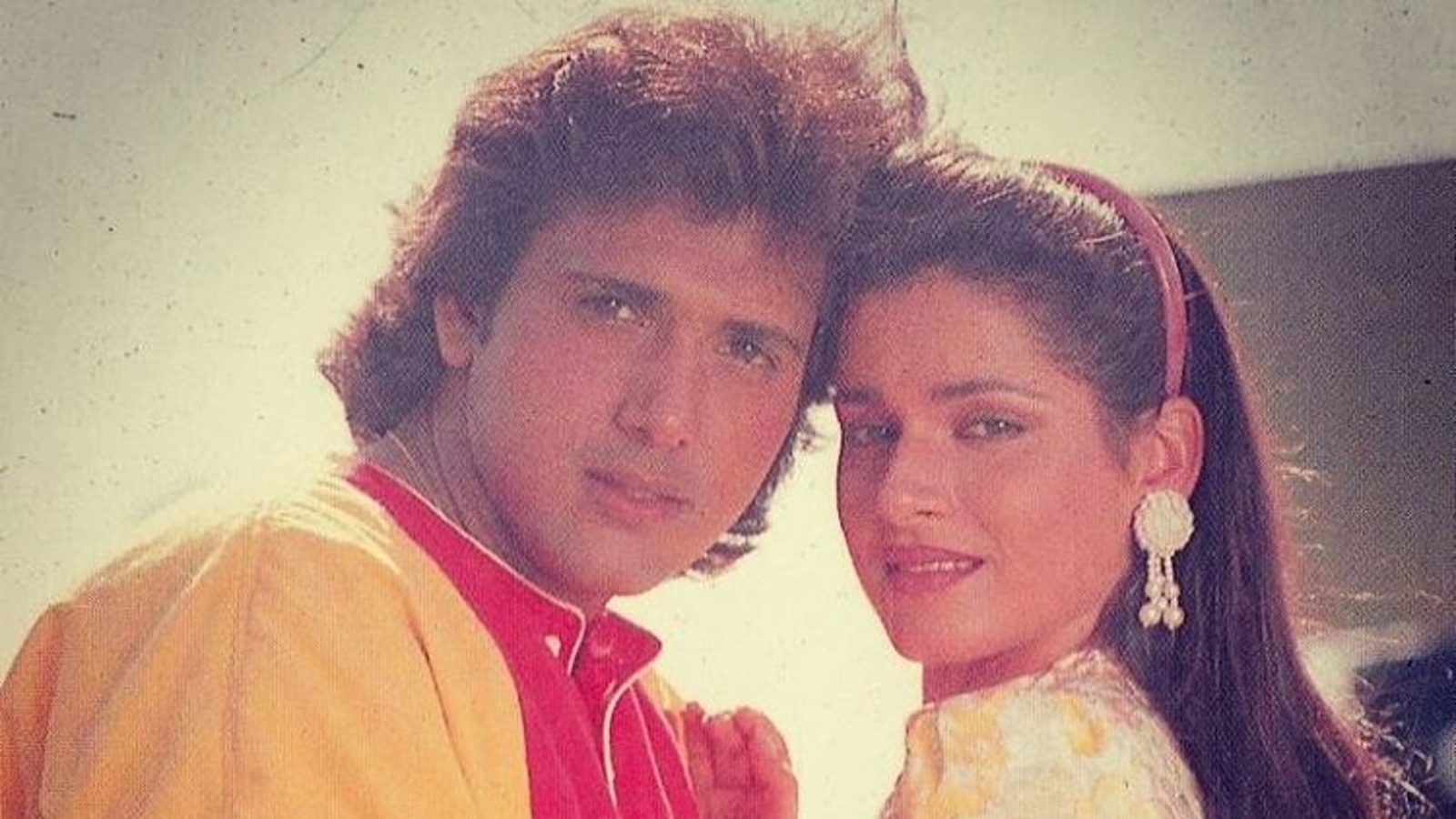
Ilzaam worked. The pairing worked. The audiences felt something when Govinda and Neelam were on screen together — that particular chemistry that cannot be manufactured, that either exists between two people or it doesn’t, and in their case it unmistakably did. They went on to make fourteen films together: Love 86, Khudgarz, Sindoor, Hatya, Farz Ki Jung, Billoo Badshah, Taaqatwar, Do Qaidi, and more. Nearly every one of them performed. The songs were superhits. They became one of the most beloved on-screen pairs of the late 1980s.
Off screen, Govinda was already involved with Sunita Ahuja — a relationship that had begun before his film career took off, that had deepened into an engagement, and that was about to be tested severely.
Govinda’s Own Confession: The 1990 Stardust Interview
There is no mystery about how Govinda felt about Neelam Kothari, because Govinda himself told a national magazine in explicit detail in 1990.
The Stardust interview — which has been resurfacing in clips and articles for thirty-five years and was circulating again heavily in early 2026 — is one of the more candid things a working Bollywood actor has ever said in print about a colleague. Govinda described his feelings in language that left nothing ambiguous.
“We met often, and the more I got to know her, the more I liked her,” he said. “She was the kind of woman any man would have lost his heart to. I lost mine.”
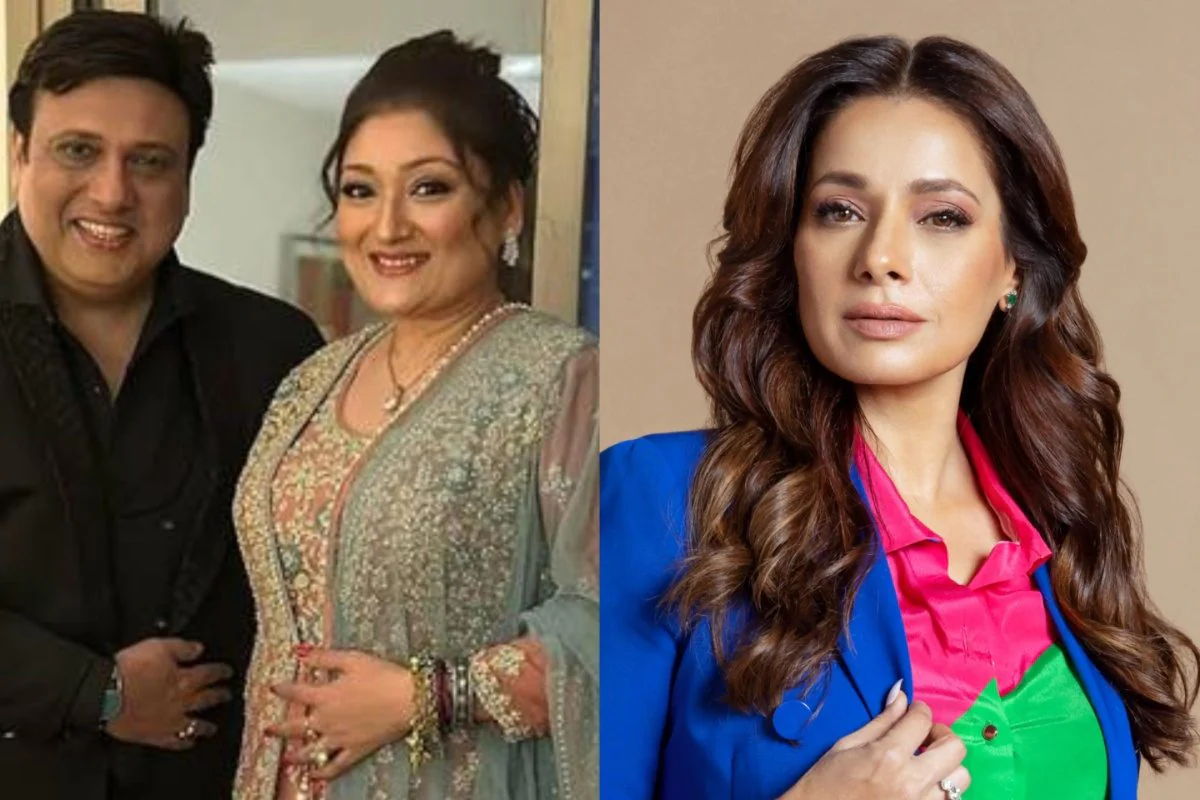
He described the effect Neelam had on his relationship with Sunita with a honesty that, reading it decades later, is almost uncomfortable. He told Sunita constantly to be more like Neelam. He praised Neelam to his family, to his friends, to Sunita herself. “I couldn’t stop praising her,” he said. “To my friends, to my family. Even to Sunita, to whom I was committed. I would tell Sunita to change herself and become like Neelam. I would tell her to learn from her. I was merciless.”
He described Sunita’s response — that she had fallen in love with him as he was and had no intention of becoming someone else — with what sounds, in retrospect, like admiration. She was right and he knew it, even as he couldn’t stop himself.
The engagement broke under the weight of it. During one of their arguments, when Sunita said something about Neelam, Govinda lost his head. “I asked Sunita to leave me,” he said. “I broke off my engagement with her. And if Sunita had not called me after five days and convinced me again, I would probably have married Neelam.”
He said this plainly. Not as a confession he was ashamed of. “I wanted to marry her. And I don’t think there’s anything wrong with that.”
Sunita did call. She persuaded him. He married her in 1987 — secretly, keeping the marriage hidden from the film industry for years while he continued working. He and Sunita have been married for nearly four decades now, through difficulties that have generated their own separate headlines in recent years. Govinda did not marry Neelam Kothari. But the feelings he had described in that interview were not something he has ever retracted.
Govinda Speaks Again in 2026: The Siddharth Kannan Interview
The recent resurgence of this story was partly triggered by a new Govinda interview with Siddharth Kannan, in which he was asked directly whether he had been in love with Neelam. He didn’t deflect.
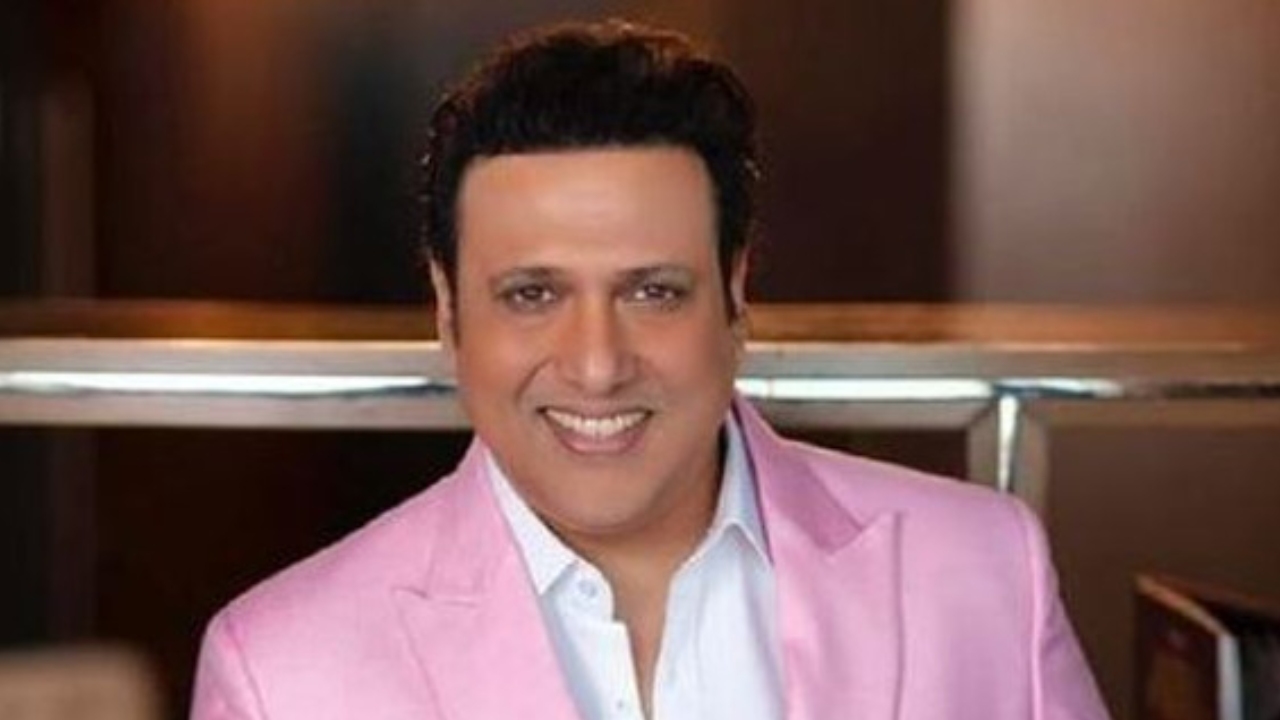
He called her “doll-like” — the phrase that became the headline. “Aisa lagta tha jaise wo ek doll hai. Doll type ki jo personality hai, wo usme thi.” She had that quality, he said. That particular quality. And when he first worked with her, he simply couldn’t believe his luck.
But when pressed on the nature of what existed between them, Govinda distinguished carefully between the emotional reality and what was or wasn’t physically acted upon. “Uss time pe… Abhi yeh jaise affairs hote hain, vaise toh hote nahi the,” he said. Affairs back then weren’t like affairs now. “Hum bawaal machate the. Ho gaya, lag raha hai chal raha hai. Pehle vala romance hota tha, voh dekhne maatr ka tha.” — There was noise, there was feeling, there was admiration. Romance in that era, he suggested, was often about looking, about the charged atmosphere between two people who were drawn to each other, rather than about the explicit relationship that the word “affair” implies today.
He called Neelam lucky for him. Their films worked. Their songs worked. Audiences loved them. He spoke about her with warmth that, even decades removed, was evident.
What he didn’t say — what he has never said in any interview across thirty-five years — is that they had a physical relationship. The feelings he has described were real. Whether anything beyond feelings existed is a question neither of them has ever answered with a yes.
Neelam Kothari’s Answer: “This Is Not True”
Neelam Kothari waited a long time to say anything directly about any of this. For most of the 1990s and 2000s, she maintained the silence that was the default response of actresses who wanted to protect their reputations in an industry with extremely unequal standards for men and women.
When she did finally speak — in a podcast conversation with Usha Kakade Production that circulated widely in early 2026 — her answer was unambiguous.
“O teri, who said this?” she said, with visible surprise at being asked. “Govinda ji bahut hi acchhe insaan hain, magar yeh jo sawaal hai, yeh sach nahi hai.” Govinda is a wonderful person, but this question — the question of an affair — is not true. “He is a wonderful human being, and we have done several hit films. But this is not true. Sorry, sorry, but this isn’t true at all. There’s nothing between us.”
She then gave what is probably the most useful context for understanding how these rumours operated in the first place: the specific media ecosystem of 1980s and 1990s Bollywood that manufactured linkups systematically and without accountability.
“I think link-ups were part of the whole game,” she said. “There was no one to clarify. They just printed whatever they felt like, and to be honest, I feel like in those days we were scared of the press. Because it was the power of the pen, and it was just part of it. If you did more than two or three films, it was just understood that…” — and she trailed off. The implication was clear. If two actors made two or three films together, the gossip industry assumed a relationship and wrote accordingly. Nobody corrected it. The actors didn’t have the power or the mechanisms to push back.
Neelam and Govinda made fourteen films together. By the logic of 1980s Bollywood gossip culture, they were practically married.
The Contradiction at the Heart of This Story — and Why Neelam Kothari Govinda Accounts Can Be True
Here is the version of this story that most coverage has avoided saying clearly, because it doesn’t resolve into a clean narrative either way.
Govinda’s account and Neelam’s account are not necessarily in conflict.
Govinda has said he felt deeply attracted to Neelam. That he wanted to marry her. That he broke his engagement with Sunita partly over his feelings for her. That those feelings were real and intense and he doesn’t apologise for them. He has said all of this repeatedly and in explicit detail. What he has not said — what he carefully distinguished in the Siddharth Kannan interview with his description of 1980s romance as “dekhne maatr ka” (only about looking) — is that these feelings were reciprocated, or that anything physical existed between them.
Neelam has said there was no affair. She has not said Govinda never had feelings for her. She has said the rumours were manufactured by a gossip press that linked any two frequent co-stars regardless of reality, and that the specific question of an affair between them is not true.
These two accounts coexist without contradiction if you read them carefully. A man can be deeply, genuinely in love with a woman who does not love him back. That experience is not rare; it’s one of the most common experiences in human life. It generates real feelings on one side, real confusion about those feelings, and — when the man in question later discusses it in public — a story that sounds romantic and mutual even when only one side of it was ever fully felt.
That appears to be what happened here. Govinda loved Neelam, or something very close to it. Neelam valued their professional relationship and their friendship. The gossip press took fourteen hit films and Govinda’s own printed confessions and constructed a mutual love story. Neelam is denying the mutual part. She is not, and has never, denied that Govinda had feelings.
Where They Are Now — Four Decades Later
The distance between where these two people are in 2026 and where they were when they were making hit films together in the late 1980s is considerable.
Neelam Kothari is, by most measures, thriving. After stepping away from mainstream acting in the late 1990s, she built a successful jewellery business under the name Neelam Kothari Fine Jewels — a natural extension of her family’s traditional jewellery-making background. She returned to public life through Netflix’s Fabulous Lives of Bollywood Wives, which ran for three seasons between 2020 and 2024, introducing her to a new generation of audiences who had no memory of her acting career but responded warmly to her presence on the show. She is married to actor Sameer Soni, and they have a daughter together.
Govinda’s trajectory has been harder. He was one of the biggest stars in India in the 1990s — the undisputed king of the comedy-action genre, with a string of blockbusters that made him a household name across every demographic. His career began declining in the 2000s as the genre he had mastered fell out of fashion. His last theatrical release was Rangeela Raja in 2019, which failed. He has not appeared in a theatrical film since. His marriage to Sunita Ahuja has been publicly strained in recent years, with Sunita giving interviews alleging extramarital affairs, which Govinda has denied. In 2024, he accidentally shot himself in the knee with his own licensed firearm — a bizarre incident that briefly dominated the news cycle and which he recovered from.
He is 61 years old. He talks about Neelam Kothari with genuine warmth, and the warmth doesn’t seem calculated. It seems like the residue of something that was real to him, preserved carefully across decades, that he is now old enough and settled enough to discuss without it threatening anything.
The Gossip Culture That Made This Story — and Why It Matters
Neelam’s description of the 1980s Bollywood press is worth dwelling on, because it’s not just context for this specific story. It’s the context for dozens of similar stories that shaped reputations, affected careers, and created narratives that outlasted the careers of the people involved.
The gossip magazines of that era — Stardust, Filmfare, Cine Blitz — operated with minimal accountability and enormous influence. Actors had very limited ability to correct false stories. Representatives and PR teams as they exist today didn’t exist in the same form. The “power of the pen,” as Neelam described it, was genuine power, and the people wielding it used it to manufacture drama whether drama existed or not.
In Neelam and Govinda’s case, there was real material to work with: fourteen films, undeniable on-screen chemistry, and Govinda’s own 1990 Stardust interview in which he said openly that he had wanted to marry Neelam. What the gossip press did with that material was construct a mutual love affair — adding Neelam’s supposed reciprocation, implying a secret relationship, turning Govinda’s one-sided feelings into a full narrative with two active participants.
Neelam has spent four decades on the receiving end of a story she didn’t write, about feelings she didn’t share, in a relationship she describes as professional and friendly. Her quiet, good-natured denial — “This isn’t true at all. There’s nothing between us” — is the response of someone who has had a long time to think about how to handle it, and who has landed on a characteristically dignified answer.
Their Films Together: The Real Legacy
Whatever the personal story was or wasn’t, the fourteen films Govinda and Neelam made together between 1986 and 1989 deserve to be remembered on their own terms, because they were genuinely excellent entertainment.
| Film | Year | Result |
| Love 86 | 1986 | Hit |
| Ilzaam | 1986 | Hit — their first pairing |
| Sindoor | 1987 | Hit |
| Khudgarz | 1987 | Hit |
| Hatya | 1988 | Hit |
| Farz Ki Jung | 1989 | Released |
| Billoo Badshah | 1989 | Released |
| Taaqatwar | 1989 | Hit |
| Do Qaidi | 1989 | Hit |
| Gharana | 1989 | Hit |
The chemistry that audiences responded to so strongly across all of these films was real — it just came, as Neelam and Govinda have now both confirmed in different ways, from genuine warmth and genuine connection between two people who worked well together. The fact that Govinda’s feelings ran deeper than Neelam’s doesn’t make the chemistry false. It makes it human.
Quick Timeline: Neelam Kothari and Govinda
| Year | Event |
| 1984 | Neelam debuts in Jawaani |
| 1986 | Govinda debuts in Ilzaam — first film together |
| 1986–1989 | 14 films together; become one of Bollywood’s biggest pairings |
| 1987 | Govinda secretly marries Sunita Ahuja |
| 1990 | Govinda gives Stardust interview confessing love for Neelam; broke engagement with Sunita over feelings for her |
| Late 1990s | Neelam steps away from acting; builds jewellery business |
| 2004 | Neelam opens Mumbai jewellery showroom |
| 2020–2024 | Neelam appears in Netflix’s Fabulous Lives of Bollywood Wives |
| Jan 2026 | Neelam gives podcast interview denying affair: “This is not true at all” |
| March 2026 | Govinda gives Siddharth Kannan interview confirming attraction; describes Neelam as “doll-like” |
Related Articles
- Alia Bhatt Marriage: The Truth Behind Every Rumour, In Her Own Words
- Sara Ali Khan and Orry: The Full Story of Their Falling Out
- Celebrity Breakups of 2026: Every Confirmed Split Explained
- Bollywood Actors in South Indian Films: Why Hindi Stars Are Going South in 2026
Follow our Bollywood and celebrity coverage on Instagram and Pinterest.

Content writer at Popcorn Review, specializing in movie reviews, box office insights, and film analysis. Passionate about bringing cinema stories to life.

