
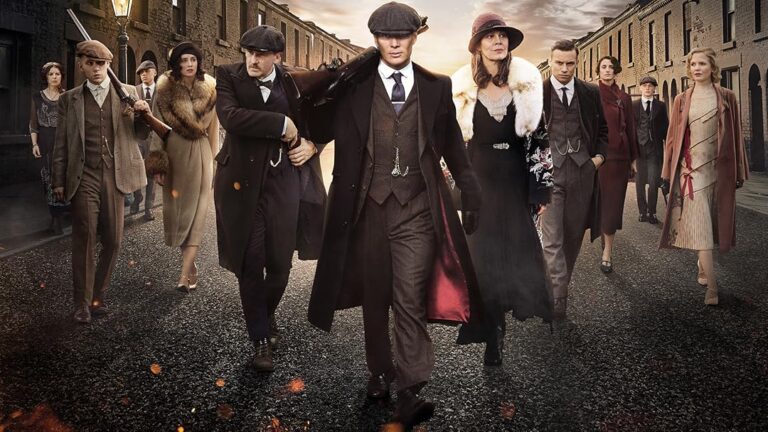
Four years. That is how long Peaky Blinders fans have been waiting for Peaky Blinders: The Immortal Man. Four years since Thomas Shelby rode off into what many believed was a near-perfect series finale. Four years of speculation, rumours, script rewrites, cast announcements, and one Oscar win for Cillian Murphy sandwiched in the middle of it all.
Now, two days before the Netflix global release on March 20, 2026, the question every fan and casual viewer is asking is simple: does Peaky Blinders: The Immortal Man actually deliver — or is it just a nostalgia cash grab dressed in a flat cap and a three-piece tweed suit?
This is our full, honest, deep-dive review. No spoilers where it matters. And we will tell you things other reviews won’t — including the psychological arc the film is really about, the one casting decision that almost derails it, and why the Indian and South Asian audience specifically will connect with this film more than Western critics expect.
Quick Facts: Peaky Blinders The Immortal Man
- Director: Tom Harper (Wild Rose, Heart of Stone)
- Writer: Steven Knight (Peaky Blinders creator, all 6 seasons)
- Starring: Cillian Murphy, Rebecca Ferguson, Barry Keoghan, Tim Roth, Stephen Graham, Sophie Rundle
- Runtime: 1 hour 52 minutes
- Rating: R (strong violence, language)
- Setting: Birmingham, England — 1940, during World War II
- Theatrical release: March 6, 2026 (select cinemas)
- Netflix release: March 20, 2026 (worldwide)
- IMDb Score: 7.7/10
- Rotten Tomatoes Critics Score: 92%
- Produced by: Cillian Murphy (also producer), Steven Knight, Guy Heeley
- Streaming platform: Netflix (exclusive worldwide)
Before We Review: Why the Peaky Blinders The Immortal Man Review Matters So Much
Let’s be honest about what this film is carrying on its back.
Peaky Blinders ran for six seasons between 2013 and 2022. At its peak — particularly seasons 2, 3, and 6, all of which hold 100% on Rotten Tomatoes — it was not just a popular show. It was a cultural event. The Shelby family’s rise from Birmingham back-street bookmakers to a criminal empire entangled with MI5, fascism, and post-war politics was one of the most ambitious storytelling projects in British television history.
Then came the series finale. Tommy Shelby, diagnosed with tuberculoma, staged his own death, planted a bullet in his own head, and walked away. For many fans — this reviewer included — it was a near-perfect ending. Elegiac, unresolved, and absolutely in keeping with the show’s bleak romanticism.
So when Peaky Blinders: The Immortal Man was announced, the first question was not ‘will it be good?’ — it was ‘does it need to exist?’ When Cillian Murphy told Netflix: ‘It seems like Tommy Shelby wasn’t finished with me,’ the romantic in you wants to believe it. The cynical part of you wonders how much of that decision was creative and how much was commercial.
Having now seen the film, the answer is: both. And that tension — between genuine artistic purpose and the gravitational pull of franchise economics — is visible in every frame of Peaky Blinders: The Immortal Man. Sometimes that tension produces electricity. Occasionally it produces frustration. Almost never does it produce boredom.
What Is Peaky Blinders The Immortal Man Actually About? (Spoiler-Free Plot Breakdown)
The film is set in Birmingham in 1940 — seven years after the events of the series finale. The world is at war. Birmingham is being bombed. And Tommy Shelby, now older and quieter, is living in self-imposed exile on a crumbling rural estate, writing his memoirs, grieving the deaths of his daughter Ruby and his brother Arthur, and apparently trying very hard to no longer be Thomas Shelby.
That peace, as always, does not last.
The central plot of Peaky Blinders: The Immortal Man involves Operation Bernhard — a real historical Nazi scheme in which Jewish concentration camp prisoners were forced to produce counterfeit British pound notes with the goal of flooding the UK economy and triggering financial collapse. The Nazis need a distribution network inside Britain. And somebody — very unwisely — has turned to Duke Shelby, Tommy’s estranged son, now running what remains of the Peaky Blinders on the streets of Small Heath.
Tommy must come out of exile. He must return to Birmingham. He must confront his son, his legacy, the Nazis, and — most importantly — himself.
The official synopsis: ‘Birmingham, 1940. Amidst the chaos of WWII, Tommy Shelby is driven back from a self-imposed exile to face his most destructive reckoning yet. With the future of the family and the country at stake, Tommy must face his own demons, and choose whether to confront his legacy, or burn it to the ground.’
What the synopsis does not tell you — and what makes the film more interesting than a simple ‘one last job’ gangster movie — is that Peaky Blinders: The Immortal Man is fundamentally a film about fathers and sons. About what we pass down. About whether a man built on violence can ever truly stop being violent — or whether he simply transfers that violence to the next generation and calls it legacy.
Cast and Performances: Who Shines and Who Disappoints in Peaky Blinders The Immortal Man
Cillian Murphy as Tommy Shelby: The Gold Standard
There is no version of this review that does not begin here. Cillian Murphy is the reason this film exists, the reason it works, and the reason — after winning the Academy Award for Oppenheimer in 2025 — his return to Tommy Shelby is the most anticipated performance of the streaming year.
Murphy does not coast on nostalgia. What he delivers in Peaky Blinders: The Immortal Man is a significantly different Tommy Shelby than the one we left in 2022. The tailoring is gone. The ferocious forward momentum is replaced by something sadder and more reflective. The older Tommy moves differently — slower, more deliberately — and Murphy communicates an entire decade of grief, guilt, and withdrawal in body language before he says a single word.
But when the aura returns — and it does, magnificently, in a sequence involving a horse that has already been flagged as destined for YouTube Shorts immortality — Murphy reminds you why this character embedded himself so deeply in the culture. He is, as Variety’s critic put it, ‘a psycho with a soul.’ That precise calibration is extraordinarily difficult to maintain. Murphy makes it look effortless.
Variety’s critic: ‘Cillian Murphy has always found just the right temperature to keep audiences on side: He’s a psycho, sure, but one with a soul.’
Barry Keoghan as Duke Shelby: Almost Perfect, Occasionally Overpitched
Barry Keoghan — Academy Award nominee, Saltburn breakout, The Banshees of Inisherin revelation — was the most intriguing casting decision in Peaky Blinders: The Immortal Man. As Duke Shelby, Tommy’s estranged son and the new head of the Peaky Blinders street operation, Keoghan brings his trademark unsettling energy to a role that fits him almost too naturally.
Duke is described in the film as a ‘bratty teenage nihilist,’ and Keoghan’s skew-whiff presence — equal parts lethal maniac and wounded naif — slots into that description with uncomfortable precision. The daddy issues between Tommy and Duke are the emotional engine of the film, and in the scenes where father and son are directly opposite each other, Peaky Blinders: The Immortal Man is genuinely electric.
The one caveat: Keoghan’s natural intensity occasionally overshoots the register the scenes require. There are moments where Duke needed to be smaller — more uncertain, more genuinely scared of his own father — and Keoghan’s instinct is always to dial up. It works more than it doesn’t. But it is noticeable.
Tim Roth as the Villain: The Film’s Biggest Weakness
This is where Peaky Blinders: The Immortal Man stumbles most visibly. Tim Roth — an extraordinarily gifted actor with a filmography that includes Reservoir Dogs, Pulp Fiction, and The Hateful Eight — is genuinely underserved by the script as the film’s primary antagonist.
The character is not written with enough specificity or menace to register as a genuine threat to Tommy Shelby. And when your villain does not feel dangerous, your protagonist does not feel tested. Multiple critics have noted this, including the Letterboxd consensus that the villain ‘never quite becomes as memorable, or as intimidating, as he should have been.’ This is not a failure of Roth’s performance — it is a failure of the script to give him anything worth performing.
In a series that gave us characters like Luca Changretta (Adrien Brody, season 4) and Oswald Mosley (Sam Claflin, seasons 5-6) as antagonists of genuine psychological weight, the Peaky Blinders: The Immortal Man villain feels like a placeholder. That is Peaky Blinders: The Immortal Man’s most significant creative misstep.
Rebecca Ferguson and the Returning Cast
Rebecca Ferguson brings her trademark intensity to a new character whose role in the plot we will not spoil. What we will say is that Ferguson and Murphy share a scene in the film’s second act that is among the best-written and best-performed moments in the entire Peaky Blinders franchise. Ferguson does not let Murphy steal every scene they share — which is exactly what this film needed.
The returning cast — Stephen Graham as Hayden Stagg, Sophie Rundle as Ada Shelby, Ned Dennehy, Packy Lee, and Ian Peck — are deployed with varying degrees of screen time. Their presence grounds the film in series continuity and provides the fan service that the narrative needs without overwhelming the new story being told. Notably absent: several fan favourites whose absence is explained by real-world production constraints. The film handles these absences as gracefully as it can.
Deep Psychological Analysis: What Peaky Blinders The Immortal Man Is Really About
Here is where most reviews stop, and where this one keeps going.
Peaky Blinders: The Immortal Man is being sold as a WWII gangster thriller. And it is that. But the real subject of the film — the question it is actually asking — is one of the oldest and most uncomfortable in storytelling: can a violent man escape his own violence? Or does he simply pass it down?
Tommy Shelby spent six seasons building an empire through intelligence, brutality, and a complete willingness to sacrifice anyone — including himself — to survive. The series finale suggested he might finally be free of it. Peaky Blinders: The Immortal Man immediately and deliberately dismantles that suggestion. There is no escape. There is no clean exit. What there is, is Duke — the son Tommy barely knew — making the exact same choices Tommy made thirty years earlier, in the same city, with the same logic.
The film’s most devastating scene — which we will not spoil — is the moment Tommy understands this. Not the plot mechanics of it, but the weight of it. The look on Murphy’s face in that scene is the entire movie condensed into a single expression. This is what the film is about. Not the Nazis. Not the counterfeit money. Not Operation Bernhard. The inheritance of damage.
The AV Club’s critic put it sharply: ‘A WWII-set season of Peaky Blinders involving Operation Bernhard would make for great television; in 112 minutes, there’s no time to enjoy the procedural and espionage pleasures of the premise.’ He is right about the format limitation. But he underestimates what the film does with the time it has.
The title itself — The Immortal Man — is doing a lot of work. It does not refer to Tommy’s physical survival. It refers to the version of Thomas Shelby that can never die: the one built out of violence, war, and the inability to believe he deserves anything else. The question the film poses is whether that version can be surrendered voluntarily — or whether it takes something catastrophic to kill it.
That is not the question a franchise cash grab asks. That is the question a genuine piece of storytelling asks. And whatever its flaws, Peaky Blinders: The Immortal Man is, at its core, genuine storytelling.
Direction, Cinematography and Soundtrack: The Craft Behind Peaky Blinders The Immortal Man
Tom Harper’s Direction
Tom Harper is not Steven Knight’s first choice as a director in most people’s imaginations — the series was built by directors like Otto Bathurst and Tim Mielants. But Harper, who helmed several episodes of the original series and has since directed the wildly entertaining Heart of Stone for Netflix, understands the show’s visual language deeply.
His direction of Peaky Blinders: The Immortal Man is controlled, atmospheric, and occasionally stunning. He does not try to make a big blockbuster movie out of material that is, at its heart, a character piece. The action sequences — and there are several good ones — serve the story rather than overwhelm it. The bombing of Birmingham is rendered with genuine horror. And the film’s quieter scenes — particularly a twilight sequence on horseback that is already being discussed as one of the most visually beautiful things Peaky Blinders has ever produced — demonstrate a directorial confidence that is easy to underestimate.
Set Design and Production Values
CBR’s Sean O’Connell noted that ‘the production values used to resurrect Birmingham have never looked better than they do in The Immortal Man.’ He is not wrong. The 1940s Small Heath reconstruction — built at Digbeth Loc Studios in Birmingham during a shoot that ran from September 30 to December 13, 2024 — is extraordinary. The bomb damage, the blackout aesthetics, the period detail of wartime Britain are rendered with a level of care and investment that makes the world feel real rather than costumed.
The Soundtrack
Peaky Blinders built a signature sonic identity through its anachronistic use of contemporary rock music — Nick Cave, Arctic Monkeys, The White Stripes, PJ Harvey — over 1920s and 1930s period visuals. Peaky Blinders: The Immortal Man continues this tradition and extends it into the 1940s setting. The effect remains as striking as it ever was. There is a specific cue in the film’s final act that, without spoiling anything, will produce involuntary goosebumps in anyone who loved the original series.
The companion soundtrack podcast, featuring interviews with the film’s cast and crew, is also available now on Netflix and Spotify for those who want to go deeper into the music curation behind the film.
El Camino vs The Immortal Man: The Most Useful Comparison for Peaky Blinders Fans
Multiple critics — most prominently Slashfilm’s Jeremy Mathai — have compared Peaky Blinders: The Immortal Man to El Camino: A Breaking Bad Movie, the 2019 Netflix film that served as Jesse Pinkman’s epilogue following Breaking Bad’s own near-perfect series finale.
This comparison is both illuminating and instructive. El Camino worked because it served the character rather than the franchise — it was not about ‘what happens next’ in a commercial sense, but about giving Jesse Pinkman the ending he deserved on his own terms. Peaky Blinders: The Immortal Man is attempting something similar for Tommy Shelby.
Where the comparison becomes complicated: El Camino was a tight 122-minute film with one protagonist, one supporting character (Jesse and Mike Ehrmantraut’s ghost), and one clearly defined emotional question. Peaky Blinders: The Immortal Man is juggling significantly more — a new villain, a new family member, a historical plot, multiple returning characters, and a franchise mythology that requires at least partial servicing. That juggling act occasionally shows its seams.
But Mathai’s ultimate verdict — that the film is ‘doing for Peaky Blinders what El Camino did for Breaking Bad’ — is defensible. Both films take a beloved character to the natural end of their arc, without diminishing what came before. That is a harder achievement than it sounds.
Why Indian and South Asian Audiences Will Love Peaky Blinders The Immortal Man Specifically
This is a section you will not find in any Western review of this film, and we think it matters.
Peaky Blinders has an extraordinarily large and devoted fanbase in India and across South Asia — one that the British entertainment press consistently underestimates. The reasons are not mysterious. The Shelby family’s story — Irish Romani outsiders building power and legitimacy in a system designed to exclude them, through a combination of intelligence, violence, family loyalty, and sheer will — resonates deeply with audiences familiar with their own versions of that struggle.
Thomas Shelby as a character archetype — the self-made patriarch who carries generational trauma, who loves his family in ways that damage them, who builds an empire and then cannot escape it — maps onto storytelling traditions that Indian audiences have consumed in cinema for decades. He is, in many ways, a British Bollywood antihero. That is not a criticism. That is an explanation for why the character hits differently here than the BAFTA panel might expect.
Peaky Blinders: The Immortal Man’s central theme — the inheritance of violence from father to son, the question of whether a man’s damage can be contained or whether it always flows downstream — is a theme that runs through the greatest Indian family dramas from Deewar to Gangs of Wasseypur. Indian viewers will recognise what this film is doing emotionally even before they consciously articulate why.
Additionally, Cillian Murphy’s Oscar win for Oppenheimer — a film that was genuinely massive in India — means his return as Tommy Shelby carries a different cultural weight here than in the UK. He is not just a TV actor coming back to a beloved show. He is an Oscar winner returning to the role that made him famous. That distinction matters to Indian audiences in a way it may not matter to a British viewer who watched him from season one.
What Peaky Blinders The Immortal Man Gets Right and Wrong: An Honest Breakdown
What Works Brilliantly
- Cillian Murphy’s performance — restrained, devastating, and physically transformed in ways the camera catches perfectly.
- The father-son dynamic between Tommy and Duke. Barry Keoghan is almost perfectly cast.
- The film’s emotional honesty about what violence costs across generations.
- The visual recreation of wartime Birmingham — the best production design in the franchise’s history.
- Rebecca Ferguson’s scene with Murphy in the second act — the best-written dialogue exchange in the film.
- The soundtrack — anachronistic, bold, and emotionally devastating in the final act.
- The horse sequence. You will know it when you see it. It belongs in the series highlight reel.
- The pacing — unlike some of the later seasons, this film moves with purpose. The 112 minutes rarely drag.
What Doesn’t Quite Land
- Tim Roth’s villain is underdeveloped. For a film set in WWII with Nazi antagonists, the threat never feels personal enough.
- The absence of several beloved series characters is handled gracefully but still leaves a gap that the film cannot entirely fill.
- The 112-minute format, while briskly paced, does compress what might have been a richer full-season exploration of the Duke Shelby dynamic.
- One subplot involving Operation Bernhard’s British contacts resolves too quickly and too neatly — in a series that earned its reputation for moral complexity, this feels slightly convenient.
- Non-series viewers may feel slightly lost in the early acts despite the film’s attempts at accessibility.
Our Verdict: Peaky Blinders The Immortal Man Review Score and Final Verdict
Popcorn Review Rating
Overall: 8.5 / 10 A worthy, emotionally honest final chapter
Performance (Murphy): 10 / 10 Career-best for this character
Performance (Keoghan): 8 / 10 Occasionally overpitched, mostly brilliant
Performance (Roth): 6 / 10 Underwritten villain, not Roth’s fault
Direction & Craft: 8.5 / 10 Controlled, atmospheric, occasionally stunning
Story & Script: 7.5 / 10 Emotionally rich, slightly rushed in places
Fan Service: 9 / 10 All the right callbacks, none that feel cheap
For Non-Series Viewers: 6 / 10 Accessible but not self-contained
Bottom line: Peaky Blinders: The Immortal Man is not the television season that could have existed in a different world — a full 6-episode exploration of Tommy and Duke, the war, the counterfeit plot, and the reckoning. It is the film that exists in this one. And as that film, it is significantly better than it had any right to be. Cillian Murphy gives the kind of performance that reminds you why this character mattered. The film gives him a genuine send-off. After four years, that is enough.
Should you watch it without having seen the series? You can. The film is broadly accessible and has been designed with new viewers in mind. But you will feel the full weight of it only if you have travelled the six-season journey to get here. If you have, Peaky Blinders: The Immortal Man will move you in ways that are difficult to explain to anyone who has not.
By order of the Peaky Blinders.
Frequently Asked Questions: Peaky Blinders The Immortal Man
Q1. Do I need to watch all 6 seasons of Peaky Blinders before The Immortal Man?
Not strictly required — the film has been designed to be broadly accessible to newcomers. However, the emotional payoff of key moments, character returns, and the film’s thematic conclusion will land significantly harder if you have watched the series. At minimum, watching season 1 and the season 6 finale will give you the essential context.
Q2. When is Peaky Blinders The Immortal Man available on Netflix?
Peaky Blinders: The Immortal Man releases globally on Netflix on March 20, 2026 — two days from now. It has been in limited theatrical release since March 6, 2026.
Q3. What is the runtime of Peaky Blinders The Immortal Man?
The film runs for 1 hour and 52 minutes (112 minutes). It is rated R for strong violence and language.
Q4. Is Barry Keoghan good in Peaky Blinders The Immortal Man?
Yes, largely. Barry Keoghan plays Duke Shelby — Tommy’s estranged son — and brings his characteristic unsettling intensity to a role he seems almost built for. He occasionally overpitches in scenes that require more restraint, but his chemistry with Cillian Murphy is electric and the father-son dynamic is the emotional heart of the film.
Q5. What is the Rotten Tomatoes score for Peaky Blinders The Immortal Man?
As of the time of writing, Peaky Blinders: The Immortal Man holds a 92% critics score on Rotten Tomatoes based on 26 reviews. The IMDb score stands at 7.7/10. It is the fourth-highest rated entry in the entire Peaky Blinders franchise, behind only seasons 2, 3, and 6 which each hold 100%.
Q6. Who plays the villain in Peaky Blinders The Immortal Man?
Tim Roth plays the film’s primary antagonist — a character connected to the Nazi Operation Bernhard counterfeit currency scheme. While Roth is a gifted actor, multiple critics including this one have noted that the character is underwritten and never quite achieves the menacing presence of the series’ best antagonists.
Q7. Is Arthur Shelby in Peaky Blinders The Immortal Man?
Paul Anderson, who played Arthur Shelby across the entire original series, does not appear in Peaky Blinders: The Immortal Man. His absence is one of the most commented-upon by fans who have already seen the film. The movie handles this absence within the story, though we will not spoil how.
Q8. Is Peaky Blinders The Immortal Man the end of the franchise?
For Tommy Shelby and the main Shelby family saga — yes, this appears to be the definitive conclusion. However, a Peaky Blinders spin-off series is reportedly in development, which partially explains why some critics felt the film had the quality of ‘an obligatory highlight reel’ rather than a fully free-standing creative statement. The spin-off’s existence was flagged by AV Club as a reason the film feels simultaneously like an ending and a scene-setting exercise.
Q9. Is Peaky Blinders The Immortal Man better than the series?
No — and it does not need to be. The series at its best (seasons 1, 2, 3, and 6) was extraordinary television. The film is a worthy coda to that story. Comparing a 112-minute film to 36 hours of television is not a useful critical frame. The better question is: does the film honour what came before it and give the central character a genuine ending? The answer to both is yes.
Q10. Should Indian and South Asian viewers watch Peaky Blinders The Immortal Man?
Absolutely — and especially if you have never watched the series before, this film is a compelling entry point to one of the most emotionally intelligent crime dramas ever produced. The themes of family legacy, generational violence, and a patriarch who builds an empire at the cost of his own soul will resonate deeply with Indian audiences. If you have watched the series, this is essential viewing. Clear your March 20 evening.
Now we want to hear from you — are you watching Peaky Blinders: The Immortal Man the moment it drops on Netflix on March 20? And if you have already seen it in cinemas, do you think Tommy Shelby got the ending he deserved — or did the series finale already say everything that needed to be said? Tell us in the comments.
Related Posts You’ll Love
→ 25 Best Hollywood Sci-Fi Movies of All Time — Ranked & Reviewed
→ 15 Most Anticipated Upcoming Hollywood Blockbusters of 2026
→ February 2026 Streaming Releases: Who Won, Who Disappointed
→ Stranger Things vs It: Welcome to Derry — The Real Verdict
→ Upcoming Netflix Series and Movies 2026: A Deep Dive
Follow Popcorn Review
For daily OTT updates, reviews, and entertainment news follow us on Instagram (@pop_cornreview) and save your watchlists on our Pinterest board.
Sources
Netflix Tudum: Peaky Blinders The Immortal Man — Official release info, plot & cast
Wikipedia: Peaky Blinders The Immortal Man — Production history & filming details
Rotten Tomatoes: Peaky Blinders The Immortal Man — Critics consensus
Rotten Tomatoes Editorial: First Reviews — What critics are saying
Variety: Full review by Guy Lodge — ‘A psycho with a soul’
Letterboxd: Audience and critic reviews
IMDb: Peaky Blinders The Immortal Man — Full cast, crew, ratings
Screen Rant: Rotten Tomatoes score analysis — franchise context
Movieweb: Critical score breakdown and cast details
Netflix Tudum: Do you need to watch the series first?

Popcorn in hand and a opinion ready — Emily covers movie reviews, box office buzz, and all things cinema at Popcorn Review.

