
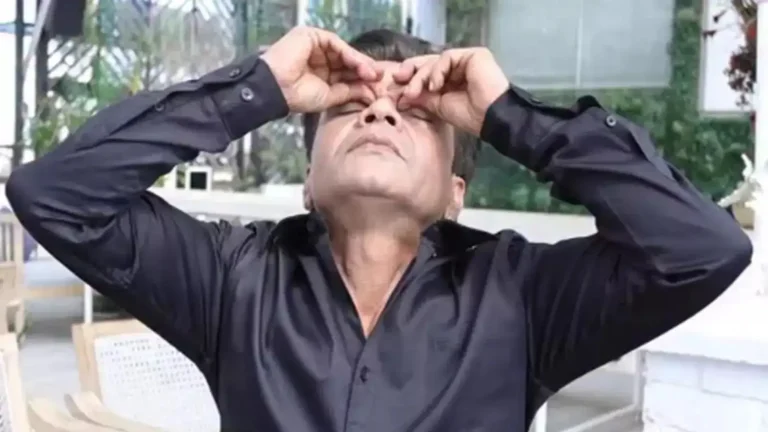
The Rajpal Yadav legal crisis that exploded across Indian entertainment news in February 2026 was not a sudden event. It was the culmination of a 15-year financial and legal battle — rooted in a single decision made in 2010, compounded by a film that failed, multiple missed court deadlines, and eventually a judge who ran out of patience.
On February 5, 2026, one of Hindi cinema’s most beloved comic actors walked into Tihar Jail — not as a character in a film, but as a convict serving a sentence. He spent 12 days inside before being granted interim bail on February 16, 2026, after depositing ₹1.5 crore as directed by the Delhi High Court.
What followed was an extraordinary sequence of events: an outpouring of public sympathy, industry colleagues stepping in with financial and professional support, a defiant press conference in which Rajpal called the case an “ego clash” and revealed a ₹1,200 crore work pipeline, and a legal battle that will continue until at least March 18, 2026 — the date of his interim bail suspension.
This is the complete, fact-based story of the Rajpal Yadav legal crisis — from its origins in 2010 to its current status.
The Origin: How a ₹5 Crore Loan Started Everything
The Rajpal Yadav legal crisis has its roots in an ambition that any creative professional can understand: the desire to direct a film.
In 2010, Rajpal Yadav borrowed ₹5 crore from a Delhi-based company called Murali Projects Pvt. Ltd. The money was taken to finance his directorial debut — a comedy called Ata Pata Laapata.
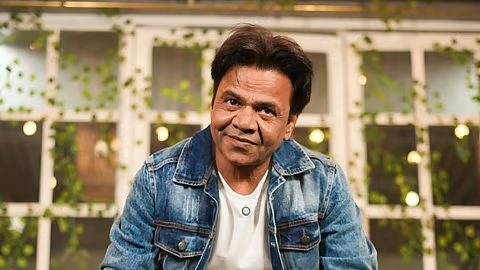
This is the detail that makes the story genuinely poignant. Rajpal was not taking a loan to fund a lavish lifestyle or a business venture unrelated to his craft. He was borrowing money to make a film. He wanted to direct. The loan was an act of creative ambition.
According to Rajpal himself, the arrangement was entirely informal — a trust-based verbal agreement. Speaking at a press conference after his release, he described it as a “ghar ka maamla” (a personal matter), saying no lawyer was involved when the deal was struck and that he had simply trusted the other party. He described signing documents at the Laxmi Nagar office without reading them — a decision he now deeply regrets.
“I promised to return ₹8 crore after the film’s release,” he said. “The agreement was verbal. It was based on trust.”
Ata Pata Laapata released in 2012. It failed at the box office.
With no box office revenue to repay the loan, Rajpal found himself in an impossible position. He could not meet his repayment obligations. The cheques he issued towards repayment — seven in total — bounced due to insufficient funds.
Under Section 138 of the Negotiable Instruments Act, dishonoured cheques are a criminal offence in India if the full amount is not paid within the legal notice period after the bounce. The complainant filed a case. The Rajpal Yadav legal crisis had officially begun.
The 15-Year Legal Timeline: Every Key Development
The journey from a bounced cheque in 2012 to Tihar Jail in 2026 unfolded across 14 years of court hearings, appeals, partial payments, broken promises, and escalating dues. Here is the complete timeline:
2010: Rajpal Yadav borrows ₹5 crore from Murali Projects Pvt. Ltd. for Ata Pata Laapata. The agreement, he would later claim, was verbal and based on personal trust.
2012: Ata Pata Laapata releases and fails commercially. Repayment issues begin. Seven cheques issued towards the loan repayment are dishonoured.
2018: After years of legal proceedings, a Magisterial Court convicts Rajpal Yadav and his wife Radha under Section 138 of the Negotiable Instruments Act. Both are sentenced to six months’ simple imprisonment. Rajpal reportedly served approximately three months before securing relief from a higher court.
Early 2019: A Sessions Court upholds the Magisterial Court’s conviction, strengthening the legal position of the complainant.
2018–2025: A long period of appeals, adjournments, and partial payments follows. During this time, interest and penalties continue to accumulate on the unpaid principal. The original ₹5 crore debt rises to nearly ₹9 crore. Rajpal makes some payments — including ₹75 lakh deposited via demand drafts — but the bulk of the outstanding amount remains unpaid.
2024: The Delhi High Court suspends the sentence in June 2024 and gives Rajpal time to settle the matter. Reports also surface that part of his ancestral property in Uttar Pradesh has been sealed over a separate loan default of ₹11 crore — indicating the financial pressures extend beyond the Murali Projects case.
October 2025: The court notes that despite the ₹75 lakh deposit, most of the outstanding amount remains unpaid. Clear deadlines are set for repayment.
February 2, 2026: The Delhi High Court refuses to extend the deadline for repayment. Justice Swarana Kanta Sharma notes that Rajpal Yadav has breached nearly 20 court undertakings — promises made through senior lawyers in open court that were repeatedly not honoured. The judge states that leniency cannot be extended indefinitely, regardless of celebrity status.
February 4, 2026: The court rejects Rajpal’s last-minute plea for one more week to arrange funds. He presents a cheque of ₹25 lakh as a gesture, but the court states that surrender is mandatory before any further consideration.
February 5, 2026: Rajpal Yadav surrenders before the concerned jail superintendent. Before entering Tihar Jail, he makes an emotional statement to the media: “Sir, kya karoon? Mere paas paise nahin hain. Aur koi upaay nahin dikhta… yahan hum sab akele hain. There are no friends. I have to deal with this crisis on my own.” He is lodged in Tihar Jail to serve his six-month sentence.
February 16, 2026: The Delhi High Court grants interim bail to Rajpal Yadav. The court directs him to deposit ₹1.5 crore — which is done. The interim suspension of sentence is granted until March 18, 2026. The bail terms include a personal bond of ₹1 lakh and one surety for the same amount. Justice Swarana Kanta Sharma’s bench grants the relief noting the deposit made.
February 28, 2026: Rajpal Yadav holds a press conference with lawyer Bhaskar Upadhyay. He reveals a ₹1,200 crore work pipeline for the next seven years, describes the case as an “ego clash,” thanks his supporters, and vows to repay everyone who helped him. He launches his YouTube channel the same day.
March 18, 2026: The date to which interim bail is currently extended. The legal battle continues.
What Is Section 138 of the Negotiable Instruments Act?
The Rajpal Yadav legal crisis has drawn widespread attention to a law that most Indians know exists but few understand in detail: Section 138 of the Negotiable Instruments Act, 1881.
Section 138 makes it a criminal offence when a person issues a cheque that is subsequently dishonoured by the bank due to insufficient funds, if the issuer then fails to pay the full amount within the legal notice period after being informed of the bounce.
The key elements are:
- A cheque is issued in discharge of a debt or liability
- The cheque is dishonoured by the bank (returned unpaid due to insufficient funds or because the account was closed)
- The payee sends a legal notice to the issuer within 30 days of receiving the bank’s dishonour memo
- The issuer fails to pay the full amount within 15 days of receiving the notice
If all these conditions are met, the issuer can be prosecuted under Section 138 — which carries a punishment of up to two years’ imprisonment, a fine up to twice the amount of the cheque, or both.
In Rajpal’s case, seven cheques bounced, criminal proceedings were initiated, he was convicted, and appeals and part-payments stretched the case across seven years before the court finally ran out of patience and ordered his surrender.
His lawyer Bhaskar Upadhyay has argued that there was “malicious intent” on the complainant’s side — alleging the case was pursued not for legitimate financial recovery but specifically to jail the actor. The lawyer noted that Rajpal had already submitted original property documents worth over ₹40 crore as security and argued that the complainant had been made whole in terms of collateral. However, the court found these arguments insufficient given the pattern of repeated non-compliance.
The “Ego Clash” Press Conference: What Rajpal Actually Said
After his release on interim bail, Rajpal Yadav held a press conference on February 28, 2026 — one of the most watched and widely discussed celebrity press conferences in recent Bollywood memory.
Standing alongside his lawyer Bhaskar Upadhyay, he made several striking statements about the Rajpal Yadav legal crisis:
On the nature of the dispute: He called it an “ego clash” rather than a straightforward financial disagreement — arguing that the original agreement was a personal, trust-based arrangement between two people who knew each other, and that the escalation into criminal prosecution reflected a breakdown of that personal relationship rather than a genuine commercial dispute.
On his own mistake: He was remarkably honest about his error — acknowledging that signing documents without reading them, without legal counsel, based purely on personal trust, was a serious mistake he deeply regretted. His lawyer noted that the situation had become “layered and confusing” due to multiple contracts, a consent decree, and subsequent proceedings over the years.
On the original amount: Rajpal stated that he always understood the amount owed to be ₹5 crore and had promised to repay ₹8 crore after the film’s release. He expressed confusion about how the figure had reached ₹9 crore through interest and penalties over 15 years. His lawyer noted that ₹2.5 crore had been arranged towards the outstanding amount, in addition to the ₹1.5 crore court deposit.
On his work pipeline: In a statement that surprised many observers, he revealed that he currently has ₹1,200 crore worth of work lined up for the next seven years — including 10 films already locked, multiple branding agreements, and non-film commercial ventures. His upcoming confirmed film releases include Bhoot Bangla with Akshay Kumar (April 10, 2026), Haiwaan, and Welcome to the Jungle.
On public support: He described receiving support ranging from children’s piggy bank savings to ₹1 crore transfers through social media. In an emotional moment, he said: “I want to thank them for their sympathy, but I also want to ask them to send their bank details. I just need time from them, but I will pay them all back with respect. However, I can’t repay the debt of so many kids across the nation who stood with me.”
His closing statement: In a moment that immediately went viral, he declared: “Raja tha, Raja hoon, aur Raja hi rahunga. Raja chahe jail mein ho ya jungle mein, Raja Raja hota hai.” (I was a king, I am a king, and I will remain a king. A king remains a king whether in jail or in the jungle.)
Industry Support: Who Stepped Forward and What They Did
The most emotionally resonant dimension of the Rajpal Yadav legal crisis was the visible outpouring of support from the film fraternity — some of it public, some of it behind the scenes.
Sonu Sood made the most significant public gesture. In a tweet on February 10, 2026, he wrote: “Rajpal Yadav is a gifted actor who has given years of unforgettable work to our industry. Sometimes life turns unfair, not because of talent, but because timing can be brutal. He will be part of my film, and I believe this is the moment for all of us — producers, directors — to step forward.” Critically, Sood offered Rajpal a signing amount for an upcoming film — framing it explicitly as professional opportunity and dignity rather than charity.
Gurmeet Choudhary posted: “It breaks my heart to see a senior, immensely talented artist like Rajpal Yadav ji going through such a painful phase. He has given us countless smiles, laughter, and unforgettable moments. Today, he needs us. As a fellow actor and as a human being, I am stepping forward to help.”
Guru Randhawa was also publicly mentioned as having offered financial assistance.
The unverified claims that promised financial aid had not reached Rajpal were firmly denied by his manager Goldie, who told Hindustan Times: “No, that is not true. Several actors and people from the industry have come forward and helped Rajpal ji.” However, exact contributions and amounts were not disclosed.
Names like Salman Khan and Ajay Devgn circulated in online discussions as potential supporters, but no official confirmation of their involvement has been made public.
Rajpal Yadav’s Career: Why This Story Hit So Hard
The Rajpal Yadav legal crisis resonated so deeply with the public precisely because of who Rajpal is — not just as an actor, but as a figure in the collective memory of Indian cinema audiences.
He grew up in Shahjahanpur, Uttar Pradesh, trained at the National School of Drama in Delhi, and entered Bollywood through a negative role in Jungle (2000) — a memorable screen debut that immediately signalled his range. Within a few years, he had pivoted to comedy and found his lane: eccentric, physically committed, laugh-out-loud funny.
His role as Chhote Pandit in Bhool Bhulaiyaa (2007). As Pappu Pager in the Golmaal franchise. As Chutki in Phir Hera Pheri (2006). As Bade Miyan in Chup Chup Ke (2006). These are not just film roles — they are comedy touchstones for an entire generation of Indian audiences. People who were children in the 2000s watched Rajpal Yadav films at family gatherings, at birthday parties, on Sunday afternoons. His face and his voice are embedded in memories across the country.
Which is precisely why seeing that face making an emotional statement outside Tihar Jail — “Mere paas paise nahin hain. Koi upaay nahin dikhta” — produced such a visceral public reaction. It felt like watching someone from your own family in distress.
Comedy creates intimacy in a way that other genres do not. The actors who make us laugh feel closer to us than the actors who make us cry, because laughter is a shared, unguarded moment. Rajpal Yadav created millions of those moments. The public’s protective response to his crisis was the natural reciprocation of all that accumulated goodwill.
What the Rajpal Yadav Case Reveals About Bollywood’s Financial Realities
The Rajpal Yadav legal crisis is also an uncomfortable mirror held up to the financial realities of the Indian film industry.
Bollywood is perceived from the outside as a world of extraordinary wealth — big stars, bigger budgets, designer clothes, luxury cars, and lavish event appearances. The reality for even successful character actors is far more complex. Income in the film industry is irregular, project-dependent, and often frontloaded — a busy period of work does not automatically translate into long-term financial security.
Rajpal Yadav was, through the 2000s and early 2010s, one of the most in-demand character actors in Hindi cinema. He appeared in back-to-back hits across multiple genres. His face was on posters, his dialogue was quoted by audiences, his presence was reliable box office insurance for comedies. And yet, in 2026, his public statement outside a jail was that he had no money and no way out.
The gap between visible professional success and actual financial stability is a reality that many in the industry live with but few discuss openly. Projects don’t always pay promptly. Advances are spent before principal photography begins. Investments made in one’s own productions — like Rajpal’s loan for Ata Pata Laapata — can wipe out years of earnings when they fail.
The Rajpal Yadav legal crisis is, in this sense, a story that resonates far beyond one person’s circumstances. It is a story about how creative industries treat their people — and about whether the same systems that celebrate artists when they are successful extend the same grace to them when they struggle.
What Happens Next: The Legal Road Ahead
As of March 2026, the Rajpal Yadav legal crisis is far from resolved. The interim bail granted on February 16, 2026 runs until March 18, 2026 — after which the court will determine the next steps based on whether Rajpal has made meaningful progress toward clearing the outstanding dues.
The total outstanding amount — after the ₹1.5 crore deposit and previous payments — is still in the region of several crore rupees. His lawyer has stated that ₹2.5 crore has been arranged in addition to the court deposit, but the full liability remains unpaid.
Rajpal’s stated plan is to leverage his ₹1,200 crore work pipeline — 10 locked films, four branding agreements, and multiple commercial ventures — to generate the income needed to clear the dues over time. His immediate confirmed releases — Bhoot Bangla with Akshay Kumar (April 10, 2026) and others in the pipeline — will be his first opportunities to demonstrate that the comeback is real and not just a press conference declaration.
The court will be watching. Justice Swarana Kanta Sharma’s repeated emphasis on the pattern of broken undertakings makes clear that judicial patience has a limit. For the interim bail to be converted into a more permanent relief, Rajpal needs to demonstrate concrete, measurable progress on repayment — not promises, but deposits.
Rajpal Yadav’s Upcoming Films in 2026
Despite the legal crisis, Rajpal Yadav’s professional calendar remains active. His confirmed upcoming releases include:
- Bhoot Bangla (April 10, 2026) — Akshay Kumar horror-comedy directed by Priyadarshan
- Haiwaan — action film, release date TBC
- Welcome to the Jungle — comedy ensemble, release date TBC
- Sonu Sood’s upcoming production — confirmed via Sood’s public tweet, with a signing amount already offered
Each of these projects represents both professional income and public visibility — two things he urgently needs to rebuild from the position he currently finds himself in.
Frequently Asked Questions About the Rajpal Yadav Legal Crisis
Why was Rajpal Yadav sent to Tihar Jail? Rajpal Yadav was sent to Tihar Jail on February 5, 2026, after the Delhi High Court withdrew the leniency extended to him following nearly 20 broken court undertakings related to a ₹9 crore cheque bounce case. He had been convicted under Section 138 of the Negotiable Instruments Act and sentenced to six months’ simple imprisonment, a sentence that had been suspended pending repayment.
What is the Rajpal Yadav cheque bounce case about? In 2010, Rajpal borrowed ₹5 crore from Murali Projects Pvt. Ltd. to finance his directorial debut Ata Pata Laapata. The film failed commercially. Seven cheques issued towards loan repayment bounced. With interest and penalties accumulated over 15 years, the outstanding amount grew to nearly ₹9 crore.
Was Rajpal Yadav granted bail? Yes. The Delhi High Court granted Rajpal Yadav interim bail on February 16, 2026 — after 12 days in Tihar Jail — upon the deposit of ₹1.5 crore. The interim suspension of sentence runs until March 18, 2026.
Who supported Rajpal Yadav during the crisis? Sonu Sood publicly offered him a role in his upcoming film with a signing amount. Gurmeet Choudhary and Guru Randhawa also offered public support. His manager confirmed that multiple industry figures contributed financial assistance, though exact names and amounts remain confidential.
What is Section 138 of the Negotiable Instruments Act? It is a law that makes dishonoured cheques a criminal offence if the issuer fails to pay the full amount within the legal notice period after a bounce. It is one of the most commonly prosecuted financial crimes in India.
What did Rajpal Yadav say at his press conference? He described the case as an “ego clash,” admitted signing loan documents without legal counsel was a mistake, revealed a ₹1,200 crore work pipeline for seven years, announced 10 locked films, and vowed to repay all those who supported him. He closed with: “Raja tha, Raja hoon, aur Raja hi rahunga.”
What is Rajpal Yadav’s next film? His next major release is Bhoot Bangla with Akshay Kumar, directed by Priyadarshan, scheduled for April 10, 2026. He also has Haiwaan, Welcome to the Jungle, and Sonu Sood’s upcoming production in his pipeline.
How much did Rajpal Yadav pay to get bail? He deposited ₹1.5 crore as directed by the Delhi High Court. His lawyer also confirmed that ₹2.5 crore has been arranged towards the total outstanding amount.
Related Posts You’ll Enjoy
- 🎬 Ratna Pathak Shah’s Bollywood Remarks: The Brutal Truth Revealed
- 🎬 Sreeleela MBBS Achievement: Actress, Doctor & Mother of 3 at 24
- 🎬 Ranveer Singh Pralay Zombie Thriller: Budget, Cast, Director & Full Details
- 🎬 Upcoming Bollywood Movies 2026 — Most Anticipated Films You Can’t Miss
- 🎬 15 Best Bollywood Films Based on True Stories to Watch in 2026
- 🎬 20 Most Underrated Bollywood Movies — Hidden Gems You Need to Watch
- 🎬 Latest Bollywood Movie Reviews February 2026 — Hit or Flop Verdicts
📱 Follow us on Instagram for real-time Bollywood celebrity news, legal updates, and entertainment coverage.
📌 Save this article on Pinterest — we update all major celebrity stories as they develop.
Last updated: March 2026. The Rajpal Yadav legal crisis is an ongoing matter. This article will be updated as court proceedings develop beyond March 18, 2026.

Popcorn in hand and a opinion ready — Emily covers movie reviews, box office buzz, and all things cinema at Popcorn Review.

