
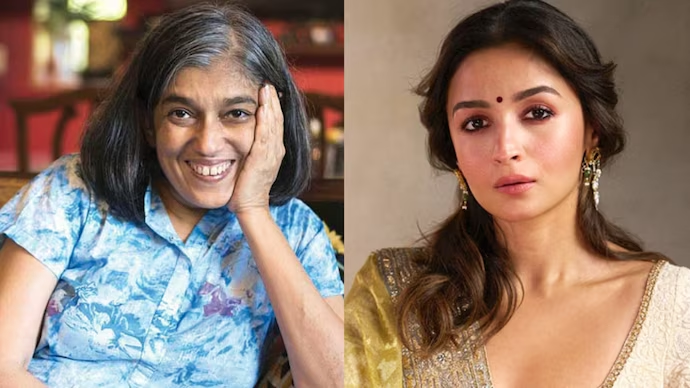
Ratna Pathak Shah Bollywood remarks on young actresses became one of the most discussed entertainment topics of February 2026. In a candid interview with Pinkvilla, the veteran actress — known for four decades of uncompromising, theatre-rooted work in Hindi cinema — offered a rare, unfiltered critique of a pattern she has observed among young actresses on film sets, while simultaneously heaping praise on Alia Bhatt as a standout exception.
The remarks were not made in anger or as an attack on any individual. They emerged from a reflective conversation about professionalism, craft, and what separates genuinely gifted performers from those who confuse charm for artistry. Yet within hours, they had ignited a full-scale Bollywood debate about generational values, work culture, image management, and whether veterans have the right to critique the generation that follows them.
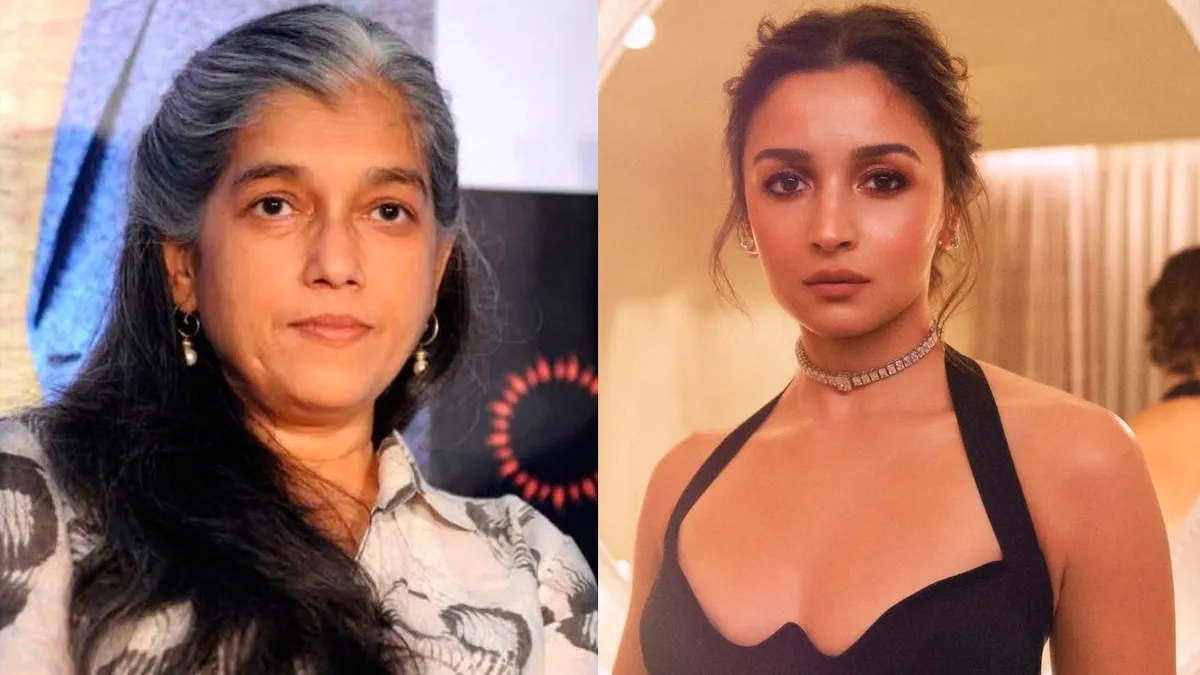
Here is the complete story — what Ratna Pathak Shah actually said, the full context behind her words, the reactions that followed, and why this conversation matters far beyond a single celebrity interview.
What Exactly Did Ratna Pathak Shah Say? The Full Quote
Before analysing the reaction, it is important to understand the Ratna Pathak Shah Bollywood remarks in their exact form. The interview was conducted by Pinkvilla, and the context was a discussion about her experience working on Kapoor & Sons (2016) alongside Alia Bhatt, Rishi Kapoor, Sidharth Malhotra, and Fawad Khan.
Ratna began by praising Alia Bhatt’s work ethic on set:
“She was very attentive — that’s what I noticed about her. She used to be on the monitor all the time. Not when she was acting, but when others were working. She observed very carefully.”
It was then that she made the observation that would go viral. Contrasting Alia’s behaviour with a pattern she has noticed more broadly, she said: “She didn’t talk much, which is surprising because young actresses seem to feel the need to be the cute entertainer on set all the time. They feel that being that cute person is going to help them. It just makes them bad performers in many cases. Not Alia. I was very impressed by her. She kept herself very quiet. I don’t think we exchanged more than a few words. We never had any scenes together, unfortunately. But I thought she was extremely gifted and focused. I liked her.”
The Ratna Pathak Shah Bollywood remarks were therefore not a sweeping condemnation of an entire generation — they were a specific observation about a specific behavioural pattern, made in the context of contrasting it with the professionalism she admired in Alia Bhatt.
That nuance, as is often the case with viral entertainment news, was lost in the initial wave of reactions.
In the same interview session, she also addressed another aspect of modern Bollywood she finds counterproductive: the rising entourage culture. “I think it’s a waste of time,” she said bluntly, describing it as a self-feeding system where nobody wants to make individual decisions anymore. She added that having lived 68 years, she doesn’t want to become “a child again” and doesn’t see how being surrounded by a large team helps anyone’s work.
Taken together, the Ratna Pathak Shah Bollywood remarks paint a consistent picture: a veteran actress who values craft, self-reliance, observation, and quiet focus — and who is increasingly concerned that the modern industry incentivises performance of a different kind entirely.
Who Is Ratna Pathak Shah? A Career That Earns the Right to Speak
To understand why the Ratna Pathak Shah Bollywood remarks carry the weight they do, it is essential to understand who she is — because her credibility is inseparable from the impact of her words.
Ratna Pathak Shah comes from a family with a rich theatrical and cinematic legacy. She is the daughter of veteran actress and Gujarati film director Dina Pathak, and the sister of actress Supriya Pathak, who is married to Pankaj Kapoor. Despite this formidable family background, Shah chose to carve her own path, refusing to be typecast in conventional Bollywood heroine roles.
She entered the film industry with Shyam Benegal’s landmark Mandi in 1983 and won the National Award for Best Supporting Actress in her very first film — a debut that very few actors across Indian cinema can claim. Her subsequent career was built not on glamour or commercial formula, but on consistently choosing work that challenged her as a performer and expanded the range of what women could represent on Indian screens.
Her filmography spans five decades and includes critically acclaimed films such as Mirch Masala (1987), Sarfarosh (1999), Kapoor & Sons (2016), Lipstick Under My Burkha (2016), Thappad (2020), and Dhak Dhak (2023) — films that, across five decades, reflect a consistent commitment to meaningful, layered storytelling over commercial popularity.
Television audiences know her as Maya Sarabhai from Sarabhai vs Sarabhai — one of the most beloved characters in Indian sitcom history. The role demonstrated her gift for sharp, witty, precisely timed comedy, a skill that required technical discipline and careful observation of human behaviour.
With a diverse filmography including titles like Mandi, Mirch Masala, Kapoor & Sons, Lipstick Under My Burkha, Thappad, and Dhak Dhak, she continues to offer perspective shaped by decades of experience.
This career — earned entirely on the basis of craft and choices rather than star machinery — is what gives the Ratna Pathak Shah Bollywood remarks their unusual gravity. When someone who has spent four decades prioritising substance over spectacle observes behavioural patterns in a younger generation, it is not merely an opinion. It is an assessment rooted in an exceptionally long frame of reference.
The Context: Kapoor & Sons and Alia Bhatt on Set
The specific setting of the Ratna Pathak Shah Bollywood remarks — the shoot of Kapoor & Sons — is worth examining in detail, because it shapes the meaning of what she observed.
Kapoor & Sons (2016), directed by Shakun Batra and produced by Dharma Productions, was one of the most emotionally complex ensemble films that Bollywood produced in that decade. The film dealt with family dysfunction, long-suppressed secrets, and the devastating effects of emotional distance between people who are supposed to love each other. It required every actor on set to be fully present, emotionally available, and technically precise.
The ensemble was remarkable: Rishi Kapoor, Rajat Kapoor, Fawad Khan, Sidharth Malhotra, and Alia Bhatt. It was the kind of set where the quality of attention and observation was visible in every performance, because the script demanded that characters react to each other with genuine emotional intelligence.
It was in this environment that Ratna Pathak Shah watched Alia Bhatt. And what she noticed was not just what Alia did when the camera was on her — it was what she did when it wasn’t. Alia would attentively watch scenes from the monitor — not just her own performances but also those of her co-actors — showing a dedication to learning and observation.
This kind of behaviour — sitting quietly and watching other people work, absorbing craft rather than performing personality — is the hallmark of an actor who understands that their job is to respond truthfully to what is around them. It is also, significantly, quite rare on large film sets where the pressure to be visible, charming, and memorable can shape behaviour long before the camera rolls.
The contrast Ratna drew between this behaviour and the “cute entertainer” pattern was not a generalised complaint about a whole generation. It was a precise observation, grounded in a specific professional context, about how behaviour on set either supports or undermines the final performance on screen.
What Is the “Cute Entertainer” Pattern She Was Describing?
The phrase “cute entertainer on set” is the heart of the Ratna Pathak Shah Bollywood remarks — and it deserves careful unpacking, because it is easy to misread as a simple personality criticism.
What Ratna appears to be describing is a specific professional strategy, not a personality type. Some actors — particularly those navigating the pressures of visibility, audience approval, and the need to be liked — develop a habit of maintaining a constant performance of accessibility and warmth even when they are not acting. They chat, joke, engage with the crew, manage relationships, and project an image of approachable charm throughout the working day.
On the surface, this seems entirely harmless and possibly even positive. A friendly set is a productive set. Goodwill between collaborators matters.
But Ratna’s critique goes deeper. Her point is that this kind of constant social performance consumes the same emotional and mental energy that should be directed at the work. If an actor is expending effort on being charming, they are not watching other actors work, not absorbing the emotional texture of the scenes happening around them, not doing the quiet internal work that produces a genuinely felt performance.
The contrast with Alia Bhatt is the key. Alia chose silence. She chose observation. She chose the discipline of directing all her attention at the material rather than at the room. And the result — as anyone who has seen Kapoor & Sons knows — is a performance of extraordinary emotional intelligence and precision.
The Ratna Pathak Shah Bollywood remarks are ultimately an argument for the primacy of craft over personality management. And it is an argument that resonates deeply with the theatre tradition she comes from — a tradition in which performers are expected to be completely present and quiet inside their work, not performing for colleagues.
The Entourage Culture Connection
The entourage culture comments made in the same interview are a natural extension of the same concern. The Ratna Pathak Shah Bollywood remarks about on-set behaviour and her critique of entourage culture are two sides of the same coin.
She described the entourage culture as a self-feeding system that the industry has created, where people don’t want to make decisions individually — someone shops for celebrities, another person tells them how to style it.
Her concern is that this system produces a kind of infantilisation — a dependency on external validation and management that undermines the self-reliance that serious craft requires. An actor surrounded by a large team of people managing their every interaction and decision is, by definition, not developing the internal resources — observation, intuition, emotional independence — that great performance demands.
She acknowledged that a certain amount of management is required given the incessant crowds and fan following that young stars deal with today. But the scale of the entourage culture she was describing goes far beyond security and logistics. It extends into creative and personal territory — and that extension, she suggests, is not helpful to anyone trying to develop as a performer.
Ratna Pathak Shah’s Broader Views on Bollywood — A Consistent Philosophy
The Ratna Pathak Shah Bollywood remarks that went viral in February 2026 did not emerge from nowhere. They are consistent with a philosophy she has articulated repeatedly over many years.
On the subject of ageism in Bollywood and male actors romancing actresses half their age, she has previously called it an embarrassment — noting that some male actors are “not ashamed to romance actresses who are younger than their daughters.” She has been equally direct in stating her belief that change is inevitable: “Women are not going under the burqa or ghunghat anymore, we are economically more viable today, we will drive certain stories.”
On the subject of acting and ageing, she has stated clearly that acting is not something you do while you’re young and pretty — a belief she formed early in her career after realising that her initial assumption about acting having a shelf life for women was simply wrong.
She has also noted with some satisfaction that today, a woman her age gets both work and respect — a significant shift from the industry she entered in the early 1980s.
The thread running through all of these statements is consistent: a deep commitment to the idea that craft, observation, and self-possession matter more than image management, commercial calculation, or social performance. The Ratna Pathak Shah Bollywood remarks of February 2026 are the latest expression of a worldview she has maintained, publicly and consistently, for decades.
How Bollywood and Audiences Reacted
The reaction to the Ratna Pathak Shah Bollywood remarks divided fairly quickly into several camps.
Those who agreed saw her comments as a refreshing dose of honesty from someone with the experience and credibility to make the observation. They pointed to a visible shift in how young actors engage with social media, fan culture, and public image — noting that the pressure to be “relatable,” “cute,” and constantly entertaining on every platform does create genuine risks for artistic development. A generation raised on Instagram, where performance of personality is the primary mode of engagement, may genuinely struggle to switch off that performance mode on set.
Those who pushed back argued that the observation was too broad and potentially unfair. They noted that young actresses today operate under commercial, social, and reputational pressures that did not exist in earlier eras — that being approachable and warm on set is partly a survival strategy in an industry that has historically been brutal to women who were perceived as difficult or cold. They also pointed out that Ratna’s experience is her own, filtered through her specific values, and that other veterans might observe the same behaviour and interpret it very differently.
A third group focused less on who was right and more on what the conversation revealed: that Bollywood’s generational dynamics are genuinely complex, that the industry’s relationship with professionalism and craft is actively evolving, and that veteran voices like Ratna Pathak Shah’s are valuable precisely because they introduce friction into a conversation that might otherwise become entirely self-congratulatory.
The fact that the remarks spread as widely as they did suggests that the underlying tension they touched — between craft and image, between observation and performance, between the old way of making films and the new — is very much alive.
Why Alia Bhatt’s Reaction Matters
At the time of writing, Alia Bhatt had not publicly responded to the Ratna Pathak Shah Bollywood remarks praising her. That silence is itself interesting.
Alia has built one of the most impressive careers in contemporary Bollywood — Udta Punjab, Raazi, Gully Boy, Gangubai Kathiawadi, and Rocky Aur Rani Kii Prem Kahaani represent a run of performances that consistently demonstrate exactly the qualities Ratna was describing: attentiveness, emotional precision, the willingness to be quiet and present rather than loud and visible.
Her work on Kapoor & Sons specifically — despite having no scenes with Ratna — is remembered as one of her finest early performances. The fact that a veteran actress of Ratna’s standing was watching her quietly, from a corner of the set, and came away as impressed as she did, is itself a meaningful data point. Great acting is recognised by people who know what they are looking for.
The praise from Ratna is the kind that carries genuine weight in an industry where such unscripted assessments are rare — because it is not promotional, not political, and not motivated by anything except an honest recollection of what she observed.
What This Debate Reveals About Bollywood’s Evolving Work Culture
The Ratna Pathak Shah Bollywood remarks landed in the middle of a broader conversation that the Indian film industry has been quietly having about work culture, professionalism, and what it means to take craft seriously in an era of constant visibility.
Several intersecting pressures are reshaping how young actors approach their work:
The social media imperative. Young actors today are expected to maintain constant, engaging digital presences — Instagram reels, YouTube videos, podcast appearances, fan interactions. This is not optional. It is a commercial requirement driven by studios and brands. The skills required for this kind of constant public performance are fundamentally different from — and in some ways incompatible with — the skills required for quiet, attentive, inward-facing craft development.
The brand ambassador economy. A significant portion of an Indian star’s income now comes from brand endorsements rather than film fees. This creates incentives to be visible, likeable, and accessible — to project a personality rather than disappear into characters. The commercial logic of being a brand ambassador actively works against the artistic logic of being a character actor.
The scrutiny multiplier. Every interaction a young actor has — on set, at events, in public — can be photographed, filmed, and circulated within minutes. The pressure to manage public perception has therefore extended into professional spaces that were previously private. An actor who was having a bad day on set in 1990 could have that bad day in relative privacy. An actor having a bad day in 2026 may be on social media within the hour.
Ratna Pathak Shah’s career was built in an entirely different environment. The pressures she navigated were real but fundamentally different in kind. The question her remarks implicitly raise is not whether younger actors are worse than those of previous generations, but whether the industry has created a structure in which the qualities she values — quiet observation, self-possessed focus, craft over personality — are being systematically disincentivised.
The Larger Pattern: Ratna Pathak Shah’s Career as a Model
Perhaps the most interesting dimension of the Ratna Pathak Shah Bollywood remarks is not the critique itself but what her own career represents as an alternative model.
She entered the industry and immediately rejected conventional heroine roles. She built her career on the stages of NSD (National School of Drama) and through carefully chosen film and television projects that valued what she was actually able to do rather than what she looked like doing it. She won a National Award with her first film. She became a household name through a television comedy that showcased technical comic precision rather than conventional star charisma.
Despite a formidable family legacy, she chose to carve her own path, refusing to be typecast in conventional Bollywood heroine roles or to follow ossified cinematic standards.
At 68, she continues to work consistently — getting both work and respect at an age when the industry once discarded women entirely.
That career arc is the context for everything she says about professionalism and craft. She is not critiquing from a position of nostalgia or failure. She is speaking from the perspective of someone whose specific approach to the work produced a specific kind of career — one defined by longevity, critical respect, and a body of work that continues to matter.
The Ratna Pathak Shah Bollywood remarks are, ultimately, an argument for the path she chose. And whether or not one agrees with every element of her critique, that argument is worth hearing in full.
Frequently Asked Questions
What did Ratna Pathak Shah say about young actresses? In a Pinkvilla interview in February 2026, Ratna Pathak Shah said that young actresses seem to feel the need to be “cute entertainers on set all the time,” and that this behaviour can make them bad performers. She contrasted this pattern with Alia Bhatt’s behaviour on the set of Kapoor & Sons, which she praised as attentive, quiet, and genuinely focused on the work.
Who did Ratna Pathak Shah praise in her interview? Ratna specifically praised Alia Bhatt, recalling how Alia would watch other actors’ scenes from the monitor, observing carefully even when she herself was not acting. She called Alia “extremely gifted and focused.”
What film were Ratna Pathak Shah and Alia Bhatt in together? Both appeared in Kapoor & Sons (2016), directed by Shakun Batra and produced by Dharma Productions. Despite being in the same film, the two did not share any scenes together.
What is Ratna Pathak Shah’s background? Ratna Pathak Shah is the daughter of veteran actress and Gujarati film director Dina Pathak, and the sister of actress Supriya Pathak. She trained at the National School of Drama, entered films with Shyam Benegal’s Mandi in 1983 (winning the National Award for Best Supporting Actress), and has built a career spanning four decades across theatre, television, and cinema. She is best known to television audiences as Maya Sarabhai in Sarabhai vs Sarabhai.
What else did Ratna Pathak Shah say in the same interview? In the same interview session, she also criticised the growing entourage culture in Bollywood, calling it “a waste of time” and describing it as a self-feeding system that encourages dependency rather than self-reliance.
Did Ratna Pathak Shah name any specific actress as a “cute entertainer”? No. Her remarks were a general observation about a pattern she has noticed, not an accusation aimed at any specific individual beyond the comparison she drew with Alia Bhatt.
What is Ratna Pathak Shah’s view on ageism in Bollywood? She has spoken extensively on this topic over the years, noting that she initially feared acting had a shelf life for women. She has also called it an embarrassment when male actors romance actresses young enough to be their daughters. She has stated that today, a woman her age gets both work and respect — a significant change from the industry she entered in the 1980s.
Related Posts You’ll Enjoy
- 🎬 Ranveer Singh Pralay Zombie Thriller: Budget, Cast, Director & Everything Confirmed
- 🎬 Upcoming Bollywood Movies 2026 — Most Anticipated Films You Can’t Miss
- 🎬 15 Best Bollywood Suspense Thriller Movies to Watch in 2025–2026
- 🎬 15 Best Bollywood Films Based on True Stories to Watch in 2026
- 🎬 20 Most Underrated Bollywood Movies — Hidden Gems You Need to Watch
- 🎬 Latest Bollywood Movie Reviews February 2026 — Hit or Flop Verdicts
- 🎬 Top South Indian Blockbusters That Conquered the Pan-India Box Office
📱 Follow us on Instagram for the latest Bollywood celebrity news, debates, and entertainment updates as they break.
📌 Save this article on Pinterest — we regularly update our Bollywood celebrity coverage.
Last updated: March 2026.

Popcorn in hand and a opinion ready — Emily covers movie reviews, box office buzz, and all things cinema at Popcorn Review.

