
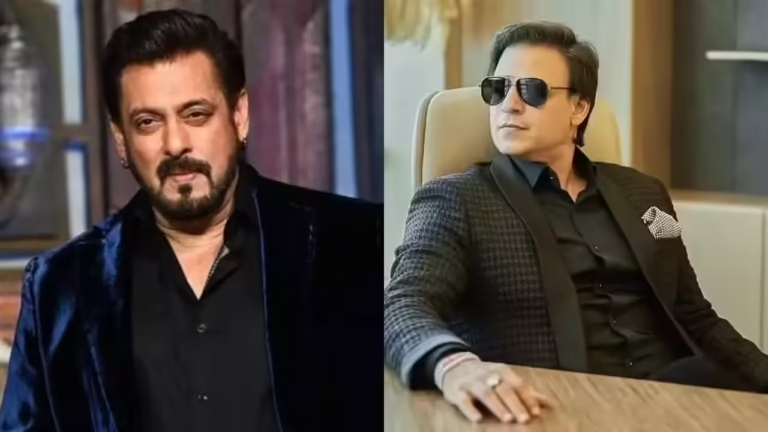
The Salman Khan Vivek Oberoi feud came back into conversation on January 30, 2026 — when producer Shailendra Singh sat down with Siddharth Kannan and said, on record, what the industry had whispered for twenty years.
Singh had been at Salman Khan’s apartment the afternoon Vivek Oberoi’s 2003 press conference aired. He watched the broadcast with Salman. He saw the reaction. And more than two decades later, he described what followed without softening it.
“I asked him not to act on impulse, to wait and fight the battle silently,” Singh said. “I think he did that. He made sure Vivek doesn’t work in Bollywood anymore. I don’t know for sure, but that’s how it looks.”
A named producer. Present in the room. Saying on camera that Salman Khan made sure a young actor didn’t work. That statement is why the Salman Khan Vivek Oberoi story is trending again — and it deserves a serious, properly sourced answer rather than the usual vague treatment.
Salman Khan Vivek Oberoi: Before the Feud, There Was a Career to Destroy
To understand what was lost, you need to understand what Vivek Oberoi actually had before April 2003.
He debuted in Ram Gopal Varma’s Company in 2002 — a gritty crime film in which he played Chandu with a hunger and volatility that was genuinely frightening. He won Filmfare Best Male Debut and Screen Award for Best Actor — a Screen Award for a debut film was extraordinary. Saathiya followed the same year, directed by Shaad Ali, produced by Mani Ratnam. A romantic film with real emotional intelligence. Two completely different registers, both working. He was twenty-five years old.
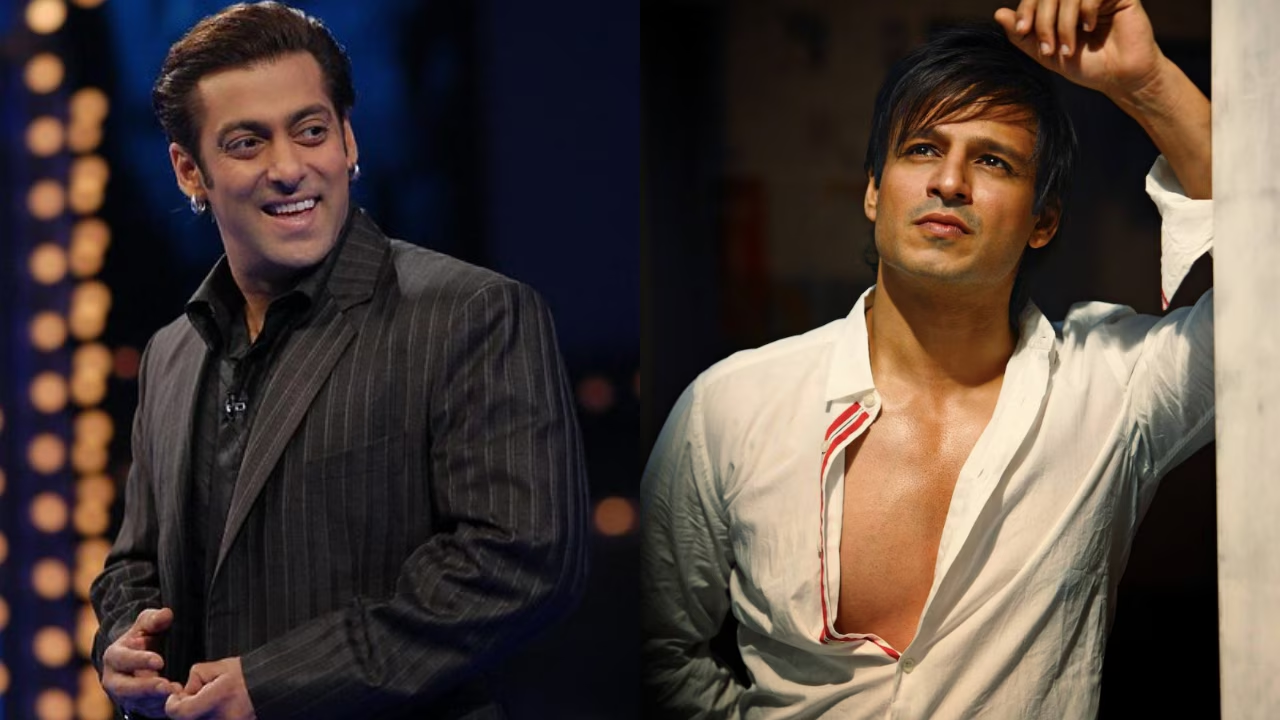
By early 2003, he was widely considered the most exciting new actor in Hindi cinema. Directors were calling. Big banners were interested. The Salman Khan Vivek Oberoi feud was about to take all of that away.
How It Started: Aishwarya, Salman, and a Relationship That Wouldn’t End
Salman Khan and Aishwarya Rai had been together roughly three years after meeting on the Hum Dil De Chuke Sanam set in 1999. The relationship ended badly. Aishwarya described it in a Times of India interview with unusual directness — his alcoholism, his inability to accept the breakup, the behaviour that followed.
After the separation, Aishwarya and Vivek were publicly together throughout 2002 and 2003. When Karan Johar asked Vivek directly on Koffee With Karan Season 1 whether he was dating her, he confirmed it with a simple yes. He was openly, happily in a relationship with his colleague. By any normal standard, that should have ended Salman’s involvement.
It did not.
The 41 Phone Calls — Vivek’s Own Account
What Vivek Oberoi has described in multiple interviews, including to Prakhar Gupta and on the Farah Khan show, is a sustained harassment campaign. Salman called him 41 times. The calls included threats to “bash him up in public” and to “kill him.” Salman also used those calls to make crude, baseless allegations about Vivek’s relationships with other actresses.
Sohail Khan — Salman’s younger brother and genuinely close to Vivek — intervened. He met Vivek privately, promised to mediate, and took personal responsibility for resolving the situation. Vivek agreed to hold off.
Then, before Sohail’s mediation had resolved anything, Vivek called the press conference anyway.
April 25, 2003: The Press Conference That Changed Everything
Inside his hotel room, surrounded by journalists in what reporters described as a darbar-style setup, Vivek named Salman Khan directly. The 41 calls. The death threats. All of it, on record, to the national media.
He was twenty-six years old, visibly shaken, operating from genuine fear and genuine anger. He had just made the most consequential decision of his professional life.
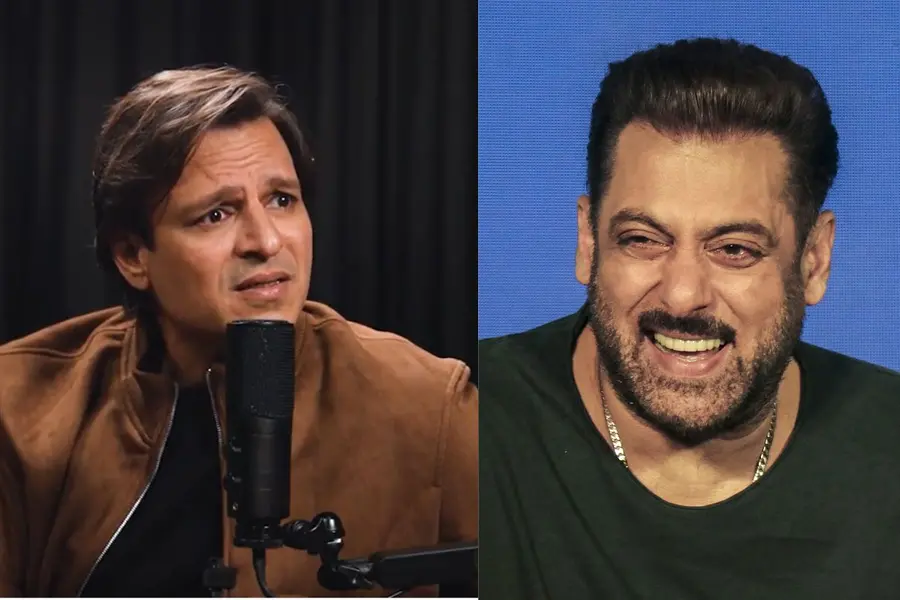
Salman said nothing publicly. Aishwarya, when she could no longer avoid questions, made clear she had not been involved in the decision and was not pleased with how it had been handled. Sohail Khan — who had put his own credibility on the line to protect his friend and been bypassed — was furious.
The industry did not rally around Vivek. Not a single major star issued a supportive statement. The silence was immediate and total.
What Happened to the Salman Khan Vivek Oberoi Career Fallout
On the Farah Khan show, Vivek described what followed: filmmakers dropped him from projects he had already signed. Almost no one wanted to work with him. This is his own account — direct, on camera, without ambiguity.
Farah Khan, speaking in the same conversation, offered the industry’s counter-position. Salman, she said, never personally told her not to work with or speak to Vivek Oberoi. No formal instruction she was aware of. Whether the absence of a written order changes what happened is a question worth sitting with. Industries don’t need formal blacklists. They need fear, loyalty, and convenience — and in Bollywood in 2003, all three were operating at full capacity.
Shailendra Singh’s account is the most direct on record: “He made sure Vivek doesn’t work in Bollywood anymore.” The qualifier — “I don’t know for sure” — matters. It also doesn’t change the observable shape of what happened.
The Public Apology That Became a Punchline
At the 10th Rajiv Gandhi Awards, Vivek walked off stage, stopped at the front row where Salman was seated, grabbed his own ears in the traditional apology gesture, and mouthed “bhai.”
Salman looked away. Committee chairman Vijay Kalantri described it: “Vivek grabbed his ears and bowed and mouthed ‘bhai’. But Salman just shook his head.”
Suresh Oberoi — Vivek’s father — was watching from the audience.
At the Zee Cine Awards that followed, Sajid Khan and Karan Johar enacted Vivek’s apology gesture on stage as a comedy bit for the audience’s entertainment.
A man had pleaded publicly and been ignored. The industry had then mocked the pleading on television. Whatever you think of the original press conference, that sequence of events is difficult to read as proportionate.
“Mujhe Salman Se Jyada Dukh Hua Sohail Ke Liye”
The most painful admission in the entire Salman Khan Vivek Oberoi story comes not from what Salman did, but from Vivek’s own accounting of his friendship with Sohail.
“Mujhe Salman se jyada dukh hua Sohail ke liye.” I felt worse about Sohail than about Salman.
Sohail had fought for him. Had committed himself as mediator. Had told his brother to back off. And Vivek had gone ahead with the press conference, bypassing everything Sohail had put on the line.
“Maine ek dost ko let down kiya.” I let a friend down.
“Aaj tak Sohail ne mujhe maaf nahi kiya.” To this day, Sohail has not forgiven me.
This is not the statement of someone positioning himself purely as a victim. This is someone acknowledging that his own decision cost him something he values more than his career.
What Vivek Said Two Decades Later — His Own Words
In a London speech at the India Global Forum, Vivek described the Salman Khan Vivek Oberoi fallout with more honesty than in any earlier interview:
“I got a lot of success, I was winning a lot of awards in my career, and suddenly it evaporated because a bunch of people, who had a lot of power in Bollywood, decided ‘You are not going to work here anymore; we will make sure that happens.’ I experienced a lot of frustration and pain and anger and felt like a victim, and I didn’t know how to deal with it.”
Then he described what changed: his mother’s advice to stop trying to be a hero in his own story and find someone else to be a hero for. He channelled the anger into philanthropy and business.
In the Prakhar Gupta interview, he said: “I don’t care about what happened to me, but I cannot forget my mother’s tears and my father’s expressions during that time. That’s something I still find hard to let go of.”
What Actually Happened to His Career
After 2003, Vivek continued working — but the trajectory changed permanently. Shootout at Lokhandwala (2007) performed reasonably. Krrish 3 (2013) gave him a villain role. Smaller productions followed. His last Hindi film as a primary lead was PM Narendra Modi (2019), which failed commercially and critically.
He has found more traction in South Indian cinema and has been active in philanthropy through Impact Guru. He is married to Priyanka Alva, has two children, and in 2024 interviews describes himself as genuinely at peace — not waiting for the industry’s validation, not bitter, not performing closure.
The career that existed in early 2003 — what looked like it was becoming one of the great acting careers of its generation — did not happen. What exactly prevented it is documented more clearly now than it has ever been.
The Power Structure the Salman Khan Vivek Oberoi Feud Exposed
The most uncomfortable part of this story is not the feud itself. It is what it reveals about how Bollywood’s informal power operates.
Farah Khan said Salman never gave her a formal instruction. She is almost certainly telling the truth. Formal instructions are not necessary. An industry that understands what a powerful person wants, and that has strong incentives to comply, operates the mechanism automatically. Fear of losing access. Loyalty to existing relationships. The practical calculation that backing a newcomer against a superstar has costs and no benefits.
Vivek Oberoi told the truth about what was being done to him and then watched the machinery close around him. Producer Shailendra Singh has now confirmed, on record, what that machinery produced. The Salman Khan Vivek Oberoi story is not just about two people. It is about what happens when someone breaks the unspoken rules of an industry built on unspoken codes.
Full Timeline: Salman Khan and Vivek Oberoi
| Year | Event |
| 1999 | Salman and Aishwarya meet on Hum Dil De Chuke Sanam set |
| 2002 | Salman-Aishwarya relationship ends; Vivek debuts in Company, wins Best Male Debut |
| 2002 | Saathiya releases; Vivek confirmed dating Aishwarya on Koffee With Karan S1 |
| April 2003 | Sohail Khan intervenes, promises to mediate |
| April 25, 2003 | Vivek holds press conference; names Salman, alleges 41 threatening calls |
| 2003 | Film offers collapse; industry silent |
| 2003 | Public apology at Rajiv Gandhi Awards ignored; mocked at Zee Cine Awards |
| 2007 | Shootout at Lokhandwala — modest hit |
| 2013 | Krrish 3 villain role |
| 2019 | PM Narendra Modi — last Hindi lead film; flops |
| 2024 | India Global Forum London speech — “powerful people decided you won’t work” |
| January 30, 2026 | Shailendra Singh on Siddharth Kannan podcast confirms: “He made sure Vivek doesn’t work” |
Related Articles
- Govinda’s Viral Moment and the “Downfall” That Wasn’t What the Internet Claimed
- Neelam Kothari and Govinda: The Full Story They Both Finally Told
- Celebrity Perfect Image: Why Fans Have Stopped Believing It
- Celebrity Breakups of 2026: Every Confirmed Split Explained
Follow our Bollywood coverage on Instagram and Pinterest.

Popcorn in hand and a opinion ready — Emily covers movie reviews, box office buzz, and all things cinema at Popcorn Review.

