
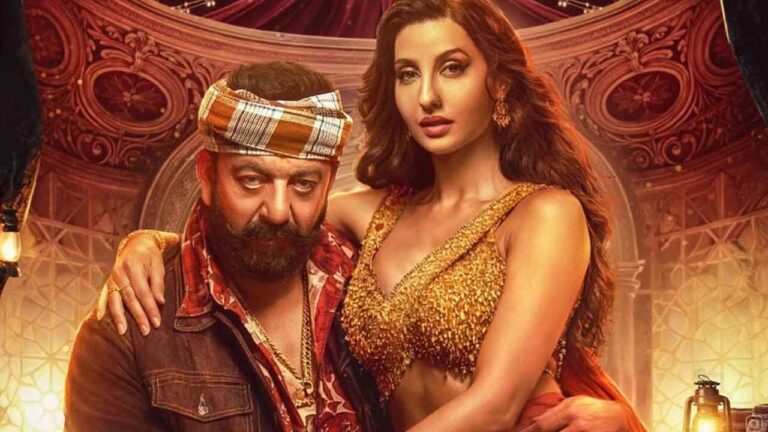
The Sarke Chunar Teri Sarke controversy is one of the fastest-escalating entertainment controversies India has seen in years. A song released. A nation reacted. And within four days, the government of India officially banned it from Parliament.
But here is what the other ten entertainment websites won’t tell you: this was not simply a case of a bold item number going too far. This is a story about a lyricist who tried to refuse, a director who wrote the original himself, a government that used a song to set a legal precedent, and a star who stayed dangerously silent while the storm raged.
If you have been following the Sarke Chunar Teri Sarke controversy and want to understand what actually happened — not just what trended — you are in the right place. Let’s go deep.
Quick Facts: Sarke Chunar Teri Sarke at a Glance
- Film: KD: The Devil (pan-India, directed by Prem, releasing April 30, 2026)
- Song title (Hindi): Sarke Chunar Teri Sarke
- Song title (Kannada): Sarse Ninna Seraga Sarse
- Featuring: Nora Fatehi, Sanjay Dutt
- Singer: Mangli
- Hindi Lyrics: Raqeeb Alam (translated from Kannada original written by director Prem)
- Music: Arjun Janya
- Released on YouTube: March 14–15, 2026
- Hindi version pulled: March 17, 2026
- Government ban confirmed in Parliament: March 18, 2026
- Other language versions: Still live on YouTube with 9 million+ combined views at time of writing
What Is the Sarke Chunar Teri Sarke Controversy Actually About?
Let’s be precise — because most coverage has been vague on purpose.
The Sarke Chunar Teri Sarke controversy centers on a specific line from the song’s Hindi lyrics that users began circulating widely on social media within hours of the video going live. The line — “Pahle uthale, ander wo dale, neeche ek boond na girae, khali kar ke nikale, mujh pe na girana, mujhe lagta hai dar” — is written around a deeply explicit double entendre. The surface reading involves pouring a drink. The intended reading, which most adult listeners immediately understood, is graphically sexual.
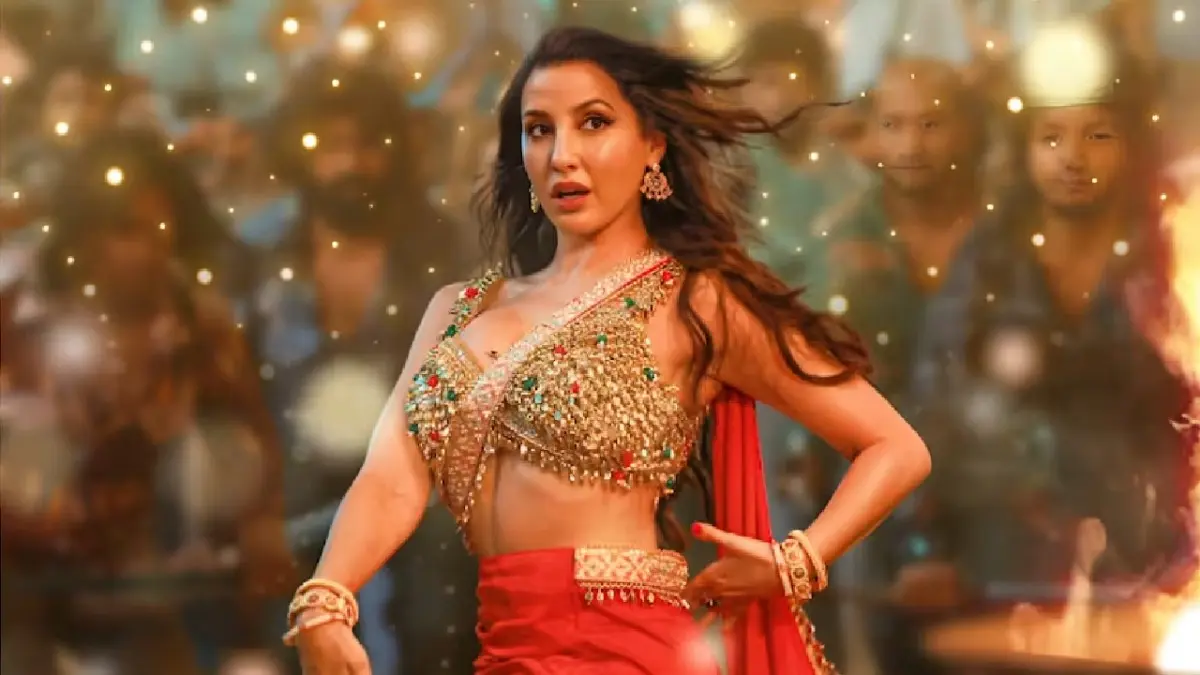
The Sarke Chunar Teri Sarke controversy is not about mild suggestiveness. It is not about a provocative dance move. The legal complaints that followed specifically describe the lyrics as “highly vulgar, sexually suggestive, and obscene expressions” — and the formal complaint forwarded to the Ministry of Information and Broadcasting uses language that leaves no room for interpretation.
Within hours of its release, the Sarke Chunar Teri Sarke song had become a flashpoint. Users on X, Instagram, and YouTube called for immediate removal. The criticism came not just from conservative voices but from within the entertainment industry itself.
The Timeline: How the Sarke Chunar Teri Sarke Controversy Unfolded in 4 Days
March 14–15: The Song Drops
KVN Productions — the same banner behind Yash’s upcoming Toxic — announced the simultaneous release of the song in five languages: Hindi, Kannada, Tamil, Telugu, and Malayalam. The Hindi version, titled Sarke Chunar Teri Sarke, was uploaded to Anand Audio’s YouTube channel. The promotional rollout was deliberate and well-resourced. Nora Fatehi, one of Bollywood’s most followed dancers with a global fanbase, was the face of the campaign. Sanjay Dutt’s presence added further commercial weight.
The Sarke Chunar Teri Sarke video was designed to go viral. And it did — just not in the way the makers planned.
March 15–16: Social Media Erupts
The specific offending line began circulating in screenshots and audio clips almost immediately. By March 16, the Sarke Chunar Teri Sarke controversy was among the top trending topics on X in India. Users were not just expressing distaste — they were tagging police accounts, government officials, and women’s commissions. Singer Armaan Malik’s response on X on March 16 marked the moment the controversy crossed from public to industry territory. His post — that he had to replay the clip to confirm what he had heard and that it was “sad to see commercial songwriting hit a new low” — was widely shared and cited by other industry figures in the hours that followed.
March 17: The Video Disappears. The Government Moves.
By the morning of March 17, users attempting to access the Hindi version of the Sarke Chunar Teri Sarke video on YouTube were met with a “video unavailable” message. The makers had quietly made it private. No announcement. No apology. No statement.
The same day, the Ministry of Information and Broadcasting directed the Central Board of Film Certification (CBFC) to examine the matter. The board was asked to ensure removal from all media platforms if the allegations were validated. Complaints had been filed with the Cyber Cell of Delhi Police, the Haryana Women’s Commission, the Karnataka Women’s Commission, and the NHRC. Two separate MPs had spoken about the Sarke Chunar Teri Sarke controversy outside Parliament.
March 18: Parliament Speaks. The Ban Is Confirmed.
Today — March 18, 2026 — Union Minister for Information and Broadcasting Ashwini Vaishnaw confirmed the ban in the Lok Sabha, responding to a question raised by Samajwadi Party MP Anand Bhadouria. The minister’s words were unambiguous: the song had been formally banned. He invoked the constitutional framework on reasonable restrictions on free speech.
The Sarke Chunar Teri Sarke controversy had gone from a YouTube upload to a parliamentary confirmation in four days.
The People Involved: Who Said What and Why It Matters
Most coverage lists reactions. We want to tell you what each reaction reveals about the system this controversy exposed.
Armaan Malik: The Insider Who Spoke First
Armaan Malik is not a conservative politician or an activist. He is a chart-topping Bollywood singer with a young, global fanbase. His criticism of the Sarke Chunar Teri Sarke song landed hard precisely because it came from inside the industry. When someone who makes commercial music says a song represents a “new low” for commercial songwriting, that is not moral outrage — that is a professional assessment.
What it reveals: There is a segment of the mainstream music industry that is genuinely uncomfortable with the direction certain song content is taking — not for political reasons, but for artistic and reputational ones.
Kangana Ranaut: Political Amplification
Actor and BJP MP Kangana Ranaut addressed the Sarke Chunar Teri Sarke controversy outside Parliament, calling out Bollywood for crossing “all limits” for cheap attention-seeking. Her comments were pointed and politically calibrated. She called for stricter regulatory oversight of Hindi cinema and said the industry had made it difficult to watch mainstream entertainment with family.
What it reveals: The Sarke Chunar Teri Sarke controversy was politically useful. A sitting MP from the ruling party condemning a film industry song publicly, outside Parliament, on camera, the day before the minister confirms a ban — that is not coincidence. It is signalling.
Ravi Kishan: The Business Argument
Actor and Lok Sabha MP Ravi Kishan made a specific point that deserves more attention than it received. He contrasted the Sarke Chunar Teri Sarke controversy with Dhurandhar 2 — arguing that the latter generated massive commercial returns without any obscenity. His framing was not moral but economic: vulgarity is not a prerequisite for commercial success. This argument cuts at the industry’s most common defence for explicit content — that it drives revenue.
What it reveals: The industry’s justification that ‘this content sells’ is increasingly being challenged on its own commercial terms.
Priyank Kanungo, NHRC: Institutional Legitimacy
The involvement of the National Human Rights Commission in the Sarke Chunar Teri Sarke controversy gave it a dimension that most item number controversies never reach. The NHRC does not typically weigh in on individual song releases. When an NHRC member indicates that formal notices will be issued, it means the controversy has been classified as a human rights concern — specifically around the dignity and representation of women.
Haryana and Karnataka Women’s Commissions: Geographic Breadth
Two state women’s commissions — Haryana and Karnataka — registered formal objections to the Sarke Chunar Teri Sarke song and wrote to the CBFC. Their involvement is significant for a specific reason: the song originated in Kannada cinema (Karnataka) but triggered the most institutional response in Haryana — a state that had already been through a similar controversy with Badshah’s Tateeree just weeks earlier. Haryana’s commission was primed and ready to act.
Rakshita: The Selective Outrage Argument
Director Prem’s wife, former actress Rakshita, addressed the Sarke Chunar Teri Sarke controversy through a series of Instagram notes. She stopped short of defending the specific lyrics but made a pointed argument about consistency — asking why past Bollywood songs and films with equally or more explicit content had not triggered comparable institutional responses.
Her examples — Peelings, Dreamum Wakeupum, Choli ke Peeche — are legitimate reference points. The question she is asking is real: what changed? The answer, which we will get to, is not about the content. It is about the political moment.
Lyricist Raqeeb Alam: The Most Revealing Statement
“Sabse pehle, main yeh spasht karna zaroori samajhta hoon ki is gaane ke har ek shabd film ke director dwara likhe gaye original Kannada lyrics ka hi anuvaad hai.” — Raqeeb Alam, Instagram
Translation: Every single word of this song is a translation of the original Kannada lyrics written by the film’s director.
Raqeeb Alam’s clarification in the Sarke Chunar Teri Sarke controversy is the single most important piece of information in this entire story. He is the credited Hindi lyricist. He translated the song. But he also revealed that he initially refused the assignment — that he read the English translation of the original Kannada lyrics and had concerns about whether it would pass censorship. He proceeded anyway, translated it word for word, and now faces public backlash and a criminal complaint.
The psychological profile here is uncomfortable: a professional who knew the content was problematic, raised concerns, then did the job anyway under industry pressure. This is not an unusual dynamic in commercial cinema. But in this case, the paper trail is now public.
What Only Popcorn Review Is Telling You: 9 Details Buried Across Dozens of Reports
Every outlet covered the surface story. We went deeper. Here are nine specific details that are scattered across court filings, ANI transcripts, Instagram posts, and industry interviews — none of which any single publication has put together in one place.
1. The Director Removed the Song Only After the Lyricist Personally Requested It
This is not widely reported. According to Raqeeb Alam’s own public statement, it was specifically his personal appeal to director Prem that triggered the song’s removal from YouTube — not the legal complaints, not the government pressure, not the NHRC notice. Alam stated: “Although director Prem has removed the song following my request, I still want to officially clarify…” The sequence matters. The makers did not act in response to public outrage or institutional pressure first. They acted because their own lyricist — the person they had contractually bound to translate the content — personally asked them to. That is an extraordinary detail that reframes the entire narrative of the takedown.
2. Raqeeb Alam Had Already Written FIVE Other Songs for This Film
This fact appears in exactly one interview — Alam’s statement to Variety India — and has not been picked up by any major outlet. Alam said: “I have written five more songs for the movie.” This means he had an existing, broader contractual relationship with KVN Productions. He was not a hired gun brought in just for Sarke Chunar. He was already embedded in the film’s creative team, which explains why walking away from the controversial translation was not a simple option — and why his contract clause became the lever the producers used to ensure compliance.
3. A Clean Version Was Recorded the Same Morning the Controversy Peaked
The makers did not wait for the storm to pass. According to Raqeeb Alam, the production team called him on Monday night — while the controversy was still building — and asked him to write fresh, clean lyrics for the same song. He sent them the new version Tuesday morning. It was being recorded that same Tuesday. The plan was to release the clean version on Tuesday evening alongside a formal apology note. That apology and re-release never materialised publicly — likely overtaken by the government ban confirmation on Wednesday. This means there is a completed, recorded clean version of Sarke Chunar sitting on someone’s hard drive right now that the public has never heard.
4. The NHRC Issued Notices to Google India Specifically — Not Just the CBFC
Every news report mentioned the NHRC notices. Almost none specified the full list of recipients. The NHRC bench, presided over by member Priyank Kanoongo, directed: the Chairman of the CBFC, the Secretary of the Ministry of Electronics and Information Technology, the Secretary of the Ministry of Information and Broadcasting, and — critically — the India lead for core government affairs and public policy at Google. The Google India notice is significant because it signals the government’s intent to hold digital distribution platforms directly accountable for the availability of content it classifies as harmful to minors, not just the content creators. All four recipients have two weeks to submit an Action Taken Report (ATR).
5. Filmmaker Onir Called Out the CBFC’s Double Standard by Name
While Armaan Malik’s response dominated headlines, filmmaker Onir’s X post contained a specific and pointed institutional critique that almost no outlet quoted fully. Onir wrote: “And the Censor board is busy with The naming of a film #GhooskhorPandat. Strange country we are becoming… opposing Valentines day celebration, interfaith marriage/celebration while ok with this rubbish.” His post named the specific CBFC case it was distracted by — a film title controversy — and directly accused the board of selective prioritisation. It is the most precise institutional critique of the controversy, and it was largely overlooked in favour of the more quotable reactions from politicians.
6. Armaan Malik’s Exact Words Were ‘I Wish I Could Unhear It’
Widely quoted as saying the song was a “new low” for commercial songwriting, Malik’s complete post on X began with a phrase no outlet led with: “Wish I could unhear it.” The full quote reads: “This showed up on my timeline and I had to replay it just to make sure I heard it right. Sad to see commercial songwriting hit a new low. I am genuinely at a loss of words.” The opening line — visceral, personal, involuntary — is the most emotionally honest reaction from anyone in the industry. The fact that it was buried in favour of the more quotable “new low” line tells you something about how entertainment media frames industry reactions.
7. The AICWA’s Formal Letter Was Addressed to Prasoon Joshi Personally
The All Indian Cine Workers Association did not write a generic letter to the CBFC. They addressed it specifically and by name to Prasoon Joshi, the current Chairman of the Central Board of Film Certification — who is himself a celebrated lyricist. The AICWA was making a pointed choice: addressing the person responsible for certifying content standards in Indian cinema, who also personally understands the craft of writing film lyrics. The association’s four formal demands were: immediate ban on the song across all platforms, re-examination of KD: The Devil by the CBFC, an FIR against producers and creators, and a formal investigation into whether the controversy was deliberately engineered for publicity.
8. The Complaint Specifically Flagged Accessibility to Minors — Not Just General Obscenity
The legal framing of the complaint filed with the NHRC was not simply “this is vulgar.” It was specifically framed around child safety and minor protection. The complaint alleged that the song was “widely available through television, social media and digital platforms, which may negatively impact the mental well-being and moral environment of minors.” This framing is legally and strategically significant — it invokes a different and more serious tier of content regulation than adult obscenity standards. It is the same framing used in child-safe media legislation internationally. By choosing this angle, the complainant positioned the song not as offensive adult content but as content harmful to children, which carries a higher legal and regulatory burden.
9. Director Prem Has Remained Completely Silent — While Everyone Around Him Has Spoken
This is the detail that the media has been curiously reluctant to highlight directly. By March 18, the following people had made public statements: Raqeeb Alam (multiple interviews and an Instagram post), Rakshita (multiple Instagram notes), Armaan Malik (X post), Kangana Ranaut (on-camera statement to ANI), Ravi Kishan (interview with ANI), Filmmaker Onir (X post), Advocate Vineet Jindal (press statement), AICWA (formal letter and X post), Haryana Women’s Commission (formal notice), Karnataka Women’s Commission (formal notice), NHRC member Priyank Kanoongo (press statement), Union Minister Ashwini Vaishnaw (Lok Sabha statement). Director Prem — the person who wrote every single word of the original Kannada lyrics, who approved the Hindi translation, who supervised the picturisation, and who runs the production house responsible for the release — has said nothing. Not a word. The person at the centre of this controversy has achieved near-perfect institutional silence while everyone around him takes the heat.
The Deep Psychological Analysis: Why Did This Song Even Get Made?
This is the question that the Sarke Chunar Teri Sarke controversy should force the industry to answer — and the one nobody is asking directly.
The song was not an accident. It did not slip through any cracks. The original Kannada version was written by the film’s director himself. A professional lyricist was hired to translate it into Hindi. A singer recorded it. A choreographer staged the visuals. A production house approved the release. A marketing team planned the rollout across five languages simultaneously. Nora Fatehi agreed to feature in it. Sanjay Dutt agreed to feature in it.
Every single one of those steps required a human decision. In an industry with multiple layers of review and approval, the Sarke Chunar Teri Sarke controversy did not happen because nobody noticed. It happened because nobody stopped it.
The Viral Calculation
Here is the business logic that almost certainly drove this: item numbers with edgy or provocative content generate disproportionate viral attention in the pre-release window. They become talking points. They get debated. They get shared by people who are outraged and by people who are defending them. Both groups create impressions. And impressions translate to awareness for the film.
The Sarke Chunar Teri Sarke controversy has, whatever else it has done, made KD: The Devil one of the most-discussed upcoming Kannada films in India right now. Most people who know the film’s name learned it this week. That is not a failure of the marketing strategy — it is, from a pure attention-generation standpoint, a success.
The producers almost certainly anticipated some backlash. What they did not anticipate was the speed and institutional breadth of the response — two state commissions, the NHRC, parliamentary speeches, a Ministry directive to the CBFC, and a formal government ban confirmed in the Lok Sabha in four days. Nobody planned for that.
The Industry’s Shifting Tolerance Threshold
There is a real and important distinction between what the Sarke Chunar Teri Sarke song contains and what previous controversial songs contained. Item numbers have a long history of double-entendre in Indian cinema. Choli ke Peeche, Sheila ki Jawani, Fevicol Se, Lovely — all pushed at the edges of mainstream acceptability. Rakshita’s comparison to these songs is not wrong on its face.
But the Sarke Chunar Teri Sarke controversy involves something qualitatively different: a line that does not merely suggest but, in context and as understood by most adult listeners, explicitly describes a sexual act. There is a line between suggestive and explicit. Different listeners will place that line in different places. But the institutional and public consensus in this case — across two women’s commissions, an NHRC member, the Ministry of Information and Broadcasting, and ultimately Parliament — was that this song crossed it.
Myth vs Fact: What People Are Getting Wrong About the Sarke Chunar Teri Sarke Controversy
Myth: Nora Fatehi wrote or approved the lyrics.
Fact: The Hindi lyrics were written by Raqeeb Alam as a translation of the Kannada original written by director Prem. Nora Fatehi is a performer, not a lyricist, and has no credited role in the writing or approval of the song’s words. Whether she read them carefully before agreeing to perform is a separate question — but she is not responsible for authorship.
Myth: The song was immediately removed from all platforms after the ban.
Fact: Only the Hindi version was made private by the makers on March 17. As of the time of writing, the Tamil, Telugu, Kannada, and Malayalam versions of the Sarke Chunar Teri Sarke song remain live on YouTube and have collectively accumulated over 9 million views. Native speakers across languages have confirmed that the meaning of the song is equally explicit in all versions. The outrage has been largely directed at the Hindi version, which itself raises questions about language-selective enforcement.
Myth: This is the first time a Bollywood song has been banned this quickly.
Fact: Badshah’s Tateeree was released on March 1 and was taken down within a week following an FIR, a police lookout circular, and a Haryana Women’s Commission arrest order. Yo Yo Honey Singh’s Millionaire was similarly summoned by the Punjab State Women’s Commission. The Sarke Chunar Teri Sarke controversy is the third major song controversy in India in the span of just three months — and the first to result in a direct parliamentary confirmation of a ban.
Myth: The government ban means the film KD: The Devil is also affected.
Fact: The ban applies specifically to the promotional song Sarke Chunar Teri Sarke. KD: The Devil remains scheduled for theatrical release on April 30, 2026. The film itself has not been banned or censored. The song was a promotional item number and is not confirmed to be part of the film’s core soundtrack.
Myth: This is politically motivated censorship of art.
Fact: This framing has some validity but requires nuance. The speed and breadth of the institutional response in the Sarke Chunar Teri Sarke controversy does suggest political will beyond ordinary regulatory process. However, the specific legal basis — Section 294 of the Bharatiya Nyaya Sanhita covering obscene acts and songs, and the Indecent Representation of Women Act — are not new instruments created for this controversy. They are established law. The question is not whether the law applies, but whether it is being applied consistently. Given the history of explicitly suggestive content in Bollywood that has never attracted comparable action, the answer to that question is clearly no.
The Business and Industry Angle: What the Sarke Chunar Teri Sarke Controversy Costs
What It Costs Nora Fatehi
Nora Fatehi has built a remarkable career on the back of her dance performances. Her trajectory — from struggling outsider to FIFA World Cup performer, Warner Music Group signee, reality show judge, and global brand endorser — is genuinely impressive. She did not achieve that by accident. She built a reputation for precision, work ethic, and a specific kind of aspirational glamour.
The Sarke Chunar Teri Sarke controversy puts a specific and new kind of pressure on that reputation. Previous controversies around her — including an ED case that she was eventually cleared of — did not involve content questions. This one does. And her continued silence as of March 18, four days into the controversy, is conspicuous.
Brand endorsers, international promoters, and streaming platforms that have invested in Nora Fatehi as a talent will be watching how she handles this. A measured, direct statement — not defensive, not apologetic for things she didn’t write, but clear and considered — would protect her far better than silence. Every day that passes without one, the silence becomes a story in itself.
What It Costs KVN Productions
KVN Productions is the banner behind both KD: The Devil and the highly anticipated Yash film Toxic. The Sarke Chunar Teri Sarke controversy has landed at a critical moment for the company’s pan-India credibility. A production house that wants to be taken seriously in the Hindi market — which KD: The Devil’s five-language rollout signals — cannot afford to be associated with content that has been formally banned in the Lok Sabha one month before the film releases.
The silver lining for the production house, such as it is, is that controversy reliably drives curiosity. KD: The Devil now has a level of national name recognition that a standard promotional campaign might have taken months to achieve. Whether audiences translate that curiosity into ticket sales is the April 30 question.
What It Costs the Industry
The Sarke Chunar Teri Sarke controversy, taken alongside Badshah’s Tateeree and Honey Singh’s Millionaire, establishes a pattern that the industry can no longer pretend is isolated. Within a three-month window, three major song releases have resulted in FIRs, state commission summons, government ministry directives, parliamentary debates, and at least one formally confirmed ban.
This is not a coincidence. It reflects a shift in the regulatory and political environment around content in Indian entertainment. The informal understanding that promotional songs operate in a space beyond meaningful enforcement is no longer valid. The Sarke Chunar Teri Sarke controversy has confirmed, at the highest level, that the government is willing and able to move quickly when it chooses to.
The Bigger Picture: Why 2026 Is Becoming the Year Bollywood Lost Its Content Free Pass
Let’s zoom out and look at what is actually happening.
The Sarke Chunar Teri Sarke controversy is not an isolated event. It is the most dramatic episode in a pattern that has been building for months. Here is the full picture:
- March 1, 2026: Badshah releases Tateeree. FIR filed within days. Haryana Police initiate lookout circular. Haryana Women’s Commission orders his arrest. Song removed from YouTube across India.
- March 2026: Yo Yo Honey Singh’s Millionaire summoned by Punjab State Women’s Commission. Commission seeks ban and investigation.
- March 15, 2026: Sarke Chunar Teri Sarke drops across five languages.
- March 17, 2026: Hindi version removed. Ministry directs CBFC to review.
- March 18, 2026: Government confirms ban in Parliament.
Three controversies. Three sets of legal consequences. A two-week window. What changed?
The honest analysis involves several converging factors. First, the political climate around women’s rights and dignity in public media has become significantly more activated at the institutional level — state commissions in Haryana, Punjab, Karnataka, and UP are all demonstrably more aggressive in their responses to content complaints than they were five years ago. Second, social media has made the gap between a song’s release and a viral controversy dramatically shorter. A line that might previously have circulated among a niche audience now reaches national attention in hours. Third, the government has, across multiple policy signals, indicated a preference for more active content regulation in entertainment. The Sarke Chunar Teri Sarke controversy did not create this environment — it simply provided the moment to demonstrate it.
The informal deal that allowed Bollywood to push limits in promotional content while largely escaping meaningful consequences has been cancelled. The Sarke Chunar Teri Sarke controversy is the formal notice.
Strong Opinion: The Sarke Chunar Teri Sarke Controversy Exposes a Cowardly System
Here is the honest editorial take that most publications will not give you.
The person most responsible for the Sarke Chunar Teri Sarke controversy is director Prem. He wrote the original Kannada lyrics. He commissioned the Hindi translation. He oversaw the production and picturisation. He approved the release. When the controversy erupted, he let his wife respond while he remained silent. His lyricist — who tried to refuse the assignment and was overridden — has now apologised publicly. His star — Nora Fatehi — has stayed silent. The director himself has issued nothing.
The Sarke Chunar Teri Sarke controversy is also a story about industry complicity at every level. A lyricist who knew the content was problematic and proceeded anyway. A production house that calculated the controversy was worth the risk. An institutional framework — the CBFC — that apparently signed off on content that two state women’s commissions, the NHRC, and ultimately Parliament classified as obscene. Either the CBFC failed to apply its own standards, or those standards are themselves inadequate. Neither answer is reassuring.
Finally, there is the question of what the Sarke Chunar Teri Sarke controversy means for women in Indian cinema more broadly. Nora Fatehi is a supremely talented artist who has built her career around dancing. She is not responsible for writing a song she performed in. But she is a public figure with enormous reach and influence. Her silence in the face of a controversy about her own image and the content she is associated with is a choice — and not a particularly courageous one.
The industry that enabled this song to be made and released is the same industry that will now, quietly, learn to make slightly less explicit versions of the same content — until the next one crosses the line, and the cycle repeats. Unless someone with genuine industry power uses this moment to say something meaningful about where the line should actually be. So far, nobody has.
Conclusion: The Sarke Chunar Teri Sarke Controversy Changed the Rules
Four days. One song. A parliamentary ban confirmed in the Lok Sabha. That is the summary of the Sarke Chunar Teri Sarke controversy — but it is not the full story.
The full story is about a director who wrote explicit content, a lyricist who tried to refuse and was pressured to comply, a star who is letting silence substitute for a response, a production house that calculated a controversy was worth the marketing value, and a government that decided this particular moment was the one to use for a very public demonstration of its regulatory will.
The Sarke Chunar Teri Sarke controversy is not the end of item numbers in Indian cinema. It is not the end of provocative content. It is not even the end of double-entendre in mainstream Bollywood songs. What it is, is the end of the pretence that the entertainment industry operates in a regulatory vacuum when it comes to content.
The rules have changed. The Sarke Chunar Teri Sarke controversy wrote them, in public, in Parliament, in four days.
KD: The Devil releases April 30, 2026. Watch whether the controversy follows the film into cinemas — or whether it serves as exactly the pre-release buzz the production house needed all along.
The most uncomfortable question the Sarke Chunar Teri Sarke controversy leaves us with is not who is to blame. It’s whether any of this actually protects anyone — or whether it’s just a very loud, very public performance of concern, while the underlying dynamics that created the song remain completely unchanged.
What do you think — is the government’s ban on Sarke Chunar Teri Sarke a genuine step toward protecting public decency, or is it selective enforcement that lets decades of similar Bollywood content off the hook? And do you think Nora Fatehi should have spoken up by now? Drop your take below.
Frequently Asked Questions: Sarke Chunar Teri Sarke Controversy
Q1. What is the Sarke Chunar Teri Sarke controversy about?
The Sarke Chunar Teri Sarke controversy erupted after Nora Fatehi and Sanjay Dutt’s promotional song from KD: The Devil was released on March 14–15, 2026. A specific line in the Hindi lyrics was widely identified as graphically sexual in its double meaning. The backlash was near-instant — within four days, the government of India confirmed a formal ban in Parliament.
Q2. Who wrote the lyrics of Sarke Chunar Teri Sarke?
The original Kannada lyrics were written by the film’s director, Prem. The Hindi translation was done by lyricist Raqeeb Alam. Alam has publicly stated that he initially refused the assignment after reading an English translation of the original, but ultimately translated the song word for word. He is not the original author of the controversial content.
Q3. Has the Sarke Chunar Teri Sarke song been officially banned?
Yes. Union Minister for Information and Broadcasting Ashwini Vaishnaw confirmed the ban in the Lok Sabha on March 18, 2026, responding to a question raised by Samajwadi Party MP Anand Bhadouria. The minister cited constitutional provisions on reasonable restrictions to free speech. The Hindi version had already been made private on YouTube by the makers on March 17.
Q4. Is the film KD: The Devil also banned?
No. The ban applies only to the promotional song Sarke Chunar Teri Sarke. The film KD: The Devil remains scheduled for theatrical release on April 30, 2026. The song was a promotional item number and is not confirmed to be part of the film’s final soundtrack.
Q5. Why haven’t the other language versions of the song been removed?
As of March 18, 2026, the Tamil, Telugu, Kannada, and Malayalam versions of the song remain live on YouTube with a combined viewership of over 9 million. The ban and the institutional backlash have been primarily directed at the Hindi version. Critics, including the Sunday Guardian, have pointed out that the lyrics carry the same meaning across all languages — making the selective focus on the Hindi version a significant inconsistency.
Q6. Has Nora Fatehi responded to the Sarke Chunar Teri Sarke controversy?
As of the time of publication — March 18, 2026 — Nora Fatehi has not issued any public statement regarding the Sarke Chunar Teri Sarke controversy. She is not the lyricist and did not write the content, but her continued silence four days into a parliamentary-level controversy is widely seen as a strategic, if risky, choice.
Q7. What legal action has been taken over the Sarke Chunar Teri Sarke song?
Advocate Vineet Jindal filed a formal complaint with the Cyber Cell of Delhi Police, naming Nora Fatehi, Sanjay Dutt, lyricist Raqeeb Alam, and director Prem. The complaint seeks an FIR under Section 294 of the Bharatiya Nyaya Sanhita (BNS) and relevant provisions of the IT Act. The complaint was also forwarded to the Ministry of Information and Broadcasting. Separately, the Haryana Women’s Commission and Karnataka Women’s Commission both issued formal notices to the CBFC.
Q8. Is this part of a bigger Bollywood song controversy trend in 2026?
Yes. The Sarke Chunar Teri Sarke controversy is the third major song controversy in India within weeks. Badshah’s Tateeree was released on March 1 and pulled from YouTube within days following an FIR and a Haryana Women’s Commission arrest order. Yo Yo Honey Singh’s Millionaire was summoned by the Punjab State Women’s Commission around the same time. The Sarke Chunar Teri Sarke controversy is the first of the three to result in a formal government confirmation of a ban in Parliament.
Q9. What is KD: The Devil about?
KD: The Devil is a pan-India period action film set in 1970s Bangalore, directed by Prem and produced by KVN Productions. The film stars Dhruva Sarja in the lead role, with a supporting cast that includes Sanjay Dutt, Shilpa Shetty Kundra, V Ravichandran, Ramesh Aravind, Reeshma Nanaiah, and Jisshu Sengupta. It is scheduled for theatrical release on April 30, 2026.
Q10. What does the Sarke Chunar Teri Sarke controversy mean for Bollywood’s future?
The Sarke Chunar Teri Sarke controversy signals a meaningful shift in India’s regulatory environment for entertainment content. For the first time in recent memory, a promotional song has been discussed and formally banned at the parliamentary level within four days of release. Combined with the near-simultaneous Tateeree and Millionaire controversies, it suggests that the informal tolerance for explicitly suggestive or obscene content in mainstream Bollywood promotional material can no longer be assumed. Content teams, lyricists, and production houses will need to recalibrate — or face legal and regulatory consequences that move faster than they anticipated.
Related Posts You’ll Love
→ Badshah’s Tateeree Song Controversy: Everything That Happened
→ Upcoming Bollywood Movies 2026 — Most Anticipated Films You Can’t Miss
→ Dhurandhar Theatrical Cut vs OTT Cut: What Netflix Changed and Why Fans Are Angry
→ Best Bollywood Suspense Thriller Movies to Watch in 2025–2026
Follow Popcorn Review
Stay updated with our latest reviews and controversy breakdowns on Instagram (@pop_cornreview) and save your favourites on our Pinterest board.
Sources
Business Today: Sarke Chunar row — Nora Fatehi, Sanjay Dutt track pulled down from YouTube
India TV News: Sarke Chunar row — Lyricist Raqueeb Alam speaks out
Bollywood Hungama: Rakshita questions ‘selective outrage’ as controversy intensifies
The Statesman: Haryana Women’s Commission issues notice to CBFC
Bollywood Hungama: Government asks CBFC to review Sarke Chunar Teri Sarke
Republic World: Hindi song taken down, other versions garner 9 million views
Sunday Guardian Live: From Tateeree to Millionaire, Now Sarke Chunar — list grows
WION: Badshah’s Tateeree song controversy — pulled from YouTube amid legal complaint
The Week: What the controversy surrounding Badshah’s Tateeree is all about

Popcorn in hand and a opinion ready — Emily covers movie reviews, box office buzz, and all things cinema at Popcorn Review.

