

South Indian cinema has completely rewritten the rules of Indian filmmaking. What once stayed within regional boundaries now commands national box office records, breaks cultural barriers, and shapes how all of India watches movies.
This article covers the biggest South blockbusters that took over India — with box office numbers, film-by-film breakdowns, and a clear picture of why this shift happened and what it means for the future of Indian cinema.
What You’ll Find in This Article
- Why South cinema went pan-India
- The timeline of the blockbuster revolution
- Top 10 highest-grossing South pan-India films
- Film-by-film breakdown — why each one worked
- South vs Bollywood: what changed
- What’s coming next in 2026
Why South Indian Cinema Went Pan-India
The rise of South blockbusters across India was not accidental. It was driven by a fundamental shift in what audiences want from cinema.
For decades, Hindi films dominated the national market while Telugu, Tamil, Kannada, and Malayalam films stayed largely regional. That division no longer exists.
Today’s audiences — especially in tier-2 and tier-3 cities — are responding to stories built around conviction, emotional intensity, and hero mythology. South cinema has always excelled at exactly these elements.
What South Films Deliver That Resonated Nationally
- Strong hero arcs with emotional clarity
- High-energy background scores and entry scenes
- Defiance against corrupt systems (relatable across India)
- Cultural rootedness — mythology, folklore, local identity
- Visceral spectacle that demands theatrical viewing
Hindi audiences don’t just watch these films. They emotionally inhabit them — which is why repeat viewings and word-of-mouth have been so powerful.
The Pan-India Revolution: A Clear Timeline
Before 2015 — Regional Hits, Limited Reach
Films like Sivaji (2007) and Enthiran (2010) gained northern popularity through TV dubbing but had no structured pan-India strategy. They were cultural curiosities, not mainstream national events.
2015–2017 — The Baahubali Shockwave
Baahubali changed everything. S.S. Rajamouli’s epic was the first South film to deliberately target all of India simultaneously — with Hindi dubbing treated as a primary market, not an afterthought.
Baahubali 2: The Conclusion (2017) crossed ₹1,800 crore worldwide. It proved that language was never the barrier — storytelling was.
2018–2022 — The Confirmation Period
KGF Chapter 2, RRR, and Pushpa: The Rise confirmed Baahubali was not a fluke. Each film demonstrated that Hindi audiences would enthusiastically embrace non-Hindi superstars when cinematic impact was strong enough.
2023–2025 — Genre Expansion
South blockbusters stopped being just mass action films. Kantara brought folklore drama. Kalki 2898 AD introduced mythology-sci-fi hybrids. L2: Empuraan proved Malayalam cinema could operate at pan-India scale. The genre range expanded dramatically.
2026 — What’s Next
Large-scale sequels, cross-industry collaborations, and mythological mega-projects are already in production. The ambition level has never been higher.
Top 10 South Blockbusters by Pan-India Box Office
All figures are trade estimates compiled from Sacnilk, Koimoi, and industry trackers.
| # | Film | Year | Language | Worldwide (₹ Cr) | Hindi Nett (₹ Cr) | Why It Mattered |
| 1 | Baahubali 2 | 2017 | Telugu | 1,810+ | 511 | Pan-India pioneer — changed the game forever |
| 2 | Pushpa 2: The Rule | 2024 | Telugu | 1,642–1,800+ | 836+ | Hindi dubbed record holder |
| 3 | RRR | 2022 | Telugu | 1,200–1,387 | 272–277 | Global recognition + Oscar nomination |
| 4 | KGF Chapter 2 | 2022 | Kannada | 1,200–1,250 | 434–435 | Nationwide mass phenomenon |
| 5 | Kalki 2898 AD | 2024 | Telugu | 1,042–1,100 | 293–295 | Genre-blending mythology + sci-fi |
| 6 | Kantara | 2022 | Kannada | 400+ | 60+ | Folklore authenticity as spectacle |
| 7 | Kantara Chapter 1 | 2025 | Kannada | 850–900 | 224+ | Folklore franchise confirmed |
| 8 | Salaar: Part 1 | 2023 | Telugu | 650+ | 152 | Brutal action — strong second half |
| 9 | L2: Empuraan | 2025 | Malayalam | Record-Breaker | Solid | Malayalam at pan-India scale |
| 10 | Coolie | 2025 | Tamil | 500+ (Est.) | Strong | Rajinikanth superstar pull |
Key takeaway: Telugu cinema dominates commercially. Hindi dubbed earnings have become a decisive factor in film budgets and release strategies. Spectacle combined with a strong hero arc creates the highest repeatability.
Film-by-Film Breakdown: Why Each One Worked
1. Baahubali 2: The Conclusion (2017)
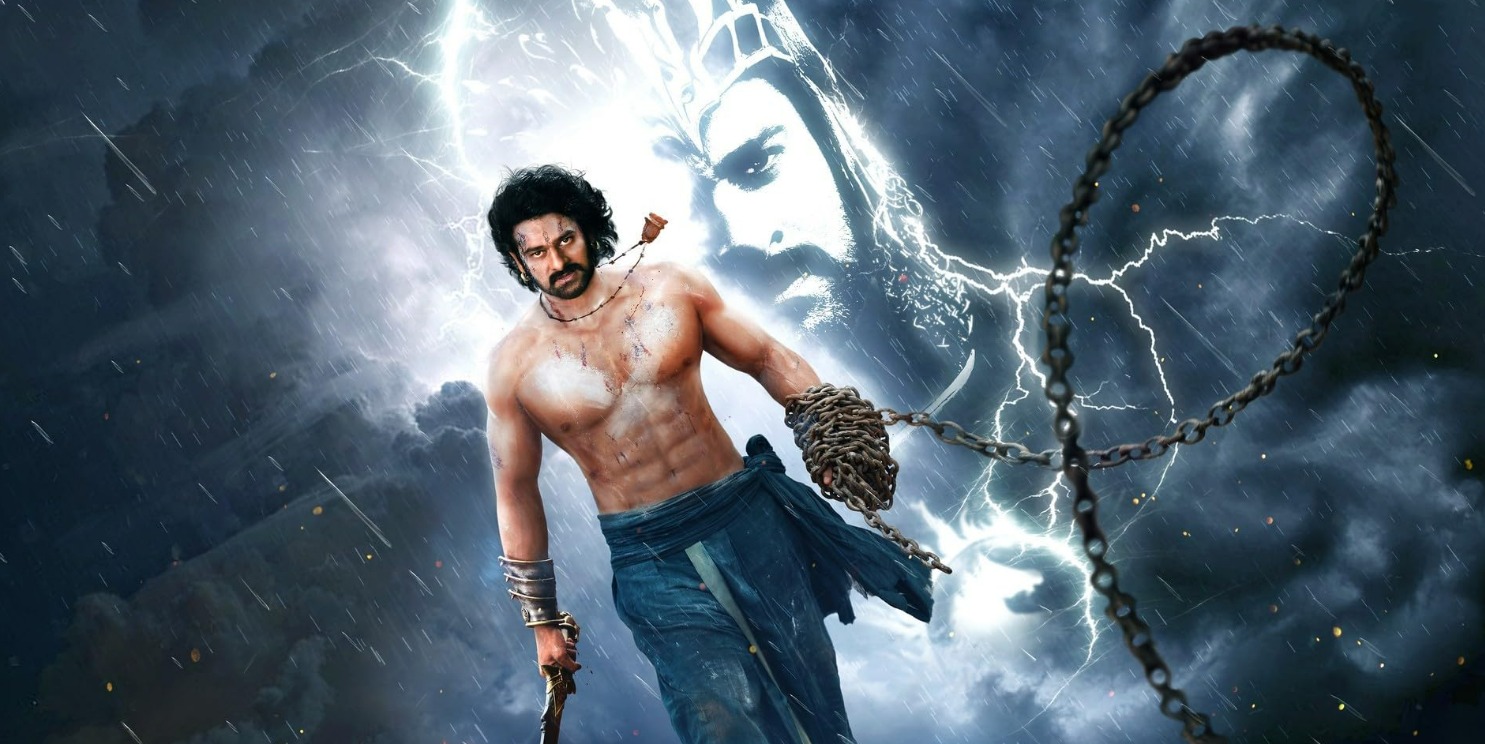
Baahubali succeeded because it fused archetypal storytelling with monumental scale and emotional operatic stakes. It was built like a mythology — not a movie. The question ‘Why did Katappa kill Baahubali?’ kept India talking for two years before Part 2 released.
It created a cinematic experience that transcended linguistic identity entirely. After Baahubali, every major Indian producer began rethinking what scale meant.
2. KGF Chapter 2 (2022)
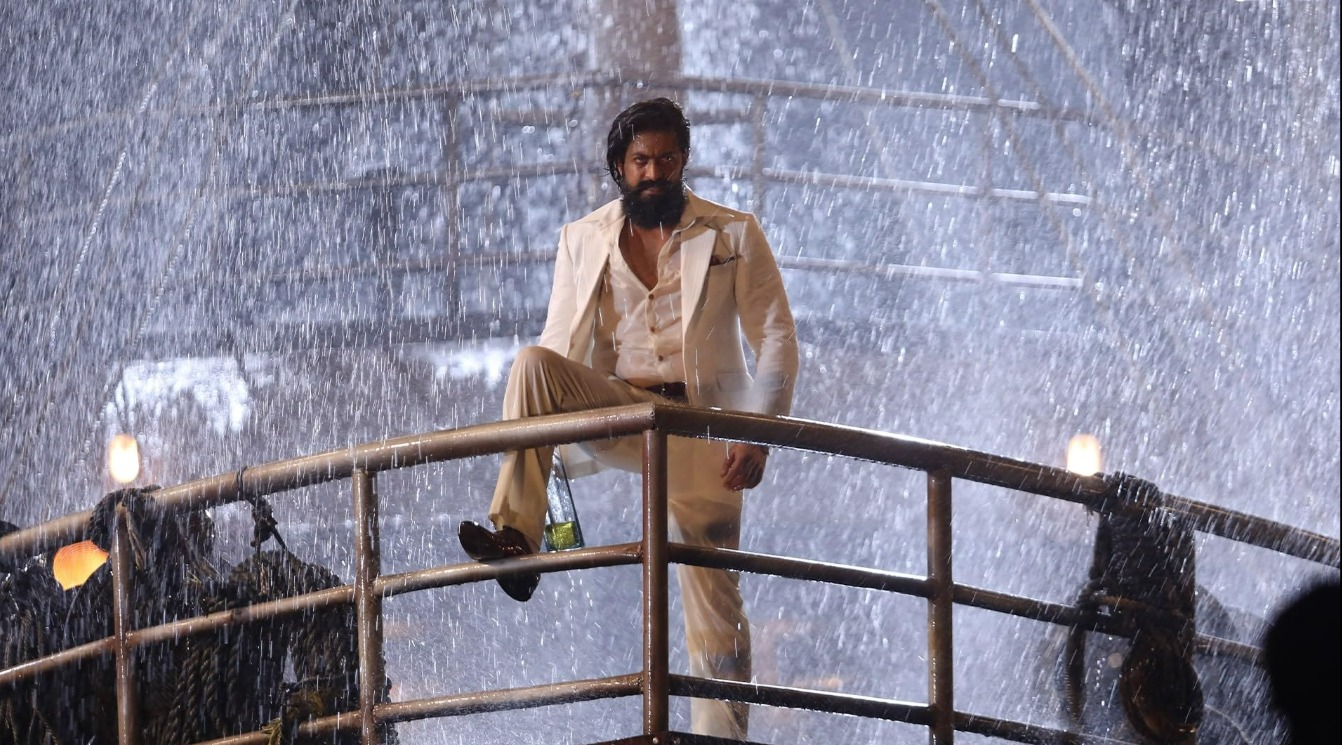
KGF’s success was engineered through stylized dominance psychology. Every element — visual design, background score, dialogue cadence, costume — was calibrated to produce theatrical euphoria. Rocky Bhai became a national icon almost overnight.
The Hindi market contributed over ₹434 crore to KGF Chapter 2, making it one of the most successful dubbed releases in Indian cinema history at that time.
3. RRR (2022)
RRR’s emotional core — friendship, sacrifice, and brotherhood — carried cross-cultural appeal far beyond its action sequences. Director S.S. Rajamouli masterfully layered Telugu folklore with universal emotional beats that resonated in every region.
Its global success and Oscar nomination for Naatu Naatu permanently elevated the international standing of South Indian cinema.
4. Pushpa Franchise
Pushpa resonated through attitude-driven charisma. The character embodied raw rebellion, pride, and survival instinct — powerful identity projection triggers for audiences across Hindi-speaking India. Allu Arjun became the first South Indian actor to win the National Award for Best Actor for this role.
Pushpa 2: The Rule (2024) shattered the Hindi dubbed box office record with over ₹836 crore in nett collections from the Hindi version alone.
5. Kantara (2022) and Kantara Chapter 1 (2025)
Kantara proved that rooted folklore storytelling can outperform formulaic spectacle. Rishab Shetty’s vision of Tulu Nadu’s traditions turned cultural authenticity itself into a cinematic event. Audiences who had never heard of the Bhoota Kola ritual became fascinated by it overnight.
Authenticity became the spectacle. This was a significant creative lesson for the entire industry.
6. Kalki 2898 AD (2024)
Kalki was a bold genre hybrid — blending Hindu mythology with dystopian science fiction at a scale Indian cinema had never attempted. Its success reflected audience appetite for narrative risk and imaginative ambition, not just star power.
South Blockbusters vs Bollywood: What Actually Changed
The comparison between South blockbusters and Bollywood in the 2020s is often oversimplified. The real story is more nuanced.
What Traditional Hindi Cinema Leaned Toward
- Urban themes and lifestyle narratives
- Romantic dramas with aspirational settings
- Glamour-driven storytelling
- Ensemble casts and social messaging
What South Blockbusters Leaned Toward
- Hero mythology and emotional intensity
- Cultural rootedness — local traditions, folklore, identity
- Moral extremity — clear heroes, clear villains
- Mass theatrical energy — designed for the big screen
Hindi audiences began increasingly rewarding conviction over polish. Films that committed fully to their vision — even when that vision was over-the-top — outperformed more restrained productions.
Bollywood’s best recent performers (Animal, Stree 2, Jawan) have borrowed heavily from the South blockbuster playbook — high hero elevation, intense action, and unapologetic scale. This cross-pollination is reshaping all of Indian mainstream cinema.
What’s Coming in South Cinema in 2026
The ambition level in South cinema has never been higher. Several major titles are in various stages of production or release:
- Yash’s Toxic — a high-concept action thriller
- Prabhas-led mythological projects
- KGF Chapter 3 — in early development
- Vijay’s continued evolution post-GOAT
- Large-scale Malayalam productions following L2: Empuraan’s success
Cross-industry collaborations between South directors and Bollywood stars are also increasing, further blurring the lines between regional cinema categories.
Frequently Asked Questions
Why did South Indian cinema suddenly dominate nationally?
The rise was not sudden — it was built over a decade. Baahubali (2015–2017) provided the proof of concept. KGF, RRR, and Pushpa confirmed it. The shift happened because South films consistently delivered the emotional intensity and theatrical spectacle that audiences had been waiting for.
Are Hindi dubbed versions now essential for South films?
Yes, absolutely. Hindi dubbed earnings now represent one of the largest revenue multipliers for South productions. Films that do not release simultaneously in Hindi miss a critical market that can often match or exceed the original language collections.
Is Bollywood losing to South cinema?
It’s more accurate to say that both industries are converging. Bollywood’s biggest recent successes (Stree 2, Animal, Jawan) have embraced the South blockbuster formula. The real winner is Indian cinema as a whole, as storytelling ambition and production scale rise across all regions.
Which South blockbuster has the highest Hindi collection?
As of 2025, Pushpa 2: The Rule holds the record for Hindi dubbed nett collections with over ₹836 crore — surpassing even Baahubali 2’s Hindi performance.
What makes South blockbusters different from other Indian films?
Three factors: commitment to the hero archetype, unapologetic theatrical scale, and culturally rooted storytelling. South blockbusters never hesitate to go all-in on their cinematic vision — and that confidence itself becomes their strongest differentiator.
Final Thoughts
South Indian blockbusters have permanently altered Indian cinema’s hierarchy. They have blurred language divisions, created shared national cultural memories, and proven that cinematic impact matters far more than linguistic origin.
The box office numbers are impressive. But the real story is what happens in the theatre — the collective emotional experience of millions of Indians watching the same story, in different languages, with the same intensity.
Cinema is no longer regional. It is experiential.
The revolution is ongoing — and its next chapter is already being written.

Content writer at Popcorn Review, specializing in movie reviews, box office insights, and film analysis. Passionate about bringing cinema stories to life.

