
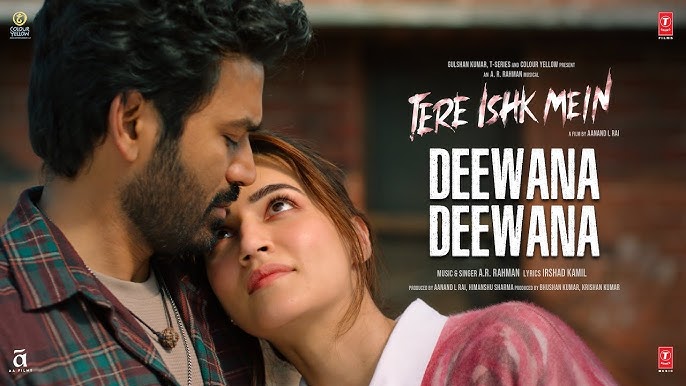
The Tere Ishq Mein OTT controversy didn’t begin with a bad review or a boycott call. It began on January 23, 2026 — the day Aanand L. Rai’s romantic drama landed on Netflix — when PhD students across India watched a single scene and collectively lost their minds.
Kriti Sanon’s character, Mukti Beniwal, a psychology research scholar at Delhi University, casually mentions submitting a 2,200-page PhD thesis. The scene is played straight. The background score swells. The thesis is framed as evidence of her intellectual dedication.
The internet had other thoughts.
Within days, doctoral candidates were flooding X with reactions ranging from disbelief to sarcasm to genuine frustration. But the thesis was only the beginning. The Tere Ishq Mein OTT controversy quickly expanded into a second, more serious argument — about whether the film glorifies toxic and obsessive love as romance. Kriti Sanon responded to both. The filmmakers have not.
Here’s exactly what happened, what people actually said, and whether any of the criticism is fair.
What Is Tere Ishq Mein — The Full Story
Tere Ishq Mein released theatrically on November 28, 2025, directed by Aanand L. Rai and starring Dhanush and Kriti Sanon in their first on-screen pairing. It is positioned as a spiritual sequel to Rai’s 2013 cult romance Raanjhanaa, marking the third collaboration between Rai and Dhanush after Raanjhanaa and Atrangi Re.
The screenplay was written by Himanshu Sharma and Neeraj Yadav. Music is by A.R. Rahman. Produced by Colour Yellow Productions and T-Series, the film was shot across Delhi, Varanasi, Leh, and Mumbai.
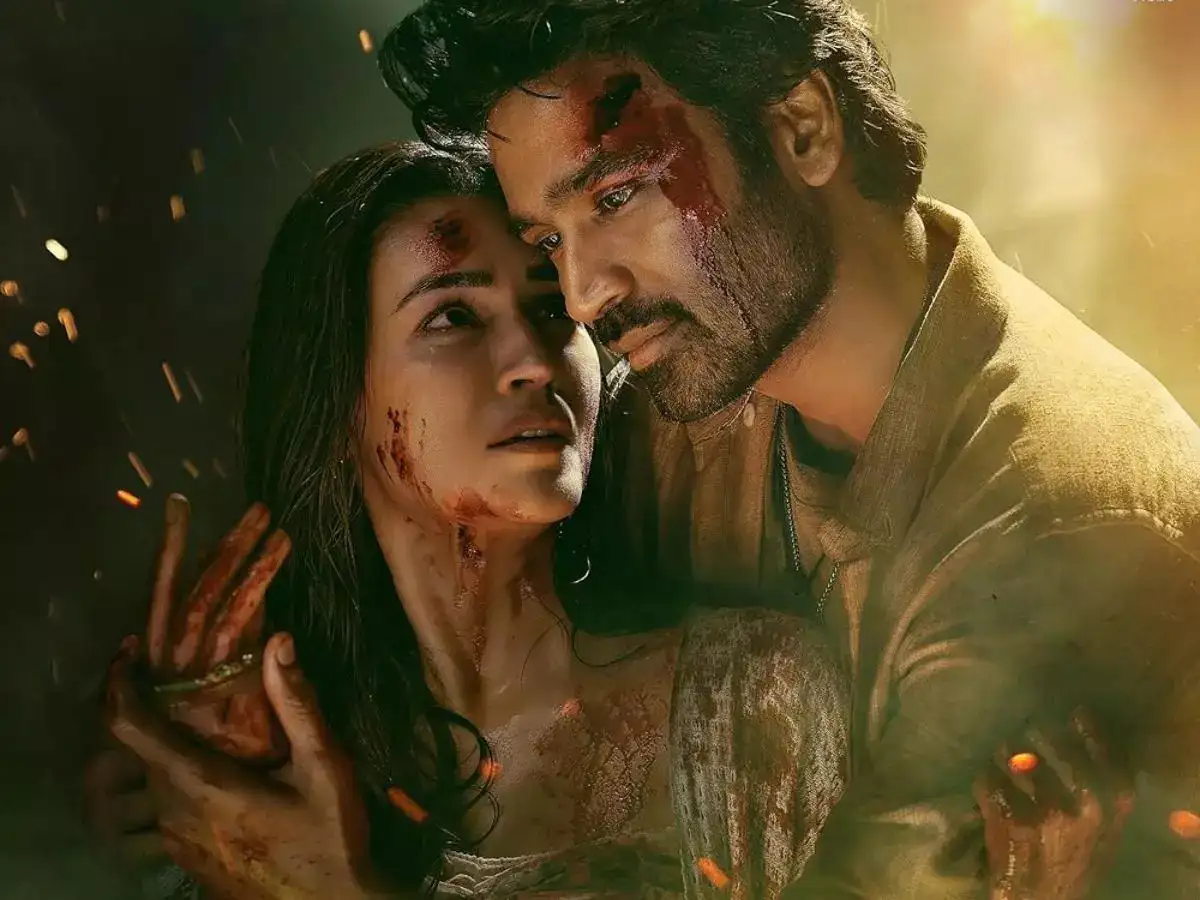
The plot follows Shankar (Dhanush), a volatile student with anger issues, who becomes the research subject of Mukti Beniwal (Kriti Sanon), a psychology research scholar studying whether violent behaviour can be transformed through counselling. They fall in love. Mukti ends the relationship and moves on. A heartbroken Shankar joins the Indian Air Force. Years later, their unresolved past resurfaces when they meet again.
The film grossed approximately ₹155 crore worldwide and ₹113.5 crore nett in India, crossing the ₹100 crore mark within ten days of release — making it a commercial success despite divisive reviews. Its OTT debut on Netflix was confirmed for January 23, 2026.
The Scene That Launched the Tere Ishq Mein OTT Controversy
In one of the film’s early sequences, Mukti refers to her completed PhD thesis — 2,200 pages long. The detail is presented without irony, intended to signal the depth of her academic commitment.
The scene triggered an immediate reaction on social media, with PhD students across the country making jokes about the movie. Within days of the Netflix release, doctoral candidates began pointing out that 2,200 pages is not a sign of academic brilliance — it’s an academic impossibility.
For context: most PhD theses fall between 150–300 pages in humanities subjects and 200–400 pages in sciences. PhD holder Sureskkumar P. Sekar said that despite writing every single day for four years, his own submission ran to 385 pages.
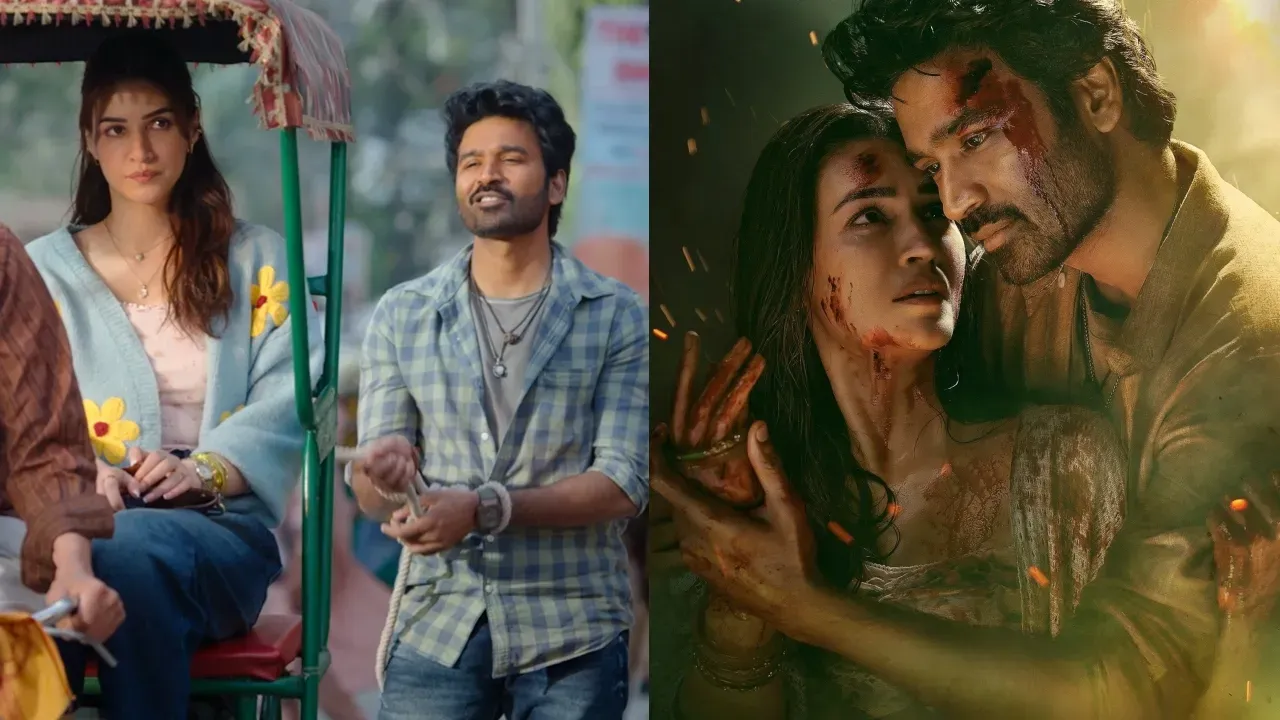
One user commented: “It will be outright rejected by your guide for being too long.”
Another wrote: “I would genuinely like to meet this PhD student who writes a 2,200-page thesis! I know movies take cinematic liberty, but LMAO dude at least try to sound a bit realistic.”
One doctoral candidate on X wrote: “This is an issue but my personal beef with this movie was the wildly inaccurate PhD student representation, like what do you mean Kriti’s character writes a 2,200-page thesis and conducts wildly unscientific human research with no ethical clearance process.”
The ethical clearance point matters. In reality, using a human subject for psychological research — particularly someone with documented anger and behavioural issues — without institutional ethics board approval would invalidate the entire study. The film treats this as a non-issue.
Several academics advised screenwriters Himanshu Sharma and Neeraj Yadav to consult an actual research scholar before depicting academic processes in future films.
What the Critics Said About the Film Itself
The thesis scene was meme gold — but it was also a symptom of something critics had already flagged before the OTT release.
The Indian Express gave the film 1 out of 5 stars, with Shubhra Gupta writing that Dhanush and Sanon starred in “a confused, heavy-on-melodrama-and-glycerine mish-mash of genres that glorifies an aggressive, angry, alpha man.”
Rahul Desai in The Hollywood Reporter India described the film as “very difficult to sit through,” placing Shankar in a lineage of Bollywood’s romanticised toxic male leads — the Kabir Singhs, the Rannvijays, the Jordans — and arguing that Tere Ishq Mein adds another entry to that tradition without examining it.
WION’s critic Shomini Sen wrote that the film’s problematic story “glorifies toxicity to no end.”
Across audience reviews, a pattern emerged: praise for Dhanush and Kriti Sanon’s individual performances, frustration with the writing. The word “toxic” appeared in thousands of posts about the film — both as criticism and as a description the film’s defenders used to argue it was accurately depicting a difficult relationship rather than endorsing one.
Kriti Sanon Responds: What She Actually Said
Kriti Sanon addressed both controversies directly — the toxic love criticism in a Zoom interview, and the broader debate in a conversation with Hindustan Times.
On the toxicity debate, she told Zoom: “Toxic and red flag — these terms have become very common now. It is great that it is being discussed. Debate is a great part of it. At the end, a lot of people are feeling like both are right and wrong at some points.”
She continued: “Your moral compass is not towards one person, which is great because human beings make mistakes. If your heart is not wrong or you’re not an evil person, and you made a mistake, there’s always a reason why you did what you did. It is a perspective.”
On whether she follows social media reactions, Kriti told Hindustan Times: “Yes, I’m obsessed. I’m always reading what people are saying — not just critics. I love debating: that’s the point of art. Not everyone sees a painting the same way, and the same goes for cinema. TIM is interesting because it shows toxic love, but the girl also calls out the toxicity.”
This distinction — that Mukti actively calls out Shankar’s behaviour at various points — is the film’s own defence against the glorification charge. Whether that defence holds depends on how much weight you give to the framing of those scenes versus the emotional rewards the film grants Shankar’s obsession.
The makers, screenwriters Himanshu Sharma and Neeraj Yadav, and director Aanand L. Rai have not responded specifically to the thesis controversy.
The Bigger Problem: Research Ethics the Film Ignored
The 2,200-page figure got the memes, but scholars pointed out a more serious issue: Mukti’s entire research methodology is academically indefensible.
In the film, she selects a real person with undisclosed mental health issues as her sole research subject, without any indication of institutional review board approval. She enters into a personal relationship with the subject — a fundamental ethical violation in psychology research. Her thesis conclusion is shaped by her own emotional involvement with the person she is studying.
In real research practice, this would not result in a PhD. It would result in the research being rejected and potentially in disciplinary action against the researcher. The film treats these violations as irrelevant background detail while focusing on the romance.
This is a different kind of inaccuracy from a page count error. It reflects a fundamental misunderstanding of what psychological research actually is — and it does so in a film that uses a researcher’s professional credentials as the basis for the central relationship.
Why the Controversy Boosted the Film Anyway
Here is the uncomfortable irony at the centre of the Tere Ishq Mein OTT controversy: the backlash drove viewership.
People who had not seen the film in theatres searched for it specifically to watch the thesis scene. Meme compilations sent curious viewers to Netflix. The “toxic love” debate made the film a conversation topic weeks after it had left cinemas.
The film was made on a reported budget of ₹85 crore and earned approximately ₹148.5 crore at the box office. The Netflix controversy added a second wave of visibility that no marketing campaign could have planned.
This has become a recognisable pattern in OTT-era Bollywood. The films that generate the most debate — for accuracy failures, for representing difficult relationships, for plot choices that invite argument — often perform better on streaming than films that generate no reaction at all. Controversy is reach.
Is the Criticism Fair?
Two separate questions are being conflated in the Tere Ishq Mein OTT controversy, and they deserve separate answers.
Is the 2,200-page thesis inaccurate? Yes, demonstrably. No PhD supervisor or university in India would accept a 2,200-page thesis. The realistic range, as multiple doctoral candidates confirmed, is 150–400 pages in most disciplines. The scene is a factual error dressed up as dramatic detail. The fix was simple: any number below 400 would have been more plausible. That the writers chose 2,200 suggests no one consulted an actual PhD student before the film went into production.
Does the film glorify toxic love? This is more genuinely contested. Kriti Sanon’s point — that Mukti calls out Shankar’s behaviour within the film — is accurate. Whether calling something out while also forgiving it, staying with it, and ultimately being emotionally rewarded for it constitutes a critique or an endorsement is the question reasonable viewers disagree on. Tere Ishq Mein is not the first Bollywood film to present this ambiguity. It is unlikely to be the last.
What the controversy does clarify is something worth noting: the audience watching Bollywood on OTT in 2026 includes a large number of people with professional credentials in the fields films casually depict — academics, doctors, lawyers, military personnel — who are vocal, connected, and entirely comfortable pointing out when a film has gotten their world completely wrong.
Filmmakers who treat research as an afterthought now face an audience that notices.
Tere Ishq Mein: Key Facts
| Detail | Information |
| Director | Aanand L. Rai |
| Writers | Himanshu Sharma, Neeraj Yadav |
| Cast | Dhanush, Kriti Sanon, Prakash Raj, Priyanshu Painyuli, Mohd Zeeshan Ayyub |
| Music | A.R. Rahman |
| Theatrical Release | November 28, 2025 |
| OTT Release | January 23, 2026 on Netflix |
| Box Office | ₹148.5 crore worldwide |
| Budget | ₹85 crore |
| Languages | Hindi, Tamil, Telugu, Kannada, Malayalam |
Related Reading

Popcorn in hand and a opinion ready — Emily covers movie reviews, box office buzz, and all things cinema at Popcorn Review.

