
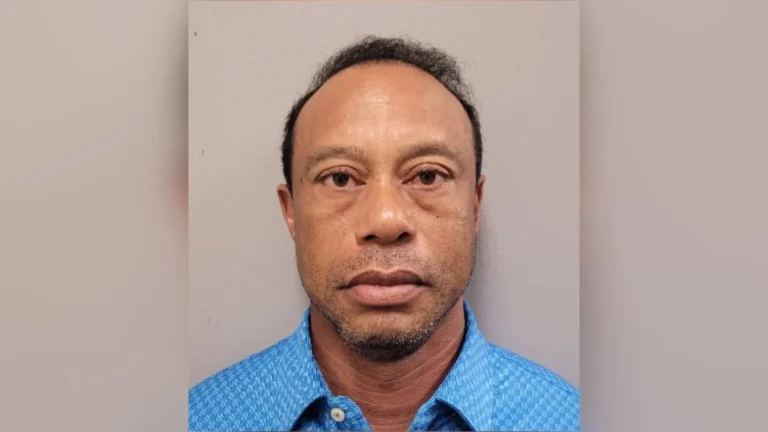
Tiger Woods DUI 2026 — three words that stopped the world on Friday, March 27. Just 72 hours after making an emotional return to competitive golf, the greatest player the sport has ever seen was sitting in a Florida jail cell, his mugshot about to go viral across every platform on earth.
This is not just a sports story. This is a human story — about pain, prescription drugs, a man fighting his body, and a legend who keeps finding himself on the wrong side of a headline at the worst possible moment.
If you’ve only seen the headlines, you’re missing the full picture. Let’s go deeper than every other entertainment site has gone — the psychology, the business fallout, the legal reality, the Masters question, and the bigger pattern nobody is talking about.
Tiger Woods DUI 2026: The Moment It All Happened
It was just before 2:00 PM on Friday afternoon in Jupiter Island, Florida — a quiet, ultra-wealthy residential enclave where a two-lane road called South Beach Road winds along the coast. Tiger Woods was behind the wheel of his black Land Rover Range Rover, travelling at what authorities described as a “high rate of speed.”
Ahead of him: a work pickup truck pulling a pressure-cleaner trailer, slowing down to turn into a driveway.
What happened next took seconds. Woods tried to overtake the truck. His Range Rover clipped the rear of the trailer. The SUV tipped, rolled onto the driver’s side door, and slid to a stop on the road.
Silence. Then Woods crawled out through the passenger door on his own — no one else was in the car, and neither he nor the truck driver was injured.
That was the last calm moment of his Friday.
The Arrest: What the Sheriff Said at the Press Conference
Martin County Sheriff John Budensiek held a 5:00 PM press conference that sent shockwaves through social media. His words were precise, measured — and damning.
“Our DUI investigators came to the scene here, and Mr. Woods did exemplify signs of impairment. They did several tests on him. And when it was determined, he was placed under arrest and taken to the Martin County Jail.”
What were those signs? The sheriff used one word repeatedly: lethargic. Woods appeared slow, sluggish, disoriented in a way that officers immediately flagged as impairment. He was cooperative, but guarded — “careful in what he said and didn’t say,” per Budensiek.
Here’s what the breathalyzer showed: 0.00. Triple zeroes. Zero alcohol in his system.
So why was he arrested? Because officers observed clear physical signs of impairment from the scene — roadside field sobriety tests confirmed it. The working theory was medication or drugs. And when asked for a urine test to find out exactly what, Woods refused.
“He cooperated with the breathalyzer, and then the urine he wanted no part of.” — Sheriff Budensiek
That refusal triggered a separate charge under Florida’s implied consent law. Woods was taken to Martin County Jail at approximately 3:00 PM ET. Under Florida statute, anyone arrested for DUI must be held for a minimum of eight hours before posting bail — no exceptions, even for the most famous golfer on earth.
His mugshot — shot inside the Martin County Sheriff’s Office — was released that evening. In it, a 50-year-old Tiger Woods stares straight into the camera, wearing a blue polo shirt, his eyes visibly bloodshot. It is one of the most shared celebrity images of 2026.
He walked out of jail just before 11:00 PM, stepping into the passenger seat of a dark SUV, face blank, driven away into an uncertain night.
The Charges Against Tiger Woods — What Each One Actually Means
Woods faces two misdemeanor charges (not felonies — an important legal distinction):
| Charge | What It Means | Maximum Penalty (Florida) |
|---|---|---|
| DUI with Property Damage | Driving impaired and causing damage to another vehicle or property | Up to 1 year in jail, $1,000 fine |
| Refusal to Submit to a Lawful Test | Declining a urine test after a DUI arrest (Florida implied consent law) | License suspension + separate misdemeanor charge |
A Florida attorney told Yahoo Sports that the DUI charge is unlikely to stick in court — and here’s why: without urinalysis results, prosecutors cannot prove what substance was in Woods’ system or at what level. The sheriff himself admitted: “We will never get definitive results as to what he was impaired on at the time of the crash.”
This creates a serious prosecutorial problem. The defense will argue Woods’ lethargy was explained by his months of post-surgery physical recovery — which is actually credible given his medical history. On the scene, Woods reportedly told officers about his recent surgeries, an explanation the sheriff acknowledged.
No court date had been set as of Saturday, March 28. His legal team has not issued a public statement. This is going to be a slow, strategic legal battle — not a quick resolution.
Tiger Woods DUI 2026 Timeline: From Surgery to Crash in 12 Months
To understand this moment, you have to understand the brutal year Tiger Woods has just lived through. This isn’t a man living a glamorous celebrity lifestyle. This is a man who has been fighting his own body, inch by inch, for the better part of two years.
| Date | Event |
|---|---|
| March 2025 | Tiger Woods ruptures his Achilles tendon |
| October 2025 | Undergoes second major surgery — lumbar disc replacement (back) |
| Early 2026 | Long, grueling rehabilitation — reportedly spent 3 months in a hospital-type bed at home |
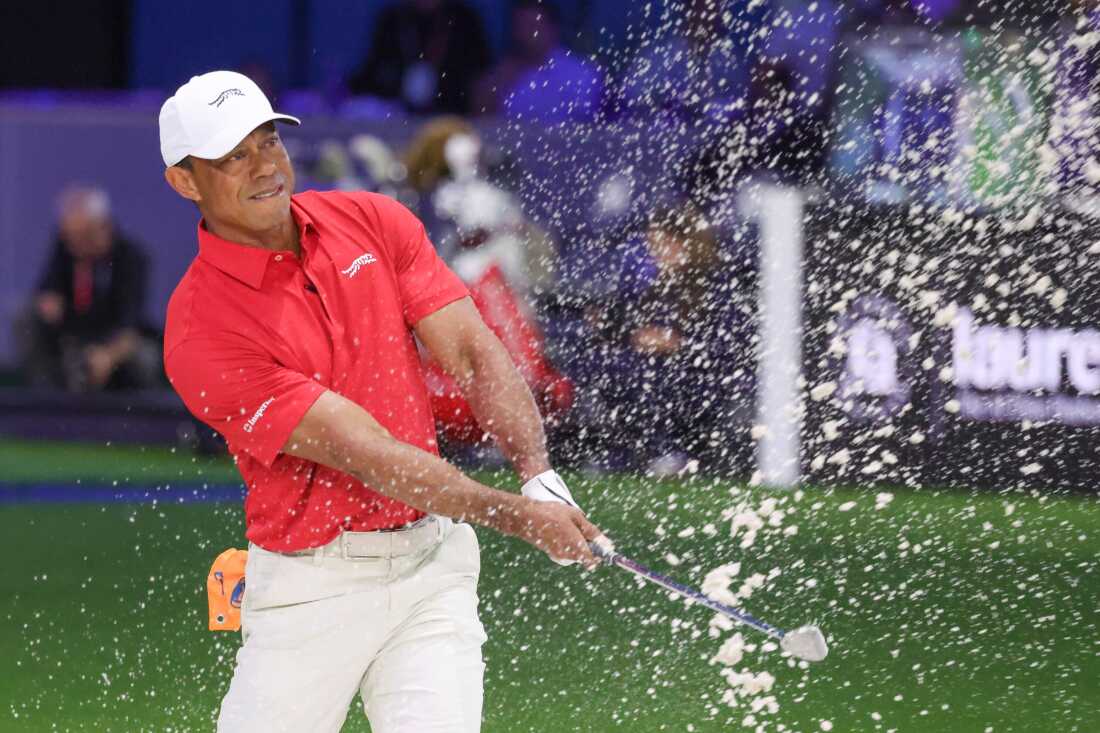
| March 24, 2026 | Makes first competitive return at the TGL indoor golf finals (Jupiter Links vs LA Golf Club). His team loses. |
| March 27, 2026 (~2 PM ET) | Rollover crash on South Beach Road, Jupiter Island. Arrested for DUI. |
| March 27, 2026 (~11 PM ET) | Released from Martin County Jail on bail |
| March 28, 2026 | Mugshot goes viral. No public statement from Woods or his team. |
| April 9, 2026 | The Masters begins — Woods’ participation now firmly in doubt |
The context here is everything. Tiger Woods had an Achilles rupture, then back surgery seven months later. He had been in recovery for almost a full year. When he crawled out of that Range Rover on Friday and told officers about his injuries and surgeries — he wasn’t making excuses. He was describing the reality of his body in 2026.
The Medication Question: What Was Tiger Actually On?
This is the question the media has danced around. Let’s go straight at it.
Officers did not find any drugs or medication in Woods’ vehicle. His breathalyzer showed 0.00 alcohol. But sheriff’s investigators — who specialize in DUI detection — observed enough physical signs to make an arrest based on probable cause alone. They specifically said they believed it was “some type of medication or drug.”
That phrase is key. Post-surgery patients often take prescription medications for pain management, muscle relaxation, and sleep regulation. After a ruptured Achilles and a lumbar disc replacement, a doctor would typically prescribe medications from one or more of these categories: opioid pain relievers, muscle relaxants, anti-inflammatory drugs, or sleep medications.
Why does this matter? Because this is almost an exact echo of his 2017 DUI.
The 2017 Pattern: History Repeating?
In May 2017, Jupiter Island police found Tiger Woods asleep at the wheel of his Mercedes-Benz with the engine running at 3:00 AM. He appeared disoriented and confused in dashcam footage. Toxicology tests later revealed five substances in his system: Vicodin, Dilaudid, Xanax, Ambien, and THC.
Woods issued a public apology and explained it as an “unexpected reaction to prescribed medications.” He pleaded guilty to reckless driving, completed a DUI diversion program, and was placed on one year’s probation.
He was not driving drunk either time. He was, both times, apparently impaired by legally prescribed medication — a distinction that matters legally, but doesn’t make the physical danger any less real.
The same man. The same town. Nine years later. The same impairment pattern.
Whether this reflects a deeper struggle with pain management, prescription dependence, or simply the unavoidable pharmacological reality of recovering from two major surgeries — no one outside his inner circle actually knows. But the pattern demands honest conversation, not just headline shock.
Tiger Woods’ Crash History: A Disturbing Pattern
This was not Tiger Woods’ first crash. It was his fourth high-profile incident:
| Year | Incident | Outcome |
|---|---|---|
| 2009 | Drove into a fire hydrant and tree outside his home at 2:25 AM after a domestic altercation with then-wife Elin Nordegren | Facial lacerations; scandal triggered massive sponsor exodus |
| 2017 | Found asleep at the wheel in Jupiter, FL — 5 drugs in system | DUI arrest; pleaded guilty to reckless driving; probation |
| 2021 | SUV careened off a California hillside at 84–87 mph; multiple rollovers | Serious injuries — shattered right leg; required long surgical procedure; nearly career-ending |
| 2026 | Range Rover rollover in Jupiter Island during high-speed overtaking attempt | No injuries; DUI arrest; mugshot; ongoing legal proceedings |
In each case, Woods survived. In the 2021 crash — the worst of them — it was a near-miracle. The 2026 crash was, as the sheriff noted, extraordinarily lucky: “Had there been somebody moving in the opposite direction, we would not be having a conversation saying there was no injuries. This could have been a lot worse.”
The Masters 2026: Is Tiger Woods Still Playing?
Three days before his arrest, Tiger Woods told reporters he was trying to get his body ready for the Masters, which begins April 9 at Augusta National.
Then, the day before the crash, President Donald Trump — who called Woods “a very close friend” when asked about the arrest — told Fox News he didn’t believe Woods would play: “I love Tiger, but he won’t be there. Well, he’ll be there, but he won’t be playing in it.”
Post-arrest, Golf Channel’s Rex Hoggard confirmed Woods is legally allowed to attend and play in the Masters — the charges are misdemeanors and he has not been convicted of anything. There is no PGA Tour rule that prevents participation pending a legal case of this nature.
But practically? Woods had not competed in a full professional tournament since the 2024 Open Championship. He had a ruptured Achilles and back surgery in the past year. His body was barely cleared for golf. The crash added physical stress, emotional turbulence, and a legal cloud.
Golf Channel analyst Mark Rolfing put it plainly: Woods should step away from golf entirely to focus on his health. Not just to rest — but to genuinely confront whatever is happening with him physically and medically.
The smart money says Augusta 2026 is off the table. The emotional money says watch this space.
The Business Impact: Sponsors, Brand, and the Economics of Tiger’s Fall
Tiger Woods’ relationship with brands has always been one of the most complicated in sports history.
At his peak, he was the most commercially valuable athlete on the planet — earning nearly $770 million in endorsements between 1996 and 2007 alone. When the 2009 scandal broke, the shareholder losses associated with his brand implosion were estimated between $5 billion and $12 billion across the companies he represented.
In January 2024, he parted ways with Nike after a 27-year partnership — one of the most iconic athlete-brand relationships ever. He currently has deals with Sun Day Red (his apparel brand via TaylorMade), Monster Energy, and a handful of other golf-related sponsors.
So what happens now?
Frankly, the sponsor picture is different in 2026 than it was in 2009. The companies currently backing Woods are golf-specific brands — not mass consumer giants desperate to protect their image with soccer moms. Sun Day Red is his own brand. TaylorMade’s interest in Woods is as a product collaborator and ambassador to the golf world, not a pop culture icon.
The outrage economy has also changed. In 2009, sponsors fled within days. In 2026, social media cycles are faster but public memory is shorter. Unless this becomes a repeat offense with worsening circumstances — the business damage may be limited and temporary.
What does face real jeopardy is his long-term legacy narrative. Every time Tiger rises, something pulls him back down. And sponsors build their brand stories around the narrative of the athlete, not just the name.
Myth vs. Fact: What the Internet Got Wrong About Tiger Woods DUI 2026
❌ MYTH: Tiger Woods was drunk driving
✅ FACT: His breathalyzer showed 0.00. Zero alcohol. He was not drinking.
❌ MYTH: He crashed because he was texting or distracted
✅ FACT: Authorities say he was travelling at high speed and attempting to overtake a truck. The cause was speed and judgment — not phone use.
❌ MYTH: Refusing the urine test means he’s definitely guilty of DUI
✅ FACT: Legally, refusal adds a separate charge but does not prove impairment. It actually weakens the prosecution’s ability to prove what substance was involved.
❌ MYTH: He’ll definitely be banned from the Masters
✅ FACT: The charges are misdemeanors. He is legally eligible to compete. Augusta National has no rule preventing his participation at this stage.
❌ MYTH: This is just like his 2009 scandal
✅ FACT: The 2009 incident was a personal/marital scandal. 2026 is a health and medication crisis. The context, causes, and implications are completely different.
The Psychology of Tiger Woods: Why Legends Fall in Patterns
There’s a fascinating psychological dimension to Tiger’s story that never gets the attention it deserves.
Tiger Woods has spent his entire life performing under pressure. From the age of two — playing golf on television with Bob Hope — to winning 15 major championships, he was trained to be invincible. His father Earl’s famous mental conditioning made Tiger almost pathologically resistant to failure in competition.
But that same conditioning — the belief that he can push through anything, outrun any obstacle, overcome any adversity through sheer force of will — may be exactly what keeps putting him in danger off the course.
He pushes his body past its limits. He returns to competition before he is medically ready. He refuses to acknowledge that 50-year-old post-surgery Tiger Woods might need to sit still and heal, instead of getting behind the wheel on a Florida road three days after playing in a golf final.
The refusal of the urine test tells the same story. A man who cannot admit vulnerability, cannot surrender control — even when that very control has just caused his car to roll over on a residential street.
The greatest athletes are often destroyed not by their weaknesses, but by the extremes of their strengths.
What Happens Next: The Legal Road Ahead
Here is the realistic legal roadmap for Tiger Woods DUI 2026:
Step 1 — Arraignment: Woods will be formally read his charges and enter a plea (almost certainly “not guilty” at this stage). No court date had been set as of March 28.
Step 2 — Pre-trial negotiations: Given his 2017 precedent — where he was able to plea down to reckless driving — a similar deal is possible. His legal team will argue the impairment was medication-related post-surgery, involuntary in nature.
Step 3 — The refusal charge complication: Under Florida law, refusing a lawful chemical test after a DUI arrest carries automatic driver’s license suspension and a separate criminal charge. This one may be harder to dismiss.
Step 4 — Probation history: Woods completed a DUI diversion program and was on probation after 2017. His legal team will need to address whether this prior arrangement affects his eligibility for a similar deal in 2026.
Likely outcome: Legal experts suggest the DUI charge itself may be difficult to prove beyond reasonable doubt without toxicology results. A plea to a lesser charge — like reckless driving — is the most probable resolution, similar to 2017.
The Human Story Behind the Headlines
Here’s what most entertainment sites won’t say: Tiger Woods is a 50-year-old man who has had more surgeries than most people have had car services. He has walked on a leg that was described by his surgeons as so badly broken, there was discussion at the time about amputation. He came back from that. He won the 2019 Masters when nobody gave him a chance. He has always, always come back.
But there is a point where the body says enough. Where the medications that allow you to function become the reason you can’t. Where the drive that made you the greatest becomes the thing that’s slowly destroying you.
Tiger’s biggest opponent in 2026 isn’t a court of law. It’s not the press. It’s not Augusta National. It’s the man in the mirror who refuses to be anything less than Tiger Woods — even when Tiger Woods needs to rest.
President Trump, his close friend, put it simply: “He’s an amazing person, an amazing man. But some difficulty.”
That’s the understatement of the year. And it might also be the most honest thing anyone has said about him all week.
WPTV — Tiger Woods DUI Arrest Exclusive Coverage
Yahoo Sports — Tiger Woods DUI Arrest Explained
CBS News — Tiger Woods Charged With DUI
ABC News — Tiger Woods Arrested for DUI
PGA Tour — Official Report
CNN — Tiger Woods Crash Analysis
Golf Channel — Tiger’s Uncertain Future
Wikipedia — Tiger Woods Full Biography
Frequently Asked Questions (FAQ)
Final Word: The Legend, the Crash, and the Question We Should All Be Asking
Tiger Woods DUI 2026 will dominate headlines for weeks. The legal proceedings will drag on. The Masters question will be answered in a few days. The pundits will have their field day.
But when all of that fades, one question will remain — the same one CNN posed after his arrest, the same one has followed Tiger Woods his entire adult life:
Can Tiger do it again?
Every time he has fallen — the affairs, the 2017 DUI, the 2021 crash that nearly took his leg — the question has been the same. And every time, against every expectation, he has found a way to stand back up. He won the 2019 Masters when nobody believed he had a single major left in him. He made people cry watching him walk down the 18th fairway.
That Tiger Woods still exists somewhere inside a 50-year-old man with a broken body, prescription medications, and a mugshot going viral. Whether that Tiger can find his way out again — that’s the story of 2026. And no other entertainment website will tell it to you with this kind of depth.
We’ll be watching. Every step of the way.
Which part of this story shocked you the most — the zero alcohol reading, the refusal of the urine test, or the fact that this happened just 3 days after his golf comeback? Drop your thoughts in the comments. 👇

Popcorn in hand and a opinion ready — Emily covers movie reviews, box office buzz, and all things cinema at Popcorn Review.

