
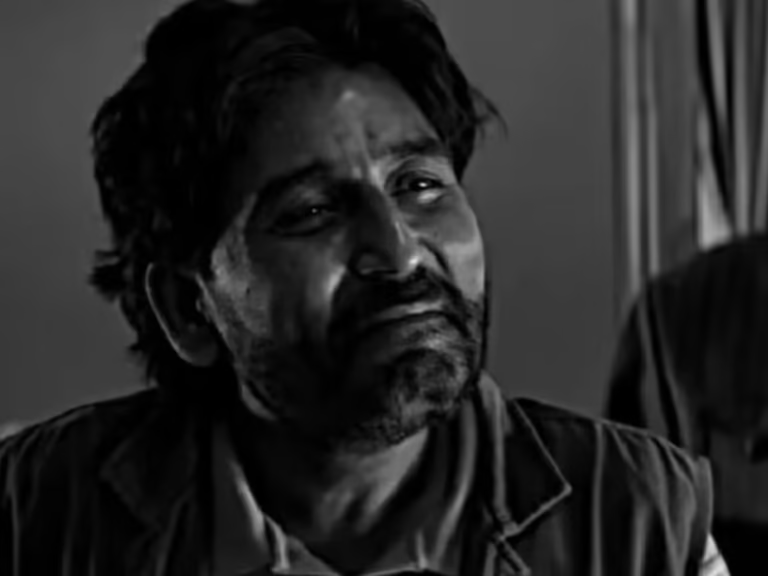
Vivek Sinha death threats were the last thing anyone expected to be talking about on the eve of Dhurandhar 2: The Revenge’s release. But that is exactly where we are — and the story behind it is one of the most uncomfortable, revealing, and psychologically fascinating episodes Indian cinema has produced in recent memory.
Vivek Sinha is not a household name. He does not have ten million Instagram followers. He is a working actor who plays Zahoor Mistry — a Pakistani terrorist who hijacks an aircraft in the opening sequence of Dhurandhar — and does it with such conviction that a significant portion of the internet has spent the last 48 hours threatening him as if he actually is one.
This is the full story of the Vivek Sinha death threats controversy — who he is, what he said on screen, what happened when the clip went viral, what he said in response, and what the entire episode tells us about the dangerous and growing inability to separate an actor from their role.
Who Is Vivek Sinha? The Actor Behind Zahoor Mistry
Before anything else, let us establish who Vivek Sinha actually is — because the Vivek Sinha death threats controversy has introduced him to millions of people who had never heard of him before, and almost none of them know his actual story.
Vivek Sinha is a trained theatre actor from Ranchi, Jharkhand. He has worked extensively in Hindi theatre and has appeared in several television serials and supporting film roles over the course of a career spanning more than a decade. He is not Pakistani. He is not Muslim. He is a Hindu man from Jharkhand who was cast to play a Pakistani terrorist because he is, by all accounts, very good at his job.
His role in Dhurandhar as Zahoor Mistry — a fictional terrorist whose dialogue is historically inspired by the Kandahar hijack of IC 814 in 1999 — is, by his own account, the biggest film role of his career. It is a villain role in one of the highest-grossing Hindi films of all time, and his performance in the film’s opening sequence was widely praised by critics and audiences who were capable of separating the character from the actor.
Unfortunately, not everyone was.
The Dialogue That Went Viral and Triggered the Vivek Sinha Death Threats
The specific line at the centre of the Vivek Sinha death threats controversy is delivered by his character Zahoor Mistry in a scene from Dhurandhar that has been widely clipped and shared out of context on social media.
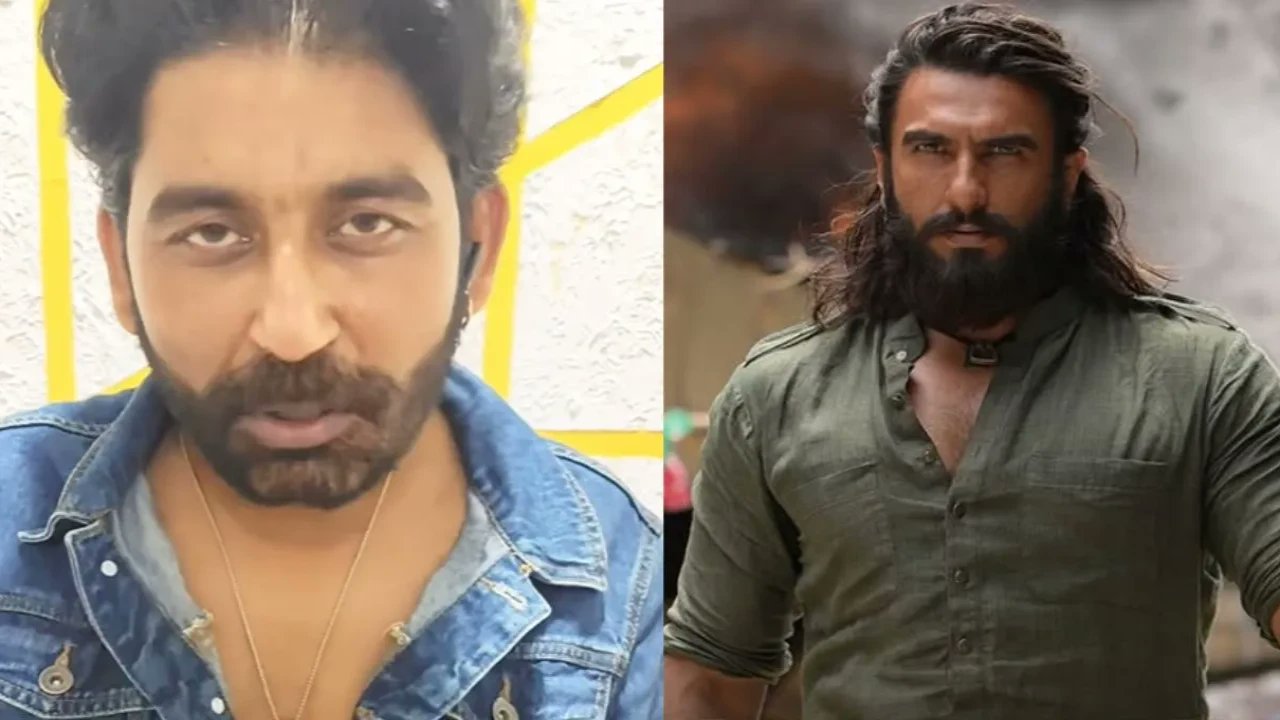
“Hindu ek darpok qaum hai, pados mein hi rehte hai hum, goodebhar ka zor laga lo aur bigaad lo joh bigaad sakte ho.”
The line translates roughly as: ‘Hindus are a cowardly community, we live right next door to them, put in all your effort and destroy what you can destroy.’
In the context of the film, this dialogue is spoken by a terrorist villain — a character the audience is meant to despise, whose worldview the film goes to considerable lengths to demolish over its three-hour-plus runtime. The entire dramatic purpose of the line is to establish the character’s villainy and the ideology of the enemy that the film’s protagonist, Hamza Ali Mazari, is fighting to defeat.
Out of context — clipped, shared, stripped of the three hours of narrative that surrounds it — the line reads very differently. And social media, which runs almost entirely on decontextualised clips, processed it accordingly.
What Happened When the Clip Went Viral: The Vivek Sinha Death Threats in Detail
The clip began circulating on X, Instagram, and WhatsApp groups in the 48 hours before Dhurandhar 2’s release. The reaction was immediate and, in many cases, genuinely alarming.
Users began flooding Vivek Sinha’s social media accounts — particularly his Instagram — with abuse, threats, and demands that he be arrested, deported, or worse. Multiple comments explicitly stated intentions to physically harm him. The specific comments that Sinha later quoted in his own response included: ‘Teri shakal aatankwadi jaisi lag rahi hai’ (‘Your face looks like a terrorist’s’) and — most disturbingly — ‘Mann kar raha hai screen mein ghus kar maar dein’ (‘I feel like jumping through the screen to beat you up’).
What made the situation more dangerous, rather than merely unpleasant, was the nature of the misidentification. Several users appeared to genuinely believe that the actor was Pakistani, or Muslim, or in some way personally responsible for the sentiment expressed in the dialogue. The distinction between a fictional character speaking scripted lines in a patriotic Indian film and a real person’s actual beliefs was simply not being made.
The Vivek Sinha death threats are not simply a case of online trolling. They represent something more specific and more troubling: a pattern in which Indian audiences — who are simultaneously proud consumers of films that portray villains committing violence — are unable or unwilling to extend basic critical thinking to the actors who play those villains.
Vivek Sinha’s Response: Every Word He Said and What It Reveals
Vivek Sinha addressed the Vivek Sinha death threats controversy in not one but two separate social media posts — each revealing different aspects of how he processed what was happening to him.
The First Video: ‘Main Pakistani Nahi Hoon’
His first response was a short, direct clarification. He stated clearly: ‘Main Pakistani nahi hoon’ — ‘I am not Pakistani.’ He emphasised that his portrayal is purely professional and part of cinematic storytelling. He identified himself by name, showed his face, and spoke calmly. There was no anger in the delivery. There was something closer to disbelief.
The Second Video: Finding Patriotism in the Threats
His second post was more nuanced — and more psychologically revealing. Sinha addressed the specific comments he had received, quoting them directly, and then did something that most people would not have done in the same situation. He chose to interpret the rage as a form of patriotism.
“Ek baat bolun, mujhe sach mein itna accha laga na, humare andar jo deshbhakti hai na, usse salaam hai.” — Vivek Sinha. Translation: ‘Let me say one thing — I was genuinely moved by this. The patriotism inside all of us — I salute it.’
This is an extraordinary response. A man who has received death threats for playing a villain in a film — death threats from people who cannot distinguish between an actor and a character — chose to reframe those threats as evidence of national pride. He chose generosity over bitterness.
Whether that generosity is genuine, or whether it is the calculated response of an actor who is acutely aware that the same public currently threatening him is also the audience for the film that is the biggest release of his career — that is a question only Sinha can answer. But the response itself is, on its face, remarkably gracious.
The Deeper Pattern: Why This Keeps Happening in Indian Cinema
The Vivek Sinha death threats controversy is not the first time this has happened in Indian cinema. It will not be the last. And the fact that it keeps happening — with increasing frequency and increasing intensity — demands serious examination.
The Precedents: Every Major Actor Who Has Faced This
Ashish Vidyarthi, one of Hindi cinema’s most celebrated character actors, spent years receiving abuse from audiences who had watched him play villains across dozens of films. He has spoken publicly about the psychological toll of being recognised on the street as ‘the villain’ rather than as an actor.
Manoj Bajpayee’s portrayal of Bhiku Mhatre in Satya — the role that made his career — came with a period in which he was treated with genuine suspicion by people who could not separate him from the character. He has recounted being refused restaurant service because the owner recognised him from the film and did not want ‘that kind of person’ in his establishment.
More recently, the actors who played Pakistani officers in Uri: The Surgical Strike — Vivek Sinha’s own director Aditya Dhar’s debut — received online abuse and, in some cases, threats. The pattern is consistent, repeated, and apparently immune to the passage of time or the availability of basic information.
What Makes Dhurandhar Different — and More Dangerous
The Vivek Sinha death threats situation is specifically more dangerous than most previous cases for one reason: the current political and social climate in India around Hindu-Muslim relations, Pakistani identity, and the representation of terrorism in media is significantly more charged than it was five years ago.
A dialogue that might have sparked online debate in 2019 sparked death threats in 2026. The content of the dialogue has not changed. The audience’s capacity for critical distance appears to have narrowed. And social media’s algorithm — which rewards outrage, amplifies decontextualised clips, and connects people who share a grievance before they have had time to understand the context — has accelerated the entire cycle to a speed that 2019 social media could not have matched.
The Specific Irony That Nobody Is Discussing
Here is the specific irony at the heart of the Vivek Sinha death threats controversy that deserves to be stated directly: the people threatening Vivek Sinha are threatening an actor who is performing in one of the most aggressively patriotic, pro-India, anti-terrorism films ever produced in Bollywood.
Dhurandhar — and its sequel Dhurandhar 2 — are films that celebrate Indian intelligence, valorise Indian sacrifice, and portray Pakistani terrorism as a civilisational evil that India’s covert operatives risk their lives to defeat. The villain whose dialogue triggered the Vivek Sinha death threats exists in the film specifically so that the hero can destroy everything that villain represents.
The audience threatening the actor playing that villain is the same audience cheering for the hero who defeats him. The cognitive dissonance required to hold both of those reactions simultaneously — ‘I love this film for showing Pakistan as the enemy’ and ‘I will threaten the Indian actor playing the Pakistani enemy’ — is staggering. And yet, here we are.
What the Film Industry Must Do — and Has Consistently Failed to Do
The Vivek Sinha death threats controversy has, predictably, generated social media posts from fellow actors expressing support for Sinha and condemnation of the abuse. That is the standard response, and it is largely meaningless in terms of actual change.
What the film industry has consistently failed to do is address the structural problem: the complete absence of any industry-level mechanism to support actors who face this kind of abuse as a direct consequence of their work.
Vivek Sinha is not a star with a PR team, a publicist, and a crisis management specialist on retainer. He is a working actor from Ranchi who got a big break and is now dealing with death threats on his personal social media accounts, alone, with two videos and a generous interpretation of national pride as his only defence.
Bollywood has a long and well-documented tradition of celebrating its villain actors at awards ceremonies and in interviews — and abandoning them entirely when the audience confuses the performance for the person. That tradition needs to end. What it should be replaced with is less clear — but at minimum, production houses that cast actors in controversial roles have a responsibility to actively support those actors when the inevitable backlash arrives.
Jio Studios and B62 Studios — the producers of Dhurandhar 2 — have, as of the time of publication, said nothing publicly about the Vivek Sinha death threats situation. The director who cast Sinha in the role has said nothing. The lead actor of the film has said nothing. The man receiving the threats has handled them entirely on his own.
Our Verdict: The Vivek Sinha Death Threats Are a Test Indian Cinema Is Failing
The Vivek Sinha death threats controversy will be forgotten within a week. The film will release, the box office numbers will dominate the conversation, and Vivek Sinha will become a footnote in the Dhurandhar 2 story — the supporting actor whose viral moment generated some pre-release buzz.
But the episode reveals something that Indian cinema and Indian audiences need to seriously reckon with. The ability to watch a villain perform a villain’s function — to say the unsayable, to represent what the hero must defeat — and to extend to the actor performing that function the basic dignity of recognising that they are acting, is not a sophisticated critical skill. It is the minimum requirement for being an audience.
An audience that cannot meet that minimum requirement is not just failing the actors. It is failing the films. And it is failing itself.
Vivek Sinha played a terrorist in a film. He is not a terrorist. He is an actor from Ranchi who went to work, did his job with skill and commitment, and is now receiving death threats for it. The least the industry — and the audience — owes him is the acknowledgment that those two facts are not in conflict.
What do you think — does the Indian film industry do enough to protect its character actors when controversies like this arise? And do you believe audiences have a responsibility to educate themselves about the difference between a character and the actor playing them? Tell us in the comments.
Frequently Asked Questions: Vivek Sinha Death Threats Dhurandhar 2
Q1. Who is Vivek Sinha from Dhurandhar 2?
Vivek Sinha is an Indian theatre and film actor from Ranchi, Jharkhand. In Dhurandhar (2025) and its sequel Dhurandhar 2: The Revenge (2026), he plays Zahoor Mistry — a Pakistani terrorist villain who hijacks an aircraft in the film’s opening sequence. He is not Pakistani, not Muslim, and has no personal connection to the views expressed by his fictional character.
Q2. What dialogue triggered the Vivek Sinha death threats?
The viral dialogue is: ‘Hindu ek darpok qaum hai, pados mein hi rehte hai hum, goodebhar ka zor laga lo aur bigaad lo joh bigaad sakte ho.’ The line is delivered by his villain character Zahoor Mistry and is historically inspired by the 1999 IC 814 Kandahar hijack. It is scripted dialogue in a patriotic Indian film, spoken by a character the film portrays as the enemy.
Q3. What did Vivek Sinha say in response to the death threats?
Vivek Sinha posted two videos on social media. In the first, he clearly stated: ‘Main Pakistani nahi hoon’ — clarifying his actual identity. In the second, he quoted the threatening comments he had received, including ‘Mann kar raha hai screen mein ghus kar maar dein’, and chose to reframe the audience’s anger as an expression of patriotism, saying he was moved by the deshbhakti he saw in the responses.
Q4. Has the Dhurandhar 2 production house responded to the Vivek Sinha death threats?
As of the time of publication, neither Jio Studios, B62 Studios, director Aditya Dhar, nor lead actor Ranveer Singh has made any public statement about the Vivek Sinha death threats controversy. Sinha has addressed the situation entirely through his own personal social media accounts.
Q5. Has this happened to other Bollywood actors before?
Yes — this is a recurring pattern in Indian cinema. Ashish Vidyarthi, Manoj Bajpayee (for Satya), and multiple actors who played Pakistani characters in Uri: The Surgical Strike all faced versions of the same audience confusion between actor and character. The Vivek Sinha death threats case is notable for its speed and intensity, which reflects the accelerated dynamics of current social media culture.
Q6. Is Vivek Sinha in Dhurandhar 2 as well?
The character of Zahoor Mistry appears in the opening sequence of the original Dhurandhar, set during the 1999 Kandahar hijack. His role in Dhurandhar 2: The Revenge, which is set in a later time period, has not been confirmed or denied in pre-release materials.
Related Posts You’ll Love
→ Dhurandhar 2 Box Office Day 1: Historic Numbers and Every Record Broken
→ Sarke Chunar Teri Sarke Controversy: The Song India Banned in 4 Days
→ Upcoming Bollywood Movies 2026 — Most Anticipated Films
→ Border 2 Pre-Release Trolling: Why Varun Dhawan Film Faces Backlash
Follow Popcorn Review
Follow us on Instagram (@pop_cornreview) and save your reads on our Pinterest board.
Sources
DNA India: Vivek Sinha Reacts to Threats — ‘I Am Not a Terrorist’
India.com: ‘Main Aatankwadi Nahi Hu’ — Vivek Sinha Addresses Threats Over His Dialogue
Wikipedia: Dhurandhar: The Revenge — Full production details, cast and release information
News24: Dhurandhar 2 — Bad News for South India Premiere Shows, Full Context

Popcorn in hand and a opinion ready — Emily covers movie reviews, box office buzz, and all things cinema at Popcorn Review.
