
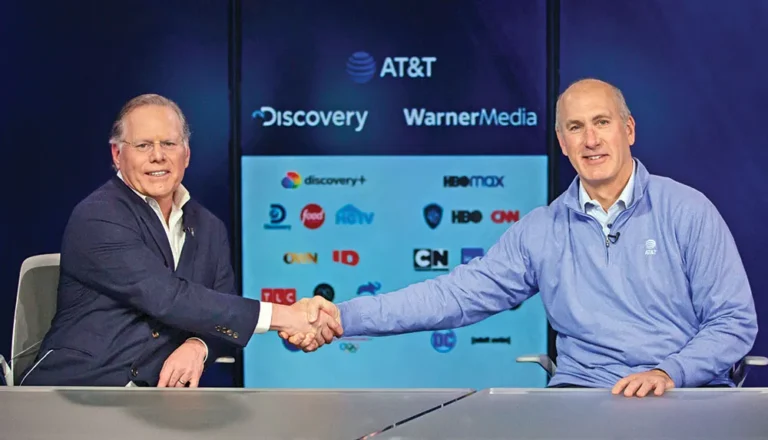
The Warner Bros Discovery acquisition saga is over — and the ending nobody predicted is now the one everyone has to live with.
Paramount won. Netflix walked. And one man — 43-year-old David Ellison, son of Oracle billionaire Larry Ellison — is now on the verge of controlling one of the most powerful media empires in the world: two major Hollywood studios, HBO, CNN, Paramount+, HBO Max, CBS, DC Comics, Harry Potter, Game of Thrones, Batman, The Godfather, SpongeBob, and about 80 cable channels.
All of it. For $111 billion.
If that sentence takes a moment to land — that’s the right reaction. This is not a normal business story. This is a story about who gets to decide what movies get made, which news networks shape public opinion, and what Hollywood looks like for the next generation. And it ended — in the span of a single Thursday afternoon — in a way that shocked nearly everyone watching.
Here’s the complete breakdown of how it happened, why it matters, and what comes next.
The Story in Numbers: A Quick Reference
Paramount’s winning bid (Feb 26, 2026): $111 billion — for the entire company, including CNN, cable channels and all
Per-share price: $31 per share (Paramount) vs $27.75 (Netflix)
Breakup fee Paramount agreed to pay: $2.8 billion (what WBD owed Netflix for walking away)
Regulatory breakup fee: $7 billion (paid to WBD if regulators block the Paramount deal)
WBD debt Paramount absorbs: ~$33 billion
Deal financing: $57.5 billion debt commitment from Bank of America, Citi, and Apollo
Netflix stock reaction: +8.8% premarket (investors relieved it walked away)
WBD stock reaction: -2% (bidding war premium evaporated)
Expected close: September–December 2026, pending shareholder vote (March 20) and regulatory approval
Chapter One · How It Started
How Warner Bros Discovery Ended Up for Sale in the First Place
Warner Bros. Discovery was born in 2022 from the merger of Warner Media and Discovery Inc. The pitch was simple enough on paper: combine Warner Bros.’ legendary storytelling engine — HBO, DC, Harry Potter, Batman — with Discovery’s vast unscripted empire of cable channels. Prestige meets scale. What could go wrong?
Almost everything. The merged company inherited a crushing debt load, found itself navigating the most competitive streaming landscape in history, and watched its stock crater as investors grew sceptical that the whole was worth more than the sum of its parts. By mid-2025, WBD CEO David Zaslav announced a plan to split the company in two — separating the studios and streaming assets from the cable networks (CNN, TNT, TBS, Discovery Channel, HGTV) into a standalone company to be called Discovery Global.
The announcement, meant to unlock value, instead announced something unintentionally: Warner Bros. was available.
David Ellison — who had just completed Skydance’s $8 billion acquisition of Paramount — showed up at Zaslav’s Beverly Hills home with an unsolicited offer. Nineteen dollars a share. Rejected. Twenty-two dollars, plus a co-CEO title. Rejected. Paramount tried again, and again, and again. What began as an unwanted knock on the door became, over five months, the most dramatic bidding war Hollywood has ever witnessed.
Chapter Two · The Battle
Netflix vs Paramount: How the Bidding War Unfolded
In December 2025, Netflix made its move. Ted Sarandos and Greg Peters — Netflix’s co-CEOs — struck a deal with WBD at $27.75 per share, valuing the studios-and-streaming assets at $82.7 billion. Crucially, Netflix didn’t want the cable channels — CNN, the Discovery networks, HGTV — and planned to spin them off in a tax-free transaction before completing the deal. WBD’s board accepted and reaffirmed its preference for Netflix multiple times.
Paramount didn’t accept that verdict.
Ellison launched a hostile bid — a tender offer directly to WBD shareholders, bypassing the board entirely. He filed a lawsuit demanding more disclosure about the Netflix deal’s valuation. He attended Trump’s State of the Union address as a guest of Senator Lindsey Graham, the two men photographed together giving a thumbs-up. His father Larry Ellison — one of the world’s wealthiest people, a major Trump donor and adviser — backed the bid with personal equity. Saudi sovereign wealth funds provided additional financing.
Netflix’s co-CEO Ted Sarandos went on CNBC and accused Paramount of “flooding the zone with confusion for shareholders.” Then Sarandos headed to the White House himself, meeting with administration officials on the very day the deal collapsed.
Chapter Three · The Decisive Moment
Why Netflix Walked Away — And What It Reveals
Ted Sarandos placed a call to David Zaslav to deliver the news personally. Then he and Greg Peters released a joint statement that tried to make a retreat sound like discipline:
“We’ve always been disciplined, and at the price required to match Paramount Skydance’s latest offer, the deal is no longer financially attractive. This transaction was always a ‘nice to have’ at the right price, not a ‘must have’ at any price.”— Ted Sarandos and Greg Peters, Netflix co-CEOs, February 26, 2026
Netflix investors, meanwhile, expressed their actual feelings through the stock price: shares surged nearly 9% in after-hours trading. The market had never been convinced that buying Warner Bros was a good idea at any price. The DOJ antitrust scrutiny — which Netflix had been privately prepared to fight — added another layer of uncertainty that made the walk-away calculation easier.
Paramount’s offer was structured to win in two ways: financially, it paid more. And politically, it promised a smoother regulatory path. David Ellison’s relationship with the Trump administration — his father’s financial backing of the president, his own State of the Union appearance with Graham — was not incidental to the deal. It was part of the pitch to WBD’s board. Trump had publicly said Netflix’s deal “could be problematic.” The DOJ was investigating it. The Ellison family had friends in the right places.
“Once our board votes to adopt the Paramount merger agreement, it will create tremendous value for our shareholders. We are excited about the potential of a combined Paramount Skydance and Warner Bros. Discovery and can’t wait to get started working together telling the stories that move the world.”— David Zaslav, CEO, Warner Bros. Discovery
Chapter Four · What Was Won
What Paramount Actually Gets: The Empire in Full
The scale of what Ellison has acquired — pending regulatory approval — is almost difficult to hold in mind at once. Two of Hollywood’s five remaining major studios under one roof. Two of America’s leading news networks. Two streaming platforms that together could finally create a genuine third force behind Netflix and Disney+.
| Asset | What It Is | Combined With (Paramount Already Owns) |
|---|---|---|
| Warner Bros. Pictures | Batman, Superman, Harry Potter, Barbie, Casablanca, The Dark Knight library | Paramount Pictures, Top Gun, Mission: Impossible, Star Trek |
| HBO / HBO Max | Succession, The White Lotus, Game of Thrones, Euphoria, The Last of Us | Paramount+ (Star Trek, Yellowstone, Tulsa King) |
| Warner Bros. Television | Friends, The Big Bang Theory, Two and a Half Men libraries | CBS Studios, Paramount TV Studios |
| DC Studios | Superman, Batman, Wonder Woman, the new DCU under James Gunn | Transformers, TMNT, SpongeBob |
| CNN | Global news network; 47 years old; reporters in 200+ countries | CBS News (now run by Bari Weiss) |
| Cable Networks | TNT, TBS, Discovery, HGTV, Food Network, Cartoon Network, Animal Planet | Comedy Central, MTV, Nickelodeon, BET |
| Looney Tunes, Scooby-Doo | Century-old animation IP | South Park, Dora the Explorer |
The combined studio debt alone is staggering: WBD’s $33 billion in existing debt is being absorbed on top of Paramount’s own financial position, financed by a $57.5 billion debt package from Bank of America, Citi, and Apollo Global Management. Larry Ellison — net worth $201 billion per Bloomberg — is personally providing additional equity to make the math work. His son is wagering everything on a bet that scale is the only survival strategy left in media.
Chapter Five · What Comes Next
What This Deal Means — For HBO, CNN, DC, and Everyone Watching
HBO: Will the Quality Last?
HBO’s creative reputation — Succession, The White Lotus, The Last of Us, Euphoria — is the most valuable non-financial asset in the entire deal. It’s also the most fragile. Industry insiders are watching to see whether Ellison’s ownership philosophy, which has leaned toward politically centrist rebranding at CBS, extends to HBO’s distinctly challenging, often politically provocative programming. One A-list director told Variety: “Ellison scares the s— out of me. Are the movies they put out going to be catered to Trump’s taste?” The answer is not yet known. What is known is that HBO has survived three ownership changes since 2018 — AT&T, then Discovery, now Paramount — and that every transition has cost it something.
CNN: The Most Contested Asset
CNN’s future is the question hovering over every other question. Trump has repeatedly and publicly called for new ownership of CNN. David Ellison attended the State of the Union with a Republican senator. His father is a Trump adviser and donor. At CBS News, Ellison installed Bari Weiss — founder of the centre-right Free Press — as editor-in-chief. Stephen Colbert’s late-night show, the top-rated in its category, was cancelled in the months before Skydance’s Paramount deal closed. The pattern is visible, even if its full implications for CNN are not yet certain.
DC Comics and the DCU: Gunn and Safran’s Future Is Uncertain
James Gunn and Peter Safran were brought in specifically to restore order to the DC cinematic universe — a task they’ve been methodically working through since late 2022. The deal puts that continuity at risk. As one industry observer noted: Warner Bros. has been a “poisoned chalice” for every company that’s bought it — AOL, AT&T, Discovery. Paramount is now attempting to drink from it while carrying $60–70 billion in combined debt. Industry sources note the mood inside WBD when the deal was announced was described internally as “bleak.”
The Streaming Picture: Paramount+ Meets HBO Max
The clearest commercial rationale for the whole deal is streaming. Paramount+ is an also-ran platform. In 2025, Paramount Pictures didn’t land a single film in the top 10 grossing releases. CBS ratings fell 12%. The cable networks barely make original content. But HBO Max is genuinely premium — the kind of streaming destination that retains subscribers. Together, the platforms could create what neither could achieve alone: a credible third streaming tier behind Netflix and Disney+, with the IP firepower to compete seriously. That’s the theory. The debt burden is the complicating factor.
Chapter Six · The Bigger Picture
This Is Bigger Than Hollywood
Step back from the deal mechanics and what you’re looking at is something more significant: the consolidation of American storytelling infrastructure into fewer and fewer hands — and those hands having closer and closer relationships with political power.
Larry Ellison now has a major stake in TikTok US, owns Oracle (which runs much of the digital backbone of government and commerce), and through his son controls Paramount, CBS, and now Warner Bros. Discovery — including CNN, TNT, and every cable channel in between. As one former top CNN executive put it: “It’s tech giants becoming media giants.” And history, he noted, shows such mega-mergers often end in tears. The movie business is expensive. Cable is profitable but declining. The debt load is enormous.
For audiences, the near-term question is simpler: will the content get better or worse? Will HBO stay HBO? Will DC stay coherent? Will CNN stay independent? None of these are settled questions. What is settled is that the battle for Warner Bros. Discovery — five months of hostile bids, court filings, White House meetings, and billion-dollar brinkmanship — is over.
Paramount won. And the era of the Ellison media empire has begun.
What do you think this means for HBO and CNN? And would you have preferred Netflix to win? Tell us in the comments below.
Frequently Asked Questions
Everything you need to know about the Warner Bros Discovery acquisition — answered.
Who won the Warner Bros Discovery acquisition — Netflix or Paramount?
Paramount Skydance won. On February 26, 2026, the WBD board declared Paramount’s $31-per-share offer ($111 billion total) a “superior proposal” to Netflix’s existing deal. Netflix declined to raise its bid and formally withdrew. Warner Bros. Discovery and Paramount signed a merger agreement on February 27. The deal is pending shareholder approval (vote expected March 20) and regulatory clearance, with a close expected between September and December 2026.
How much did Paramount pay for Warner Bros Discovery?
Paramount Skydance’s winning offer values WBD at approximately $111 billion — $31 per share in cash for the entire company. This compares to Netflix’s $82.7 billion offer for only the studios and streaming assets (not the cable channels). The deal is being financed by a $57.5 billion debt package from Bank of America, Citi, and Apollo Global Management, plus personal equity from Larry Ellison. Paramount also agreed to pay the $2.8 billion termination fee that WBD owed Netflix for ending their deal.
Why did Netflix walk away from the Warner Bros deal?
Netflix declined to raise its offer because, as co-CEOs Ted Sarandos and Greg Peters stated, the deal was “no longer financially attractive” at the price required to match Paramount’s bid. Netflix had offered $27.75 per share for the studios and streaming assets only; matching Paramount’s $31 offer for the entire company — including the cable channels Netflix didn’t want — would have required dramatically overpaying. Additionally, the DOJ had opened antitrust scrutiny of the Netflix deal in February, adding regulatory uncertainty. Netflix stock surged nearly 9% after it walked away, signalling investor relief.
What assets does Paramount get in the Warner Bros Discovery acquisition?
Paramount acquires the entirety of Warner Bros. Discovery — all assets Netflix’s deal would have excluded. This includes Warner Bros. Pictures, HBO and HBO Max, DC Studios (Batman, Superman, Wonder Woman), the complete Warner Bros. Television library (Friends, The Big Bang Theory), CNN, TNT, TBS, Cartoon Network, Discovery Channel, HGTV, Food Network, Animal Planet, Looney Tunes, Scooby-Doo, and WBD’s gaming division. Combined with what Paramount already owns — Paramount Pictures, CBS, Paramount+, Star Trek, Mission: Impossible, Top Gun, SpongeBob, Comedy Central, MTV, Nickelodeon — the merged company becomes one of the largest entertainment conglomerates in history.
Who is David Ellison and why does it matter that he’s running this company?
David Ellison, 43, is the CEO of Skydance Media, which completed its acquisition of Paramount in August 2025. He is the son of Larry Ellison, Oracle’s co-founder and one of the world’s wealthiest people (net worth ~$201 billion), who has personally backed his son’s WBD acquisition. David Ellison has cultivated a close relationship with the Trump administration — attending the State of the Union as a guest of Senator Lindsey Graham, meeting privately with Trump at the White House, and installing conservative commentator Bari Weiss as editor-in-chief of CBS News. His ownership philosophy at Paramount has emphasised broad commercial appeal and politically centrist rebranding, which is why many creators at HBO and CNN are watching the deal anxiously.
What happens to CNN under Paramount’s ownership?
This is the most contested question following the deal. CNN would become Paramount’s fourth corporate parent in under a decade. David Ellison and his father have a documented close relationship with President Trump, who has repeatedly called for new CNN ownership. Ellison has already installed Bari Weiss at CBS News, presided over the cancellation of Stephen Colbert’s top-rated late-night show, and made DEI-related pledges to FCC chair Brendan Carr during the Paramount regulatory process. CNN journalists have described the atmosphere since Thursday’s announcement as “grim.” What specifically happens to CNN’s editorial direction will only become clear once the merger closes and regulators approve.
What happens to HBO Max and Paramount+ after the merger?
The two streaming platforms are widely expected to eventually merge into a single service. The combined offering would bring together HBO Max’s premium originals (Succession, The White Lotus, Euphoria, The Last of Us, Game of Thrones) with Paramount+’s content (Star Trek, Yellowstone, Tulsa King, CBS, NFL). Together, they could create a genuine third streaming tier behind Netflix and Disney+. Whether this comes at a higher price point and what the combined brand name will be has not yet been announced. The merger itself still requires regulatory clearance, which is expected by September–December 2026.
What are the biggest risks to the Paramount-WBD deal closing?
Three main risks: First, regulatory approval. The deal requires sign-off from the DOJ’s antitrust division, the FCC, and European regulators — a process that could take until late 2026. Democrats in Congress, including Senator Elizabeth Warren, have vowed to scrutinize the transaction. Second, debt. Paramount is taking on approximately $33 billion in WBD’s existing debt on top of its own financial position. The combined company will carry over $78 billion in debt, which analysts see as a significant operational constraint. Third, if regulatory approval fails, the deal includes a $7 billion reverse termination fee Paramount must pay WBD — and Netflix could potentially return as a buyer.
What does the Warner Bros Discovery acquisition mean for Indian audiences and OTT subscribers?
For Indian audiences, the most immediate implication involves HBO Max content. If HBO Max and Paramount+ eventually merge globally, it could change how HBO content is licensed and distributed in India — potentially affecting partnerships with JioHotstar, which currently carries HBO content in the Indian market. In the short term, nothing changes for existing subscribers. The long-term streaming restructuring will only become clear once the merger is completed and the new company announces its international distribution strategy. DC franchise films, HBO originals, and Warner Bros. theatrical releases remain unaffected during the regulatory period.

Popcorn in hand and a opinion ready — Emily covers movie reviews, box office buzz, and all things cinema at Popcorn Review.

