
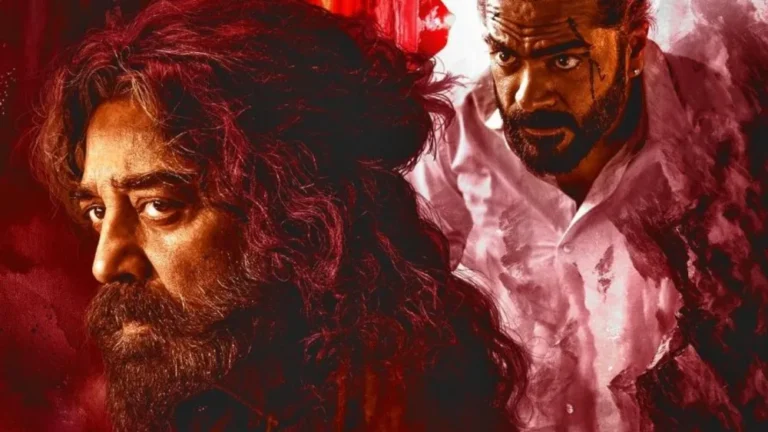
When Thug Life Mani Ratnam Kamal Haasan was announced in November 2022, the Indian film industry received it as a cultural event. Not a film announcement. An event. The collaboration between two of Tamil cinema’s most towering figures — the director whose work redefined emotional storytelling in Indian cinema and the actor-intellectual who has spent 60 years rewriting what it means to perform — had not produced a film together since Nayakan in 1987. That was 38 years ago. Nayakan is not merely a great Tamil film; it is routinely cited as one of the greatest Indian films ever made, one of TIME magazine’s 100 greatest films of all time. The pressure attached to any sequel of creative spirit was, from the very first announcement, almost impossibly high.
What followed the announcement of Thug Life was three years of anticipation, a title reveal, a budget that climbed to ₹250 crore, an AR Rahman score, a pan-India release strategy, an 8-week OTT commitment secured from multiplexes — and then, in the two weeks before release, a political crisis triggered by five words spoken at a promotional event that banned the film from an entire Indian state without a single ticket being sold.
The film released on June 5, 2025. It grossed ₹93–98 crore worldwide against its ₹250 crore budget. It became, by any trade measurement, one of the biggest box office disasters of 2025 — Kamal Haasan’s lowest-grossing film since his post-COVID career restart. The theatrical window, which had been publicly committed to 8 weeks, was shortened to 28 days as the multiplexes demanded early OTT release. The film began streaming on Netflix on July 3, 2025.
This is the complete, honest, fact-based story of the Thug Life Mani Ratnam Kamal Haasan project — what it was, what happened before release, why the Karnataka ban was so damaging, what critics said, what the audience decided, and where Kamal Haasan and Mani Ratnam go from here.
The Film: What Thug Life Is Actually About
The original article on this page never explained the plot of Thug Life. Here it is in full.
Thug Life is a Tamil-language gangster action drama co-written by Mani Ratnam and Kamal Haasan — a detail that deserves emphasis, because the script is not purely Ratnam’s work. It originated as a Kamal Haasan story.
As Haasan explained in an interview with critic Anupama Chopra, the film grew out of a shelved project he had developed called Amar Hain — originally conceived as a Rashomon-structured story he had been working on since the early 2000s. He brought the basic storyline and characters to Ratnam; Ratnam took those foundations and developed them further. Haasan even suggested the title Thug Life, directly inspired by the American rapper Tupac Shakur, whose THUG LIFE acronym — “The Hate U Give Little Infants F***s Everybody” — resonated with the film’s thematic concerns about cycles of violence and inheritance. Ratnam, impressed, accepted it as the official title.
The plot: The film follows Rangaraaya Sakthivel (played by Kamal Haasan) — a feared mafia kingpin operating out of New Delhi who has spent decades building a criminal empire and raising a young man named Amaran as his own son. Sakthivel survives a brutal assassination attempt and comes to suspect that Amaran — the person he trusted most — was involved in orchestrating it. What unfolds is a conflict of loyalty, betrayal, power, and revenge between a criminal patriarch and the protégé he raised, filtered through Mani Ratnam’s characteristic interest in moral complexity and emotional restraint.
The film also involves Sakthivel’s brother Rangaraaya Manickam, who becomes entangled in the betrayal narrative — creating a three-way conflict between blood loyalty, adopted loyalty, and survival.
Haasan described the title as a pun: the principal character Amaran (who the audience is led to believe is dead) is not dead — an echo of the trailer tagline from Alfred Hitchcock’s The Trouble with Harry (1955), “Amar Hain” meaning “he is alive/immortal” in Hindi.
The cast:
| Actor | Character | Background |
| Kamal Haasan | Rangaraaya Sakthivel | Mafia kingpin, patriarch |
| Silambarasan TR (STR) | Amaran | Sakthivel’s adopted son |
| Trisha Krishnan | Key role | Veteran Tamil actress |
| Aishwarya Lekshmi | Key role | Known for Minnal Murali |
| Ashok Selvan | Supporting | Tamil actor |
| Joju George | Supporting | Acclaimed Malayalam actor |
| Nassar | Supporting | Veteran Tamil actor |
| Ali Fazal | Supporting | Bollywood/Hollywood crossover |
| Mahesh Manjrekar | Supporting | Bollywood filmmaker/actor |
| Abhirami | Supporting | Tamil actress |
| Sanjana Krishnamoorthy | Supporting | Tamil actress |
| Sanya Malhotra | Supporting | Bollywood actress |
| Rohit Saraf | Supporting | Bollywood actor |
| Tanikella Bharani | Supporting | Veteran Telugu actor |
| Pankaj Tripathi | Supporting | Bollywood actor |
Note: The original article on this page incorrectly listed Dulquer Salmaan as a cast member. Dulquer Salmaan does not appear in Thug Life.
Technical team: – Director: Mani Ratnam – Co-writer: Kamal Haasan – Music: A.R. Rahman – Cinematography: Ravi K. Chandran – Editing: A. Sreekar Prasad – Production: Raaj Kamal Films International, Madras Talkies, Red Giant Movies – Budget: ₹180–250 crore (varying reports; ₹180 crore production + ₹20 crore marketing, plus Sacnilk reports citing ₹250 crore total)
The 38-Year Weight of Nayakan
No discussion of Thug Life Mani Ratnam Kamal Haasan is complete without understanding the specific pressure that Nayakan (1987) placed on every aspect of this project.
Nayakan — loosely inspired by Francis Ford Coppola’s The Godfather and the real life of Mafia don Varadarajan Mudaliar — remains the most acclaimed Tamil film ever made by most critical reckonings. Directed by Mani Ratnam with Kamal Haasan in the lead role as Velu Naicker, a young orphan who rises to become a Mumbai underworld kingpin, the film received the National Film Award for Best Tamil Film, won the Filmfare Award for Best Film in Tamil, and was selected as India’s entry for the Academy Award for Best Foreign Language Film in 1988. TIME magazine in 2005 included it in its list of All-TIME 100 Movies — one of only two Indian films on the list.
Kamal Haasan’s performance in Nayakan is considered by a wide consensus to be one of the greatest performances in the history of Indian cinema. He was 33 when he made it. He is 70 now.
When critics reviewed Thug Life, the Nayakan comparison was not just inevitable — it was the entire frame. Anupama Chopra of The Hollywood Reporter captured the consensus with characteristic precision, writing that while Thug Life had “sparks which blaze momentarily, they never ignite into a glorious fire. And leave Nayakan behind. Perhaps no one, not even Ratnam and Haasan, can match that poetry.”
- Suganth of The Times of India gave it 2/5 stars and wrote that both Mani Ratnam and Kamal Haasan “disappoint, delivering one of their weakest efforts.” Saibal Chatterjee of NDTV similarly gave 2/5 and wrote that the film “definitely needed more life.” Goutham S of Pinkvilla gave 2/5 and stated it was “nowhere close to being the next Nayakan.”
The few more generous notices came from Kirubakhar Purushothaman of News18 (3/5 stars), who wrote: “While Thug Life may not be Nayakan, it never tries to be. What it does offer is a compelling drama anchored by a magnetic lead performance.” And Krishna Selvaseelan of Tamil Guardian gave 4/5 stars, writing that Haasan “may have done so” in bettering his previous Ratnam collaboration.
On Rotten Tomatoes, 25% of 12 critics’ reviews are positive, with an average rating of 5.3/10. IMDb users rate it 4.2/10.
The Karnataka Crisis: “Kannada Was Born Out of Tamil”
The story of Thug Life Mani Ratnam Kamal Haasan cannot be told without its most damaging pre-release episode — the Karnataka ban triggered entirely by five words Kamal Haasan spoke at a promotional event.
On May 28, 2025 — one week before the film’s release — Kamal Haasan was at a promotional event in Bengaluru. While speaking about the cultural and linguistic ties of South India, and while welcoming Kannada actor Shiva Rajkumar to the event, Haasan remarked: “Kannada language originated from Tamil.”
The claim is disputed by linguists. Both Tamil and Kannada belong to the Dravidian language family, but the scholarly consensus does not support the assertion that one descended from the other in the straightforward way Haasan suggested. The statement was received by Kannada linguistic groups, cultural organisations, and political parties as an insult to one of the world’s oldest classical languages.
The response was immediate and severe:
May 29: The Karnataka Rakshana Vedike filed a police complaint against Kamal Haasan for hurting the sentiments of Kannadigas. Karnataka Chief Minister Siddaramaiah publicly criticised Haasan: “Kannada has a long-standing history. Poor Kamal Haasan, he is unaware of it.” BJP Karnataka chief B.S. Yediyurappa accused Haasan of insulting Kannada.
May 30: The Karnataka Film Chamber of Commerce (KFCC) announced a formal ban on Thug Life in Karnataka unless Haasan issued a public apology within 24 hours.
Haasan’s response was characteristically unbending. He released a statement: “I’ve been threatened before. If I’m wrong, I’ll apologise. If I’m not, I won’t. This is my lifestyle, please don’t tamper with it.”
June 3: The matter reached the Karnataka High Court. Justice M. Nagaprasanna was unsparing in his assessment of Haasan’s position: “This is your ego speaking.” The judge cited the precedent of C. Rajagopalachari, who in 1950 made a similar remark about Tamil and Kannada — and publicly apologised. He asked: “Are you a historian or a linguist? On what basis did you speak? You’ve come to this court seeking police protection for a situation you created — and for commercial gain.” Haasan’s counsel confirmed he would not release the film in Karnataka on June 5.
June 5 (release day): Thug Life released nationwide — but not in Karnataka. The state, with its significant multiplex market in Bengaluru and other cities, was entirely absent from the release map.
June 13: The Supreme Court took up the matter and subsequently quashed the Karnataka High Court’s effective endorsement of the ban, ordering that the film should be allowed to screen. However, by this point, the film had already suffered severe first-week damage. Karnataka distributors — faced with a two-week-old film competing against new releases — announced they would not screen it regardless. Distributor Aravind of VR Films told India Today: “It’s an utter waste to release the film now after two weeks.” The distributors demanded a full refund from Kamal Haasan’s production house, Raaj Kamal Films International — an amount running to several crore rupees that, as of June 2025, had reportedly not been paid.
The estimated revenue loss from the Karnataka ban: approximately ₹5 crore in potential box office — significant, but not the primary driver of the film’s overall underperformance. The film struggled nationwide, not just in Karnataka.
The Political Dimension: Rajya Sabha Nomination and Industry Timing
One detail that added political complexity to the Thug Life Mani Ratnam Kamal Haasan Karnataka controversy: the day before the promotional event where Haasan made the language remark, he had been named by the DMK (Dravida Munnetra Kazhagam) party as a candidate for the Rajya Sabha — India’s upper house of Parliament.
The timing meant that Haasan walked into a Bengaluru promotional event as a freshly announced DMK Rajya Sabha nominee — a party whose political identity is deeply rooted in Tamil linguistic nationalism. Karnataka BJP politicians were quick to frame his comment in this political context, arguing it was not merely a personal linguistic view but a reflection of DMK’s Tamil supremacist politics.
Haasan rejected this framing entirely. His written statement to the KFCC emphasised that his comment was the result of “linguistic confusion” and not intended to demean any language. But the political overlay made reconciliation significantly harder — a straightforward apology about a misstatement became laden with the weight of party allegiance and regional identity politics.
The Box Office Collapse: Opening Day to Final Numbers
The Thug Life Mani Ratnam Kamal Haasan box office story is one of the most dramatic collapses for a high-profile film in recent South Indian cinema history.
Opening day (June 5, 2025): ₹17 crore net in India. Worldwide gross approximately ₹36 crore. The numbers were reasonable given the circumstances — the Karnataka ban had already reduced the film’s accessible market, and the mixed pre-release reviews had dampened enthusiasm. But industry observers noted the opening was significantly below what a ₹250 crore Kamal Haasan–Mani Ratnam film should achieve.
Day 2 onward: The drop was catastrophic. Trade analysts described the Day 2 fall as “nastier than any other movie seen before” — the kind of word-of-mouth collapse that signals near-total audience rejection of content. By the second Monday, collections had fallen below ₹2.25 crore. By the second Friday, below ₹1 crore.
First week India total: Approximately ₹46–47 crore net.
Hindi version: A near-total non-starter — ₹1.7 crore lifetime in Hindi. The film had secured multiplex Hindi releases based on its announced 8-week theatrical window commitment (making it one of the first major Tamil films to achieve multiplex Hindi screenings in recent years). The Hindi audience simply did not come.
Lifetime worldwide gross: ₹93–98 crore — depending on the source. Pinkvilla reports ₹93 crore; Koimoi reports ₹98.05 crore. The film did not cross ₹100 crore worldwide — a threshold that, as Pinkvilla noted, “Kollywood biggies breach on their very first day.”
Verdict: FLOP — confirmed across all major trade trackers (Sacnilk, Koimoi, Pinkvilla, Box Office Index). Against a total outlay estimated at ₹250 crore (production plus marketing plus distribution), the worldwide gross of under ₹100 crore represents one of the largest absolute losses for a Tamil film in the post-COVID era.
The 8-Week OTT Promise That Was Broken in 4 Weeks
One of the most revealing elements of the Thug Life Mani Ratnam Kamal Haasan commercial failure was what happened to the theatrical window.
Before release, the makers made a high-profile public commitment: Thug Life would observe an 8-week theatrical window before streaming on OTT — a significant departure from the standard 4-week Tamil industry norm. This commitment is what secured the film its multiplex Hindi screenings — major multiplex chains agreed to take the film only on the basis of the extended window.
When the film collapsed at the box office within its first week, the calculus changed entirely. Multiplexes — with nearly empty screens showing a rejected film — wanted it removed to make way for new releases. The OTT platform (Netflix, which had paid ₹149.7 crore for the streaming rights) reportedly requested to exercise a clause allowing early premiere given the poor commercial response, simultaneously demanding a 20–25% reduction in the deal price.
The result: Thug Life began streaming on Netflix from July 3, 2025 — 28 days after its theatrical release, not 56. The 8-week commitment was abandoned exactly halfway through. Multiplexes levied financial penalties against the producers for the breach. The OTT rights renegotiation meant the one asset that could partially offset the theatrical losses — the ₹149.7 crore Netflix deal — was also reduced.
As Pinkvilla noted in its closing box office report, the non-theatrical rights (including Netflix) ultimately ensured the makers did not lose their entire investment. But “neither Kamal Haasan, nor Mani Ratnam will make a fraction of the amount that they command for being associated with a film as investing as Thug Life.”
The Music and Visuals: What Almost Everyone Agreed On
Amid the widespread critical disappointment with Thug Life’s screenplay and pacing, two elements commanded near-universal praise even from the film’s harshest reviewers: AR Rahman’s music and Ravi K. Chandran’s cinematography.
A.R. Rahman’s score for Thug Life includes songs with lyrics by Kamal Haasan himself (a rare occurrence for any major Tamil production), Karthik Netha, and Siva Ananth. The album was released well in advance of the film and received warm critical reception, with tracks praised as “soulful, meditative, and emotionally rich.” Even the Koimoi 40% review that described the film as “beyond mediocrity” acknowledged: “A.R. Rahman’s Music is good.” The background score received more mixed notices — some critics felt it occasionally failed to match the on-screen visuals.
Ravi K. Chandran’s cinematography was perhaps the most universally praised element. Chandran — whose previous work with Mani Ratnam includes Guru (2007) and Raavan (2010) — brings his characteristic mastery of long takes, natural light, and compositional elegance to Thug Life. Even critics who found the screenplay predictable or the characters underdeveloped consistently described the film’s visual craftsmanship as a reason to see it. The staging of action sequences and the golden-hour landscape photography were cited repeatedly.
The STR–Kamal confrontation scene, and a specific sequence involving what critics described as a “silent stare-down” by Haasan, circulated widely on social media — mocked by some, celebrated by others, but watched by everyone. The film’s visual language, at its best, delivered the kind of cinema that makes people want to clip and share even when they disagree about the rest.
Kamal Haasan: 70 Years Old, 234th Film as Lead Actor
The Thug Life Mani Ratnam Kamal Haasan story is also a story about a man who has been making films continuously since 1960, when he made his first screen appearance as a child actor at the age of 6.
Kamal Haasan — born on November 7, 1954, in Paramakudi, Tamil Nadu — is now 70 years old. Thug Life is his 234th film as a lead actor — a fact acknowledged in the film’s original working title, KH234, announced in November 2022. He is, by virtually any measure, the most technically accomplished actor in the history of South Indian cinema: a classically trained Bharatanatyam dancer who applies that discipline to physical performance, a polyglot who writes poetry and film scripts, a producer, director, and now a Rajya Sabha MP.
His filmography includes works that redefined what Indian cinema could do: Moondram Pirai (1982), Saagara Sangamam (1983), Swati Muthyam (1986), Nayakan (1987), Apoorva Sagodharargal (1989), Michael Madana Kama Rajan (1990), Thevar Magan (1992), Mahanadi (1994), Kurudhipunal (1995), Hey Ram (2000), Anbe Sivam (2003), Virumaandi (2004), Dasavathaaram (2008), Vishwaroopam (2013), Vikram (2022), Indian 2 (2024).
The post-pandemic era had been commercially difficult: Indian 2, despite enormous anticipation, grossed ₹150.94 crore worldwide — disappointing against its enormous budget. Thug Life, at ₹93–98 crore worldwide, fell below even that. It became Kamal’s lowest-grossing film as a lead actor in the post-COVID era.
His next announced project is Indian 3, directed by Shankar — continuing the franchise that began with Indian (1996).
The North vs South Frame: What the Hindi Failure Revealed
The Thug Life Mani Ratnam Kamal Haasan commercial story has a specific Hindi market dimension worth unpacking. The decision to release Thug Life with multiplex Hindi screenings — secured specifically through the 8-week window commitment — was part of a broader strategy to position the film as a pan-India release.
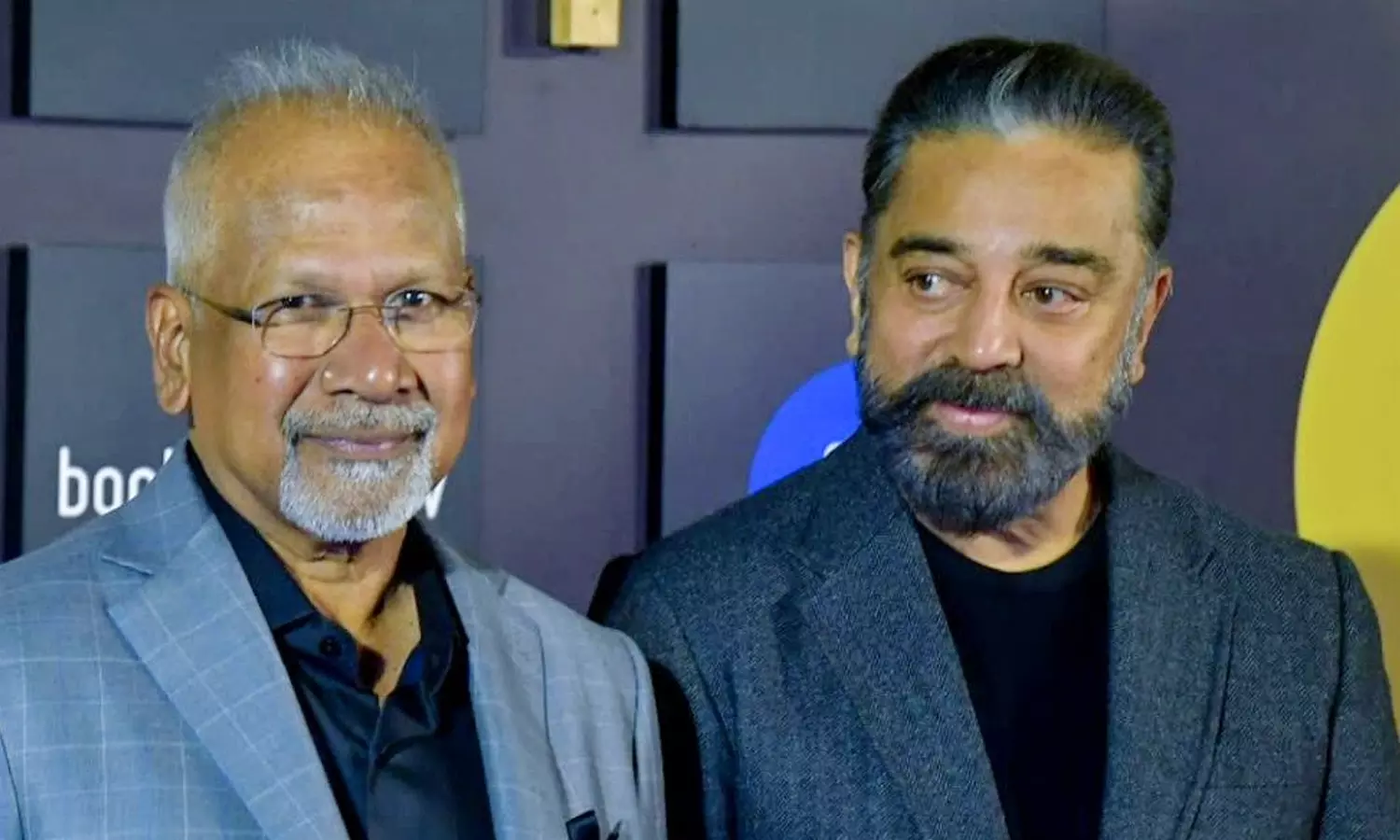
The Hindi version earned ₹1.7 crore lifetime. This number confirms a reality that trade analysts have articulated repeatedly: the pan-India model works for specific kinds of films — primarily high-concept action entertainers with immediate mass appeal (the RRR, Baahubali, KGF model) — but does not automatically translate for character-driven, slower-burning, prestige Tamil films, however accomplished their pedigree.
Thug Life is, at its core, a Tamil gangster drama with emotional restraint, complex family dynamics, and a deliberate pacing that rewards patience. These are not the qualities that drive multiplex Hindi audiences who have been primed by a decade of high-octane South Indian crossover hits. As Sacnilk’s analysis noted: “Class Classics rarely translate to Mass Hindi Box Office.”
Why People Are Still Talking About Thug Life in 2026
Given all of the above — the flop verdict, the Karnataka controversy, the broken OTT commitment — why does the Thug Life Mani Ratnam Kamal Haasan story continue to generate conversation months after its theatrical run ended?
Several reasons:
The Nayakan comparison refuses to die. Any film carrying the creative DNA of one of the greatest Indian films ever made will be argued about indefinitely. Thug Life keeps getting revisited on social media by viewers who want to relitigate whether it was genuinely bad or misunderstood.
Kamal Haasan’s performance generates genuine disagreement. The divided response — with some critics calling it his most mature work in years and others describing it as “peak overacting in slow motion” — is the kind of disagreement that keeps conversations alive.
The Karnataka controversy has lasting political relevance. Haasan’s refusal to apologise — and his subsequent Rajya Sabha nomination — made Thug Life a data point in ongoing debates about cultural nationalism, linguistic identity, and the role of film personalities in Indian politics.
AR Rahman’s songs continue to circulate. Even viewers who have no interest in revisiting the film find the music returning to them. “Vandha Mala” and other tracks have accumulated streaming numbers that significantly outpaced the theatrical performance.
The gap between ambition and execution is instructive. Film students, critics, and industry observers continue to use Thug Life as a case study in what happens when prestige, budget, and legendary pedigree collide with a screenplay that does not fully honour any of them.
Frequently Asked Questions About Thug Life
When did Thug Life release? Thug Life was released theatrically on June 5, 2025 — not January 2026 as previously stated on this page. It began streaming on Netflix on July 3, 2025.
Is Thug Life a hit or a flop? A confirmed FLOP. The film grossed ₹93–98 crore worldwide against a budget of approximately ₹250 crore. It is Kamal Haasan’s lowest-grossing film as a lead actor in the post-COVID era.
Why was Thug Life banned in Karnataka? At a promotional event in Bengaluru on May 28, 2025, Kamal Haasan stated that “Kannada language originated from Tamil.” The Karnataka Film Chamber of Commerce banned the film unless he issued a public apology. Haasan refused: “If I’m wrong, I’ll apologise. If I’m not, I won’t.” The film was not released in Karnataka on its opening day.
What is Thug Life about? It follows Rangaraaya Sakthivel (Kamal Haasan), a feared mafia kingpin in New Delhi, who suspects his adopted son Amaran (Silambarasan TR) was involved in a betrayal-assassination attempt against him. The story explores cycles of violence, loyalty, and revenge.
Is Dulquer Salmaan in Thug Life? No. Dulquer Salmaan does not appear in Thug Life. The main supporting cast includes Trisha Krishnan, Aishwarya Lekshmi, Ashok Selvan, Joju George, Nassar, Ali Fazal, Sanya Malhotra, Rohit Saraf, and Pankaj Tripathi.
Did Thug Life keep its 8-week OTT promise? No. Despite publicly committing to an 8-week theatrical window — which secured the film its multiplex Hindi screenings — it began streaming on Netflix after just 28 days. Multiplexes levied financial penalties for the breach.
What did critics say about Thug Life? Most reviews were negative. Rotten Tomatoes: 25% positive (12 critics, avg. 5.3/10). The ToI, NDTV, and Pinkvilla all gave 2/5 stars. Common criticisms: predictable second-half story, underdeveloped characters, inferior to Nayakan. Common praise: Kamal Haasan and STR’s performances, Ravi K. Chandran’s cinematography, AR Rahman’s music.
What is Kamal Haasan’s next film? Indian 3, directed by Shankar — the third instalment in the Indian franchise. Haasan is also a DMK-nominated Rajya Sabha MP.
What was Thug Life’s Netflix deal worth? Netflix acquired the streaming rights for ₹149.7 crore — a significant sum that partially offset the theatrical losses, though the deal reportedly underwent a 20–25% renegotiation due to the film’s poor commercial performance.
Related Posts You’ll Enjoy
- 🎬 Varun Dhawan Viral Clip: How Border 2 Went From Paid Trolls to ₹464 Crore
- 🎬 Ghooskhor Pandat Controversy: FIR, Supreme Court & Full Story
- 🎬 Kevin Feige Sinners Oscars: All 16 Nominations, Exact Quote & Full Story
- 🎬 Top South Indian Blockbusters That Conquered the Pan-India Box Office
- 🎬 Best South Indian Movies Dubbed in Hindi to Watch in 2026
- 🎬 Rajpal Yadav Legal Crisis: ₹9 Crore Case, Tihar Jail & Full Story
- 🎬 Upcoming Bollywood Movies 2026 — Most Anticipated Films You Can’t Miss
📱 Follow us on Instagram for South Indian cinema box office updates, OTT premiere dates, and entertainment news as it happens.
📌 Save this article on Pinterest — the complete fact-checked guide to Thug Life, Kamal Haasan and Mani Ratnam’s 2025 reunion.
Last updated: March 2026. Thug Life is currently streaming on Netflix (premiered July 3, 2025). Sources: Wikipedia, Pinkvilla, Koimoi, Sacnilk, The Hollywood Reporter India, NDTV, Times of India, Gulf News, Outlook India, WION, India TV News.

Popcorn in hand and a opinion ready — Emily covers movie reviews, box office buzz, and all things cinema at Popcorn Review.

