
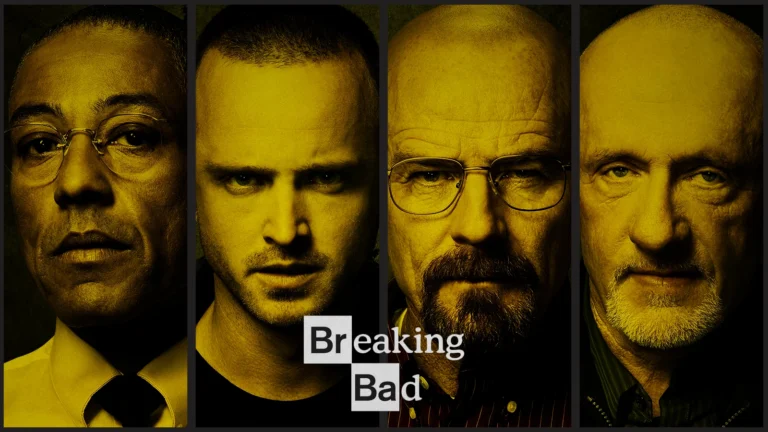
Breaking Bad stands as one of the greatest television achievements in history. Over thirteen years after its finale aired on September 29, 2013, the series continues dominating conversations among television critics, casual viewers, and entertainment professionals worldwide. Even in 2026, new audiences discovering Breaking Bad for the first time experience the same emotional devastation and fascination that made the series a genuine cultural phenomenon.
This comprehensive Breaking Bad review explores every dimension that elevated this series to masterpiece status—from its revolutionary narrative structure to extraordinary performances, technical cinematography, and exploration of profound thematic material. Whether you’re considering starting the series, actively watching through all five seasons, or seeking deeper understanding of its storytelling brilliance, this complete guide provides comprehensive analysis of why Breaking Bad redefined what television could achieve.
Breaking Bad: Essential Series Information & Show Details
Creator & Production Team Details
Breaking Bad emerged from the creative vision of showrunner and creator Vince Gilligan, whose distinctive storytelling approach shaped every element of the series. Gilligan’s previous television experience—including work as a writer and producer on the acclaimed science fiction series The X-Files—prepared him for the ambitious scope, complex character development, and sustained narrative arc that Breaking Bad required.
Gilligan maintained creative control throughout the series’ entire five-season run, directing multiple episodes himself and establishing visual and tonal templates that guest directors maintained consistently. This level of creative control proved rare in television and contributed significantly to the series’ narrative cohesion and thematic consistency.
Network: AMC (American Movie Classics) — Breaking Bad initially aired on this cable network
Format: Crime drama series with ongoing serialized narrative
Total Seasons: 5 complete seasons (concluded)
Total Episodes: 62 episodes total (Season 1: 7 episodes, Season 2: 13 episodes, Season 3: 13 episodes, Season 4: 13 episodes, Season 5: 16 episodes)
Episode Length: 45-58 minutes per episode (varies based on network requirements and content)
Original Air Dates: January 20, 2008 – September 29, 2013 (approximately 5.5 years of broadcasting)
Production Company: Sony Pictures Television, High Bridge Productions
Original Language: English (though dubbed into numerous international languages)
Status: Series concluded with full narrative resolution (complete series available)
Awards & Recognition: 16 Emmy Awards (including Outstanding Drama Series), multiple Golden Globe nominations, SAG Awards, critical acclaim universally
Complete Cast & Major Characters With Details
The ensemble cast delivers career-defining performances that anchor the series’ emotional and dramatic core:
Walter White (Lead/Protagonist): Portrayed by Bryan Cranston, Walter White is the central character—a high school chemistry teacher who becomes a methamphetamine manufacturer. Cranston’s transformation from mild-mannered educator to ruthless criminal mastermind represents one of television’s finest acting achievements. His portrayal earned him four Emmy Awards for Outstanding Supporting Actor in a Drama Series. Cranston brings extraordinary nuance to Walter’s internal contradictions—his capacity for both tenderness and brutality, his justifications and self-deceptions, his genuine love for family and simultaneous capacity to destroy it completely.
Jesse Pinkman (Co-Lead/Emotional Core): Played by Aaron Paul, Jesse is a small-time methamphetamine cook whom Walter recruits as his manufacturing partner and distributor. Paul’s emotional depth and vulnerability provide Breaking Bad‘s emotional heart and moral compass. His character arc—from street criminal to victim of circumstance to haunted survivor—drives audience investment and provides counterbalance to Walter’s ambition. Aaron Paul won three Emmy Awards for Outstanding Supporting Actor in a Drama Series, with his performance celebrated for capturing Jesse’s psychological damage and moral awakening even as he’s forced into increasingly terrible situations.
Skyler White (Supporting Lead): Anna Gunn portrays Walter’s wife, who gradually discovers her husband’s criminal enterprise through Season 2 and beyond. Skyler’s character provides crucial perspective on Walter’s actions and refuses to be passive—she actively questions, challenges, and eventually becomes complicit through knowledge. Her character arc challenges traditional depictions of spouses in crime dramas by portraying her as intelligent, suspicious, and increasingly trapped. Gunn won two Emmy Awards, with her performance showcasing Skyler’s deterioration from concerned spouse to haunted woman trapped in impossible circumstances.
Hank Schrader (Supporting): Dean Norris plays Walter’s brother-in-law, a DEA (Drug Enforcement Administration) agent investigating methamphetamine operations. Hank begins as seemingly comic relief—the loud, crude agent with American flag-patterned items—but gradually evolves into one of television’s most compelling characters. His investigation of the mysterious criminal “Heisenberg” becomes personal obsession. His discovery that his brother-in-law is the criminal mastermind he’s been hunting creates devastating dramatic irony. In the final season, Hank becomes the moral weight opposing Walter’s complete moral collapse.
Gus Fring (Antagonist): Giancarlo Esposito’s portrayal of the chicken restaurant owner and sophisticated drug kingpin creates one of television’s most unforgettable antagonists. Fring represents a different criminal archetype than Walter—calculated, controlled, patient. His facade—the polite businessman, the respectable restaurant owner, the community member—masks a ruthless operator willing to commit atrocities while maintaining professional composure and dignity. Esposito’s performance captures Fring’s ability to compartmentalize emotions, maintain control, and execute sophisticated criminal operations with precision.
Mike Ehrmantraut (Supporting): Jonathan Banks plays the former cop turned fixer, whose professional competence and moral code make him essential to the narrative’s functioning. Mike works for Gus as his primary enforcer and problem-solver, handling logistics and eliminating obstacles. His storyline explores the possibility of criminal operation through discipline, strategy, and calculated decision-making. Mike’s character demonstrates how intelligent, principled people rationalize terrible choices, and how professional competence doesn’t preclude moral compromise.
Nacho Varga (Supporting): Michael Mando portrays a complex criminal caught between Walter and Gus, struggling to maintain his humanity while navigating impossible circumstances. Nacho represents the collateral damage of Walter’s ambitions—a character drawn into increasingly terrible situations through circumstances beyond his control.
Saul Goodman (Supporting): Bob Odenkirk’s criminal lawyer provides dark humor while simultaneously facilitating Walter’s criminal enterprise. Saul represents the institutional corruption enabling Walter’s operations—the lawyer, the fixer, the criminal infrastructure making sophisticated crime possible. Odenkirk’s character proved so compelling that it inspired the prequel series Better Call Saul.
Plot Overview & Complete Series Architecture
Central Premise: Fatal Diagnosis & Desperate Transformation
Breaking Bad review must begin with understanding the core premise: Walter White, a high school chemistry teacher experiencing chronic financial hardship, receives a terminal lung cancer diagnosis. He has, by medical estimation, approximately six months to live. Facing imminent death without adequately providing for his family’s financial future, Walter turns to manufacturing methamphetamine—initially justifying the illegal activity as ensuring his family’s financial security after his death.
What elevates Breaking Bad above typical crime narratives is that it systematically deconstructs and dismantles every rationalization Walter offers. The series never allows his “I’m doing this for my family” justification to stand unchallenged. Instead, throughout five seasons, Walter’s true motivations gradually surface: his desire for power, respect, significance, and legacy—desires rooted in his perception that he’s been overlooked, undervalued, and disrespected throughout his life.
By the series’ end, Walter admits brutal truth that contradicts his entire premise. In the finale, confronted about his criminal enterprise, Walter confesses: “I did it for me. I liked it. I was good at it. And I was really… I was alive.” This admission reveals that Walter’s crime wasn’t fundamentally about family protection but about personal fulfillment and significance.
Five-Season Structure: Escalating Moral Deterioration
Vince Gilligan architected Breaking Bad across five seasons, each representing escalating stakes, increasing moral compromise, and Walter’s progressive deterioration from sympathetic character to ruthless criminal.
Season 1 (7 episodes, 2008): Establishes Walter’s desperate situation—his cancer diagnosis, his financial hardship, his underappreciation at his high school teaching job. Walter’s former student and small-time drug dealer Jesse Pinkman becomes his manufacturing partner. The season introduces the basic premise while establishing character relationships, fundamental conflicts, and the initial justification for criminality. Episodes showcase Walter’s gradual transition from law-abiding citizen to criminal manufacturer, with each step justified by circumstance and rationalization.
Season 2 (13 episodes, 2009): Walter and Jesse face competition from established drug dealers and criminal organizations more experienced and ruthless than they are. Financial pressures mount, and character relationships become strained by stress and danger. The season introduces Gus Fring, a seemingly respectable restaurant owner who will become central to the narrative. Key episodes explore consequences of Walter’s choices—his criminal partner’s death, complications with his family relationships, and recognition that his initial justifications don’t account for unintended damage.
Season 3 (13 episodes, 2009-2010): Walter begins working directly for Gus, learning corporate-scale drug production and sophisticated criminal operations. Hank’s DEA investigation intensifies, creating increasing danger. Walter’s ambition and pride become increasingly evident as he prioritizes his criminal empire over his family’s emotional wellbeing. The season portrays Walter’s transition from reluctant criminal to ambitious operator seeking to expand his power and control.
Season 4 (13 episodes, 2011): Gus’s control tightens while Walter schemes to gain independence and primacy. The tension between Walter and Gus—two prideful men competing for dominance in their criminal enterprise—escalates toward inevitable confrontation. The season demonstrates how Walter’s ambition creates conflict with the sophisticated criminal infrastructure that previously protected him. Mike’s character storyline expands, exploring his own moral compromises and the professional code he constructed to rationalize his criminal activities.
Season 5 (16 episodes, 2012-2013): Split into two parts separated by a hiatus, the final season spirals toward devastating conclusion. Walter achieves his criminal ambitions and financial goals but destroys everything meaningful in the process—his family relationships fracture completely, his marriage becomes hollow, his son despises him, and Jesse becomes psychologically demolished. The season demonstrates that Walter’s achievement of his stated goals simultaneously represents his total defeat and moral annihilation.
Deep Dive Character Analysis: Television’s Most Complex Portraits
Walter White: The Ambitious Teacher Becoming Ruthless Criminal
Walter White represents television’s most complex character study. Bryan Cranston’s extraordinary performance captures the subtle shifts—the way Walter’s eyes harden when stressed, how his voice changes when discussing chemistry versus crime, the physical transformation from bumbling, insecure teacher to confident criminal operator.
Walter’s character presents a paradox: he’s simultaneously sympathetic and contemptible. He begins the series with justifiable desperation—a man facing death without providing for his family. Yet throughout the series, his true motivations gradually surface. His repeated statements about “providing for family” eventually reveal themselves as rationalizations masking his deeper needs for significance, power, and respect.
The genius of Walter’s character arc is that he never transforms into a traditional villain. Instead, he remains convincingly human—capable of both genuine tenderness toward family and casual cruelty toward obstacles. His evolution isn’t sudden but gradual, forcing audiences to identify the moment Walter became irredeemable, recognizing that pinpointing exact transition proves impossible.
Walter’s character also explores how intelligent people construct sophisticated justifications for terrible choices. His chemistry background allows him to understand the mechanics of methamphetamine production and to rationalize the chemistry of his own moral compromises. He applies scientific precision to moral questions, creating frameworks where his actions appear logical and justified within his constructed reasoning.
Jesse Pinkman: Humanity’s Moral Compass
Jesse Pinkman functions as Breaking Bad’s moral compass and emotional anchor. Unlike Walter, Jesse never loses his capacity for guilt, remorse, shame, and fundamental humanity. Aaron Paul’s extraordinary portrayal captures Jesse’s internal conflict—his involvement in terrible crimes while maintaining core decency that tortures him psychologically.
Jesse’s character arc follows an inverse trajectory to Walter’s. While Walter becomes increasingly hardened, removed from consequences, and capable of casual brutality, Jesse becomes increasingly traumatized and psychologically damaged by his actions. By the series’ end, Jesse has suffered catastrophic psychological devastation—forced to witness people he cares about die, manipulated by Walter repeatedly, enslaved by Gus, and ultimately broken by his role in the criminal enterprise.
The Jesse-Walter dynamic creates Breaking Bad’s emotional core. Initially, they seem like mentor and apprentice, with Walter teaching Jesse manufacturing techniques and street criminal knowledge. But their relationship becomes increasingly complicated as Walter manipulates Jesse repeatedly, using his youth, vulnerability, and need for approval against him. Jesse desperately seeks Walter’s recognition and respect despite growing recognition that Walter doesn’t reciprocate his loyalty—Walter sees Jesse as a tool, a means to criminal ends rather than a person worthy of genuine care.
Jesse’s redemptive arc—his capacity to feel remorse, his desire to escape criminality, his psychological breakdown under the weight of guilt—provides the series’ emotional counterbalance to Walter’s ruthless ambition. Audiences invest in Jesse not because he’s innocent but because he demonstrates genuine moral awareness and suffering consequences for his actions.
Skyler White: Trapped in Impossible Circumstances
Skyler White provides crucial perspective challenging traditional depictions of spouses in crime dramas. She’s not a silent supporter nor a tragic victim but a complex character making impossible choices under extraordinary pressure.
Throughout the series, Skyler gradually realizes the extent of Walter’s criminal activities. As her knowledge accumulates, her character evolution reflects the impossible position she occupies—legally, morally, and practically. Protecting her children while living with a dangerous criminal, aware of his activities but powerless to stop him, she becomes increasingly complicit through knowledge while maintaining awareness that her only genuine power involves testifying against Walter.
Anna Gunn’s performance captures Skyler’s deterioration—a woman becoming increasingly trapped, her agency stripped away, her psychological wellbeing deteriorating under chronic stress. She transforms from concerned spouse to terrified woman to complicit accessory. The audience’s relationship with Skyler mirrors Walter’s manipulation; many viewers initially resent her for “standing in the way” of Walter’s ambitions before eventually recognizing that her concerns were justified all along and that her resistance represented moral clarity Walter had abandoned.
Hank Schrader: From Comic Relief to Tragic Hero
Hank Schrader’s character transformation represents one of television’s finest achievements in character development. Dean Norris begins portraying Hank as comedic relief—the loud, crude DEA agent with patriotic decoration preferences who seems more caricature than authentic character.
As Breaking Bad progresses across seasons, Hank’s unexpected depth emerges. His investigation of the mysterious criminal “Heisenberg” becomes personal obsession—he becomes emotionally invested in catching this particular criminal. His discovery that his brother-in-law is the criminal mastermind he’s been hunting creates devastating dramatic irony for both the audience and Hank himself.
In the final season, Hank becomes the moral counterweight to Walter. He’s not perfect—he’s rough, sometimes crude, occasionally problematic—but he’s fundamentally decent. His refusal to let Walter escape consequences, his recognition that Walter manipulated him personally, his willingness to sacrifice himself to protect others establishes him as the genuine hero that Walter never was. Hank’s character arc suggests that decent people don’t require extraordinary circumstances to do the right thing—they simply maintain their principles despite pressure and temptation.
Gus Fring: The Controlled Antagonist
Giancarlo Esposito’s Gus Fring represents a distinctly different criminal archetype than Walter White. Where Walter is impulsive, prideful, and driven by ego, Gus is calculated, controlled, and disciplined. His public facade—the polite businessman, the respectable restaurant owner—masks a ruthless operator willing to commit atrocities while maintaining composure.
Gus’s character arc explores the possibility of sustained criminal enterprise through discipline and strategic thinking rather than chaotic ambition. Unlike Walter, who constantly creates problems through pride and impulsive decision-making, Gus maintains distance from his criminal operations, delegates effectively, and rarely allows emotions to influence decisions.
Gus’s conflict with Walter drives much of seasons three and four, pitting two forms of criminality against each other: Walter’s chaotic ambition versus Gus’s controlled precision. Their power struggle demonstrates that criminal success requires different approaches—Walter’s approach creates constant crises, while Gus’s approach maintains stability. However, Gus’s defeat ultimately comes through Walter’s application of ruthlessness that exceeds Gus’s calculated approach.
Mike Ehrmantraut: Professional Competence & Moral Compromise
Jonathan Banks’ Mike Ehrmantraut provides perhaps television’s most tragic character arc. Once a legitimate law enforcement officer, Mike became a criminal fixer, constructing justifications and codes to rationalize his moral compromises.
Mike’s storyline explores how intelligent, capable people rationalize terrible choices. His devotion to his granddaughter, his respect for professional competence, his disdain for Walter’s ego-driven decision-making—these human elements make Mike sympathetic even as he commits violence and criminality. Mike represents someone trying to maintain personal standards and a code within a corrupting profession, but his attempts ultimately fail as his actions accumulate consequences.
Mike’s ultimate fate—being killed by Walter—demonstrates that Walter destroys everyone he touches. Mike, despite his criminal competence, cannot escape the consequences of Walter’s presence. Walter’s insertion into Mike’s world creates chaos that Mike’s discipline and competence cannot manage. Their relationship ends with Mike recognizing that Walter’s ambition has rendered professional competence insufficient.
Technical Execution: Breaking Bad’s Cinematic Mastery
Cinematography: Visual Storytelling Excellence
Breaking Bad employed cinematographer Michael Chapman (who photographed Taxi Driver and The King of Comedy) and later Peter Medak, bringing extensive theatrical experience to television. The series treats every scene with cinematic attention—strategic framing, meaningful color choices, camera movement conveying emotional subtext rather than merely showing action.
Color symbolism appears throughout Breaking Bad. Green and bright colors characterize Walter’s initial world—legitimate teaching, family normalcy, honest work. As Walter transitions into criminality, blues and cold tones dominate visual palette. Gus’s spaces feature clinical greens and sterile corporate aesthetics. The desert settings employ golden tones and harsh lighting reflecting moral landscape deterioration.
New Mexico’s landscape becomes a character itself. Wide shots emphasizing isolation and infinite horizons suggest both freedom and entrapment. The harsh terrain visually reflects the moral wasteland the characters inhabit. The show employs extreme close-ups—of chemical reactions, insects, blood—to emphasize consequences of characters’ actions through visceral imagery.
Framing and composition deliberately position characters to reflect psychological or power states. Characters appear off-center or marginalized within frames during vulnerable moments. Low angles emphasize threat or power; high angles suggest vulnerability or diminishment. This visual language communicates emotional information without explicit exposition.
Direction: Precise Narrative Architecture
Vince Gilligan directed multiple episodes personally, establishing visual and tonal templates that guest directors maintained consistently. Directors Peter Medak, Michael Slovis, Colin Bucksey, and Moira Walley-Beckett brought individual styles while maintaining overall coherence.
Directors treat Breaking Bad episodes as complete films—with three-act structure, rising tension, climactic moments, and denouement. No scene exists merely for exposition; every moment serves narrative or character development. Dialogue often proves minimal; instead, visual storytelling and character behavior communicate information.
Sound Design & Original Score
Dave Porter’s original score employs restraint and precision. Rather than melodic themes, Porter creates atmospheric soundscapes—ambient sounds, electronic elements, minimal instrumentation. The music reinforces emotional moments without manipulating audience reaction.
Silence functions as effectively as music in Breaking Bad. Tense scenes often occur without musical accompaniment, allowing ambient sound, dialogue, and environmental noise to create atmosphere. This approach maintains tension without constant reinforcement, making music moments more impactful through contrast.
Major Themes: Why Breaking Bad Endures Across Decades
Pride & Ego: The Ultimate Human Motivators
Beneath Walter’s “I’m providing for my family” justification lies a primal need for recognition and respect. The series interrogates whether Walter’s criminal activities truly serve his family or serve his psychological needs for significance.
The famous line—”I am the one who knocks”—captures Walter’s underlying motivation perfectly. He’s no longer the overlooked, underappreciated teacher; he’s powerful, feared, and significant. This drives far more of his decision-making than financial necessity. His pride in his chemical abilities, his need to be acknowledged as “the cook” rather than junior partner, his resistance to being subordinate—all reflect ego rather than legitimate survival concerns.
Consequences & Cause-and-Effect: Actions Have Enduring Costs
Breaking Bad operates on a principle of inexorable consequences. Every action ripples forward, creating unintended damage. Characters rarely escape consequences; instead, they accumulate psychological and emotional damage proportional to their crimes.
A person dies early in Walter’s criminal enterprise because Walter fails to take necessary precautions—this death cascades through multiple seasons, affecting Jesse psychologically and creating complications that ripple throughout the narrative. Walter’s choices create consequences he cannot control or predict, demonstrating that criminal enterprises generate uncontrollable chaos despite plans and precautions.
The American Dream Corrupted: Hard Work Doesn’t Guarantee Success
Walter embodies a corrupted vision of the American Dream—a man who supposedly can pull himself up through bootstraps via hard work and intelligence. However, Breaking Bad suggests the legitimate system is rigged, opportunities are limited, and advancement often requires moral compromise or fortunate circumstances beyond individual control.
Walter’s initial desperation stems partly from genuine bad luck—he left Gray Matter Technologies before it became successful, his legitimate teaching job doesn’t pay adequately despite his expertise, his cancer treatment requires resources he doesn’t possess. The series suggests that individual excellence doesn’t guarantee commensurate reward within legitimate systems, potentially explaining why Walter turns to criminality.
Power & Corruption: How Power Transforms People
The series explores how unlimited power without moral restraint inevitably leads to devastation. Walter begins as sympathetic character but becomes progressively corrupted by the power his criminal empire provides. He transforms from desperate man into ruthless operator willing to eliminate anyone threatening his position or authority.
Family & Loyalty: The Destruction of Intimate Relationships
Despite claiming to protect his family, Walter systematically destroys it. His loyalty extends only as far as it serves his interests. His wife becomes terrified of him; his son eventually despises him; his daughter barely recognizes him; his brother-in-law dies partially because of Walter’s actions.
The series questions whether family loyalty can survive fundamental moral compromise. Walter’s crimes contaminate every family relationship, proving that criminal enterprise and genuine family care prove incompatible.
Morality & Justification: How People Rationalize Terrible Choices
Characters throughout Breaking Bad construct sophisticated moral justifications for terrible actions. The series suggests that humans are remarkably adept at rationalizing behavior, that conscience proves flexible, and that self-deception enables otherwise decent people to commit atrocities while maintaining positive self-images.
Identity & Transformation: Who We Become Through Our Choices
Walter’s transformation from teacher to criminal raises questions about identity and change. Does Walter become someone new, or does criminality reveal who he truly was beneath the facade? The series suggests that Walter’s criminality allows him to express aspects of himself—ambition, ruthlessness, desire for power—that his legitimate life suppressed.
Season-by-Season Episode Breakdown & Key Moments
Season 1 Key Episodes: “Pilot” (establishing premise and Walter’s desperation), “Crazy Handful of Nothin'” (Walter’s first independent act of violence), “A1A” (Jesse’s moral conflict and consequences), “Cat’s in the Bag” (establishing manufacturing process and danger).
Season 2 Key Episodes: “Seven Thirty-Seven” (introducing plane crash that becomes season arc), “Half Measures” (Walter beginning to eliminate competition), “Phoenix” (tragic climax demonstrating Walter’s willingness to let innocent people die).
Season 3 Key Episodes: “One Minute” (Hank recognizing vulnerability), “Full Measure” (Walter orchestrating murders to protect his position).
Season 4 Key Episodes: “Salud” (Gus and Max’s death backstory), “Face Off” (explosive conclusion with chemical weapon attack).
Season 5 Key Episodes: “Dead Freight” (Walter poisoning a child), “Ozymandias” (emotional devastation and family destruction), “Felina” (finale revealing Walter’s true motivations).
Why Breaking Bad Remains Television’s Masterpiece
Complete Creative Vision Throughout
Vince Gilligan maintained creative control throughout Breaking Bad’s five-season run, directing multiple episodes and establishing consistent vision. This creative control proved rare in serialized television and contributed significantly to narrative cohesion and thematic consistency impossible when control becomes fragmented across multiple producers.
Fearlessness in Storytelling Consequences
Breaking Bad refuses to shy away from consequences. Characters suffer devastating losses, psychological trauma, and moral collapse. The series rejects easy redemption or comfortable conclusions, instead committing to demonstrating that Walter’s ambition destroys everyone it touches.
Character Complexity & Multidimensionality
Every major character contains multitudes—capable of both virtue and cruelty, motivated by competing desires, evolving through the series rather than remaining static archetypes. This complexity makes characters feel authentic and prevents simplistic moral judgments.
Technical Excellence Sustained Across Full Run
From cinematography to editing to sound design, Breaking Bad maintains theatrical quality throughout—a remarkable achievement for television, where budget and time constraints often reduce production value as series progress.
Frequently Asked Questions: Breaking Bad Explained
Q1: Is Breaking Bad worth watching in 2026, more than a decade after conclusion?
A: Absolutely. While Breaking Bad originally aired from 2008-2013, its themes regarding ambition, power, corruption, and consequence remain eternally relevant. New audiences discovering the series in 2026 report experiencing the same emotional devastation and fascination as original audiences. The series’ technical mastery, character complexity, and thematic depth reward multiple viewings. Television has evolved since the finale, but few series match Breaking Bad’s artistic achievement or emotional impact.
Q2: How does Breaking Bad compare to other acclaimed crime dramas?
A: Breaking Bad stands alongside elite crime dramas including The Sopranos, The Wire, and Succession. While each offers excellence, Breaking Bad distinguishes itself through complete creative vision maintained across the full series, fearless commitment to character consequences, and sustained thematic exploration without diminishment in later seasons. Many acclaimed series falter in final seasons; Breaking Bad maintains quality throughout.
Q3: Can I start with Better Call Saul instead, or should I watch Breaking Bad first?
A: While Better Call Saul functions as a prequel and can be enjoyed independently, Breaking Bad provides essential context. Better Call Saul frequently references Breaking Bad events, character relationships, and emotional beats that carry deeper resonance with Breaking Bad knowledge. Starting with Breaking Bad allows you to appreciate Better Call Saul’s prequel storytelling with complete character history and context.
Q4: Is the finale satisfying, or does it disappoint?
A: The finale provides thematic and character closure without offering easy comfort. Walter faces consequences—he doesn’t escape legal justice, his family relationships remain destroyed, his victory proves hollow. The finale concludes with bittersweet honesty rather than traditional satisfying resolution. Those seeking Walter’s redemption will find the ending troubling; those appreciating realism and character consequence will find it perfectly crafted.
Q5: What series should I watch after completing Breaking Bad?
A: Start with Better Call Saul (prequel exploring Saul’s transformation), then watch El Camino (film continuing Jesse’s story after the finale). For similar acclaimed dramas exploring moral complexity and character transformation, consider Succession, True Detective Season 1, The Leftovers, or Ozark.
Q6: Does Breaking Bad glorify drug manufacturing or crime?
A: No. The series systematically demonstrates crime’s human costs. Characters suffer psychologically and physically; relationships fracture irreparably; no character escapes unscathed. The series critiques rather than glorifies criminality. Walter’s success in criminal enterprise becomes his complete defeat as a human being—financial achievement accompanied by total destruction of everything meaningful.
Q7: How many seasons and episodes comprise the complete series?
A: Five complete seasons total with 62 episodes. Season 1 contains 7 episodes, Seasons 2-4 each contain 13 episodes, and Season 5 contains 16 episodes. Most episodes run between 45-58 minutes, making the complete series approximately 47-50 hours of viewing time. This represents significant but manageable commitment for a complete series review.
Q8: Where can I watch Breaking Bad in 2026?
A: Breaking Bad is available on multiple streaming platforms including Netflix (primary availability in many regions), AMC+, and rental services including Amazon Prime Video. Availability varies by geographic region and changes periodically. Check your region’s available platforms for current streaming options.
The Enduring Legacy & Cultural Impact
Breaking Bad influenced an entire generation of television creators to prioritize character development, thematic depth, and narrative complexity over episodic storytelling. The series demonstrated that television could achieve artistic excellence matching or exceeding theatrical cinema. Every prestige drama since Breaking Bad owes conceptual debt to Gilligan’s pioneering approach.
The show spawned Better Call Saul, a prequel series of comparable quality, and El Camino, a feature film continuing Jesse’s story after the finale. These extensions testify to the world’s richness and justify continued exploration beyond the main narrative.
More broadly, Breaking Bad contributed crucially to what critics termed the “Golden Age of Television,” demonstrating that audiences and critics recognize television’s potential for sophisticated storytelling. The series proved that serialized television could maintain quality across extended runs, that character development required time and commitment, and that moral complexity enriched rather than diminished entertainment value.
Final Breaking Bad Review: Why This Series Demands Your Time
Breaking Bad deserves recognition as one of the greatest television achievements ever created. The series succeeds through complete creative vision, fearless storytelling, extraordinary performances, technical excellence, and profound thematic depth that rewards analysis and discussion.
Whether you seek character-driven narrative exploring psychological complexity, thrilling crime drama maintaining tension across multiple seasons, exploration of moral ambiguity and ethical compromise, or technically masterful filmmaking executed at television’s highest level, Breaking Bad delivers comprehensively on all fronts.
The series demands emotional engagement and rewards attentive viewing. It provides no easy comfort or simplistic morality but instead forces viewers to confront uncomfortable truths regarding ambition, pride, complicity, and consequence. It demonstrates that good people can commit terrible acts, that rationalization enables moral compromise, and that ambition without restraint destroys everything meaningful.
Over a decade after conclusion, Breaking Bad continues proving that television can achieve artistic mastery equivalent to greatest cinema. For fans of sophisticated drama exploring institutional and personal corruption, character transformation, and moral consequence, Breaking Bad remains the gold standard against which other series are measured.
Share Your Breaking Bad Thoughts & Reactions
Have you watched Breaking Bad? Which character arc resonated most powerfully with you? What did you think of the series’ conclusion? Do you believe Walter achieved any redemption or remained irredeemable throughout? Which season stands as your personal favorite? Which supporting character deserved more screen time?
Drop your thoughts in the comments below. For more series reviews and entertainment analysis, explore Popcorn Review’s comprehensive coverage of streaming content, Hollywood productions, and dramatic excellence across television and cinema. Share this review with fellow drama enthusiasts who appreciate character-driven storytelling and moral complexity. 🎬📺

Popcorn in hand and a opinion ready — Emily covers movie reviews, box office buzz, and all things cinema at Popcorn Review.

