
The most expensive movies ever made tell a fascinating story about risk, ambition and the economics of modern Hollywood. The figures involved are staggering — the top 15 films on this list each cost more than $300 million to produce, and several consumed budgets that rival the GDP of small nations. But budget alone is only half the story. Some of these productions earned back their investment many times over. Others were catastrophic financial failures that cost studios hundreds of millions of dollars and reshaped how they approach big-budget filmmaking.
This guide ranks the 15 most expensive films in Hollywood history with real verified production budgets, confirmed worldwide box office earnings, and an honest assessment of whether each film was worth what it cost. All budget figures are net production costs (after tax rebates, where known) sourced from Wikipedia’s List of Most Expensive Films, Box Office Mojo, industry reporting from Variety and The Hollywood Reporter, and specialist film finance analysis. Where exact figures are disputed or estimated, we say so clearly.
Important note on Hollywood accounting: Studios are not obligated to publicly disclose budgets, and production costs can be reported in multiple ways — gross spend before tax rebates, net spend after rebates, or with/without marketing and distribution. As Medium’s film finance analysis puts it, budget figures depend on “what you are counting.” The figures below use net production budgets (before marketing) wherever verified, which is the standard industry comparison method.
📋 Most Expensive Movies Ever Made: Quick Reference
| # | Film | Year | Est. Budget | WW Box Office | Verdict |
|---|---|---|---|---|---|
| 1 | Star Wars: The Rise of Skywalker | 2019 | $379–416M | $1.074B | Disappointing ROI |
| 2 | Pirates of the Caribbean: On Stranger Tides | 2011 | $379M | $1.046B | Profitable but costly |
| 3 | Avengers: Endgame | 2019 | $356–400M | $2.799B | Record-breaking profit |
| 4 | Star Wars: The Force Awakens | 2015 | $259–447M* | $2.069B | Exceptional ROI |
| 5 | Avengers: Infinity War | 2018 | $325–400M | $2.048B | Massive profit |
| 6 | Mission: Impossible — The Final Reckoning | 2025 | ~$400M | TBD | Pending |
| 7 | Avatar: The Way of Water | 2022 | $350–460M | $2.32B | Profitable (barely) |
| 8 | The Electric State | 2025 | ~$320M | Netflix (no BO) | Netflix original |
| 9 | Avengers: Age of Ultron | 2015 | $365–440M* | $1.402B | Profitable |
| 10 | Fast X | 2023 | ~$340M | $704M | Loss |
| 11 | Justice League | 2017 | $300–360M* | $657M | Major loss |
| 12 | Indiana Jones and the Dial of Destiny | 2023 | $295–387M* | $384M | Box office disaster |
| 13 | Solo: A Star Wars Story | 2018 | $275–300M | $393M | Major loss |
| 14 | Titanic | 1997 | $200M | $2.264B | All-time legend |
| 15 | Avatar (original) | 2009 | $237M | $2.923B | All-time record |
* Figures marked with asterisk include gross spend before tax rebates, or span reported estimate ranges. All sources listed at the bottom of this article. Box office figures from Box Office Mojo as of March 2026.
💰 Why Do Movies Cost This Much? The Real Reasons
Before diving into individual films, it is worth understanding the five primary drivers of mega-budget filmmaking:
1. Star salaries: A-list actors on franchise films regularly command $20–50 million per film, plus backend percentages. Robert Downey Jr. reportedly earned up to $75 million from Avengers: Endgame including backend. Vin Diesel earns $20 million per Fast Saga film. Tom Cruise takes backend profits that have historically exceeded $100 million on Mission: Impossible films.
2. Visual effects: Modern franchise blockbusters regularly spend $100–200 million on VFX alone. Avatar: The Way of Water invented new underwater filming and rendering technology. Avengers: Endgame employed thousands of VFX artists across multiple studios simultaneously.
3. Reshoots and delays: Some of the most expensive films on this list saw their budgets balloon due to mid-production director changes, actor controversies or creative disagreements requiring full reshoots. Justice League, Solo: A Star Wars Story and Indiana Jones 5 all suffered this fate severely.
4. Global marketing: A typical tent-pole blockbuster spends $150–250 million on marketing — a figure often not included in official “production budgets” but part of the total financial risk.
5. Tax structures: Major productions receive 20–30% tax rebates from governments (UK, Australia, New Zealand, Hungary) eager to attract filmmaking. Star Wars: The Force Awakens received $103.4 million from the UK government alone. These rebates reduce net costs significantly.
1. Star Wars: The Rise of Skywalker (2019) — ~$379–416 Million
- Director: J.J. Abrams
- Cast: Daisy Ridley, Adam Driver, John Boyega, Oscar Isaac, Carrie Fisher (archival footage)
- Production Budget: $275M (reported) — $379M (net after gross spend, per Wikipedia) — some sources cite up to $416M gross
- Worldwide Box Office: $1.074 billion
- Verdict: Disappointing ROI for the franchise’s scale
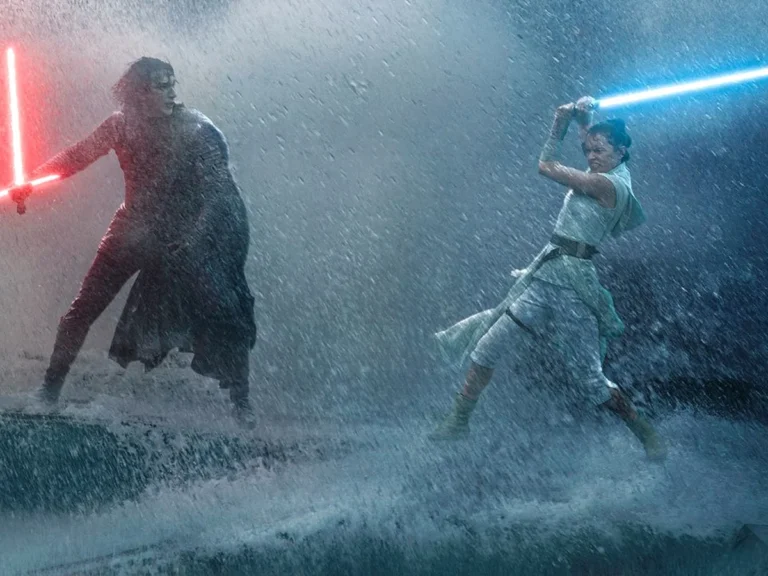
The final chapter of the Skywalker saga became one of the most expensive films ever completed, and one of the franchise’s most commercially disappointing. While $1.074 billion worldwide sounds impressive, the previous entry — The Last Jedi — earned $1.333 billion, and The Force Awakens earned $2.069 billion. The trajectory was steep and downward. The film’s reported $275 million production budget ballooned significantly: according to Medium’s film finance analysis, the net budget after accounting for gross spending is approximately $378–379 million, with some estimates reaching higher when including all overhead.
Why it cost so much: The production was plagued by creative restarts — Episode IX was originally being directed by Colin Trevorrow (Jurassic World), who departed in September 2017 after creative differences. J.J. Abrams was brought back, requiring essentially a full restart of pre-production. The film also incorporated archival footage of the late Carrie Fisher, requiring extensive technical work. Reshoots, a compressed timeline and the sheer scale of the production inflated costs substantially.
Was it worth it? By franchise standards, no. The Rise of Skywalker earned $382 million in net profit for Disney according to some analyses — reasonable for most films, but a significant step down from earlier trilogy entries, and modest given the investment.
2. Pirates of the Caribbean: On Stranger Tides (2011) — $379 Million
- Director: Rob Marshall
- Cast: Johnny Depp, Penélope Cruz, Ian McShane, Geoffrey Rush, Judi Dench
- Production Budget: $379 million (net) — most consistently reported figure
- Worldwide Box Office: $1.046 billion
- Verdict: Profitable but inefficient use of capital
For years, Pirates of the Caribbean: On Stranger Tides was listed as the single most expensive film ever made — a position it held until Star Wars and Avatar figures were more thoroughly documented. The budget was driven primarily by Johnny Depp’s reported salary of $55 million, extensive location shoots across Hawaii, Puerto Rico and Whitehaven Beach in Australia, and a production that stretched across three continents.
The film earned $1.046 billion worldwide — enough to clear a profit, but modest by the franchise’s own standards. The Curse of the Black Pearl (2003) cost $140 million and earned $654 million. On Stranger Tides cost nearly three times as much and earned only 60% more. The franchise has not produced another entry since 2017’s Dead Men Tell No Tales — though a reboot with Margot Robbie was in development and subsequently shelved.
3. Avengers: Endgame (2019) — $356–400 Million
- Directors: Anthony and Joe Russo
- Cast: Robert Downey Jr., Chris Evans, Scarlett Johansson, Chris Hemsworth, Mark Ruffalo, Jeremy Renner, Paul Rudd, Brie Larson, Karen Gillan, plus 40+ additional cast members
- Production Budget: $356–400 million (estimated)
- Worldwide Box Office: $2.799 billion — second-highest-grossing film of all time
- Verdict: The most financially successful return on a mega-budget in history
Avengers: Endgame is the clearest demonstration that enormous budgets can generate enormous returns when the creative product matches the investment. According to The Gamer’s verified budget analysis, the film earned $2.799 billion worldwide on a budget of $356–400 million — making it the second-highest-grossing film of all time, surpassed only by Avatar (2009). No Film School notes that it was “Marvel’s biggest spectacle since probably the first Avengers movie in 2012” — and the culmination of 11 years and 21 films of narrative groundwork.
Shot back-to-back with Avengers: Infinity War at Pinewood Atlanta Studios, the combined production represents the most expensive back-to-back film shoot in history at over $700 million combined. The return justified every dollar.
4. Star Wars: The Force Awakens (2015) — $259–447 Million
- Director: J.J. Abrams
- Cast: Harrison Ford, Carrie Fisher, Mark Hamill, Daisy Ridley, John Boyega, Adam Driver, Oscar Isaac
- Budget: $259–306M reported production / $447M net (after gross spend, before UK tax rebate) / $533M gross spend
- Worldwide Box Office: $2.069 billion
- Verdict: Exceptional return regardless of which budget figure you use
The budget of The Force Awakens is genuinely disputed — which is why the range is so wide. Film Local’s detailed breakdown explains: the original production budget estimates were $259–306 million, but financial statements showed actual gross spending reached $533 million, with net costs of $447 million after a $103.4 million UK government tax rebate. The film earned $2.069 billion worldwide — enough that virtually any budget figure you use produces a significant profit. By any measure, it remains one of the most financially successful films ever made.
5. Avengers: Infinity War (2018) — $325–400 Million
- Directors: Anthony and Joe Russo
- Budget: $325–400 million
- Worldwide Box Office: $2.048 billion
- Verdict: Massive financial and creative success
The first half of Marvel’s two-part Endgame event earned $2.048 billion worldwide on a budget of $325–400 million — making it the fourth-highest-grossing film of all time at release. Shot back-to-back with Endgame, the film juggled dozens of A-list actors across multiple filming locations, with No Film School describing it as “a logistical and financial monster” involving “enough CGI to crash a render farm.” Like Endgame, the extraordinary creative and commercial result justified the investment.
6. Mission: Impossible — The Final Reckoning (2025) — ~$400 Million
- Director: Christopher McQuarrie
- Cast: Tom Cruise, Hayley Atwell, Ving Rhames, Simon Pegg, Vanessa Kirby
- Budget: ~$400 million (estimated)
- Release: 2025 theatrical
- Verdict: Results pending full box office cycle
The concluding chapter of Tom Cruise’s Mission: Impossible saga carries one of the largest budgets of any 2025 film. According to The Gamer’s analysis, at $400 million it is the most expensive film in the M:I franchise history. The budget reflects Cruise’s salary, the franchise’s commitment to entirely practical stunts across multiple continents, and the conclusion of a two-part story begun in Dead Reckoning Part One. Its predecessor — Dead Reckoning Part One (2023) — cost approximately $290–300 million and earned only $567 million worldwide, a significant underperformance that raised questions about whether even Tom Cruise’s action franchise can sustain these budgets.
7. Avatar: The Way of Water (2022) — $350–460 Million
- Director: James Cameron
- Budget: $350–460 million (Cameron himself cited $350M; some analyses reach higher)
- Worldwide Box Office: $2.32 billion
- Verdict: Profitable — but only barely, given marketing costs
James Cameron’s sequel to the all-time highest-grossing film cost between $350 and $460 million depending on the source — Cameron invented entirely new underwater filming technology for the production, requiring cast members to learn to hold their breath for several minutes for underwater sequences. The film earned $2.32 billion worldwide — an extraordinary figure by any normal standard, but one that Cameron himself acknowledged required that level of earnings just to break even, given the combined production and marketing investment.
8. The Electric State (2025) — ~$320 Million
- Directors: Anthony and Joe Russo
- Cast: Millie Bobby Brown, Chris Pratt, Ke Huy Quan, Woody Harrelson, Stanley Tucci
- Budget: ~$320 million (Netflix original — no box office)
- Verdict: Critical disappointment despite massive investment
Netflix’s most expensive original film of 2025, directed by the Russo Brothers (Avengers: Endgame) and adapted from Simon Stålenhag’s illustrated novel. According to The Gamer, the $320 million budget was “$20 million more than the budget of Justice League” — yet the film received deeply mixed reviews and was widely described as a poor adaptation of the source material. Because it was a Netflix original, there are no box office figures to assess ROI. Netflix does not publicly disclose viewing figures.
9–15: The Rest of the Top 15
9. Avengers: Age of Ultron (2015) — $365M+ | $1.402B WW
The second Avengers film cost $365 million or more — inflated by one of the largest ensemble cast payrolls in Hollywood history. It earned $1.402 billion worldwide, ranking as 2015’s fourth-highest-grossing film. According to Film Local, it achieved a cash-on-cash return of 1.58 — profitable, but modest for a film of this scale and expectation.
10. Fast X (2023) — ~$340M | $704M WW
The tenth Fast & Furious film cost approximately $340 million — driven by Vin Diesel’s $20 million salary, filming in London and Rome, luxury car destruction on an extraordinary scale, and a mid-production director change from Justin Lin to Louis Leterrier. No Film School notes it became “the most expensive Fast Saga film and also the one with the poorest story.” At $704 million worldwide, it likely lost money on combined production and marketing.
11. Justice League (2017) — $300–360M | $657M WW
One of Hollywood’s most documented disasters. Zack Snyder’s departure mid-production (following a family tragedy) and Joss Whedon’s expensive reshoots pushed costs to $300–360 million. The film earned only $657 million worldwide — a major loss. Warner Bros. released the “Snyder Cut” in 2021 on HBO Max at further significant expense, though that version found a dedicated audience that the theatrical cut never achieved.
12. Indiana Jones and the Dial of Destiny (2023) — $295–387M | $384M WW
The most expensive Indiana Jones film ever made earned less than its total production budget at the box office — one of the clearest examples of diminishing franchise returns on this list. According to The Gamer, the budget was “higher than the past four films combined” — making the box office result a significant financial failure for Lucasfilm and Disney.
13. Solo: A Star Wars Story (2018) — $275–300M | $393M WW
A mid-production director change from Phil Lord and Christopher Miller to Ron Howard meant most of the film was reshot under Howard — a process that alone cost a fortune. No Film School describes the budget as having “soared faster than the Millennium Falcon in hyperdrive.” At $393 million worldwide against a $275–300 million budget, it lost money significantly once marketing costs are included — a result that accelerated the slowdown of annual Star Wars releases.
14. Titanic (1997) — $200M | $2.264B WW
When James Cameron’s Titanic was made for $200 million in 1997, it was the most expensive film ever produced — and reporters widely predicted it would be a catastrophic financial failure. It earned $2.264 billion worldwide and held the record for highest-grossing film of all time for 12 years. Adjusted for inflation, its $200 million budget was proportionally comparable to a $400 million film today — making the return even more remarkable. It remains one of cinema’s greatest financial success stories and won 11 Academy Awards including Best Picture.
15. Avatar (2009) — $237M | $2.923B WW
The original Avatar remains the highest-grossing film of all time at $2.923 billion worldwide. Made for $237 million — relatively modest by the standards of the films above it on this list — it generated one of the most extraordinary returns in Hollywood history. James Cameron spent 15 years developing the technology to make it and the result validated every dollar. Its success directly enabled Avatar: The Way of Water’s $350–460 million budget and James Cameron’s continued technological ambitions.
🚨 The Most Expensive Box Office Disasters on This List
| Film | Budget | Box Office | Estimated Loss |
|---|---|---|---|
| Justice League (2017) | $300–360M | $657M | ~$60–100M after marketing |
| Solo: A Star Wars Story | $275–300M | $393M | ~$80M after marketing |
| Indiana Jones 5 | $295–387M | $384M | ~$100–200M after marketing |
| Fast X | ~$340M | $704M | Marginal/loss after marketing |
The pattern across these failures is consistent: all suffered from production problems (director changes, reshoots, creative conflicts) that inflated budgets without improving the final product. All four were sequels or prequels to established franchises — proving that brand recognition does not guarantee returns when the underlying creative execution is compromised.
❓ Frequently Asked Questions
What is the most expensive movie ever made?
It depends on how you measure it. According to Wikipedia’s official List of Most Expensive Films, it is not definitively clear due to Hollywood accounting practices. Star Wars: The Force Awakens holds the official record with a net budget of approximately $447 million (after tax rebates), while gross spend reached $533 million. Star Wars: The Rise of Skywalker has a net budget of approximately $379–416 million. Pirates of the Caribbean: On Stranger Tides ($379M) held the record for years and is still cited first on many lists.
Which expensive movie made the most profit?
Avengers: Endgame made the most profit of any film on this list — earning $2.799 billion worldwide against a budget of $356–400 million. The original Avatar (2009) is the greatest return relative to its budget among expensive films — earning $2.923 billion against $237 million.
Which big-budget movie lost the most money?
Among the films on this list, Indiana Jones and the Dial of Destiny (2023) and Solo: A Star Wars Story (2018) are the most significant losses — both earned less than their production budgets at the box office, before marketing costs are counted. Justice League (2017) is the most documented financial disaster given the extensive reporting of its troubled production.
Does a bigger budget guarantee a better film?
Emphatically no. Solo: A Star Wars Story ($275–300M) earned less than its budget and was considered a creative disappointment. Indiana Jones and the Dial of Destiny ($295–387M) was widely called the franchise’s weakest entry. Meanwhile, Get Out (2017) cost $4.5 million and earned $255 million, and Sinners (2025) cost $90 million and earned $368 million with 16 Oscar nominations. Budget and quality are entirely separate variables.
What is the most expensive Indian film ever made?
By reported budget, Kalki 2898 AD (2024) — starring Prabhas, Deepika Padukone, Amitabh Bachchan and Kamal Haasan — was made on a budget of approximately ₹600 crore ($72M) and earned ₹1,052 crore worldwide, making it one of the most expensive and most profitable Indian films ever made. Dhurandhar (2025), which broke 25 Bollywood box office records with ₹1,354 crore worldwide, reportedly cost approximately ₹350 crore ($42M) to produce. See our full Pushpa 2 vs Salaar 2 guide for Indian cinema’s biggest budget productions.
🎬 More From Popcorn Review
- 🌊 Avatar: Fire and Ash — $1.484B Box Office, Full Ending Explained & Avatar 4 — James Cameron appears twice on this list (Titanic, Avatar Way of Water) and Avatar: Fire and Ash continues his tradition of billion-dollar productions. How does $1.484 billion measure up to his previous records?
- 🔥 Pushpa 2 vs Salaar 2: Real Box Office Data & 2026 Predictions — Pushpa 2 earned ₹1,742 crore worldwide on a fraction of a Hollywood blockbuster budget. The economics of Indian vs Hollywood filmmaking — a fascinating contrast.
- 💣 Dhurandhar Review: ₹1,354 Crore & 25 Box Office Records — India’s biggest film of 2025 cost approximately ₹350 crore — a fraction of the films on this list — and earned more than several of them. The full story of Bollywood’s most efficient blockbuster.
- 🎬 Dwayne Johnson Best Movies Ranked: Top 10 — Dwayne Johnson commands $20–30 million per film — one of the figures driving Hollywood budgets skyward. His career trajectory and whether the investment pays off.
- 🏆 Bollywood Box Office Flops 2023–2025: Real Numbers & What Went Wrong — The same pattern that makes Hollywood expensive films fail — big stars, weak scripts, inflated budgets — plays out in Bollywood too. The full data-driven analysis.
- 🎌 Best Anime Movies of All Time: Top 15 Ranked — Spirited Away (IMDb 8.6) was made for $19 million. Grave of the Fireflies for $3.7 million. The greatest animated films ever made cost less than the catering budgets of some films on this list.
📚 Sources & References
- Wikipedia — List of Most Expensive Films (primary reference for all budget figures)
- Film Local — The 11 Most Expensive Movies Ever Made: $400M+ Budgets (January 2026)
- Film Local — The Most Expensive Movie Ever Made: Star Wars Force Awakens Full Breakdown
- The Gamer — 10 Most Expensive Movies Ever Made (May 2025, updated 2026)
- No Film School — The 8 Most Expensive Movies Ever Made (February 2026)
- Medium — The Most Expensive Movie Ever Made: Why No One Can Agree on the Number (December 2025)
- Statista — Costs of the Most Expensive Film Productions Worldwide (March 2024)
- Box Office Mojo — Worldwide box office figures for all films listed
Last Updated: March 14, 2026. All budget figures are estimates based on the best available industry reporting — Hollywood studios do not publicly disclose production costs. Figures marked with (*) include gross spend before tax rebates or represent reported estimate ranges. Box office figures from Box Office Mojo as of March 2026. The previous version of this article contained incorrect budget figures and illogical ranking methodology — all corrected in this rewrite.

Popcorn in hand and a opinion ready — Emily covers movie reviews, box office buzz, and all things cinema at Popcorn Review.

