
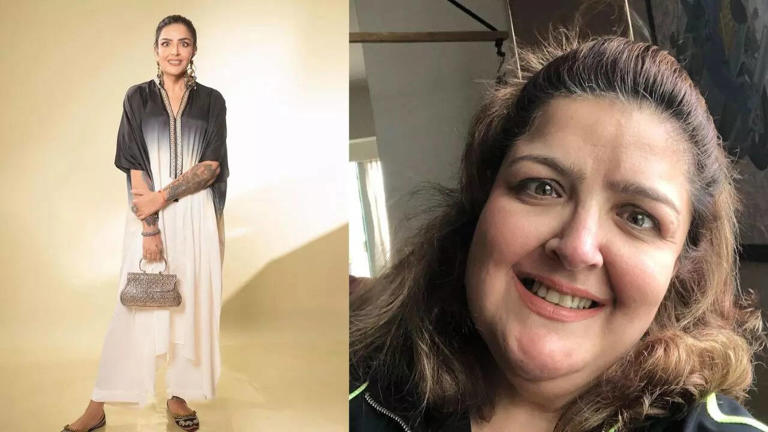
On January 29, 2026, Sunaina Roshan posted a video on her social media account and said, plainly and directly, what she had been carrying for years.
“The hardest thing I ever did was admit that I had a problem, but it changed everything.”
She spoke about alcoholism. She spoke about an unhealthy relationship with sweets and junk food. She described addiction as something that can go unnoticed precisely because it shapeshifts — not always a bottle in a bag, sometimes just a habit you don’t recognise as a cage until you’re already inside it.
“Addiction can take many forms — food, alcohol, even habits we don’t realise we’re clinging to.”
Hrithik Roshan commented on the video. Rakesh Roshan commented. Pinkie Roshan commented. All three praised her publicly, in the same thread, on the same day.
The Sunaina Roshan personal reveal wasn’t a tabloid leak or a crisis PR moment. It was a woman choosing to be honest about her own life, in her own words, on her own timeline. Here is the full account — what she said in the January 2026 video, what she said in earlier interviews where she went into more detail, and what all of it actually means when you read it together.
Who Is Sunaina Roshan
Sunaina Roshan is the daughter of filmmaker Rakesh Roshan and Pinkie Roshan, and the elder sister of Hrithik Roshan. She was born in 1970 and married fashion designer Asish Soni in 1992. They have a daughter, Suranika Soni. The marriage ended after a few years.
She has spent most of her adult life out of the film industry spotlight — not because nothing was happening, but because what was happening was largely private, painful, and not the kind of story Bollywood’s publicity machine tends to amplify.
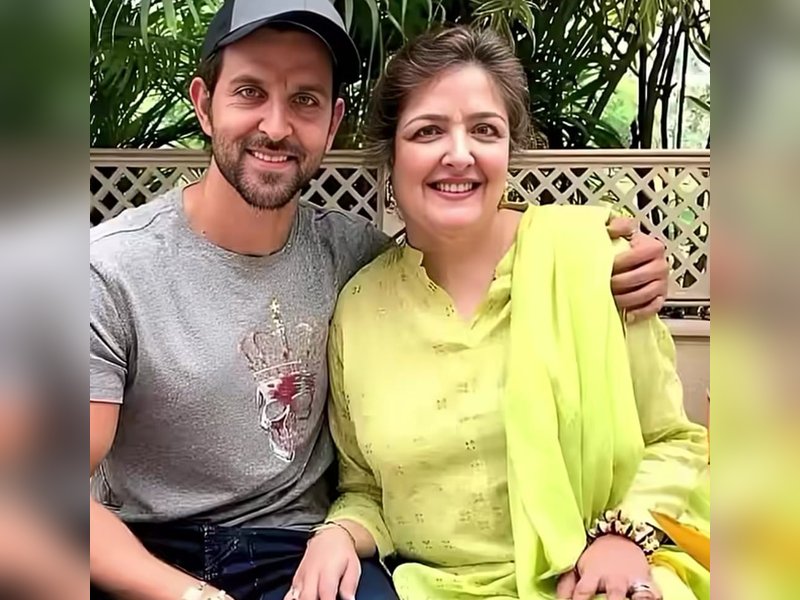
Over the years, Sunaina has been open, in fragments, about a series of serious medical crises: cancer, brain tuberculosis, Zoster Herpes, diabetes, sleep apnea, high blood pressure, and fatty liver. Each of these was documented in interviews, but rarely in a way that connected them into a coherent picture of sustained, compounding difficulty.
The alcoholism is connected to that picture. It didn’t arrive separately.
The January 2026 Video: What She Said
The January 29 video was Sunaina’s most direct public statement on addiction to date — a short, composed piece addressed to anyone who might recognise themselves in it.
She described her own experience in three stages: the struggle, the acceptance, and the path forward.
On the struggle: “I struggled with alcoholism and at one point an unhealthy relationship with sweets and junk food.”
On acceptance as the turning point: “The hardest thing I ever did was admit that I had a problem, but it changed everything.”
On the nature of addiction more broadly: “Addiction can take many forms — food, alcohol, even habits we don’t realise we’re clinging to.”
On what she wanted others to take from it: “You don’t have to do it alone. It’s not about perfection, it’s about progress.”
She closed with: “Don’t be afraid to reach out for support. You are unbreakable.”
The video was not melodramatic. It was not framed as a comeback story or a brand pivot. It was, in tone and content, a message from someone who had been through something and wanted to say so plainly, in case it helped someone else.
The Siddharth Kannan Interview: The More Detailed Account
Before the January 2026 video, Sunaina had spoken at greater length about her alcoholism in a conversation with host Siddharth Kannan. That interview is where the fuller account lives.
She described how the drinking began: not as a recreational habit but as a response to sustained emotional and physical pain. “I was going through a very, very difficult time. I was very vulnerable emotionally and wanted to numb my senses — so I drank. I know that was the worst phase of my life.”
She was careful to make a distinction she clearly felt mattered: “Alcohol is not a bad thing, but alcoholism is, where you do not have control over your drinks.”
The dependency, once established, became structural. She described drinking throughout the day. She described blackouts. She described losing track of what had happened the previous day. “I have fallen off beds, injured myself, I had a slip from a chair.”
Her parents — Rakesh Roshan and Pinkie Roshan — eventually intervened. They revoked her credit cards and cut off her financial support when they realised she was spending money on alcohol. Rakesh Roshan went further: he assigned bodyguards to follow her. Despite the surveillance, she found ways to drink in secret.
The family’s intervention created conditions for change but couldn’t produce the change itself. “Despite her family’s intervention, Sunaina emphasised that the decision to recover had to come from within.”
That decision came. She sat her parents down and asked for help. “I sat my parents down and told them, ‘I want to get out of this.’ They suggested rehab, but I took the initiative and found a rehabilitation centre myself.”
The Rehab: What the 28-Day Programme Actually Involved
The detail Sunaina provided about her rehabilitation experience is specific enough to be useful to anyone who has wondered what the process actually looks like — and it is quite different from most sanitised public accounts of celebrity recovery.
She described it as a 28-day course at a centre that was, in her words, “not like a normal rehab.” The centre treated all forms of addiction, not only alcohol. It involved 56 counsellors and an intensive confrontation-based approach. She described being placed in a room for 89 hours of sustained questioning.
“It was worse than normal rehab. I don’t know what normal rehab is all about, but this was — in one room, for 89 hours. They are just grilling you.”
The rules of the facility were strict. No mobile phones. No sugar, no coffee, no chocolate, no perfume. Her mother had to provide a list of approved contacts who could call her. Everything potentially addictive was removed, not only the primary substance.
She described the physical and psychological exhaustion of those 28 days honestly: “I went there knowing I would get better. This is one step of moving ahead in life to get over my alcoholism.”
She completed the course. Then, almost immediately after leaving, she received news that her father Rakesh Roshan had been diagnosed with cancer. She described the impact of that news arriving in the fragile period immediately after discharge — unable to sleep, calling her doctors from the washroom in the middle of the night.
Recovery is not a destination. That sequence of events illustrated it with unusual clarity.
The Context the January 2026 Video Didn’t Mention: Everything Else She Was Carrying
To understand why the Sunaina Roshan personal reveal resonated as widely as it did, you need the full medical history alongside the addiction account.
Sunaina has spoken in various interviews about cancer — the diagnosis, the treatment, the aftermath. She has spoken about brain tuberculosis, which she has emphasised is widely misunderstood: tuberculosis is not confined to the lungs and can affect any part of the body. She has spoken about Zoster Herpes, diabetes, sleep apnea, high blood pressure, and fatty liver.
She described in a Pinkvilla interview how the cancer, tuberculosis, and Herpes diagnoses arrived in close succession and how the cumulative physical and emotional toll left her searching for a way to stop feeling it. Alcohol became that way for a time.
This is the context the January 2026 video compressed into a single sentence about wanting to “numb my senses.” The sentence is accurate. The compression loses the weight of what was being numbed.
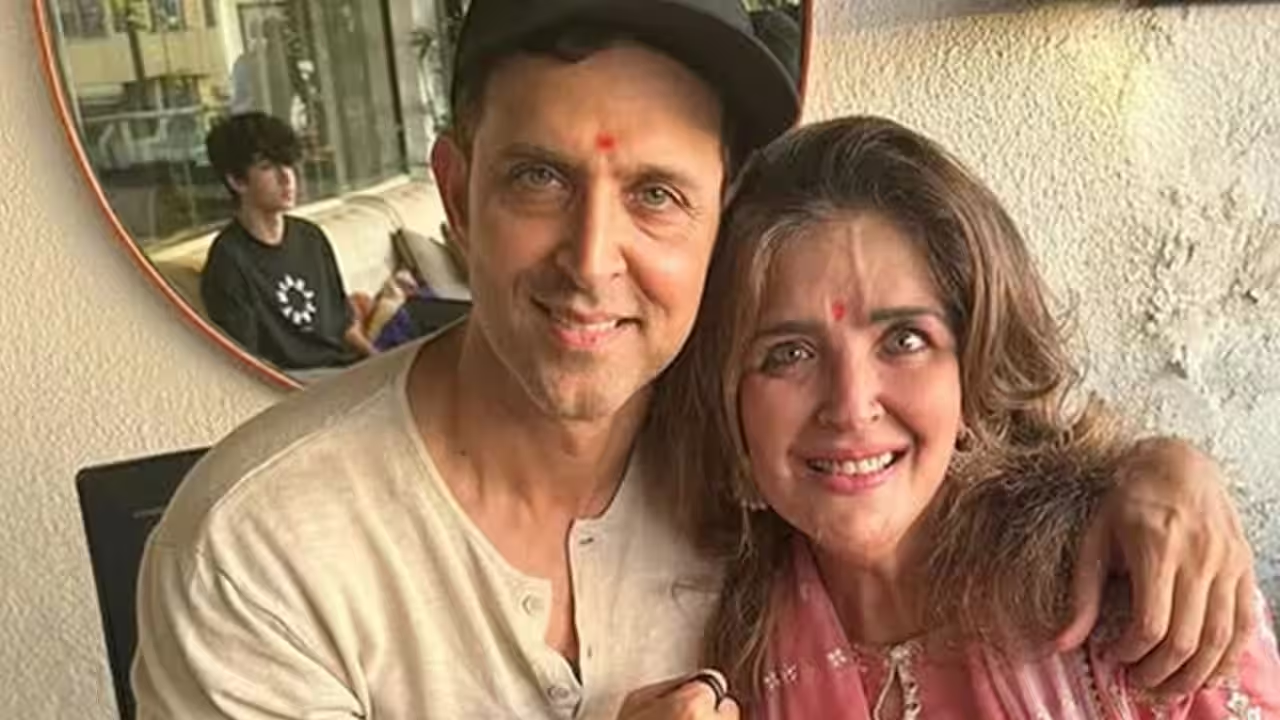
The reason this background matters is that it changes the nature of the Sunaina Roshan personal reveal. This is not a story about someone who developed a substance problem in comfortable circumstances. This is a story about someone who faced a sequence of serious, life-threatening medical crises over an extended period, found a coping mechanism that stopped working, recognised that it had stopped working, and chose to do something about it — without the protection of a PR team, without a redemption arc already written, and without any guarantee of how it would be received.
How the Family Responded Publicly
Hrithik Roshan’s comment on the January 2026 video was widely shared, but he has otherwise not discussed his sister’s recovery in detail in any public forum. His presence in her comments — alongside both parents — was itself the statement.
Rakesh Roshan, who has been public about his own cancer diagnosis and treatment in recent years, has spoken about Sunaina’s strength in general terms in interviews. Pinkie Roshan has not made public statements on the subject.
The family’s public response to the January 2026 video was unanimous and immediate. It was also contained — three comments, no press statements, no coordinated media cycle. The contrast with the way Bollywood typically manages family narratives was noticeable.
Why This Matters Beyond the Headline
The Sunaina Roshan personal reveal is not, primarily, a Bollywood story. It is a story about addiction, recovery, and the conditions that produce both.
Sunaina Roshan is not a film star. She does not have an upcoming release to promote. She has no obvious professional incentive to be public about her difficulties. The January 2026 video was, by every available indication, exactly what it presented itself as: a person who had been through something hard, had come out the other side, and wanted to say so in case it helped someone else.
In a media environment saturated with celebrity wellness content that is often carefully curated and commercially motivated, that simplicity is the substance.
She said: “You don’t have to do it alone. It’s not about perfection, it’s about progress.”
She said: “Don’t be afraid to reach out for support. You are unbreakable.”
These are not original formulations. What makes them worth paying attention to is who is saying them, with what behind it, and without asking for anything in return.
Sunaina Roshan: Key Facts
| Detail | Information |
| Born | 1970 |
| Parents | Rakesh Roshan (filmmaker), Pinkie Roshan |
| Sibling | Hrithik Roshan |
| Marriage | Asish Soni (fashion designer), married 1992, later separated |
| Daughter | Suranika Soni |
| Medical history | Cancer, brain tuberculosis, Zoster Herpes, diabetes, sleep apnea, high blood pressure, fatty liver |
| Addiction | Alcoholism; unhealthy relationship with sweets and junk food |
| Rehab | 28-day programme, 56 counsellors, completed voluntarily |
| January 2026 video | Posted January 29, 2026 on social media |
| Family response | Hrithik, Rakesh, and Pinkie Roshan all commented publicly |
Related Reading
- Celebrity Perfect Image: Why Fans Have Stopped Believing It in 2026
- Celebrity Deaths 2026: Every Loss From January to March, Remembered Properly
- Janhvi and Shanaya Cold War: The Reddit Origins and What Actually Happened
- Alia Bhatt Marriage: What She Actually Said to Silence the Rumours
Follow us on Instagram and Pinterest.

Popcorn in hand and a opinion ready — Emily covers movie reviews, box office buzz, and all things cinema at Popcorn Review.

