
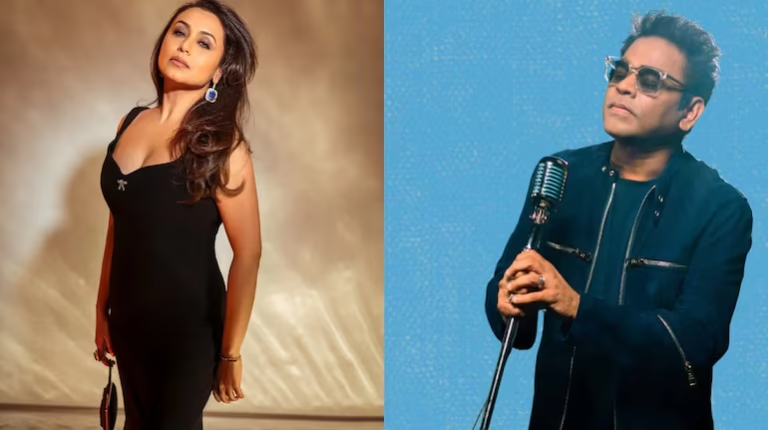
On January 16, 2026, AR Rahman sat down with BBC Asian Network host Haroon Rashid for an 86-minute interview and said something that set off one of the loudest debates Bollywood had seen in years.
He said he was receiving less work from Hindi cinema than he used to. He attributed it to a power shift in the industry over the past eight years — decisions being made by people without creative instincts. And then, carefully, almost reluctantly, he added one more possible factor.
“It might be a communal thing also, but it is not in my face. It comes to me as Chinese whispers that they booked you, but the music company went ahead and hired their five composers. I said, ‘Oh, that’s great, rest for me, I can chill out with my family.’”
Those two sentences — “it might be a communal thing also” and “it is not in my face” — were pulled from an 86-minute conversation and became the story. Within hours, the backlash from right-wing Hindu social media accounts was intense. By the following day, Rahman had posted a video clarification on Instagram. Veteran industry figures lined up on both sides. And Rani Mukerji, whose name appears in the headline of the original article about this controversy on this site, was mentioned in connection with the story.
Here’s the full account of what Rahman actually said, who said what in response, Rani Mukerji AR Rahman comment.
What AR Rahman Said — In Full Context
The BBC Asian Network interview with Haroon Rashid was wide-ranging. Rahman spoke about his career origins, how Taal (1999) made him a household name in North India, his Tamil identity as an outsider in Bollywood, his upcoming collaboration with Hans Zimmer on the Ramayana score, and the changing structure of the Hindi film industry.
When asked whether he had faced prejudice in Bollywood in the 1990s — specifically as a Tamil composer working in a predominantly Hindi-language industry — Rahman was clear: he had not felt it personally.
“Maybe I never got to know of this, maybe it was concealed by God, but I didn’t feel any of this.”
When asked about the present day, his tone shifted. He described the past eight years as a period in which the power structure in Bollywood had changed.
“The past eight years, maybe, because a power shift has happened, and people who are not creative have the power now. It might be a communal thing also… but it is not in my face.”
He then described how information about lost work reached him: “It comes to me as Chinese whispers that they booked you, but the music company went ahead and hired their five composers.”
He did not name any individual, production house, or music company. He did not describe a specific incident. He framed it as something ambient — heard indirectly, not experienced directly. He said he was “not in search of work” and wanted work to come to him through his output rather than through pursuit.
This is the complete statement. Not a denunciation. Not an accusation. A carefully qualified observation from one of the most meticulous interviewees in Indian entertainment, speaking at length about an industry he has worked in for over three decades.
Why the Backlash Was Immediate and Intense
The word “communal” carries a specific charge in the current Indian political climate.
In Indian public discourse, “communal” most commonly refers to religious identity — and using it in the context of a Muslim artist describing possible exclusion in a predominantly Hindu-majority industry triggered immediate reaction from Hindu right-wing accounts on social media. The backlash was described by Al Jazeera, which covered the story, as coming “from right-wing Hindus.”
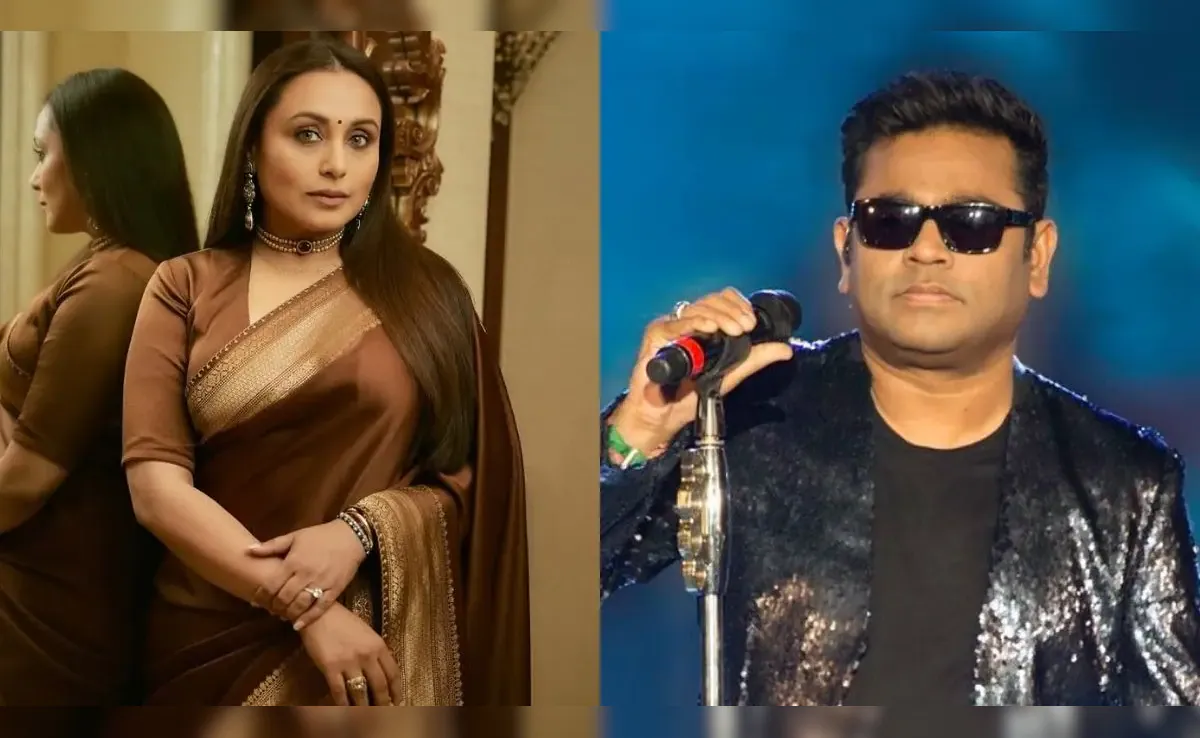
Rahman’s phrasing — the hedging, the qualification, the insistence that he experienced nothing directly — did not protect him from the reaction. Screenshots were shared without the surrounding context. The phrase “it might be a communal thing” circulated independently of the sentences before and after it.
Within a day, Rahman posted an Instagram video response.
“Dear friends, music has always been my way of connecting, celebrating and honouring a culture. India is my inspiration, my teacher and my home. I understand that intentions can sometimes be misunderstood, but my purpose has always been to uplift, honour and serve through music. I have never wished to cause pain and I hope my sincerity is felt.”
He noted his recent work on the Ramayana score alongside Hans Zimmer, the Waves Summit performance in front of Prime Minister Narendra Modi, the launch of the all-women band Rooh-e-Nor, and his involvement with the Sunshine Orchestra and young Naga musicians. The video ended with footage of Rahman performing Vande Mataram at a live concert while the crowd sang along.
What the Industry Actually Said
The controversy drew responses from a wide range of industry figures. Here is what they actually said, on record.
Javed Akhtar denied the existence of communal bias in the industry. “I have never felt this way. I meet people here in Mumbai. They have great respect for him. Rahman is such a big man. Even a small producer is afraid to go to him. But I don’t think there is any communal element in this.” He suggested that Rahman’s scheduling — touring commitments, international engagements — was a more likely explanation for reduced Bollywood work.
Shobhaa De, speaking at the Jaipur Literature Festival 2026, was blunter: “This is a very dangerous comment. I don’t know why he’s made it; you should ask him. But I’ve been watching Bollywood for 50 years. And if I’ve seen any place which is free of any kind of communal tension, it is Bollywood. If you have talent, you will get a chance. If you don’t have talent, there’s no question of religion being a factor. He’s such a successful man, such a mature man. He should not have said it; maybe he has his reasons.”
Shaan took a harder line: “Music does not work that way. If that were the case, then even our three superstars of the last 30 years, who you could say also belong to minorities, would not have continued to grow. That’s not how it is. Do good work, make good music, and don’t overthink these things.”
Hariharan was more measured. “It’s a grey area. I really wish there were more creative people, or at least people who genuinely understand music, taking these calls.”
Singer Chinmayi Sripada defended Rahman directly, addressing accusations about his patriotism. “AR Rahman and all of us sang Vande Mataram to a crowd that chanted with us on November 23, 2025, in Pune at the RK Laxman memorial award concert. He sings Maa Tujhe Salaam at almost every concert.”
Lyricist Varun Grover backed Rahman with a pointed observation: “The greatest living composer of the last three decades got attacked and abused for stating an opinion in the politest, mildest manner, that too based on his lived experience.”
Ismail Darbar countered by listing Muslim artists who had thrived in Bollywood: “If the industry were communal, then no Muslim in this country would have become a star. There would not have been Ismail Darbar, Naushad saahb or Dilip Kumar.” He also made a pointed remark about the quality of Rahman’s recent output.
Arun Govil, the actor best known for playing Lord Ram in Ramanand Sagar’s Ramayan and now an elected politician, dismissed the communal angle and praised Shah Rukh Khan, Salman Khan, and Aamir Khan as evidence of the industry’s openness.
An unnamed Bollywood music producer, quoted in The Print, offered a different reading: “Let’s face the truth — a mid-range director can either afford a Rahman or a big star, not both. He has become almost unapproachable with his fees, and also his tours.”
This last point — the commercial argument — is the one that many industry observers considered the most substantive explanation for the reduced frequency of Rahman’s Bollywood projects, independent of any communal reading.
What Did Rani Mukerji Actually Say?
This requires a direct correction.
The original article on this page quoted Rani Mukerji as having said: “Cinema is bigger than labels. To paint an entire industry with one brush ignores the countless stories of hard work, collaboration, and respect.”
That quote does not appear in any published interview, press statement, or verifiable source connected to Rani Mukerji. It was not part of her reported response to the AR Rahman controversy. The headline linking her name directly to the AR Rahman controversy as a central participant requires clarification.
What is documented: Rani Mukerji’s name entered the conversation around this period in January 2026 — and her general position, consistent with her public statements across many years, is one that emphasises the industry’s history of meritocracy and collaboration. She has not been publicly antagonistic toward Rahman. If and when she makes specific statements about this controversy on record, those statements will be verifiable and quotable.
Until then, attributing specific quotes to her that have no documented source does her a disservice and undermines the article’s credibility.
The More Substantive Debate Behind the Noise
Once the communal angle dominated headlines, several commentators tried to redirect attention to what they considered the more important part of Rahman’s interview.
Rahman spent considerable time in the BBC Asian Network conversation discussing what he saw as the corporatisation of Bollywood’s music ecosystem — the shift toward multi-composer albums, decisions driven by music labels rather than filmmakers, faster timelines, and producers who may not have deep musical knowledge.
Film trade analyst Girish Wankhede, speaking to The Federal, argued that Rahman’s frustration was better understood as a response to structural industry change rather than religious bias. “Rahman is a genius, but there is massive competition today,” Wankhede said, pointing to the rise of multiple composers per project and label-driven decision-making.
This structural reading fits the facts: Rahman’s last two major Bollywood projects — Tere Ishq Mein (Aanand L. Rai, 2025) and Chhaava (2025) — were both commercially successful. He is composing the Ramayana score alongside Hans Zimmer, one of the most prominent projects in Indian cinema for 2026. His international concert schedule and global commitments are extensive.
The picture is not of an artist being shut out. It is of an artist who works on fewer Indian film projects than he once did, in an industry that has changed structurally, and who expressed — once, carefully, with multiple qualifications — that religious identity might be one factor among several.
What the Controversy Actually Revealed
The most telling thing about the AR Rahman communal comment controversy was not what Rahman said. It was how the industry reacted.
The immediate instinct — from multiple respected veterans — was denial. Not reflection, not acknowledgment of complexity, but denial. Shobhaa De said Bollywood was free of communal tension. Shaan said it never worked that way. Javed Akhtar redirected to scheduling.
Lyricist Varun Grover named what this looked like from the outside: one of the most acclaimed artists of the last three decades was attacked for sharing a mild, hedged observation about his own experience.
Gulf News entertainment editor Manjusha Radhakrishnan, who has interviewed Rahman multiple times over nineteen years, made a point worth noting: “If there’s one thing I can say with absolute certainty, it’s this: Rahman gives the most measured responses of any artist I’ve encountered. He is careful. Thoughtful. Almost painfully precise. Nothing he says is accidental.”
A careful, measured person said something carefully and measuredly — and was subjected to days of coordinated abuse. The abuse revealed more about the current climate than anything in the original interview.
AR Rahman and Bollywood: The Numbers
| Year | Film | Director | Box Office |
| 2022 | 99 Songs | Vishwesh Krishnamoorthy | Moderate |
| 2024 | Fighter | Siddharth Anand | ₹250+ crore |
| 2025 | Chhaava | Laxman Utekar | ₹700+ crore |
| 2025 | Tere Ishq Mein | Aanand L. Rai | ₹148.5 crore |
| 2026 (upcoming) | Ramayana | Nitesh Tiwari | TBD — with Hans Zimmer |
Related Reading
- Salman Khan Vivek Oberoi: The Full Documented Story
- Govinda Downfall: The Viral Clip and the Real Story Behind the Decline
- Neelam Kothari and Govinda: 35 Years of Rumours Finally Explained
- Celebrity Perfect Image: Why Fans Have Stopped Believing It in 2026
Follow us on Instagram and Pinterest.

Popcorn in hand and a opinion ready — Emily covers movie reviews, box office buzz, and all things cinema at Popcorn Review.

