
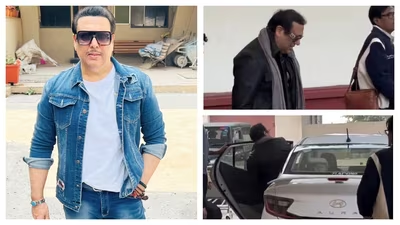
On January 30, 2026, a clip went viral. In it, Govinda — Chi-Chi, the man who once made entire cinema halls vibrate with the kind of energy you can’t manufacture or rehearse — steps out of an airport in Pratapgarh, Uttar Pradesh, and gets into a waiting car. A Hyundai Aura. A government-issued vehicle with “Bharat Sarkar” on the side.
Within hours, the post spreading the video had been shared hundreds of thousands of times with the caption: “Kabhi Mercedes, Audi, BMW se utarne waale Govinda ji aaj saadhaaran Aura taxi mein! Ye hai unka tagda downfall!” — He who once arrived in Mercedes, Audi, BMW, now travels in an ordinary taxi. This is his big downfall.
And just like that, the Govinda downfall narrative had its evidence. A car. A single car at a government event in a city where, as Govinda would later explain, luxury vehicles are not permitted inside certain restricted zones.
The internet had made up its mind before he landed.
What Govinda Actually Said — His Own Rebuttal
Three days ago, on Siddharth Kannan’s podcast, Govinda addressed the viral car moment and the “small events” criticism directly — and his response is worth quoting in full before we do anything else.
On the Pratapgarh school event being called small and beneath him: “Jisse tum chota keh rahe ho na, usme Chief Minister the, MP the” — The event you’re calling small had a Chief Minister and a Member of Parliament in attendance.
On the Hyundai Aura in Agra that separately went viral: He explained that the area in question only allows specific vehicles inside due to local regulations. “Agar koi Mercedes mein aaye, toh woh bahar hi khadi rehti hai” — If someone arrives in a Mercedes, it has to remain parked outside regardless.
On social media’s ability to manufacture narratives: “Digital space kisi ke control mein nahi hai. Log koi bhi headline bana sakte hain.” The digital space isn’t controlled by anyone. People can create any headline they want.
He’s right on all three counts. The Pratapgarh event was a government function with senior political figures. The restricted-zone vehicle rules are standard practice in many Indian cities. And the gap between what a viral clip shows and what actually happened is often enormous — which is exactly what happened here.
The Govinda downfall narrative was built on a car. The car was a government vehicle at an event that required it. The event had a Chief Minister present.
Who Govinda Actually Was — For Anyone Who Forgot
Before the Pratapgarh clip, before the gun accident, before the Sunita Ahuja affairs allegations, before any of the recent noise — there was the career. And the career was, by any serious measure, one of the most extraordinary runs in the history of Hindi popular cinema.
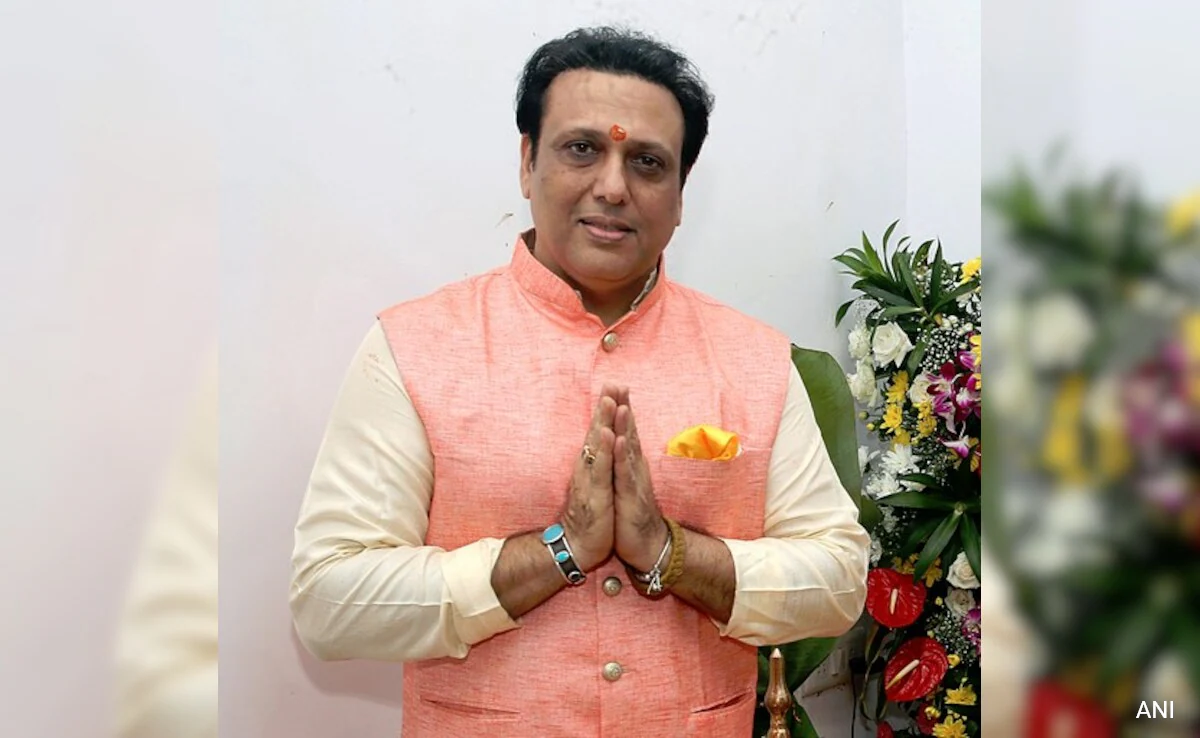
Born December 21, 1963, in Virar, Mumbai, to actor-singer Arun Kumar Ahuja and actress Nirmala Devi, Govinda (full name Govinda Ahuja) debuted in 1986 with Ilzaam. What followed across the next thirteen years is almost impossible to fully account for because the volume is so large.
He starred in over 165 Hindi films. He delivered hit after hit in genres that required a specific kind of performer — someone who could anchor a scene with physical comedy, carry a romantic number, execute a fight sequence, and make an audience of 800 people in a single-screen cinema in Meerut feel like the entire film had been made specifically for them. Coolie No. 1. Raja Babu. Aankhen. Hero No. 1. Dulhe Raja. Bade Miyan Chote Miyan. Partner. Bhagam Bhag. Deewana Mastana.
His dancing was something else entirely. Not technically trained in the classical sense, but with a natural rhythm and physical expressiveness that no choreography could fully contain. The songs he danced in became benchmarks — Ankhiyon Se Goli Maare, Main Toh Raste Se Ja Raha Tha, Sone Ki Nagri — tracks that still play at weddings and functions decades later because the energy in them refuses to age.
In the 1990s, Govinda was not merely one of the top-paid actors in Bollywood. He was the single biggest draw for certain kinds of audiences — the mass, single-screen, Tier-2 and Tier-3 city audiences who turned out in numbers that genuinely surprised distributors, film by film, across the entire decade.
How the Decline Actually Happened — The Real Story
The Govinda downfall isn’t a recent phenomenon triggered by a viral clip. It happened over a long period, through a specific sequence of events, and several people who were closest to the story have spoken about it publicly.
The Biwi No. 1 rejection (1999) is consistently identified as the pivot point. The film was originally written for Govinda. He declined it, reportedly because he did not want to work with Sushmita Sen. The role went to Salman Khan. Biwi No. 1 made ₹41.6 crore on a ₹12 crore budget and revitalised Salman’s career at a moment when both actors were competing for the same audience. After 1999, Govinda gave only two genuine hits and a string of failures. The commercial momentum that had seemed unstoppable simply stopped.
The David Dhawan fallout was the second major blow. Govinda and Dhawan had made seventeen films together — Raja Babu, Hero No. 1, Coolie No. 1, Deewana Mastana, Akhiyon Se Goli Maare and more — and their collaboration had been one of the most commercially reliable partnerships in Bollywood of the 1990s. When Dhawan began working with Salman Khan and then Varun Dhawan, and when the two men’s relationship soured after Do Not Disturb in 2009, Govinda lost not just a director but the creative context in which his particular gifts had been most effectively deployed.
The politics chapter — Govinda entered politics in 2004, winning the Mumbai North constituency as a Congress MP. He served one term, did not seek re-election in 2009, and returned to films. The five-year gap removed him from mainstream cinema at a moment when the industry was changing rapidly. Actors who took a single year off found re-entry difficult; a five-year gap in a shifting market was far more damaging.
Producer Pahlaj Nihalani, who made Aankhen and Ilzaam with Govinda and knew him at close range across decades, described what happened in a June 2025 interview with Vicky Lalwani: “Govinda was an all-rounder individual. He managed his career well, but due to his vulnerability, he easily puts his trust in others, and the environment around him is not positive, which leads him to stray.” He described people actively working to damage Govinda’s relationships with key collaborators, and said that Govinda’s trusting nature made him susceptible to manipulation in ways that more guarded stars were not.
The gun accident of October 2024 landed him in hospital after his licensed revolver discharged accidentally at his Mumbai home and the bullet grazed his foot. He recovered fully, but the incident generated the kind of coverage — bizarre, tinged with dark humour, impossible to control — that no publicist could manage into anything useful.
The Sunita Ahuja Dimension — Personal Life Under Public Scrutiny
Any honest account of why Govinda’s public standing has become complicated in recent years has to include the Sunita Ahuja chapter, because she has been unusually candid in interviews about their marriage in ways that have generated sustained negative headlines for him.
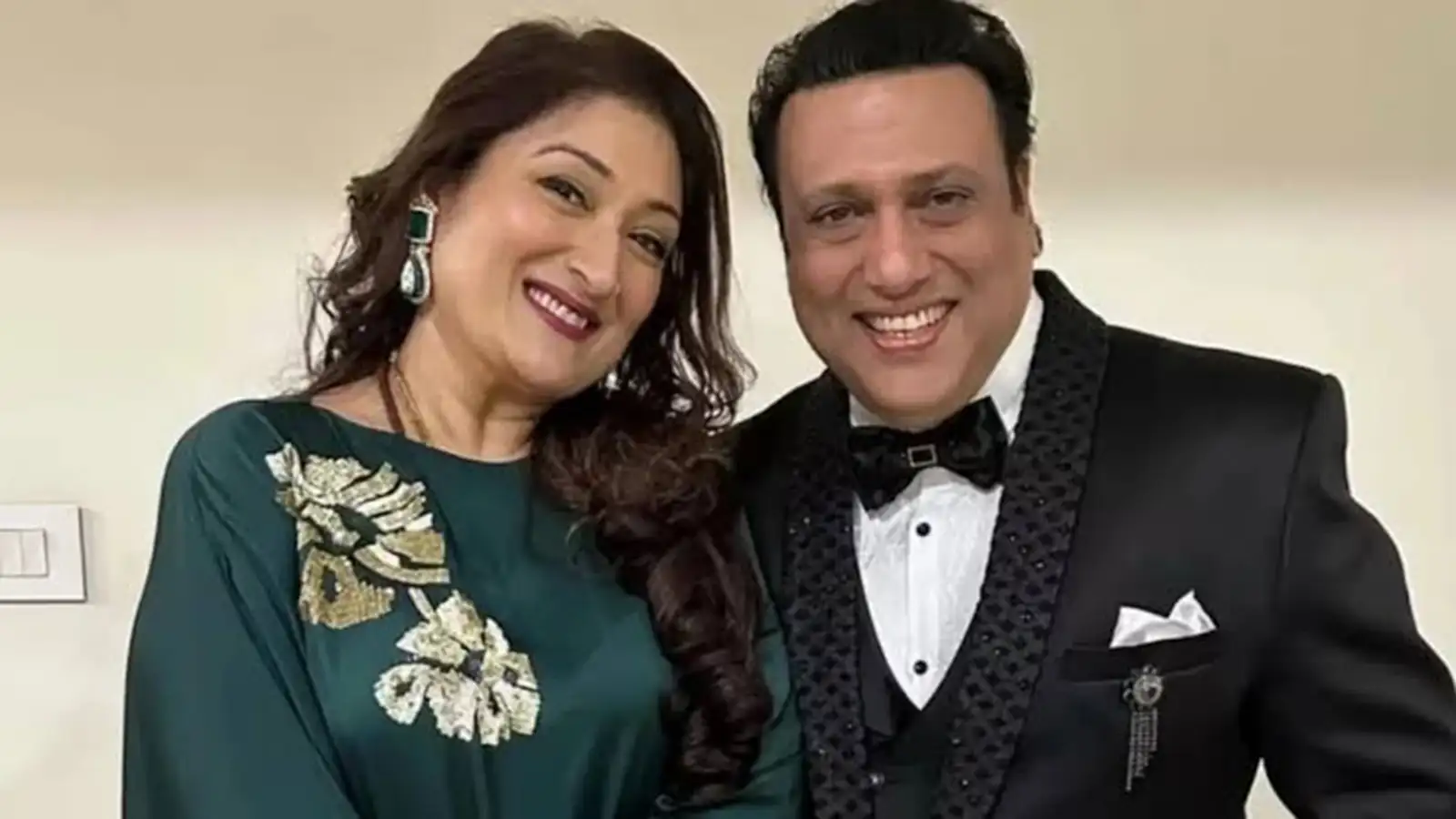
Sunita — who married Govinda secretly in 1987 and stayed through the height of his fame — has given several interviews across 2023–2025 in which she has described affairs she believes Govinda had during their marriage. She has not divorced him. She has not remained silent. The result is a public portrait of a marriage that has survived decades but carries visible damage — and a wife whose willingness to discuss that damage in public has kept the story alive.
In his own interviews, Govinda has consistently said that every marriage goes through difficult phases, that mutual faith helps couples through them, and that his family has always been his biggest support system. He has not confirmed the specific allegations. He has not been publicly contrite in ways that would settle the discourse. The conversation continues.
In the Siddharth Kannan podcast where he addressed the downfall clips, he also talked about his feelings for Neelam Kothari — the “doll-like” interview covered separately on this site — and about moments of betrayal from within the industry. He spoke about learning to deal with criticism by keeping faith in God. He mentioned planning to return to films as an actor, and possibly as a producer or director. He seemed, by all accounts of people who watched the full interview, like someone in reasonable spirits who had made his peace with a career that had given him enormous things and then taken some of them away.
The Avatar Story — A Portrait in Miniature
In March 2025, Govinda appeared on Mukesh Khanna’s YouTube channel and told a story that became the internet’s favourite Govinda anecdote of the year.
James Cameron, he said, had offered him a role in Avatar: Fire and Ash for ₹21.5 crore (he later revised this figure to ₹18 crore in a separate telling). He had declined. The shoot would have been 410 days. The role required his entire body to be painted blue. “Agar main apna body paint karwaunga, toh main hospital mein hoga!” — If I paint my body, I’ll be in the hospital.
Sunita Ahuja, when asked about the offer by Uorfi Javed, said she had no idea when this happened or whether it actually happened at all. India TV ran a full fact-check that concluded Govinda is not in Avatar: Fire and Ash; the blue-painted images circulating on social media were AI-generated by fans who had taken the story and run with it.
The Avatar story is the Govinda downfall narrative in miniature: an outlandish claim, genuine uncertainty about whether it’s real, a wife expressing open scepticism, internet creativity filling the gap with fabricated imagery, and a wave of coverage in which nobody quite knows what to believe. Govinda, as he has always done, told the story with total conviction and absolute commitment to every detail. Whether it happened or not, he told it like it happened, and the internet decided what it wanted to decide.
The Actual State of His Career in 2026
Govinda’s last theatrical film was Rangeela Raja in 2019, which failed. He has not appeared in a theatrical release since. He has done stage shows and event appearances — the things the viral clips are documenting — and he has spoken in interviews about his desire to return to films, potentially as a producer or director as well as an actor.
The recent IWM Buzz interview, published five days ago, quoted him reflecting on “moments of betrayal, misunderstandings, and professional setbacks that slowly pushed him away from the top position.” He spoke about his bond with the late Kader Khan, whose writing and guidance he described as foundational to his comic timing. He spoke with warmth about David Dhawan’s films even as he acknowledged the distance that grew between them. He mentioned Salman Khan, Amitabh Bachchan, and Akshay Kumar respectfully.
He is 62 years old. He has been in the film industry for forty years. He has made more people laugh in single-screen cinemas across this country than almost any other entertainer in the history of Hindi popular cinema. He is currently performing at government functions in Uttar Pradesh. A government vehicle was sent to the airport for him because the area required it.
This is a man navigating the particular difficulty of having been extraordinary and then becoming ordinary, in public, with an internet that mistakes a Hyundai Aura for evidence of ruin. It is not a dignified situation. It is also not the catastrophe the viral narrative made it.
What He Said That the Internet Ignored
When Govinda said on Siddharth Kannan’s podcast “Jisse tum chota keh rahe ho na, usme Chief Minister the, MP the” — he wasn’t being defensive in the way a person with something to hide is defensive. He was correcting a factual error. The event wasn’t small. It had senior political figures in attendance. The car wasn’t a humiliation. It was the right vehicle for the location.
The internet’s instinct — to read a Hyundai Aura as a statement about a man’s worth — is precisely the kind of cruelty Govinda described when he talked about social media creating headlines without context. The car was never the story. The story was that a man who gave India forty years of joy is now being mocked for accepting government transport at a government function, by people who have spent their lives watching his films on screens he helped fill.
That’s worth sitting with.
Govinda’s Career at a Glance
| Era | What He Gave Us |
| 1986–1990 | Debut years; Ilzaam, Love 86, Sindoor, Swarg — built his mass audience base |
| 1991–1998 | Peak superstardom; Aankhen, Coolie No. 1, Raja Babu, Hero No. 1, Dulhe Raja, Bade Miyan Chote Miyan, Deewana Mastana |
| 1999 | Biwi No. 1 rejection — identified pivot point; career momentum begins to shift |
| 2000–2003 | Continued releases, declining hits; Hadh Kar Di Aapne, Ek Aur Ek Gyarah |
| 2004–2008 | Enters politics; wins Mumbai North as Congress MP |
| 2007 | Partner — one of his last major blockbusters, with Salman Khan |
| 2009 | Do Not Disturb — last film with David Dhawan; relationship cools |
| 2011–2018 | Sporadic releases, none major; attempts at comeback |
| 2019 | Rangeela Raja — last theatrical release; flops |
| 2024 | Gun accident at Mumbai home; recovers fully |
| 2025 | Avatar-offer story goes viral; Neelam Kothari interview; stage show appearances |
| Jan 2026 | Pratapgarh viral clip sparks “downfall” discourse |
| March 2026 | Siddharth Kannan podcast — addresses viral clips directly; “Jisse tum chota keh rahe ho…” |
Related Articles
- Neelam Kothari and Govinda: The Full Story They Both Finally Told
- Celebrity Deaths in 2026: Remembering Everyone We’ve Lost So Far
- Celebrity Perfect Image: Why Fans Have Stopped Believing It
- Did Salman Khan Really End Vivek Oberoi’s Career?
Follow our Bollywood coverage on Instagram and Pinterest.

Popcorn in hand and a opinion ready — Emily covers movie reviews, box office buzz, and all things cinema at Popcorn Review.

