
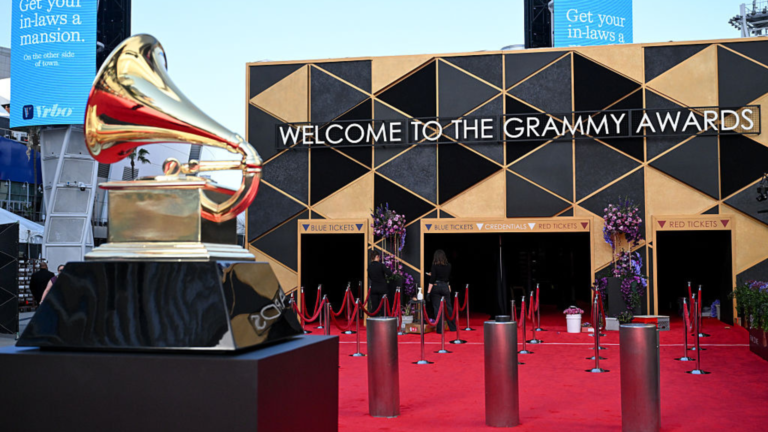
The 2026 Grammy Awards were one of those rare nights where you genuinely didn’t know what was coming next. No dominant sweep. No predictable winner walking away with five trophies. No Taylor Swift or Beyoncé narrative dominating the room. Just an unusually wide-open ceremony that ended up being more honest, more global, and more politically charged than most Grammy nights in recent memory.
The 68th Annual Grammy Awards took place on February 1, 2026, at the Crypto.com Arena in Los Angeles. Trevor Noah hosted for the sixth and final time — CBS broadcast the show for the last time before the ceremony moves to Disney platforms in 2027. Around 17 million viewers watched live, but the real audience was on social media, where clips from the night racked up hundreds of millions of views within 48 hours.
Here’s everything that happened — the wins, the performances, the fashion, the controversies, and the moments that are still being talked about.
The Winners: Historic Firsts Across Every Major Category
This was the night’s real story. The 2026 Grammy Awards winners list didn’t look like any previous year’s list — and that’s genuinely significant, not just as a talking point.
The Complete Major Category Winners
| Category | Winner | Artist | Why It Matters |
| Album of the Year | DeBÍ TiRAR MáS FOToS | Bad Bunny | First fully Spanish-language album to ever win AOTY |
| Record of the Year | luther | Kendrick Lamar feat. SZA | Kendrick’s second consecutive major Grammy win |
| Song of the Year | Wildflower | Billie Eilish | Her third Song of the Year win |
| Best New Artist | — | Olivia Dean | British soul singer breaks through globally |
| Best Rap Album | Chromakopia | Tyler, the Creator | Widely considered his most ambitious work |
| Best Pop Vocal Album | — | Sabrina Carpenter | Confirms her commercial-to-critical crossover |
| Best Latin Pop Album | — | Bad Bunny | Added to his AOTY win — three total on the night |
| Best Song Written for Visual Media | — | K-pop artist | First-ever K-pop win in Grammy history |
Bad Bunny winning Album of the Year is the headline that will be written about in music history books. A fully Spanish-language album winning the Recording Academy’s highest honour was something many people assumed would never happen in their lifetime. When his name was announced, the arena reaction was unlike anything in the night’s first three hours — genuinely stunned, then genuinely ecstatic.
His acceptance speech was short and direct. He thanked his family, Puerto Rico, and then said something to the effect of “we are much bigger than borders” — a line that landed like a full stop on a decade of debate about whether non-English music would ever get its due at the Grammys.
Kendrick Lamar winning Record of the Year for luther (featuring SZA) also cemented something important: he is now officially the most-awarded rapper in Grammy history. The win came off the back of an extraordinary 18 months where he arguably won the internet’s biggest cultural battle in years, then dropped one of the year’s most acclaimed albums. Seeing that work recognised at this level felt earned in a way that Grammy wins don’t always feel.
The first-ever K-pop Grammy win — in the Best Song Written for Visual Media category — was a quieter historic moment but a significant one. K-pop’s global penetration has been building for a decade, and this felt like the Recording Academy finally acknowledging what fans worldwide already knew.
The Red Carpet: Fashion, Politics, and Everything In Between
The 2026 Grammy Awards red carpet was exactly what you’d expect from a night that had no interest in playing it safe.
Where the Oscars red carpet leans toward classic elegance, the Grammys have always been the ceremony where artists actually wear what they want. In 2026, that translated into one of the most genuinely diverse and politically loaded carpets in recent memory.
Chappell Roan arrived in a nearly topless Mugler creation that immediately split the internet — half the reactions were about how stunning it was, the other half were outrage. The debate raged for about 72 hours and then somehow became a conversation about bodily autonomy, music industry double standards, and the history of female artists at award shows. All from one outfit.
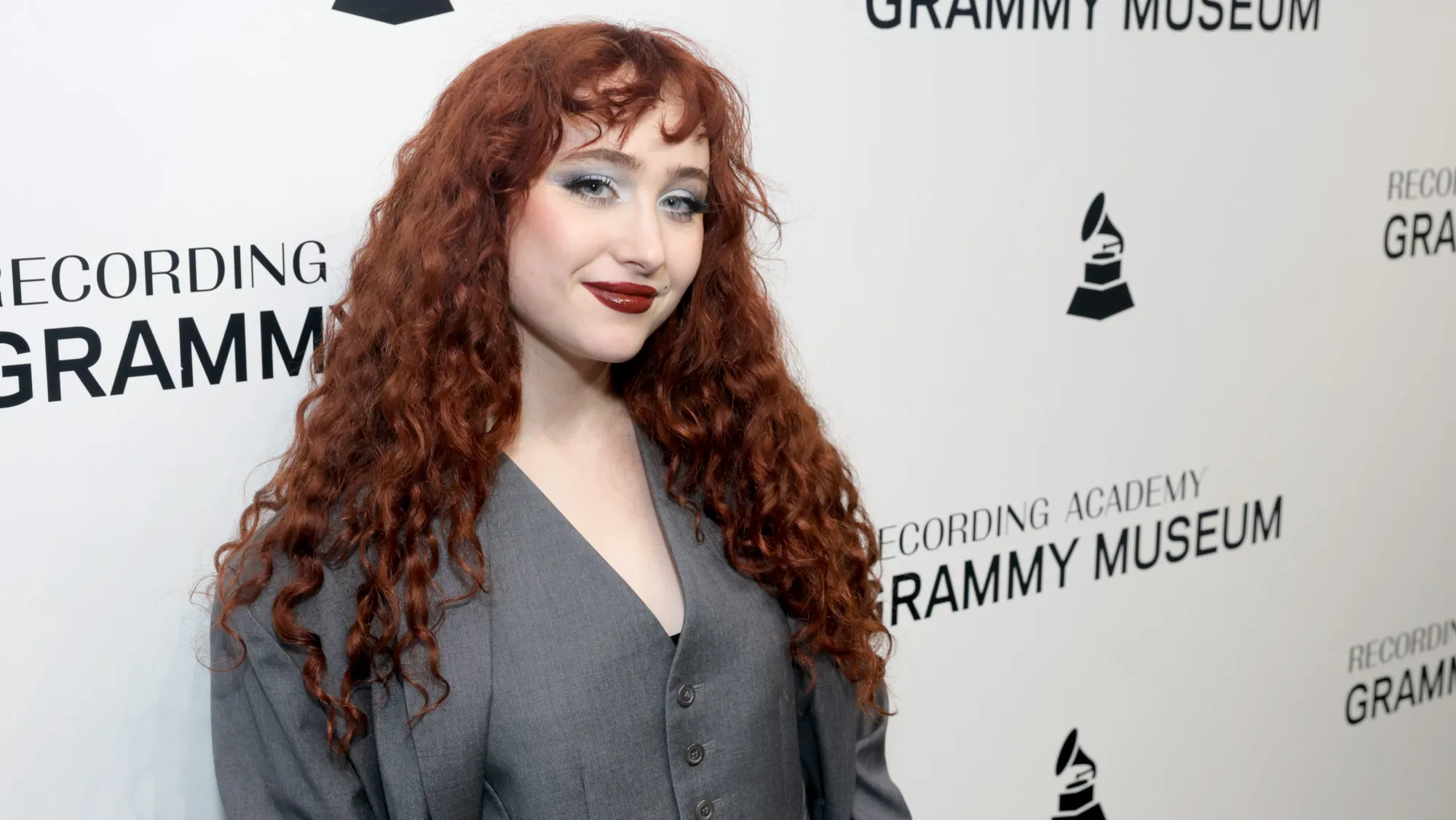
Bad Bunny wore a corseted Schiaparelli tuxedo that blurred gender lines in a way that felt natural rather than calculated. For an artist whose entire aesthetic has always been playfully fluid, it was entirely consistent. The fashion press went appropriately wild.
Sabrina Carpenter went in the opposite direction — a crystal-embellished Valentino gown that was ethereal and deliberately romantic, perfectly matching the aesthetic she’d been building all year. It was the kind of red carpet look that actually made sense for who she is as an artist, which is rarer than it sounds.
Lady Gaga balanced gothic drama with high couture in a way that reminded everyone why she remains one of the most interesting figures in pop culture. Not shocking for shock’s sake — genuinely considered.
Justin Bieber and Hailey Bieber both wore “ICE Out” protest pins, which set a clear tone for what kind of political undercurrent the night would carry. They weren’t the only ones — multiple artists wore political symbols on the carpet, and the statements escalated once the ceremony began.
Follow our Instagram for all the best red carpet moments, performance clips, and backstage highlights we’ve been curating since the night aired.
The Performances: What Worked, What Didn’t, and What Was Genuinely Unforgettable
The Highs
Rosé and Bruno Mars opened the show with a punk-rock version of APT. that nobody anticipated. Punk-rock Bruno Mars is a sentence that shouldn’t work and absolutely did. The energy in the arena in the first five minutes set a chaotic, anything-goes tone that the rest of the night tried to live up to.
Lady Gaga’s performance of Abracadabra was the consensus best of the night by some distance. Theatrical, technically flawless, emotionally present — she reminded everyone watching why she’s been one of the most compelling live performers of her generation for nearly two decades. If you only watch one clip from the 2026 Grammys, make it this one.
Tyler, the Creator brought raw intensity with tracks from Chromakopia in a performance that felt less like a typical award show slot and more like a condensed version of one of his actual concerts. He didn’t tone it down for the broadcast. The audience loved it.
Justin Bieber, performing in boxers with just a guitar, delivered what several critics called the most unexpected moment of the night. Stripped of production, visuals, and any kind of showbiz protection, it was genuinely intimate in a way that award show performances rarely are. Whether you find him compelling or not, it was a real moment.
The Mixed Reactions
Not everything landed. A handful of newer artists given prominent slots struggled to match the energy of the performers around them — which is partly a problem of sequencing and partly just the reality that not every artist translates well to live television.
The In Memoriam segment was emotional but generated significant backlash for notable omissions. This happens almost every year, but the specific omissions in 2026 felt pointed enough to generate genuine anger rather than just background grumbling.
A live-animal stage prop during one performance drew a formal complaint from animal rights organisations the following day and became its own news cycle for about a week.
The Controversies: Politics, Censorship, and Culture Wars
The 2026 Grammy Awards were never going to be politics-free given the climate, and they weren’t.
Anti-ICE statements during acceptance speeches were the most consistent political thread of the evening. Multiple artists made direct references to immigration enforcement, deportation policies, and community safety. The reaction was exactly what you’d expect — praise from some quarters, fury from others, and an extended media cycle that lasted longer than the broadcast itself.
Several expletives went out uncensored on the CBS broadcast and became viral clips within minutes. Whether this was technical error or deliberate is still debated.
Chappell Roan’s fashion choice became its own multi-day controversy that extended into broader conversations about how female artists are discussed in media — a conversation that, honestly, needed to happen regardless of the specific trigger.
The Recording Academy’s decision to cut several award categories from the live broadcast also generated real anger from artists and fans in jazz, classical, and regional music genres. This is an ongoing tension at the Grammys — the broadcast is a television show first and an awards ceremony second, and the categories that get cut tend to be the ones that matter most to working musicians and least to casual viewers.
For more Grammy controversy breakdowns and behind-the-scenes moments, we’ve been posting consistently on our Pinterest page — worth a browse if you want a full visual walkthrough of the night.
Behind the Scenes: The Stories That Didn’t Make the Broadcast
Some of the best Grammy content is always what happens off-camera.
Justin Bieber’s reported seven-minute rehearsal time became a talking point about whether his stripped-down performance was genuinely spontaneous or very carefully prepared spontaneity. Probably the latter, honestly — but it doesn’t make the performance less effective.
A teleprompter error during a major announcement caused a flub that was described by one producer as “beautiful anarchy.” The clip of the presenter’s face in that moment is one of the funnier things to come out of the evening.
Celebrity PDA, barefoot singers wandering backstage, and spontaneous selfie sessions all added to the sense that the 2026 Grammys had a looser, less controlled energy than recent years. Whether that’s good or bad depends on what you want from an awards ceremony — but it made for much better content.
Why Bad Bunny’s Win Actually Matters Beyond Music
It would be easy to treat Bad Bunny’s Album of the Year win as just a Grammy milestone. It’s more than that.
For the last decade, Spanish-language music has been the fastest-growing segment of the global music market. Reggaeton and Latin trap have influenced mainstream pop, hip-hop, and R&B production in ways now deeply embedded in how popular music sounds worldwide. Artists like J Balvin, Ozuna, and Bad Bunny himself built audiences of hundreds of millions without needing English-language crossover hits.
But the Recording Academy has historically been slow to reflect this. The general field categories almost exclusively went to English-language music. The Latin categories existed as a separate track that felt, to many in the industry, like a polite acknowledgement without real recognition.
DeBÍ TiRAR MáS FOToS winning AOTY breaks that ceiling. It’s a deeply Puerto Rican album — the title is Puerto Rican Spanish slang, the themes are rooted in Puerto Rican identity and history, and Bad Bunny made it explicitly as a love letter to the island. It wasn’t made to cross over. It crossed over anyway, because the music was simply that good.
That’s the version of the Grammy story worth holding onto.
What the 2026 Grammys Tell Us About Where Music Is Going
A few things became clear on February 1, 2026, that will shape how the music industry thinks about the next few years.
Non-English music is not a niche anymore. This has been true commercially for years, but the Grammys catching up matters symbolically for artists, labels, and streaming platforms deciding where to invest.
The live performance still matters. In an era where music consumption is almost entirely streaming and social clips, the Grammy performances generated the kind of shared conversation that individual streams can’t replicate. People watched together and reacted together — which is increasingly rare and increasingly valuable.
Political statements at award shows are not going away. Every year there are predictions that artists will tone it down and focus on the music. Every year this proves wrong. The artists with the most to say politically tend to have the biggest platforms, and they’re going to use them.
And Trevor Noah is genuinely going to be missed. Six years is a long run, and he leaves with a track record of handling difficult moments — political tension, COVID ceremony complications, cultural flashpoints spilling over from other ceremonies — with more grace and wit than most hosts manage in a single year.
Full 2026 Grammy Awards Winners List — All Major Categories
| Category | Winner | Artist |
| Album of the Year | DeBÍ TiRAR MáS FOToS | Bad Bunny |
| Record of the Year | luther | Kendrick Lamar feat. SZA |
| Song of the Year | Wildflower | Billie Eilish |
| Best New Artist | — | Olivia Dean |
| Best Pop Solo Performance | — | Sabrina Carpenter |
| Best Pop Vocal Album | — | Sabrina Carpenter |
| Best Rap Album | Chromakopia | Tyler, the Creator |
| Best Rap Song | tv off | Kendrick Lamar |
| Best Melodic Rap Performance | luther | Kendrick Lamar feat. SZA |
| Best Latin Pop Album | DeBÍ TiRAR MáS FOToS | Bad Bunny |
| Best Song Written for Visual Media | First K-pop Grammy win | — |
| Best Rock Performance | — | Chappell Roan |
Related Articles You’ll Enjoy
- Bollywood Actors in South Indian Films: The Surprising Reason Hindi Stars Are Going South in 2026
- Top South Indian Blockbusters That Conquered Pan-India Box Office
- Pan-India Films 2026: The Movies That Could Dominate the Box Office
- February 2026 Streaming Releases: Who Won, Who Disappointed
Final Thoughts
The 2026 Grammy Awards were historic in the truest sense — not as a marketing claim, but because several things happened that night that had genuinely never happened before. Bad Bunny winning Album of the Year. Kendrick Lamar becoming the most-awarded rapper in Grammy history. The first K-pop win in a general category.
But beyond the records, what made this night stick was the feeling that the ceremony finally reflected what music actually looks like in 2026 — global, politically engaged, emotionally raw, and impossible to contain within neat categories.
Whether the Recording Academy sustains this or retreats back toward safer choices in future years is the real question. Based on this night, there’s at least reason to hope they won’t.
Keep up with all major award show coverage, winner breakdowns, and red carpet moments on our Instagram and Pinterest.

Popcorn in hand and a opinion ready — Emily covers movie reviews, box office buzz, and all things cinema at Popcorn Review.

