
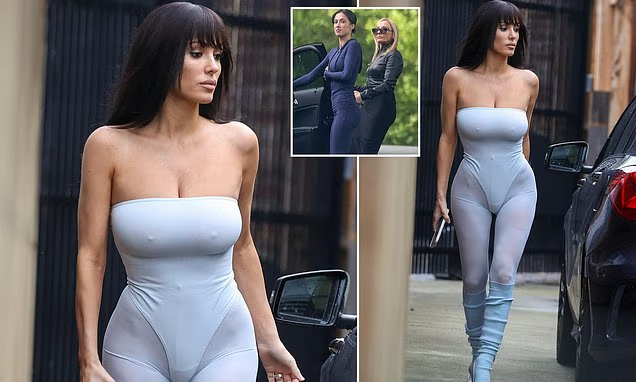
Bianca Censori controversy has been building for three years — through near-nude public appearances, a Venice boat police investigation, Yeezy employee lawsuits, a whispered marriage crisis, and three years of complete public silence that the internet interpreted as everything from submission to strategy.
On February 6, 2026, she finally broke that silence. The resulting Vanity Fair interview is the most significant celebrity disclosure of the year so far — not because of what the interview confirmed about the fashion, but because of what it revealed about everything else: a benzodiazepine addiction she treated at a rehab facility in Spain, a personal art project seven years in the making that she says is the actual point of all the nudity, a careful refusal to fully distance herself from her husband’s antisemitic statements, and a dry, self-aware observation about her own position in culture that no one had anticipated.
The original article about the Bianca Censori controversy on this site — published February 7, 2026 — was written before the Vanity Fair interview was fully analysed, and before a wave of legal proceedings brought both her and Ye into courtrooms and depositions through February and March 2026. It described the controversy in conceptual terms: artistic freedom, gender double standards, social media obsession. All of that is real. But none of it substitutes for the actual facts — the verified, documented timeline of events that explain why this particular Bianca Censori controversy cycle feels categorically different from previous ones.
This is the complete, fully updated account. Every section is built on named sources, documented events, and direct quotes — not speculation.
Who Bianca Censori Actually Is — The Background the Headlines Always Skip
Before every controversy requires the person at its centre to be understood as a human being rather than a cultural symbol. With the Bianca Censori controversy, that context is almost always missing from coverage, which treats her primarily as a visual object — the outfits, the photos, the husband — without the biographical architecture underneath.
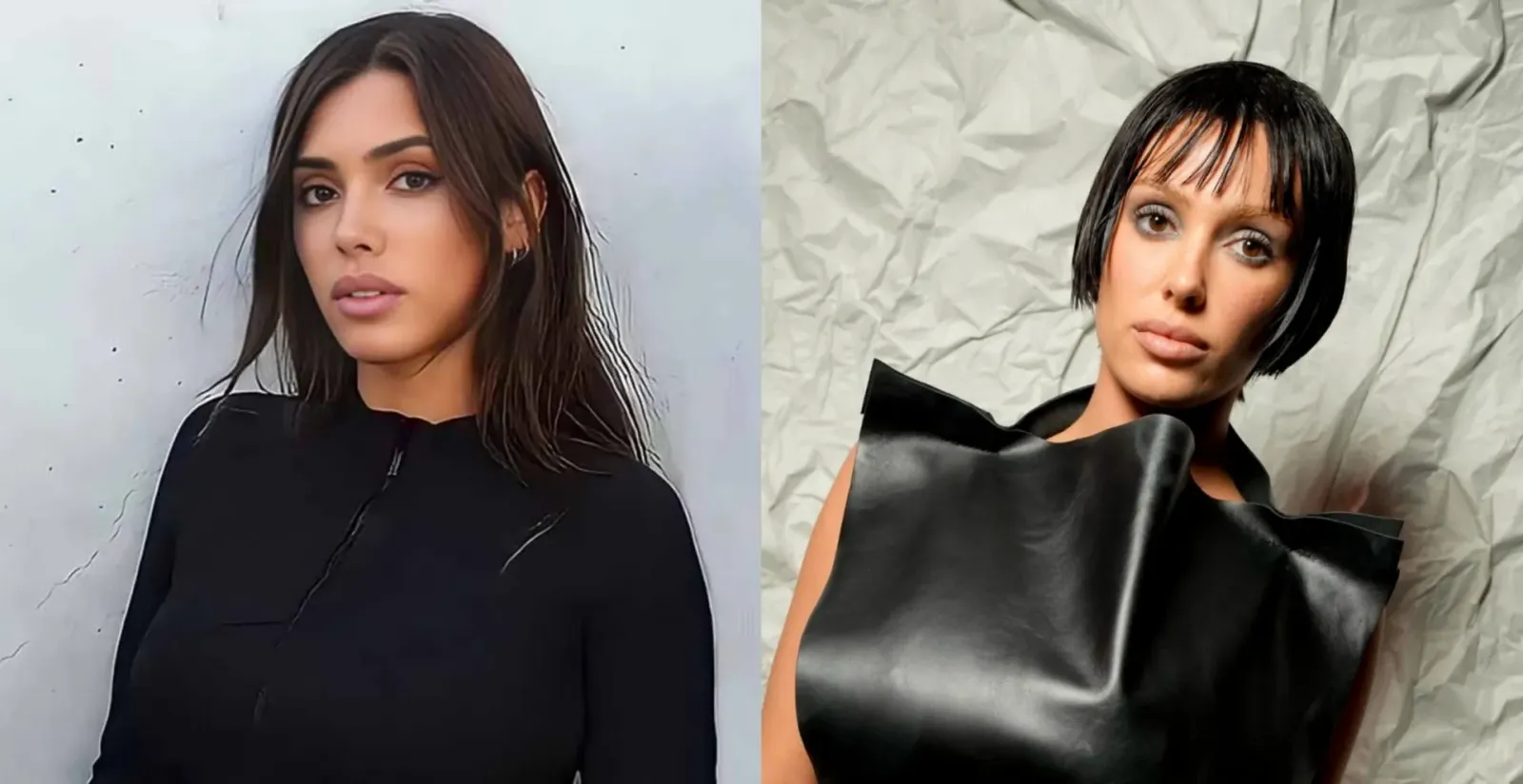
Born: January 5, 1995, in Melbourne, Australia. The second of four children in a family that, by her own description, was warm, close, and Catholic — which makes her comfort with public nudity more layered than a simple rebellion narrative.
Education: She studied architecture at the University of Melbourne, graduating with both a Bachelor of Environments and a Master of Architecture. Her academic focus included sustainable housing — a subject she studied in Manila that she told Vanity Fair left her “cold on the topic,” not because she stopped caring about sustainability but because the internship experience disappointed her with its gap between ideals and practice.
Early career: She spent four years at a conventional architecture firm in Melbourne — work she described in the Vanity Fair interview as boring but professionally formative. She was building a professional portfolio on the side, including digital and conceptual design work, which she documented on Instagram.
How she got to Yeezy: Ye discovered her Instagram portfolio in 2020, specifically an image she had posted of “a digital mask with alien proportions.” He was running Yeezy’s architecture and design division at the time and had been building a team with unconventional profiles. He contacted her, she shipped her portfolio, and she was hired as head of architecture at Yeezy. She moved from Melbourne to Los Angeles.
How she met Ye: Their workplace romance developed over 2020–2022 — a period in which Ye’s marriage to Kim Kardashian was deteriorating publicly and ultimately ending. The Vanity Fair article confirmed a detail that generated significant reaction: Censori and Ye had begun communicating while he was still married to Kardashian, before the divorce was finalised in November 2022.
The marriage: They married in a private ceremony in December 2022 — one month after Ye’s divorce from Kardashian was finalised. The marriage was conducted under a confidential marriage licence and has not been legally fully confirmed in public documents, though Ye refers to her as his wife and media publications follow that designation.
This is who Bianca Censori was before the Bianca Censori controversy began. A 27-year-old trained architect from Melbourne who shipped a portfolio to a famous person and got a job offer, a workplace relationship, and a marriage — and then found herself the most Googled woman on the internet.
Part 1: The 2025 Grammys and How the “Most Googled Woman” Moment Happened
The immediate trigger for the most recent cycle of the Bianca Censori controversy — the one that led directly to the Vanity Fair interview — was the 67th Grammy Awards in February 2025.
Censori arrived in a large black fur coat that concealed her entire outfit. She walked the red carpet in it. She took her seat. Then she removed it, revealing a sheer illusion-net minidress that left effectively nothing to the imagination — the dress was transparent enough that she appeared to be wearing nothing underneath at all, with sheer mesh structured only at the neckline and hem.
The social media reaction was immediate and overwhelming. Within hours she was the most-searched person on multiple platforms. Ye posted on X the following morning that she had become “the most Googled person on the planet called Earth” — a line that was characteristically Ye in its grandiosity but was not entirely inaccurate. She had already been named the most Googled woman globally for 2024 before this moment; the Grammys appearance confirmed the status with an exclamation point.
Ye himself described the dress as the first official women’s piece from his Yzy label — custom couture. He called it a deliberate design choice that he and Censori had developed together. The Recording Academy, when asked about their dress code, noted that their policy was described as “artistic black-tie” — language broad enough to cover the look without formal penalty.
The backlash was multi-directional: from people who thought the dress was inappropriate for the venue, from people who believed Ye had coerced the choice, from people who argued the spectacle was a calculated PR move for Yeezy, and from a significant number of commenters who found the combination of Censori’s public silence and this level of visibility deeply unsettling.
It was this backlash — the persistence of the “she’s being controlled” narrative specifically — that Vanity Fair ultimately used as the hook for the interview they had been negotiating with Censori for months.
Part 2: The Vanity Fair Interview — Every Major Revelation, Verified and Organised
The Vanity Fair interview, published February 6, 2026, was Censori’s first public statement of any substance since she became famous. Here is every major revelation from it, organised by subject.
On the nudity and who controls it
Censori addressed the control question directly and with language that was considerably more specific than the vague “I make my own choices” framing most expected.
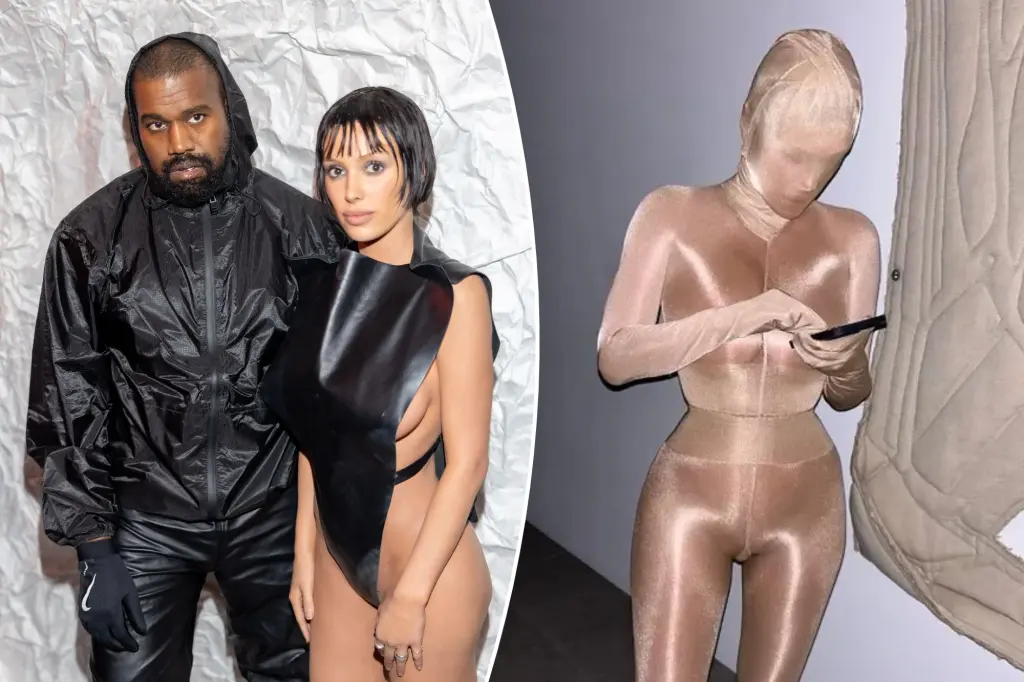
“I wouldn’t be doing something I didn’t want to do,” she said. “Me and my husband would work on my outfits together. It was like a collaboration, it was never, ‘I was being told to do something.’”
She drew an analogy: “If you were married to Gianni Versace, wouldn’t he give you a dress or something?” — a line designed to reframe the relationship as co-designer rather than captive muse.
She described her public nudity as a multi-year personal art project — not a fashion phase and not a Yeezy marketing exercise. “I was naked everywhere,” she said. “I consistently showed the same imagery over and over and over again. I live my artwork.” She described her exposure at the 2025 Grammys as feeling like “the process was complete” — the climax of a deliberate arc rather than an impulsive decision.
She also made the sharpest observation in the entire interview about her own position in culture: “I’m trying not to sound like I’m bragging, but it is not a position that anybody in time has ever had that much visibility without speech. If it was just nudity, a lot of people would have that. But it also proves in a time that was so overexposed and vulnerable, that mystery still has power.”
The observation is, by any measure, accurate. A woman who has appeared naked in public repeatedly across multiple years and hundreds of documented appearances, without saying a single word in public about any of it, became the most Googled person on earth. The silence was the strategy, and the Vanity Fair interview was the moment she chose to break it on her own terms rather than anyone else’s.
On her silence — and why she chose it
When asked about the years of public silence — which many interpreted as Ye preventing her from speaking — her response was direct: “Demanding that I speak out is, in itself, a form of control.”
The line cuts against both the “she was silenced by Ye” narrative and the “she should explain herself to us” demand simultaneously. Her silence was positioned not as submission but as refusal to be compelled in either direction.
On the BIO POP art project
The most underreported element of the Bianca Censori controversy is that the nudity has always been part of a documented, structured art project — not an improvised performance. Censori debuted the first chapter of this project, titled BIO POP, at an exhibition in Seoul, South Korea in December 2025. The show featured Censori wearing a maroon latex bodysuit, carrying a cake into a living room filled with furniture made from contortionists — women wearing nude body suits who appeared to be her body doubles, woven into and around the furniture. The contortionists wore masks and were positioned so that the furniture physically constrained and incorporated their bodies.
Censori’s website describes BIO POP as “a self-portrait in constraint” — with the furniture described as “an apparatus that moulds the body, turning comfort into confinement and domesticity into architecture.” The doubles function as “extensions of the design, collapsing the distinction between object, body, and idol.”
The project is planned as seven installments running through 2032. The second and third chapters — titled “CONFESSIONAL (THE WITNESS)” and “BIANCA IS MY DOLL BABY (THE IDOL)” — are scheduled for 2026. When this art context is applied to her years of public appearances in sheer and nude-adjacent clothing, the “performance” framing becomes considerably more coherent. What has looked to most observers like the behaviour of someone dressing for a husband’s approval is, in Censori’s account, the live component of a seven-year conceptual project about the body, constraint, identity, and visibility.
On rehab and the benzodiazepine addiction
The single most significant personal revelation in the interview was one that almost no one anticipated: Censori disclosed that she had sought treatment at a rehabilitation facility in Spain for an addiction to benzodiazepines — prescription anti-anxiety medications — and for broader emotional dysregulation.
She described the patterns that led her there: “I put a lot of pressure on other people being the reason for my happiness or the reason for my unhappiness. I would blame someone else if I wasn’t feeling good.” She described entering treatment emotionally dysregulated and leaving with a renewed capacity to self-regulate. She had been self-medicating with benzodiazepines before seeking help.
Ye covered the cost of her treatment — a fact she mentioned not as evidence of his control but as evidence of his support. She was explicit that the gesture went beyond financial assistance.
Separately, Ye confirmed in his own Vanity Fair interview (published around the same time, in which he apologised for his antisemitic statements) that Censori had helped him through “a deep depressive episode” — a four-month manic period in the first half of 2025 — and had encouraged him to seek treatment at a rehabilitation facility in Switzerland. The two apparently sought treatment within a similar timeframe, separately. His WSJ apology advertisement, published January 26, 2026, described this period as “hitting rock bottom.”
On Ye’s antisemitism
The most politically sensitive section of the interview involved Censori’s response to Ye’s documented antisemitic statements and public behaviour — statements she had never previously addressed.
She confirmed she does not identify as antisemitic and explicitly distanced herself from his views. But her response to the specific question of why she stood by him through the controversy was more complicated than a simple condemnation: “You have to think of other obsessions he’s had,” she said. “Because this would have been one that was perceived as damaging — obviously, it was damaging. But hasn’t he also had extreme obsessions before?”
The response frames antisemitism as one item in a pattern of Ye’s intense fixations rather than as a unique moral failing — a position that many found insufficient, particularly as Ye’s apologies in both the WSJ and Vanity Fair attributed his behaviour primarily to bipolar disorder and an undiagnosed neurological injury from a 2002 car accident rather than to ideological conviction.
She also noted she had not previously issued any public statement about his antisemitism: “I wasn’t thinking about the PR cleanup.”
On the Yeezy employee lawsuits
The interview also touched on the multiple lawsuits filed by former Yeezy employees — including a lawsuit in which Censori herself was mentioned, alleging she had shared a link to explicit content that was accessible to minor employees during the development of Ye’s adult content streaming project.
Censori denied the allegation categorically in the interview. Her representatives described the claim as “offensive, disgusting, abhorrent, and categorically and wholly false.” She was not named as a defendant in the lawsuit itself — the allegation appeared in the filing as context for describing Yeezy’s workplace culture.
In the interview, she addressed the broader pattern of employee lawsuits with language that critics found revealing: “Can you censor an artist for showing something he needs to share to do his job?” She suggested that some former employee complaints were connected to the end of their employment rather than to genuine harm: “There’s always emotional charge. There’s obviously times where somebody’s hurt by not working anymore.”
Part 3: The Venice Investigation — What Actually Happened in 2023
One of the most searched-for elements of the Bianca Censori controversy is the Venice boat incident from August 2023 — and most coverage of it is incomplete or inaccurate on the legal details.
Here is what actually happened, in verified sequence:
On August 28, 2023, Ye and Censori were photographed on a water taxi crossing the Venice lagoon. Ye’s trousers were partially down, exposing his bare buttocks. Censori’s head was visible in his lap. A third person — a woman who had been accompanying them throughout their Italian trip — was also present on the boat. Other tourists on passing vessels filmed and photographed the scene. The images went viral globally within hours.
The boat rental company — Venezia Turismo Motoscafi — issued a public statement confirming they were “completely unaware” of what had happened (their driver was focused on navigation), condemned the behaviour, and confirmed both Ye and Censori were permanently banned from using their boats. The company is one of the more prestigious water taxi operators in Venice, known for its celebrity clientele.
Venice police launched a formal investigation for “acts contrary to public decency” — an administrative rather than criminal charge. Under Italian law, public indecency can carry fines between €5,000 and €10,000 under the constitutional court’s framework. Police identified the boat driver and requested the paparazzi photographer hand over the images. The investigation was for the boat incident specifically; a separate series of complaints had already been filed against Censori for walking through Venice in what locals described as virtually nothing — nude bodysuits that Italian authorities received complaints about under the same public decency framework.
The public safety adviser for Venice, Elisabetta Pesce, told the Daily Mail: “Without a shadow of a doubt what we saw from the couple was a lack of respect for Venice, which is the most fascinating city in the world.” A source close to the mayor of Venice, Luigi Brugnaro, said he “had a very dim view” of the behaviour and hoped the prosecutor would impose a fine.
No formal charges were confirmed in any subsequent reporting. The investigation appears to have concluded without prosecution, though no official closure was announced. The lifetime ban from Venezia Turismo Motoscafi remains.
This is the Italy situation as it actually happened. There was no “arrest warrant.” No charges were filed. There was a police investigation, a company lifetime ban, and a series of administrative complaints that did not result in prosecution.
Part 4: The Ye Split Rumours — What Wikipedia and Insiders Confirmed
The Bianca Censori controversy has included recurring speculation about the state of her marriage — and the timeline of this is more complicated than most coverage suggests.
Early 2025 — separation reports: Multiple outlets cited sources suggesting that Censori had separated from Ye after two years of marriage, with sources noting she had become uncomfortable with aspects of his public behaviour and controversies. Representatives for the couple denied the split, stating they planned to spend Valentine’s Day 2025 together.
April 2025 — the “Bianca” leak: Ye shared a song titled “Bianca” with DJ Akademiks. The song’s content has been widely described as Ye pleading with Censori to return. On his stream at the time, Ye said Censori had to “take time to digest the tweets” — a statement that strongly implied they were not together at that point.
May 2025 — public reunion: The following month, both Ye and Censori were photographed together in the Spanish coastal town of Santanyí. Whatever the state of the relationship in April, they appeared to have reconciled by May.
December 2025 — Seoul together: Ye attended and praised Censori’s BIO POP debut art exhibition in Seoul. He described her as “the one with the aura.” His one appearance in the Vanity Fair profile — eating a heart-shaped cake — functioned as a visual cameo that framed the couple’s dynamic without words.
February 2026 — the Vanity Fair interview: Censori confirmed their relationship was intact and characterised by love. Her most quoted line on this: “I didn’t marry my husband because I wanted some sort of platform. I married him because I love him. Is that like the corniest thing ever?”
Late February–March 2026 — the Ye mansion trial: Bianca Censori was reported to have been called to testify in the ongoing Tony Saxon lawsuit against Ye — the first of more than a dozen civil complaints against Ye to reach trial. Ye and Censori were both expected to appear as witnesses. Testimony during the trial placed Censori at the Malibu mansion development project and described her professional role within Yeezy Construction during the period in question.
The marriage has been through at least one documented rocky period and is still intact as of March 2026. Whether either party will speak about the April 2025 separation reports publicly remains unknown.
Part 5: The Question the Interview Leaves Open
After all of this — the Vanity Fair quotes, the BIO POP exhibition, the Venice investigation, the rehab admission, the Yeezy lawsuits, the separation and reconciliation — the Bianca Censori controversy is not resolved. It has simply entered a new phase.
The interview accomplished what Censori said she wanted: it established her as someone capable of articulating her own position in complex, specific terms. She is not the mute figure public silence made her appear. She has a clear artistic vision, a seven-year project documented on her own website, a sophisticated understanding of visibility and mystery as tools, and a willingness to discuss addiction and emotional dysregulation with a frankness that most celebrities at her level of exposure would never allow.
What the interview did not do — and perhaps could not do — is resolve the underlying discomfort that drives the Bianca Censori controversy in the first place. That discomfort is not, at its root, about whether her outfits are her own choices. It is about the structural conditions that made those outfits global news: her marriage to a man whose behaviour has caused documented harm to documented people, her visible proximity to his most extreme episodes, and the question of what it means to love someone whose public actions you sometimes cannot defend and whose private support you nonetheless depend on.
She gave no simple answer to that question. She gave a human one: “I wouldn’t be doing something I didn’t want to do.” And then she went back to building her art project, which ends in 2032.
Frequently Asked Questions
What did Bianca Censori say in her Vanity Fair interview? The Vanity Fair interview, published February 6, 2026, was Censori’s first public statement since she became famous. She said her nudity was a personal artistic choice — “I live my artwork” — and that outfits were collaborative with Ye: “It was never, ‘I was being told to do something.’” She disclosed that she had sought treatment at a rehab facility in Spain for a benzodiazepine addiction. She distanced herself from Ye’s antisemitism but did not condemn it fully. She addressed her public silence: “Demanding that I speak out is, in itself, a form of control.” She described her mystery as intentional: “In a time that was so overexposed and vulnerable, that mystery still has power.”
What is Bianca Censori’s BIO POP art project? BIO POP is a seven-part performance art project conceived and led by Bianca Censori, debuted in Seoul, South Korea in December 2025. The first installation featured Censori in a maroon latex bodysuit carrying a cake into a room of living furniture — contortionists wearing nude body suits and masks, woven into and around conventional furniture pieces. Censori’s website describes BIO POP as “a self-portrait in constraint.” The next two chapters — “CONFESSIONAL (THE WITNESS)” and “BIANCA IS MY DOLL BABY (THE IDOL)” — are scheduled for 2026. The final chapter is planned for 2032. The project reframes her years of public nudity as a pre-planned artistic arc rather than fashion improvisation.
What was the Venice boat controversy? On August 28, 2023, Ye and Censori were photographed on a Venice water taxi with Ye’s trousers partially down and Censori’s head in his lap. The images went viral globally. The boat rental company Venezia Turismo Motoscafi issued a lifetime ban on the couple. Venice police launched a formal investigation for “acts contrary to public decency.” No charges were ultimately confirmed in subsequent reporting. Separately, Italian locals had already filed complaints about Censori walking through Venice in nude bodysuits, with potential fines of €5,000–€10,000 under Italian constitutional law.
Did Bianca Censori admit to drug addiction? Yes. In the Vanity Fair interview, she disclosed that she had sought treatment at a rehabilitation facility in Spain for an addiction to benzodiazepines and for emotional dysregulation. She described self-medicating with benzodiazepines before entering treatment and left with improved ability to self-regulate. Ye covered the cost of her treatment. Around the same time, Ye also entered a rehabilitation facility in Switzerland for a depressive episode — Censori is credited with recognising the severity of his condition and encouraging him to seek help.
Is Bianca Censori involved in the Yeezy lawsuits? Censori was mentioned — though not named as a defendant — in a 2024 lawsuit filed by former Yeezy developers, which alleged she shared a file-sharing link containing explicit content that was accessible to minor employees during development of Ye’s adult streaming project. She denied this categorically. Her representatives described the claim as “offensive, disgusting, abhorrent, and categorically and wholly false.” In early 2026, she was reported to have been called to testify in a separate Ye lawsuit — the Tony Saxon personal injury case — as a witness, given her professional role at Yeezy Construction during the period in question.
Did Bianca Censori and Kanye West split up? Separation reports surfaced in early 2025, with sources claiming Censori had become uncomfortable with Ye’s public behaviour. Representatives denied the split. In April 2025, Ye shared a song apparently directed at Censori and made public comments suggesting they were not together at that point. They were photographed reunited in Spain in May 2025. They appeared together at her BIO POP Seoul exhibition in December 2025. In the February 2026 Vanity Fair interview, Censori confirmed they were together: “I married him because I love him.”
Why was Bianca Censori the most Googled woman? Censori was named the most Googled woman globally in 2024 — and subsequently described by Ye as “the most Googled person on the planet called Earth” following the 2025 Grammys. She explained this in Vanity Fair: the combination of extreme public visibility through provocative appearances with complete public silence on every platform created a uniquely potent information vacuum. “If it was just nudity, a lot of people would have that,” she said. “But it also proves in a time that was so overexposed and vulnerable, that mystery still has power.” She is believed to be the first person to achieve this level of global search dominance without making any public statement across the same period.
Related Posts
- 🎬 Brooks Nader Rumors: 7 Shocking Claims She Shut Down — Tom Brady, Ben Affleck, Twin Tennis Stars and Everything In Between
- 🎬 Kim Kardashian Lewis Hamilton: 5 Confirmed Facts, the Super Bowl Hard Launch, Kendall’s Warning, and the Complete 2026 Story
- 🎬 Madelyn Cline Kelsea Ballerini: 3 Breakups, “Emerald City” Decoded, and the Shocking Truth Behind the Grammys Selfie
- 🎬 Hollywood Celebrity Drama 2026: The Biggest Stories So Far
- 🎬 Upcoming Movie Leaks & Casting Rumors: 5 Shocking 2026 Truths — Avengers, Spider-Man, Star Wars, Avatar, and Fast Furious Decoded
📱 Follow us on Instagram for real-time celebrity news, verified interview breakdowns, and every major controversy explained as it develops.
📌 Save this on Pinterest — the complete, sourced breakdown of the Bianca Censori controversy with every verified fact from the 2026 Vanity Fair interview and beyond.
Last updated: March 5, 2026. Sources: Vanity Fair (February 6, 2026 — dofollow link recommended), The Hollywood Reporter, Yahoo Entertainment, IBTimes UK, BritBrief, AzatTV, Reality Tea, Vinyl and Velvet, Paginasiete, Archpaper, Wikipedia (Bianca Censori), Rolling Stone, Vibe, HotNewHipHop, Outlook India, The Express Tribune, Hola!, Euronews, National World, Hot97, The Things, TrueScoopNews, IMDb. All quotes verified against named publication sources.

Popcorn in hand and a opinion ready — Emily covers movie reviews, box office buzz, and all things cinema at Popcorn Review.

