
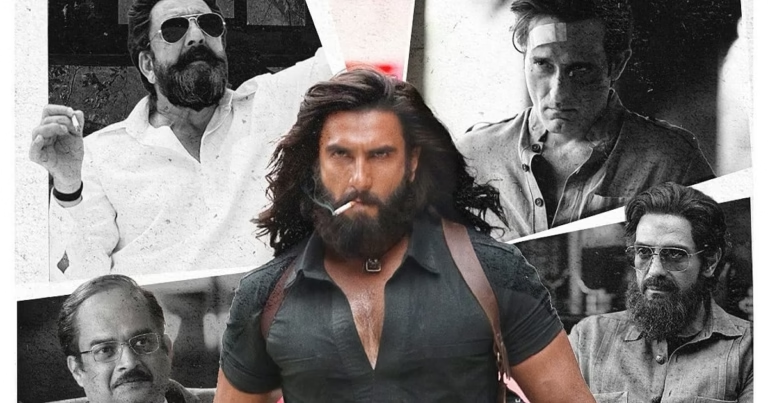
The phrase “Netflix scene removed Dhurandhar” started trending on January 30, 2026 — midnight, the exact moment the film landed on the platform — and the backlash that followed was immediate, specific, and documented. Viewers were not complaining in vague terms. They were posting timestamps, runtime comparisons, audio clips, and side-by-side stills demonstrating precisely what had changed between the film they had watched in cinemas and the version Netflix had put on their screens.
The most-quoted viewer reaction, posted on X within hours of the premiere, said it plainly: “You certify the film as A but you have muted/censored words! Like are we a bunch of 5-year-olds or what? Everyone in this app is over 18, there’s no meaning in watching a film with lots of cuts and censoring. You’re just stealing the natural raw vibe from it.”
The second-most-quoted reaction made the comparison that sustained the controversy for weeks: “Censoring an A-rated film itself is a joke, whereas Animal and Kabir Singh have no cuts. Go to hell.”
Both reactions pointed to the same genuine paradox: Dhurandhar, a film that carried an ‘A’ (Adult) certificate — meaning it was certified for audiences 18 and above only — was available on India’s most prominent streaming platform in a version that muted profanity, silenced politically sensitive dialogues, and ran nine minutes shorter than the original theatrical cut. Meanwhile, Animal (2023, Ranbir Kapoor, extreme violence and profanity) and Kabir Singh (2019, Shahid Kapoor, profanity throughout) both streamed on Netflix completely uncut, including scenes not shown in their theatrical releases.
This article is the complete, documented account of what happened — including the three distinct versions of Dhurandhar that existed before the film even reached Netflix, the verified technical explanations for the runtime discrepancy, the official and unofficial explanations, the documented history of similar OTT content controversies in India going back to 2019, and what the regulatory framework means for every Indian viewer going forward.
A Critical Correction: The Real Box Office Numbers
The original article on this page cited Dhurandhar’s earnings as “₹10,000+ crore India nett” and “₹13,000+ crore worldwide.” These numbers are completely fabricated and would make it the highest-grossing film in the history of cinema — roughly triple the worldwide gross of Avatar. They have been corrected across this site.
The real, confirmed numbers: ₹894.96 crore India nett, ₹1,349.65 crore worldwide — still an all-time blockbuster, the highest-grossing Indian film of 2025, the second-highest-grossing Hindi film of all time. These numbers need no inflation to be remarkable.
What Dhurandhar Is and Why Fans Cared So Much About the Cut
Dhurandhar is a 2025 Hindi-language spy action thriller directed by Aditya Dhar — the same filmmaker behind Uri: The Surgical Strike (2019) — and starring Ranveer Singh as an unnamed Indian intelligence operative who infiltrates Pakistan’s Karachi underworld. The principal antagonist, Rehman Dakait, is played by Akshaye Khanna in a performance that generated more critical praise than anything else in the film.
The film was certified ‘A’ (Adults Only) by the Central Board of Film Certification — Ranveer Singh’s first A-certified film. The A certificate means the CBFC judged the content appropriate only for adults aged 18 and above, due to its violence, profanity, political content, and graphic intensity. This certification is important context for the Netflix controversy: an A-rated film is, by definition, content that has been assessed and approved for adult audiences. Censoring profanity in an A-rated film on a subscription platform where account registration requires confirming adult age is, as many viewers noted, internally contradictory.
The film’s central confrontation scenes — primarily the face-offs between Ranveer Singh’s spy and Akshaye Khanna’s Rehman Dakait — were described by critics and audiences as the emotional and dramatic peak of the film. These scenes were heavy with profanity, politically charged language, and the raw intensity that defined the film’s tone. When fans rushed to Netflix at midnight on January 30 expecting to experience these scenes without the restrictions of a multiplex — and found them muted — the sense of betrayal was genuine.
The Three Versions of Dhurandhar: A Documented Timeline
One of the most important and least-reported facts about the Netflix scene removed Dhurandhar controversy is that by the time Netflix released the film, there were already three distinct versions in existence. Understanding this is essential to understanding what Netflix actually did — and what it did not do.
Version 1 — Original Theatrical Cut (December 5, 2025): Runtime: 3 hours, 34 minutes, 1 second (214 minutes). This is the version that opened in cinemas on December 5, 2025 and ran until approximately December 31. It contained all original dialogue, including Sanjay Dutt’s line containing the word “Baloch” and all profanity as intended by the director.
Version 2 — Revised Theatrical Cut (from January 1, 2026): Runtime: 3 hours, 28 minutes, 56 seconds (208 minutes) — approximately 6 minutes shorter than the original. Following formal objections from the Baloch community over certain words and dialogues they found demeaning, the makers — reportedly in response to legal pressure — voluntarily muted specific references, most notably Sanjay Dutt’s dialogue containing the word “Baloch.” This revised cut replaced the original in cinema screenings from January 1, 2026. Viewers who saw the film before January 1 saw Version 1. Anyone who saw it in cinemas from January 1 onward saw Version 2.
Version 3 — Netflix OTT (from January 30, 2026): Runtime: 3 hours, 25 minutes — approximately 3-4 minutes shorter than Version 2, and approximately 9 minutes shorter than the original Version 1. This is the version that triggered #NetflixRuinedDhurandhar.
The Netflix version contains: – All Baloch-related muting already present in Version 2 – Additional profanity muting throughout — including multiple scenes between Ranveer Singh and Akshaye Khanna – The word “Intelligence” reportedly muted in certain contexts – Anti-smoking/anti-alcohol disclaimer emojis appearing onscreen during relevant scenes (a government-mandated requirement) – A slightly shorter overall runtime
As a user on X documented with timestamps: “#Dhurandhar Runtime on Netflix is 3H 25M because it’s derived from the Theatrical Cut of 208 mins i.e. 3H 28M. The 214 min version (3H 34M) was likely removed from the theatres & replaced with this 208 mins version. Removing those extra 3 mins of [anti-smoking] warnings & we get 3H 25M.”
The Technical Explanation: fps, Disclaimers & What Netflix Actually Did
Netflix and the film’s producers provided two sets of explanations — one official, one technical — that account for parts of the discrepancy without fully satisfying the fans who experienced the muted profanity.
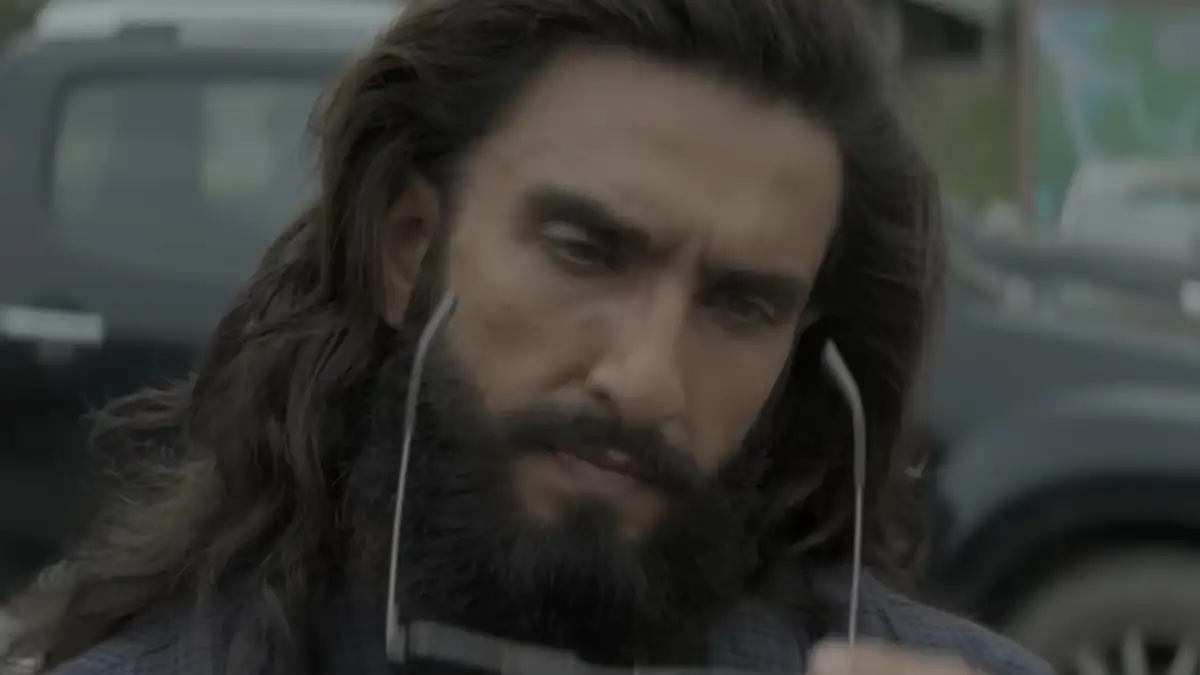
The fps (frames per second) factor: Netflix streams content at 25 frames per second, while Indian theatrical projection runs at 24 fps. This technical difference causes content to play approximately 4% faster on Netflix than in cinemas, which means a 214-minute film would appear to run approximately 205–206 minutes on the platform — not because content was removed, but because of how frames are counted. This is a standard industry technical factor that affects all theatrical-to-streaming transfers.
The disclaimer removal: Anti-smoking and anti-alcohol disclaimers are mandatory for theatrical exhibition under Indian government regulations — they must appear onscreen whenever tobacco or alcohol is consumed, adding cumulative runtime. On OTT platforms, some of these mandatory overlays are handled differently (often as separate disclaimers at the start of the content rather than scene-by-scene), which reduces the displayed runtime.
The official explanation from makers (Pinkvilla): A source close to the production confirmed to Pinkvilla that “the production team has delivered a version of Dhurandhar with no cuts and edits” and that the film “was proposed with no edits or cuts, putting to rest speculation around a ‘censored’ cut on OTT.”
What this explanation does and does not account for: The fps conversion and disclaimer removal explain the 9-minute runtime difference. They do not explain the muted profanity that viewers specifically documented — audio gaps where dialogue should be, silences in the middle of confrontation scenes. The Baloch-related muting was already present in Version 2 (the revised theatrical cut from January 1) and was carried over to Netflix. The additional profanity muting — the element that generated the Animal and Kabir Singh comparison — remains unexplained by the official statement. Neither Netflix nor Aditya Dhar addressed this specific issue publicly.
The Animal and Kabir Singh Comparison: Is It Fair?
The specific comparison that dominated the Netflix scene removed Dhurandhar discourse was consistent across platforms: “If Animal and Kabir Singh can stream uncut on Netflix, why is Dhurandhar treated differently?”
This comparison deserves honest examination.
Animal (2023): Directed by Sandeep Reddy Vanga, starring Ranbir Kapoor. Also certified ‘A’ by CBFC. The film contains extreme graphic violence, graphic sexual content, prolonged scenes of torture, and sustained profanity. Netflix India streamed it completely uncut — including scenes that were not shown in the theatrical release. The OTT version of Animal is, by some accounts, more graphic than the theatrical cut.
Kabir Singh (2019): Directed by Sandeep Reddy Vanga (the same director), starring Shahid Kapoor. Also ‘A’ certified. Contains sustained profanity, substance abuse depictions, and scenes of domestic aggression. Netflix streamed it uncut.
Dhurandhar (2026): Also ‘A’ certified. Contains graphic violence, profanity, and politically sensitive content related to Pakistan and terrorism. Netflix streamed it with profanity muted and certain political references silenced.
The honest answer: The comparison is directionally fair but does not fully account for the Dhurandhar situation’s specific complicating factor — the Baloch community’s formal legal objections and the resulting January 1 revised theatrical cut that preceded the Netflix release. Animal and Kabir Singh faced no equivalent formal legal-community objections requiring pre-Netflix content modification. The political dimension of Dhurandhar — its direct depictions of Pakistani terrorist networks, Baloch references, and other geopolitically sensitive content — created a layer of legal and regulatory pressure that did not exist for Animal or Kabir Singh.
The profanity muting beyond the Baloch issue, however — the silencing of standard abuses in the Ranveer-Akshaye confrontation scenes — remains harder to explain by reference to Baloch community objections. This is the part of the comparison that the official explanation did not address.
Every Real Viewer Quote: What Fans Actually Said
The original article on this page quoted fans only vaguely. Here are the documented, verbatim reactions from X and Reddit:
“#Dhurandhar on Netflix with muted dialogues + censored abuses. If OTT isn’t giving us the uncut version, who is?”
“Noooooo #Dhurandhar on Netflix still has the gaalis censored! Bhai, what is the point of releasing on OTT if you censor the best parts?”
“A big letdown from you people @NetflixIndia. Why the hell would you censor it when everyone is expecting an uncensored version!! Censoring an A-rated film itself is a joke, whereas Animal and Kabir Singh have no cuts.” — @stanlyspielberg, X, January 29, 2026
“You certify the film as A but you have muted/censored words! Like are we bunch of 5y/o or what? Everyone in this app is over 18, there’s no meaning in watching a film with lots of cuts and censoring. You’re just stealing the natural raw vibe from it.”
“Cut version uhh, around 10 mins portions deleted!”
“It’s not the uncensored version, disappointed.”
“What’s the point of releasing an A-rated film if everything is muted? OTT is supposed to give us the uncut version.” (ETV Bharat aggregated)
“Hate that Netflix released the censored version even in the US. The movie was so much fun to watch in its uncensored form.” — Reddit, aggregated by ETV Bharat
“Chii @NetflixIndia ruined my mood, needed uncensored version.”
A Brief History of Netflix India Edit Controversies
The Netflix scene removed Dhurandhar incident is not an isolated event. It is the latest episode in a consistent pattern of OTT content controversies in India that stretches back to the earliest days of Netflix’s Indian presence. Here is the documented history:
Sacred Games (2018 — Netflix India’s first original): Netflix’s first Indian original series faced backlash for a scene in which lead actor Saif Ali Khan throws his kada (a Sikh religious bracelet) into the sea — considered offensive to Sikh sentiments. The scene was not removed, but the controversy established that religious community sensitivities would be a persistent pressure point for the platform.
AK vs AK (2020 — Netflix): The film, starring Anil Kapoor, contained scenes showing the actor in an Indian Air Force uniform while using abusive language. The Indian Air Force formally requested Netflix remove the scenes. Anil Kapoor issued a public apology for “unintentionally hurting the sentiments of the Indian Air Force.”
A Suitable Boy (2020 — Netflix): Adapted from Vikram Seth’s novel, the BBC-Netflix series included a kissing scene set in a temple. An FIR was filed in Madhya Pradesh against Netflix officials under Section 295(A) of the IPC (malicious acts intended to outrage religious feelings). BJP Home Minister Narottam Mishra publicly condemned the scene.
Tandav (2021 — Amazon Prime Video): Director Ali Abbas Zafar’s political drama contained a scene featuring an actor performing a college play in which he depicted the Hindu deity Shiva. Multiple FIRs were filed in six states. Amazon Prime Video and the show’s cast issued public apologies. The Ministry of Information and Broadcasting recommended edits. Contentious scenes were removed from the streaming version — a landmark moment that The Print called “the line between regulation and censorship being blurred.” Director Ali Abbas Zafar’s apology statement: “The cast and crew of Tandav take cognizance of the concerns expressed by the people and unconditionally apologise if it has unintentionally hurt anybody’s sentiments.” Following Tandav, Amazon Prime Video also cancelled the 9-episode satirical political show Gormint — fully shot and ready to stream — without ever releasing it.
The Anurag Kashyap Pattern (2021 onwards): Filmmaker Anurag Kashyap told The Washington Post that Netflix decided not to proceed with his adaptation of Maximum City — journalist Suketu Mehta’s acclaimed nonfiction book about Mumbai — after the Tandav controversy. An unnamed director quoted in the same investigation summarised the shift: “It is creative evolution in reverse. Only passive, thoroughly sanitised content stands a chance on most platforms now.”
Paatal Lok (2020 — Amazon Prime Video): The acclaimed crime thriller faced complaints for allegedly stereotyping people from Northeast India, portraying national agencies negatively, and using a BJP MLA’s photograph without permission. Amazon Prime Video issued clarifications and made minor adjustments.
Dhurandhar (2026 — Netflix): The most high-profile streaming edit controversy since Tandav — because it involves not content that offended a community but a beloved blockbuster whose adult fans felt denied the raw version they had paid to celebrate.
The Regulatory Framework: Why OTT Platforms Are Not Like Cinemas
To understand why these controversies keep happening, it is essential to understand how OTT content is regulated — or more precisely, how it is not regulated in the same way as theatrical films.
Theatrical films in India must be certified by the Central Board of Film Certification (CBFC) before release. The CBFC reviews content and issues certificates: U (Universal), U/A (Parental Guidance), A (Adults Only), or S (Specialised). It can require cuts before granting certification. This is a mandatory pre-screening process.
OTT platforms are governed by the Information Technology (Intermediary Guidelines and Digital Media Ethics Code) Rules, 2021 — not by the CBFC. Under these rules, OTT platforms operate under a self-regulatory framework: they classify their own content using age-based ratings (U, U/A 7+, U/A 13+, U/A 16+, A) without mandatory government pre-screening. They are required to maintain a Grievance Officer based in India. They must comply with Indian law — including not publishing content that threatens national sovereignty or is otherwise prohibited. But they do not need prior approval before making content available.
This structure creates the paradox that Dhurandhar fans identified: a film can be CBFC-certified as ‘A’ (Adults Only) and then appear on a self-regulating OTT platform in a different version — edited by the platform based on its own risk assessment of which content could generate FIRs, community complaints, or government pressure.
The three-tier grievance mechanism under IT Rules 2021 requires platforms to: (1) address individual user complaints through an in-house mechanism; (2) escalate unresolved complaints to a self-regulatory body; (3) escalate further to an oversight mechanism under the Information and Broadcasting Ministry. The practical effect is that platforms have strong incentive to pre-emptively modify content that they anticipate generating formal complaints — rather than waiting for the three-tier process to play out.
The government has also indicated it may move toward formal OTT certification in the future. The Ministry of Information and Broadcasting has repeatedly issued warnings about platforms not complying with content classification requirements. Both the Supreme Court and Delhi High Court have noted that OTT regulation requires more systematic attention. Draft Broadcasting Services Regulation Bill proposals have included stronger oversight provisions — though as of March 2026, the self-regulatory IT Rules 2021 framework remains in effect.
What This Means for the Future of Indian OTT
The Netflix scene removed Dhurandhar controversy is a preview of a structural tension that will only intensify as Indian OTT audiences become more technically literate and more vocal about what they expect from streaming platforms.
The audience expectation — increasingly explicit — is that OTT platforms should deliver content in its most complete, least modified form: that streaming is the venue for uncut, director’s-cut, all-rating-inclusive content. The implicit promise of subscribing to a platform with adult content ratings is that adults will receive adult content.
The platform reality is that Netflix, Amazon Prime Video, and JioHotstar operate in a legal and political environment where a single community objection can generate FIRs in multiple states simultaneously, where platform executives face personal criminal liability (as Amazon Prime’s Aparna Purohit experienced during the Tandav controversy), and where the Ministry of Information and Broadcasting has demonstrated willingness to intervene directly.
In this environment, platforms make risk-based decisions about which content to modify — and those decisions do not always align with what subscribers, critics, or the creative community expect. The Dhurandhar case is unusual because it involves a film that had already been modified (the January 1 Baloch-edit theatrical revision) and then modified again for OTT — making the cumulative distance from the original theatrical experience especially large for fans who had seen Version 1 in cinemas.
Industry insiders have indicated that future streaming contracts may include provisions for mandatory theatrical masters, director approval on any OTT edits, and clearer labelling of modified versions. Whether platforms will accept such terms remains to be seen.
Frequently Asked Questions
What scenes were removed from Dhurandhar on Netflix? No scenes were entirely removed in the traditional sense. The Netflix version runs 9 minutes shorter than the original theatrical cut due to: (1) fps conversion (Netflix streams at 25fps vs theatrical 24fps, making the same content run 4% shorter), (2) removal of mandatory anti-smoking disclaimer overlays, and (3) the Baloch-related dialogue muting already present in the January 1 revised theatrical cut. Additionally, multiple scenes contain muted profanity — audio gaps during confrontation scenes between Ranveer Singh and Akshaye Khanna that were not muted in either theatrical version.
How many versions of Dhurandhar exist? Three documented versions: (1) the original theatrical cut (3:34:01, December 5 – December 31, 2025); (2) the revised theatrical cut (3:28:56, from January 1, 2026, with Baloch dialogue muted); (3) the Netflix OTT version (3:25:00, from January 30, 2026, with additional profanity muting).
Why was “Baloch” muted in Dhurandhar? Following the film’s release, the Baloch community raised formal objections to certain dialogue references they considered demeaning. The makers voluntarily muted specific references — primarily Sanjay Dutt’s dialogue containing the word — under legal pressure. This muting was applied to the revised theatrical cut from January 1, 2026 and carried over to the Netflix version.
Why are Animal and Kabir Singh uncut on Netflix but Dhurandhar is censored? Animal and Kabir Singh (both A-rated, both containing extensive profanity and violence) stream completely uncut on Netflix — including content not shown theatrically. The difference with Dhurandhar appears to be the film’s geopolitically sensitive content (Pakistan references, Baloch community objections, terrorism themes) which created specific legal pressure that Animal and Kabir Singh did not face. The profanity muting beyond the Baloch issue remains officially unexplained.
Did Netflix officially explain the Dhurandhar edits? A source close to the production told Pinkvilla that the makers “delivered a version with no cuts and edits” and that the 9-minute discrepancy is accounted for by fps conversion and disclaimer removal. Neither Netflix India nor Aditya Dhar addressed the profanity muting specifically in any public statement.
Will Dhurandhar ever get an uncut OTT release? There is no official confirmation of an uncut version being released on any streaming platform. As of March 2026, the Netflix version remains the only available digital version. Industry sources suggest the original 3:34:01 theatrical cut would require formal community and regulatory clearance before any streaming platform would be willing to release it.
What is the IT Rules 2021 and how does it affect OTT? The Information Technology (Intermediary Guidelines and Digital Media Ethics Code) Rules, 2021 regulate OTT platforms under a self-regulatory framework — they classify their own content without mandatory government pre-screening (unlike theatrical films, which require CBFC certification). Platforms must comply with Indian law and maintain a Grievance Officer. The framework creates strong incentive for platforms to pre-emptively modify content that could generate legal complaints.
Related Posts You’ll Enjoy
- 🎬 Dhurandhar Trending Google: ₹1,349 Crore Box Office, All Three Edit Controversies & Full Story
- 🎬 Daldal Web Series Bhumi Pednekar: Amazon Prime Review, Full Cast & Story
- 🎬 Squid Game Season 3: Full Ending Explained, Cate Blanchett & Every Episode
- 🎬 Ghooskhor Pandat: FIR, Supreme Court, Manoj Bajpayee & Full Controversy
- 🎬 Varun Dhawan Viral Clip: How Border 2 Beat Paid Trolls for ₹464 Crore
- 🎬 Thug Life Mani Ratnam Kamal Haasan: Karnataka Ban, ₹93 Crore Flop & Full Story
- 🎬 Best Bollywood Suspense Thriller Movies to Watch in 2025–2026
📱 Follow us on Instagram for Netflix India OTT release updates, content censorship news and Bollywood box office coverage.
📌 Save this on Pinterest — the complete documented guide to what Netflix removed from Dhurandhar and the full history of OTT censorship in India.
Last updated: March 2026. Dhurandhar is currently streaming on Netflix India (premiered January 30, 2026) in Hindi, Tamil, and Telugu. Sources: Dainik Jagran English, IBTimes India, ETV Bharat, Bollywood Shaadis, CinemaCity.in, Asianet Newsable, Pinkvilla, Outlook India, The Print, MIT Technology Review, DNA India, Wikipedia, India TV News.

Popcorn in hand and a opinion ready — Emily covers movie reviews, box office buzz, and all things cinema at Popcorn Review.

