
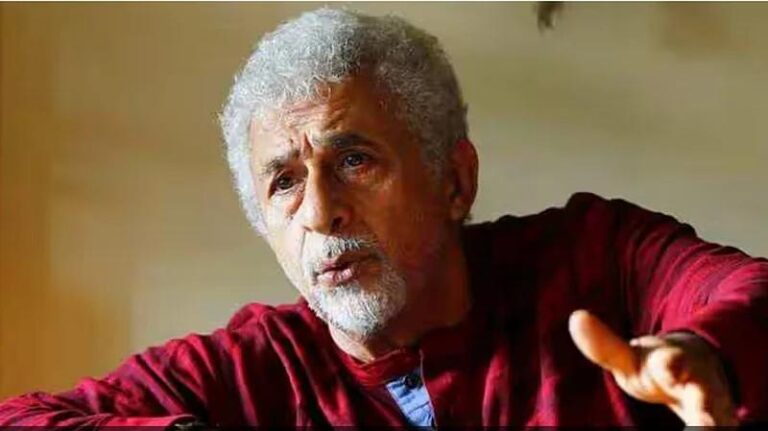
The Naseeruddin Shah viral statement story of February 2026 begins and ends with a fact that is often lost in the noise of the controversy it generated: the actor never gave a viral interview. He never sat across a journalist and made inflammatory claims. He wrote a 700-word opinion piece for The Indian Express about being disinvited from a university Urdu festival the night before the event — a piece titled “When a university speaks power to truth” — and what happened next is a case study in how the internet transforms careful, specific, documented criticism into a culture-war flashpoint in under 24 hours.
This article tells the complete story. It begins with the exact sequence of events on January 31 and February 1, 2026. It then reproduces every exact, verified quote from Shah’s Indian Express article — the original source, not paraphrased social media clips. It covers the full range of public responses, including lyricist Manoj Muntashir’s specific rebuttal and SP MLA Rais Shaikh’s condemnation of the university. It places the incident in the context of Shah’s decade-long public dissent record and in the context of a parallel controversy — AR Rahman’s Bollywood remarks — that was playing out the same week. And it provides a complete, accurate biography of one of the genuinely most decorated actors in the history of Indian cinema.
The Timeline: What Actually Happened, Day by Day
The original article on this page described the Naseeruddin Shah viral statement story vaguely as emerging from “a media interaction in late January / early February 2026” — never naming the event, never giving the specific date, and quoting Shah in a paraphrased form that was not sourced to the original text. Here is the verified, documented timeline.
January 31, 2026 (night): Naseeruddin Shah — aged 75, one of the most decorated actors in the history of Indian cinema — received communication from the University of Mumbai’s Urdu Department informing him that his presence was no longer required at an event they had invited him to attend.
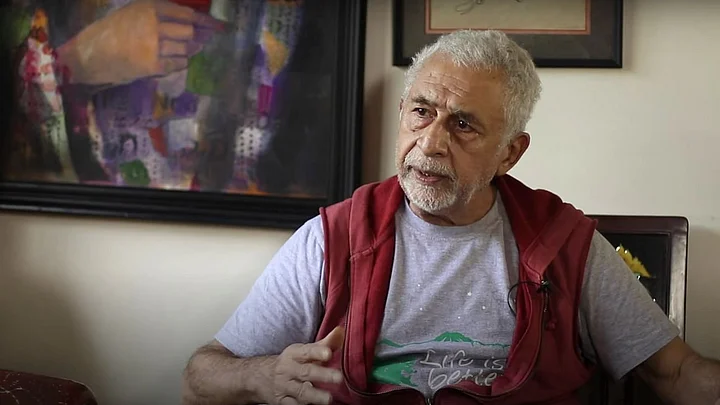
The event was the Jashn-e-Urdu — an Urdu literature and culture festival organised by Mumbai University’s Urdu Department — scheduled for the following morning, February 1, 2026. Shah had been invited to participate, had accepted, and had been looking forward to it specifically because it involved interacting with students. He considers teaching and engaging with young people one of the most rewarding activities of his career — a four-decade commitment that long predates his acting fame.
No reason was given for the withdrawal. No apology was offered. The notification came in the night.
February 1, 2026: The Jashn-e-Urdu event proceeded without Naseeruddin Shah. The university, at the event itself, announced to the audience that Shah had refused to attend — directly contradicting Shah’s account, in which he was the one told not to come.
(Note: A separate complication emerged later. Organisers of a related event called Urdu Jalsa — run by the Bazm E Ahbab foundation, which had prominently featured Shah in its promotional materials — released a clarification claiming Shah was never invited to Jashn-e-Urdu specifically, but to the Urdu Jalsa programme. The overlap between two Urdu events on the same day at the same institution, and the naming distinction between them, added a factual dispute to what had already become a political firestorm.)
February 5, 2026: Naseeruddin Shah published his opinion piece in The Indian Express: “When a university speaks power to truth.” The op-ed described the disinvitation, challenged the university’s public claim that he had refused to attend, and used the incident as a launching point to reflect on the broader social and political atmosphere in India. Within hours, clips and paraphrases of the op-ed were spreading across social media, stripped of context.
February 6, 2026: Multiple public figures responded — lyricist Manoj Muntashir, SP MLA Rais Shaikh, and others. The controversy was covered by every major Indian news organisation. Shah later addressed reporters who had gathered outside his home; when one journalist pressed him repeatedly on the topic he responded: “You are harassing me” — a clip that also circulated widely.
Days later: Speaking at a separate event in Hyderabad, Shah expressed regret about missing the Mumbai University student interaction and addressed the controversy with characteristic wry humour, though specific remarks from that appearance are not verbatim-sourced in available reports.
Every Exact Quote From the Indian Express Op-Ed
The original article on this page presented a paraphrased summary of Shah’s supposed remarks attributed to “widely circulated paraphrased excerpts.” That framing is precisely the problem the article was trying to describe — context being stripped and replaced with paraphrase. Here, sourced directly from multiple news organisations that quoted the op-ed verbatim, are Shah’s actual words from “When a university speaks power to truth”:
On the disinvitation itself:
“The Jashn-e-Urdu organised by the Urdu department of Mumbai University for February 1, from which I was disinvited at the last moment, was an event I was greatly looking forward to because it meant interacting with students. The university, after informing me that I needn’t attend (on the night of January 31, and giving no reason for it, forget an apology) obviously considered this not insulting enough. So they decided to rub a little salt in by announcing to the audience that I had refused to be there.”
On the university’s stated justification:
“It’s not really surprising they didn’t have the courage to state the truth — that I ‘openly make statements against the country’, (if they were covert I suppose that would be all right) or, at least, that’s what a senior university official reportedly said. If he’s not merely toeing the line and actually believes that statement, I hereby challenge the gentleman in question to produce one single statement of mine in which I run down my country.”
On his criticism of the Prime Minister — the passage that went most viral:
“Sure, I have never praised the self-proclaimed ‘Vishwaguru’. In fact, I have been critical of the way he conducts himself. His narcissism offends me, and I haven’t been impressed by a single thing he’s done in 10 years. I have often been critical and continue to be so of many things the ruling dispensation does.”
On the social atmosphere — invoking Orwell:
“The ‘thought police’ and ‘doublespeak’ have been deployed in full force, as has surveillance.”
“Not singing the praise of the ‘great leader’ is considered sedition.”
The closing line — the one that spread furthest:
“This is not the country I grew up in and was taught to love.”
On specific grievances that trouble him:
Shah listed a series of concerns that he wrote continue to disturb him — the prolonged detention of student activists without trial, the granting of bail to those convicted of serious crimes, the rise of cow vigilantism, changes to history textbooks and curriculum, and what he described as political rhetoric targeting religious minorities. He questioned how long such conditions could be sustained.
The headline’s irony: Shah titled the piece “When a university speaks power to truth” — a deliberate inversion of the phrase “speaking truth to power.” His argument: the university, by disinviting him without explanation and then misrepresenting the reason to its audience, had enacted exactly the kind of institutional dishonesty that the phrase was invented to resist.
What Shah Was Specifically Not Saying: The Distinction That Got Lost
The Naseeruddin Shah viral statement controversy was driven primarily by one sentence — “This is not the country I grew up in” — which, stripped of its context, was circulated with captions like “Veteran actor says he no longer loves India” and “Naseeruddin Shah wants to leave the country.”
The op-ed makes the distinction explicit. Shah challenges the university official to produce a single example of him “running down” India. He argues: his criticism has always been directed at the government’s conduct and the ruling establishment’s actions — not at India as a country, its people, or its institutions in the abstract. The phrase “this is not the country I grew up in” is an expression of grief about perceived change — not a renunciation of love for the country.
That distinction — between criticising a government and criticising a nation — is the exact fault line on which Indian political discourse has increasingly fractured. For Shah’s supporters, it is obvious. For his critics, it is a distinction without a difference. The virality of the controversy was powered entirely by which side of that line each viewer stood on before they read a single word.
The Responses: What Real People Actually Said
The original article said “public support from Bollywood insiders was minimal” and that “silence was driven by fear of similar backlash.” Both may be accurate. But the article named no actual respondents. Here are the documented, named responses:
Manoj Muntashir — lyricist (Adipurush, Kesari, Uri: The Surgical Strike) — February 6, 2026:
Speaking at an event, Muntashir told IANS: “I think universities are run independently in this country. I did not know this. They have autonomous management. I do not know what happened. But Naseeruddin Shah is a great artist. He is a great actor. We all respect him a lot.”
He then directly addressed Shah’s closing line: “I read a statement. He said that the country where he grew up is not that India. Maybe he is right. The country where he grew up and I was growing up, was the country of appeasement. This is a new India. This is a better India. This is a good India. I like this India more.”
Muntashir’s response is the most carefully calibrated of all the public reactions — acknowledging Shah’s stature while directly and specifically reframing his nostalgia as a defence of the old order, and positioning the “new India” as an improvement rather than a deterioration.
Rais Shaikh — Samajwadi Party MLA, Maharashtra — February 5/6, 2026:
Shaikh strongly condemned the disinvitation, stating that the government was using universities as instruments to restrict what could be said. “Be it Parliament or universities, the government is trying to restrict what can be said.”
The Jashn-e-Urdu/Urdu Jalsa organisers:
The Bazm E Ahbab foundation, responsible for the Urdu Jalsa programme (distinct from Jashn-e-Urdu), released a clarification: Shah was not invited to Jashn-e-Urdu specifically, but to their Urdu Jalsa event. They said the decision to disinvite followed “university guidelines” — without elaborating on what those guidelines were. Their promotional materials had, however, prominently featured Shah — a contradiction that was noted by journalists covering the story.
The broader Bollywood community: As the original article noted, most major names in the film industry stayed silent. The few who expressed solidarity did so privately rather than publicly. This silence itself became a secondary story — discussed in film journalism as evidence of the chilling effect that previous backlash cycles (AR Rahman, Aamir Khan, Swara Bhasker) have had on industry willingness to take political positions publicly.
The AR Rahman Parallel: The Same Week, the Same Pattern
One detail that the original article missed: the Naseeruddin Shah viral statement controversy played out in the same week as a closely parallel controversy involving AR Rahman — and the juxtaposition reveals something important about the current climate for prominent Muslim artists in India.
In a BBC Asian Network interview, AR Rahman had spoken about his reduced presence in Bollywood — attributing the shift partly to a movement of power toward corporate, non-creative entities, and partly (in language that was interpreted by many as a reference to communal dynamics in the industry) to structural changes in how creative decisions are made. The response was swift: veteran lyricist Javed Akhtar suggested producers might be “scared to approach a legend like Rahman,” while filmmaker Subhash Ghai called the remarks “unnecessarily exaggerated.” Boycott calls followed.
Rahman then issued an Instagram clarification: “I have never wished to cause pain, and I hope my sincerity is felt. I feel blessed to be Indian, which enables me to create a space that always allows freedom of expression and celebrates multicultural voices.” He reaffirmed India as his “inspiration” and said his “intentions” had been “misunderstood.”
The contrast between Rahman’s retraction and Shah’s defiance is instructive. Shah explicitly refused to walk back his remarks — his op-ed was itself the considered, argued response, not a clarification or softening. Where Rahman’s trajectory followed the pattern the original article described (remark → backlash → clarification), Shah’s trajectory was different: considered written argument → misrepresented viral clips → defiant secondary statement rather than apology.
Naseeruddin Shah’s Decade of Dissent: The Full History
The Naseeruddin Shah viral statement of February 2026 did not occur in a vacuum. To understand why the backlash was so intense and why it followed such a predictable script, it is essential to understand the full record of his public positions over the past decade.
2015 — The “Award Wapsi” movement: Shah returned a National Film Award, joining a wave of artists who returned state honours in protest at what they described as a climate of rising intolerance and government inaction on attacks against minorities. The gesture was celebrated by some as principled and condemned by others as performative.
2018 — Cow vigilantism: Shah made a widely reported comment that the death of a cow appeared to cause more outrage in India than the death of a police officer — a remark made in the context of mob lynchings by cow protection vigilante groups. The backlash was severe; he received death threats, which he declined to publicly discuss in detail.
2019–2020 — CAA protests and Anupam Kher row: During the protests against the Citizenship Amendment Act, Shah gave an interview to The Wire in which he called out what he described as Bollywood’s silence and hypocrisy on the CAA. He described actor Anupam Kher — a vocal BJP supporter — as “a clown” whose “sycophantic nature is in his blood.” Kher responded with a rebuttal video. The exchange marked the most public Bollywood political confrontation of that year.
2023 — “Jingoistic agenda” and Nazi Germany comparison: Shah said in an interview that Bollywood was pushing a “jingoistic agenda” and directly compared the trend in Indian cinema toward nationalist spectacle to propaganda films in Nazi Germany. The response was predictable in its fury.
2026 — Mumbai University and “Vishwaguru”: The February 2026 op-ed.
What connects all these moments is not a radical political agenda — Shah’s positions consistently fit within mainstream liberal democratic discourse about religious pluralism, academic freedom, and civic rights. What makes him a lightning rod is his refusal to soften, qualify, or retract. Every other major Bollywood figure who has entered these waters — AR Rahman, Aamir Khan, Swara Bhasker — has eventually issued a clarification or walked something back. Shah, across a decade of controversy, has not.
Who Naseeruddin Shah Actually Is: A Complete Biography
Given that the controversy generates searches not just about the incident but about the man himself, a complete, accurate biography is essential context for any article about the Naseeruddin Shah viral statement.
Naseeruddin Shah was born on July 20, 1950, in Barabanki, Uttar Pradesh — a small town with a history of Nawabi culture and Urdu literary tradition. He is 75 years old. He was born into a Muslim family descended, according to family lore, from Jan-Fishan Khan — a 19th-century Afghan nobleman. His father expected him to become a doctor. He failed in the attempt and eventually found his way to the stage.
His formal education: St. Anselm’s Ajmer (school), St. Joseph’s College Nainital, Aligarh Muslim University (graduation, 1971). He then trained at the National School of Drama (NSD), New Delhi and subsequently at the Film and Television Institute of India (FTII), Pune — India’s two most prestigious training institutions for theatre and cinema respectively. It was at FTII that the famous stabbing incident occurred: a classmate, envious of Shah being offered roles, stabbed him in the canteen. Shah discussed the incident candidly in his 2014 memoir And Then One Day.
He founded the theatre group Motley Productions in 1977 alongside actors Tom Alter and Benjamin Gilani. Their first production was Samuel Beckett’s Waiting for Godot. Motley has been producing theatre for nearly five decades, staging works by Shakespeare, Ismat Chughtai, and Saadat Hasan Manto among many others. Teaching aspiring actors through Motley and other workshops has been one of the defining commitments of his adult life — which is why the Mumbai University disinvitation stung specifically: it struck at something more personally meaningful than his film career.
First marriage: Manara Sikri (also cited in some sources as Parveen Murad), who was significantly older than him; the marriage produced a daughter, Heeba Shah (now a working actress), and ended in separation. Second marriage (1982): Ratna Pathak Shah — actress and daughter of veteran actress Dina Pathak — with whom he has two sons, Imaaduddin Shah and Vivaan Shah, both now working actors. The entire family appeared together in the series Charlie Chopra & the Mystery of Solang Valley.
Awards and recognitions:
| Award | Film / Occasion | Year |
| National Film Award — Best Actor | Sparsh | 1980 |
| National Film Award — Best Actor | Paar | 1984 |
| National Film Award — Best Supporting Actor | Iqbal | 2005 |
| Filmfare Award — Best Actor | Aakrosh | 1980 |
| Filmfare Award — Best Actor | Chakra | 1981 |
| Filmfare Award — Best Actor | Masoom | 1983 |
| Volpi Cup — Best Actor, Venice Film Festival | Paar | 1984 |
| Padma Shri | Government of India | 1985 |
| Padma Bhushan | Government of India | 2003 |
The Venice Film Festival Volpi Cup — one of the oldest acting prizes in world cinema — remains one of very few times the award has gone to an Indian actor for an Indian film. His memoir And Then One Day (2014) is considered one of the most honest and self-critical autobiographies by any major film figure.
Selected filmography (parallel cinema era):
Nishant (1975, Shyam Benegal), Manthan (1976), Bhumika (1977), Junoon (1979), Aakrosh (1980, National Award winner), Albert Pinto Ko Gussa Kyoon Aata Hai (1980), Sparsh (1980, National Award), Chakra (1981, Filmfare Award), Jaane Bhi Do Yaaro (1983, cult classic), Masoom (1983, Filmfare Award), Paar (1984, National Award + Venice Volpi Cup), Mirch Masala (1987).
Selected filmography (mainstream/crossover):
Tridev (1989), Sarfarosh (1999), Monsoon Wedding (2001, Mira Nair), The League of Extraordinary Gentlemen (2003, Hollywood), Maqbool (2003, Vishal Bhardwaj, adaptation of Macbeth), A Wednesday! (2008 — widely considered his greatest commercial performance), Ishqiya (2010), Zindagi Na Milegi Dobara (2011), Iqbal (2005, National Award), Charlie Chopra & the Mystery of Solang Valley (OTT series).
He has acted in over 100 films across more than 50 years.
The Broader Pattern: Celebrity Speech in India in 2026
The Naseeruddin Shah viral statement episode fits into a pattern that has now repeated enough times to have predictable stages. As the original article correctly identified, the formula is consistent:
Stage 1 — The original statement: Considered, contextualised, often written (Shah’s op-ed, AR Rahman’s BBC interview, Aamir Khan’s 2015 intolerance remarks).
Stage 2 — The clip: A 15–30 second extract, stripped of context, circulated with a provocative caption that replaces the original framing.
Stage 3 — The outrage: Hashtags, memes, calls to boycott, demands to “leave the country.” The online ecosystem rewards anger because anger generates engagement, which algorithms amplify.
Stage 4 — The response: Either a clarification/retraction (Rahman, Aamir) or defiance (Shah). Shah’s defiance is notable precisely because it is rare.
Stage 5 — The silence of peers: Every major controversy of this kind in Bollywood is accompanied by near-total silence from other prominent names — a silence that is itself understood as a political statement, and that fuels secondary commentary about chilling effects on Indian celebrity speech.
Stage 6 — Fade: The hashtags cool. The search interest peaks and declines. The person’s artistic legacy continues — and in Shah’s case, is enhanced rather than diminished by his consistency.
What is specific to the February 2026 incident — and what distinguishes it from his 2018 or 2020 controversies — is the institutional dimension. This was not a comment made in an interview. It was a response to an institution of higher learning removing him from an event for unstated reasons and then misrepresenting why to the audience. The academic freedom dimension — a university silencing a guest based on his political views — drew responses from civil society, legal scholars, and opposition politicians that previous Shah controversies had not.
Frequently Asked Questions About the Naseeruddin Shah Controversy
What did Naseeruddin Shah actually say? He wrote an op-ed in The Indian Express titled “When a university speaks power to truth” after being disinvited from Mumbai University’s Jashn-e-Urdu event on January 31, 2026. His exact words: “This is not the country I grew up in and was taught to love.” He also wrote: “Sure, I have never praised the self-proclaimed ‘Vishwaguru’. In fact, I have been critical of the way he conducts himself. His narcissism offends me, and I haven’t been impressed by a single thing he’s done in 10 years.”
Why was Naseeruddin Shah disinvited from Mumbai University? He was removed from the Jashn-e-Urdu/Urdu Jalsa event on the night of January 31, 2026 — the night before the February 1 event — with no explanation or apology. He alleges the real reason was that a senior university official reportedly said he “openly makes statements against the country.” He challenged that official to produce a single example.
Did Naseeruddin Shah say he hates India? No. His op-ed explicitly distinguishes between criticising the government’s conduct and disparaging the country. He challenged the university official to produce “one single statement of mine in which I run down my country.” He has been openly critical of Prime Minister Narendra Modi and the ruling party — a position he has held publicly and consistently for a decade.
What was Manoj Muntashir’s response? Muntashir acknowledged Shah’s stature as an actor, then directly responded to his closing line: “The country where he grew up and I was growing up, was the country of appeasement. This is a new India. This is a better India. This is a good India. I like this India more.”
Did Naseeruddin Shah apologise? No. He has not retracted the op-ed or issued an apology. His statement to reporters gathered outside his home — “You are harassing me” — indicated he was not inclined toward further public engagement on the matter.
Who supported Naseeruddin Shah? SP MLA Rais Shaikh publicly condemned the disinvitation. Civil society voices and journalists covering academic freedom also supported Shah’s account. Most major Bollywood figures stayed silent.
What is the “Vishwaguru” reference? Vishwaguru (world teacher/guru) is a term used by Prime Minister Modi and his supporters to describe India’s aspirational global role. Shah’s use of “self-proclaimed Vishwaguru” is a direct sarcastic reference to Modi’s political rhetoric.
What is Naseeruddin Shah’s full award record? Three National Film Awards (two as Best Actor for Sparsh and Paar, one as Best Supporting Actor for Iqbal), three Filmfare Awards, the Volpi Cup for Best Actor at the Venice Film Festival (1984) for Paar — one of very few times the prize has gone to an Indian actor — Padma Shri (1985) and Padma Bhushan (2003).
How old is Naseeruddin Shah? He was born on July 20, 1950 and is currently 75 years old.
Related Posts You’ll Enjoy
- 🎬 Daldal Web Series Bhumi Pednekar: Complete Review & Controversy Explained
- 🎬 Dhurandhar Trending Google: ₹1,349 Crore Box Office, Netflix Cut & Full Story
- 🎬 Ghooskhor Pandat Controversy: FIR, Supreme Court & Manoj Bajpayee Full Story
- 🎬 Kangana Ranaut Akshaye Khanna Viral Video: What She Actually Said
- 🎬 Thug Life Mani Ratnam Kamal Haasan: Karnataka Ban, ₹93 Crore Flop & Full Story
- 🎬 Border 2 Pre-Release Trolling: How a Patriotic Film Turned Into a ₹464 Crore Hit
- 🎬 Varun Dhawan Viral Clip: How One Video Changed Public Opinion Before Border 2
📱 Follow us on Instagram for Bollywood celebrity news, industry controversies and entertainment updates as they break.
📌 Save this on Pinterest — the complete fact-checked guide to Naseeruddin Shah’s February 2026 statement, every exact quote and every real response.
Last updated: March 2026. Sources: The Indian Express (“When a university speaks power to truth,” Naseeruddin Shah, February 5, 2026), WION News, The Quint, The News Mill, News9Live, Free Press Journal, Outlook India, DESIblitz, ProKerala/IANS, Deccan Herald, Bombay Samachar, Wikipedia, Britannica, IMDb, FTII records.

Popcorn in hand and a opinion ready — Emily covers movie reviews, box office buzz, and all things cinema at Popcorn Review.

