
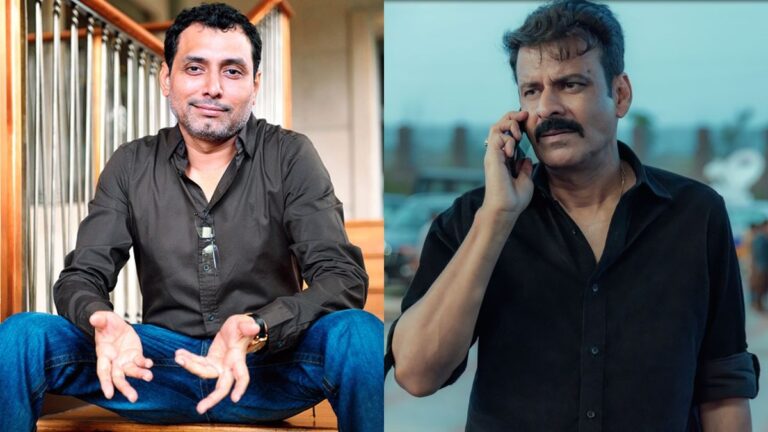
The Ghooskhor Pandat controversy moved faster than almost any legal dispute in recent Bollywood history. In exactly ten days — from the Netflix announcement on February 3, 2026 to the Supreme Court disposal of all proceedings on approximately February 13, 2026 — a film that had not yet been released, not yet received a streaming date, and not yet been seen by any member of the public managed to accumulate a Lucknow FIR, a Delhi High Court petition, a Supreme Court PIL, a FWICE industry warning letter, a Film Makers Combine (FMC) title registration objection, official statements from both Manoj Bajpayee and director Neeraj Pandey, the removal of all promotional material from every social media platform, and ultimately an affidavit filed before the Supreme Court in which the filmmaker formally declared the original title “stands unequivocally withdrawn and shall not be used in any manner whatsoever.”
All of that — for a film nobody has seen. All of that — over a single word in the title.
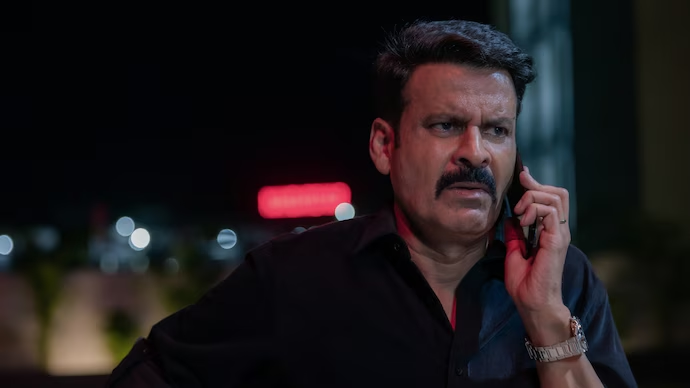
This is the complete, chronological, fact-based story of the Ghooskhor Pandat controversy: what the film actually is, what the title means and why it offended people, every legal development in sequence, what Manoj Bajpayee and Neeraj Pandey actually said, what FWICE and the courts actually said, and what happens now that the original title is officially gone.
What Is Ghooskhor Pandat? The Film, the Plot, the Cast
Before explaining why the Ghooskhor Pandat controversy escalated so rapidly, it is worth establishing what the film actually is — because the original article on this page never explained this.
Ghooskhor Pandat is a crime thriller produced by Neeraj Pandey and directed by Ritesh Shah — both of whom also co-wrote the script together. It is a direct-to-Netflix production, part of Netflix India’s official 2026 release slate.
The plot: The film unfolds over the course of a single night in Delhi. The central character is Ajay Dikshit — a corrupt, morally bankrupt police officer played by Manoj Bajpayee — who goes by the nickname “Pandat” among colleagues and on the street. Dikshit has a planned, money-making evening ahead of him. Those plans are violently disrupted when he comes across a severely injured young woman who has been thrown out of a moving car in the middle of the city. As Dikshit attempts to take her to the hospital and uncover her identity, he finds himself drawn into a conspiracy that extends far beyond anything he anticipated — an international criminal plot that he is dangerously unprepared for.
The film’s opening teaser voiceover describes the character plainly: “He is married but a philanderer. His service record is also very bad. He was recruited as an SI 20 years ago, but he’s right back to where he started. He is not from Delhi, but is still posted in Delhi.”
The production team described the project as: “A one-night thriller that follows the corrupt and morally bankrupt police officer Ajay Dikshit, as an unexpected encounter disrupts his plans and draws him into a chain of events far larger than anticipated. The story is built around the idea of an ordinary night turning into a high-stakes situation, with a central focus on the unfolding mystery and the moral ambiguity of the protagonist.”
The cast: – Manoj Bajpayee as Ajay Dikshit (“Pandat”) — corrupt Delhi police officer – Nushrratt Bharuccha — key supporting role – Saqib Saleem — supporting role – Divya Dutta — pivotal character in the investigation – Akshay Oberoi — supporting role – Shraddha Das — supporting role – Kiku Sharda — supporting role
Netflix India announced the film at its official 2026 slate launch event in Mumbai on February 3, 2026. The teaser was unveiled at the same event.
Within hours, the Ghooskhor Pandat controversy had begun.
What Does “Ghooskhor Pandat” Mean — and Why Did It Cause Offence?
To understand the Ghooskhor Pandat controversy, you need to understand what the title actually means.
Ghooskhor (घूसखोर): A colloquial Hindi word meaning “bribe-taker” or “corrupt person.” It is formed from “ghoos” (bribe) + “khor” (one who takes/consumes). The word is entirely neutral in the sense that it describes an action or characteristic, not a community — a “ghooskhor” is simply a person who takes bribes.
Pandat (पंडत): This is the contested word. “Pandat” is a colloquial, slightly casual variant of “Pandit” — a term that refers to a Hindu Brahmin scholar or priest. “Pandit” carries deep cultural and religious significance: it denotes learning, spiritual authority, and community leadership within the Brahmin/Brahmin-adjacent tradition. “Pandat” as a nickname for a fictional corrupt police officer therefore struck a significant section of viewers as a deliberate or careless association between the word for a Hindu priest and the quality of moral corruption.
The combination — “Ghooskhor Pandat” — translates approximately as “the corrupt priest-like one” or, more casually, “the bribe-taking Pandit.” The film’s own framing makes clear that Pandat is purely a nickname for the fictional character Ajay Dikshit, who is not actually a Brahmin or a priest. But critics argued that using a community-identifying term as a nickname for a corrupt, morally bankrupt character was inherently derogatory — that it irreversibly links the idea of “Pandit” with corruption in the minds of viewers, regardless of narrative intent.
The producers’ position, stated in every official response, was that “Pandat” is used solely as a colloquial character nickname — that it describes how colleagues refer to Ajay Dikshit in the story, not a statement about any actual community. Neeraj Pandey’s statement clarified: “The story focuses on an individual’s actions and choices and does not comment on or represent any caste, religion, or community.”
The critics’ position was that intent is irrelevant when the effect is to associate a community-identifying term with villainy — and that regardless of the fictional framing, audiences of all kinds would walk away with an association between “Pandit” and corruption embedded in their memory.
Both positions are coherent. The courts, ultimately, sided with the critics.
The Complete Legal Timeline: 10 Days from Announcement to Title Withdrawal
The Ghooskhor Pandat controversy moved through legal channels with extraordinary speed. Here is the complete chronological timeline:
February 3, 2026 (Monday): Netflix India holds its 2026 slate announcement event in Mumbai. The teaser for Ghooskhor Pandat is unveiled. Manoj Bajpayee, Neeraj Pandey, and Ritesh Shah attend. Within hours of the teaser going public, social media backlash begins — primarily from members of the Brahmin/Pandit community who object to the use of “Pandat” in the title of a film about a corrupt character.
February 4–5, 2026: Backlash intensifies across X (formerly Twitter), Instagram, and WhatsApp. Multiple users tag Netflix India, CBFC, and the Prime Minister’s Office. Calls for boycott emerge. The term #GhooskhorPandatControversy begins trending. A complaint is registered with local police in Lucknow.
February 6, 2026 (Friday): Two significant developments:
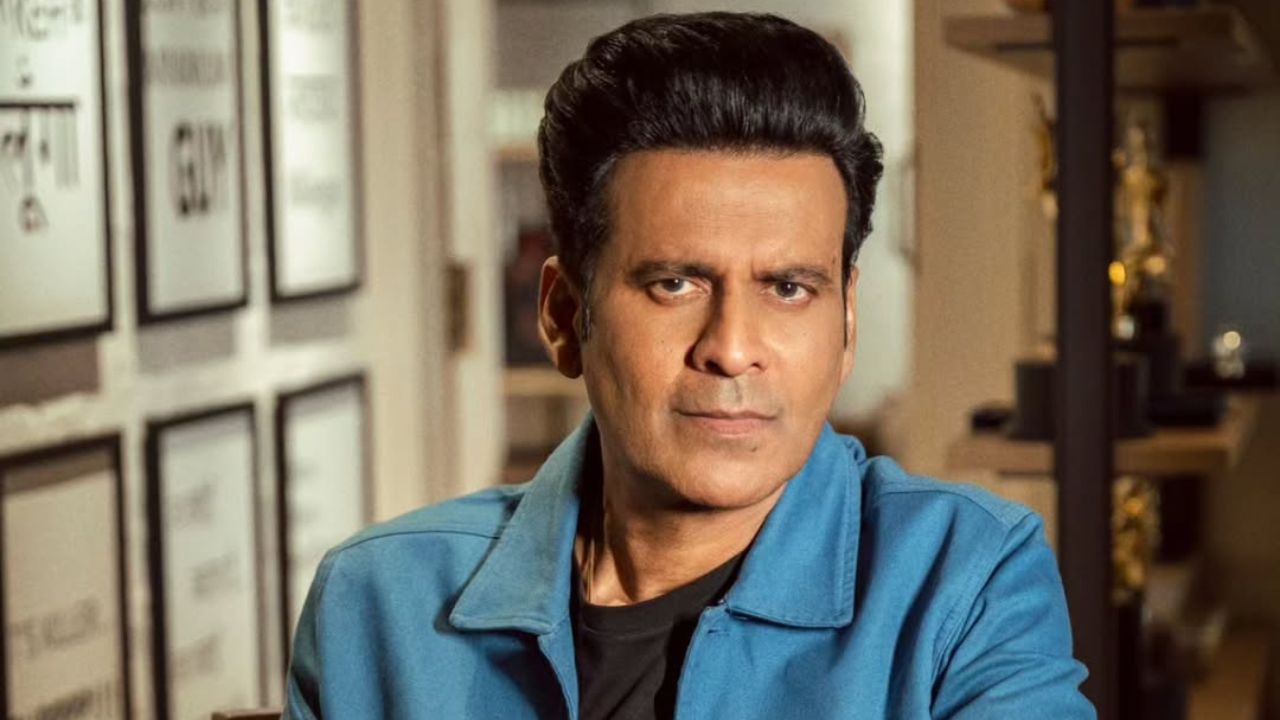
First, Neeraj Pandey issues an official statement on Instagram, acknowledging that the title had caused hurt: “Our film is a fictional cop drama, and the term ‘Pandat’ is used simply as a colloquial name for a fictional character. The story focuses on an individual’s actions and choices and does not comment on or represent any caste, religion, or community… We understand that the title of the film has caused hurt to some viewers, and we genuinely acknowledge those feelings. In light of these concerns, we have decided to take down all promotional materials for the time being, as we believe the film should be experienced in its entirety and understood in the context of the story we intended to tell, rather than judged on partial glimpses.”
Second, an FIR is registered at Hazratganj Police Station, Lucknow — naming Neeraj Pandey and his production team. The FIR, filed under provisions related to hurting religious and caste sentiments, alleges that the title links the term “Pandat” with corruption and thereby maligns a specific community. Inspector Vikram Singh of Hazratganj took cognisance of the complaint.
February 7, 2026 (Saturday): FWICE (Federation of Western India Cine Employees) issues a formal letter to all film and television producer bodies, OTT platforms, and film associations. The letter, directed specifically at Neeraj Pandey, warns against the use of “derogatory and offensive titles.” The FWICE statement reads in part: “FWICE firmly believes that there should be no division in society on the grounds of caste, creed, religion, or profession. All professions are equally dignified and deserving of respect. The film industry, being a powerful medium of expression, carries a moral and social responsibility to ensure that its content and titles do not promote hatred, disrespect, or unrest among citizens. We therefore appeal to all producer bodies to refrain from allowing the registration or continuation of film titles that are provocative in nature and capable of creating unrest among Indians.” FWICE makes clear that it will not cooperate with the makers as long as the title stands.
February 7–8, 2026: A writ petition is filed in the Delhi High Court seeking a stay on the film’s release on Netflix. The petitioner, Mahender Chaturvedi (through advocate Vineet Jindal), alleges the title and proposed content are “defamatory and communally offensive.”
February 9–10, 2026: The Delhi High Court hears the petition. Netflix India, represented in court, informs the bench that the makers have decided to change the film’s title. The court records: “The producer has taken a conscious decision in light of the concern that has arisen to change the title of the film from Ghooskhor Pandat to an alternate title which more accurately reflects the film’s narrative and intent.” The Delhi HC dismisses the petition — satisfied that the title change has been committed to, making further injunctive relief unnecessary. Simultaneously, all promotional material — trailers, posters, social media posts — is pulled from Netflix India and every platform associated with the film.
February 10, 2026: Manoj Bajpayee issues his personal statement on X (formerly Twitter). He shares Neeraj Pandey’s earlier statement and adds: “I respect the emotions and concerns people have shared, and I take them seriously. This was not meant to be a statement about any community.” He defends the director’s intent: “In my experience of working with Neeraj Pandey, there has been a consistent seriousness and care in how he approaches his films. The filmmakers have decided to take down the promotional material, in light of the public sentiment. This reflects the seriousness with which the concerns are being taken.”
February 12, 2026 (Thursday): A Public Interest Litigation (PIL) reaches the Supreme Court of India. Filed by Atul Mishra, national organisation secretary of the Brahman Samaj of India, the petition seeks a stay on the film’s release on Netflix. A bench of Justices B.V. Nagarathna and Ujjal Bhuyan hears the matter. The Supreme Court is direct: “Why should you denigrate a section of society by using such a title? This is against morality and public order. We will not allow you to release the film unless you tell us the changed title.” The court directs the makers to file an affidavit confirming the new title and the changes made to the film.
Late February / Early March 2026: Neeraj Pandey files an affidavit before the Supreme Court. The key text, as confirmed by multiple sources including ANI and Outlook India: “I respectfully submit that the earlier title, Ghooskhor Pandat, stands unequivocally withdrawn and shall not be used in any manner whatsoever. While the new title has not yet been finalised, I undertake that any title that may hereafter be identified and adopted shall not be similar to, or evocative of, the earlier title in respect of which objections were raised, and shall accurately reflect the narrative and intent of the film without giving rise to unintended interpretations.” The affidavit also confirms: “All promotional material, posters, trailers, and public content under the earlier title have already been withdrawn prior to the listing of the present situation.”
The Supreme Court bench accepts the affidavit and disposes of the PIL. Justice Nagarathna observes that the matter should now reach “a quietus.” The case is closed.
As of March 2026, the new title has not been publicly announced. The film remains in post-production and will release on Netflix under a different name.
The FMC Registration Issue: An Additional Complication
One element of the Ghooskhor Pandat controversy that received less coverage than the court proceedings was a parallel complication raised by the Film Makers Combine (FMC) — the body responsible for title registration in the Hindi film industry.
According to ANI reporting, FMC pointed out that Neeraj Pandey had not formally applied for the title “Ghooskhor Pandat” through the official title registration process. FMC stated: “You are a bona fide member of IMPPA. As per our official record, you have not even applied for the title ‘Ghooskhor Pandat.’”
This adds a procedural layer to the Ghooskhor Pandat controversy — the film’s title had apparently not been formally registered before it was publicly announced, which is an unusual oversight for a producer of Neeraj Pandey’s stature and experience. Whether the title was deliberately withheld from the registration process to avoid early scrutiny, or whether this was a procedural lapse, was not clarified in official statements.
Manoj Bajpayee and Neeraj Pandey’s Statements: What They Actually Said
The Ghooskhor Pandat controversy is the kind of story where exact words matter enormously. Both the director-producer and the lead actor made official statements — and both are worth reading in full.
Neeraj Pandey (Instagram, February 6, 2026):
“Our film is a fictional cop drama, and the term ‘Pandat’ is used simply as a colloquial name for a fictional character. The story focuses on an individual’s actions and choices and does not comment on or represent any caste, religion, or community.
The film is a reformative, fictional police drama. The principal photography has been completed and the film is still at the editing stage. As a result, the film has not been released.
We understand that the title of the film has caused hurt to some viewers, and we genuinely acknowledge those feelings. In light of these concerns, we have decided to take down all promotional materials for the time being, as we believe the film should be experienced in its entirety and understood in the context of the story we intended to tell, rather than judged on partial glimpses.”
Manoj Bajpayee (X/Twitter, February 10, 2026):
“I respect the emotions and concerns people have shared, and I take them seriously.
As an actor, I come to a film through the character and the story I am playing. For me, this was about portraying a flawed individual and his journey of self realisation. This was not meant to be a statement about any community.
In my experience of working with Neeraj Pandey, there has been a consistent seriousness and care in how he approaches his films. The filmmakers have decided to take down the promotional material, in light of the public sentiment. This reflects the seriousness with which the concerns are being taken.”
Both statements share a common structure: acknowledge the hurt, defend the creative intent, and signal cooperation with community concerns. Neither is a full apology. Both are measured, professional responses from two of the most experienced and respected figures in Hindi cinema.
The Broader Context: Bollywood’s History of Title Controversies
The Ghooskhor Pandat controversy is not the first time a Bollywood film’s title has attracted legal challenges and community backlash — and understanding that history helps contextualise why this case escalated so rapidly and was resolved so quickly.
Padmaavat (2018): Sanjay Leela Bhansali’s epic was originally titled Padmavati — the name of a revered historical Rajput queen. The Rajput community, particularly the Rajput Karni Sena, objected violently to the film’s portrayal and title. The film faced production disruptions, protests, and legal challenges across multiple states. The Central Board of Film Certification eventually mandated a title change to Padmaavat and required several content modifications before the film could be released.
Ram Leela / Goliyon Ki Raasleela Ram-Leela (2013): Another Bhansali film that faced objections from communities concerned about the use of “Ram Leela” — a sacred Hindu theatrical tradition — for a contemporary romantic drama. The film’s title was expanded and modified in response to pressure.
The Kashmir Files (2022): A film about the exodus of Kashmiri Pandits that became enormously controversial — though in this case, the controversy cut in the opposite direction, with supporters arguing the title was accurate historical documentation and critics alleging propagandistic intent. The film ultimately grossed over ₹340 crore at the box office.
The Kerala Story (2023): A film alleging forced religious conversion of women in Kerala, which faced legal challenges, state-level bans (subsequently overturned), and intense political controversy.
What distinguishes the Ghooskhor Pandat controversy from most of these precedents is the speed of resolution. In the cases of Padmaavat and Ram Leela, the controversies stretched over months, involved physical protests and vandalism, and were resolved only through substantial content modification. The Ghooskhor Pandat case moved from announcement to Supreme Court disposal in approximately ten days — largely because the makers chose to concede the title immediately rather than mount a sustained legal defence of it.
Who Is Neeraj Pandey? The Director-Producer Behind the Film
Understanding the Ghooskhor Pandat controversy in full context requires knowing who Neeraj Pandey is — because his track record makes the controversy particularly surprising.
Neeraj Pandey is one of the most respected crime thriller filmmakers in Bollywood. His directorial career began with A Wednesday! (2008) — a critically acclaimed thriller starring Naseeruddin Shah and Anupam Kher that won multiple National Film Awards and remains one of the most celebrated debut features in recent Hindi cinema. It also starred Manoj Bajpayee in an important supporting role — establishing the creative relationship that continues with Ghooskhor Pandat.
His subsequent directorial work: Special 26 (2013) with Akshay Kumar, Baby (2015) with Akshay Kumar, M.S. Dhoni: The Untold Story (2016) — one of the most successful biographical films in Indian cinema history. As a producer, he has backed projects including the web series Special Ops (2020), one of the highest-rated Indian web series on IMDb.
The fact that a filmmaker of Pandey’s experience — who has consistently demonstrated meticulous attention to narrative and sensitivity in his work — could find himself at the centre of a title controversy of this magnitude surprised many industry observers. His position throughout — that the term was purely a fictional character nickname with no community targeting intended — is consistent with his creative history. But the public perception, once established, proved impossible to reverse through statement alone.
Ritesh Shah: The Director and His Creative Background
The Ghooskhor Pandat controversy has somewhat overshadowed the fact that the film has a director worth discussing: Ritesh Shah, who also co-wrote the script with Neeraj Pandey.
Ritesh Shah is primarily known as a screenwriter — he is the author of some of the most commercially and critically successful scripts in recent Bollywood, including Pink (2016, directed by Aniruddha Roy Chowdhury, starring Amitabh Bachchan), Kahaani 2 (2016), Airlift (2016), Rustom (2016), and Sardar Udham (2021). His writing is characterised by tightly constructed plots, social awareness, and morally complex protagonists — all qualities visible in the Ghooskhor Pandat premise.
Ghooskhor Pandat marks one of Shah’s first significant directing credits, with Pandey serving as creative producer and co-writer. The combination of Shah’s writing expertise with Pandey’s production machinery and Bajpayee’s acting depth makes the underlying project — whatever its eventual title — one of the more anticipated Netflix India originals of 2026.
What Happens Now: The Film’s Future Under a New Title
The Ghooskhor Pandat controversy is legally resolved — but the film’s journey is far from over. Here is what is confirmed about its status as of March 2026:
Title: The original title is formally withdrawn. A new title has not been publicly announced. Neeraj Pandey’s Supreme Court affidavit commits to a title that will not be similar to or evocative of the original and will “accurately reflect the narrative and intent of the film without giving rise to unintended interpretations.”
Production status: Principal photography is complete. The film is in the editing stage, according to Pandey’s own affidavit.
Release platform: Netflix India — confirmed. The release timeline will be announced once the title controversy is fully resolved and a new name is locked.
Cast: All confirmed cast members — Manoj Bajpayee, Nushrratt Bharuccha, Saqib Saleem, Divya Dutta, Akshay Oberoi, Shraddha Das, Kiku Sharda — remain attached to the project.
Will the film itself change? Pandey’s affidavit describes the film as “a reformative, fictional police drama” and states that the principal photography is complete. This implies the film’s content — the storyline, the character’s corruption arc, the international conspiracy — remains intact. What changes is the title and presumably any reference to “Pandat” within the film’s dialogue, marketing, or credits that could reignite the controversy under a different name.
The film’s underlying premise — a corrupt Delhi cop nicknamed for his community background getting entangled in an international conspiracy over a single night — remains as compelling as it was when announced. The Ghooskhor Pandat controversy, ironically, has probably made the eventual release more anticipated than it would have been had the announcement passed without incident.
Frequently Asked Questions About the Ghooskhor Pandat Controversy
What is Ghooskhor Pandat? A Netflix India crime thriller directed by Ritesh Shah and produced by Neeraj Pandey, starring Manoj Bajpayee as Ajay Dikshit — a corrupt Delhi police officer nicknamed “Pandat” — who gets caught up in an international conspiracy after encountering an injured woman thrown from a moving car. The film unfolds over a single night in Delhi.
Why did the title Ghooskhor Pandat cause controversy? “Pandat” is a colloquial variant of “Pandit” — a term for a Hindu Brahmin scholar or priest. Critics argued that using this community-identifying term as a nickname for a corrupt, morally bankrupt character was inherently derogatory and linked Brahmin/Pandit identity with villainy. The makers maintained the term was purely a fictional character nickname with no community targeting intended.
Was an FIR filed over Ghooskhor Pandat? Yes. An FIR was registered at Hazratganj Police Station in Lucknow against Neeraj Pandey and his production team, alleging the title hurts religious and caste sentiments and could inflame public harmony.
Did the Delhi High Court ban Ghooskhor Pandat? No. The Delhi High Court dismissed the petition seeking a ban on the film’s release after Netflix India informed the court that the title would be changed and all promotional material had been removed. The court was satisfied and disposed of the petition on February 10, 2026.
What did the Supreme Court order? A Supreme Court bench of Justices B.V. Nagarathna and Ujjal Bhuyan told the makers: “Why should you denigrate a section of society by using such a title? This is against morality and public order. We will not allow you to release the film unless you tell us the changed title.” The court directed an affidavit confirming the title change.
What did Neeraj Pandey say in his Supreme Court affidavit? “The earlier title, Ghooskhor Pandat, stands unequivocally withdrawn and shall not be used in any manner whatsoever. Any title that may hereafter be identified and adopted shall not be similar to, or evocative of, the earlier title and shall accurately reflect the narrative and intent of the film.”
What is the new title of Ghooskhor Pandat? As of March 2026, the new title has not been publicly announced. The film remains in the editing stage.
What did Manoj Bajpayee say about the controversy? Bajpayee said: “I respect the emotions and concerns people have shared, and I take them seriously. This was not meant to be a statement about any community.” He defended Neeraj Pandey, saying: “In my experience of working with Neeraj Pandey, there has been a consistent seriousness and care in how he approaches his films.”
Where will the film be available to watch? Exclusively on Netflix India, once the title change is finalised and a release date is announced.
Related Posts You’ll Enjoy
- 🎬 Rajpal Yadav Legal Crisis: ₹9 Crore Case, Tihar Jail & Full Story
- 🎬 Kevin Feige Sinners Oscars: All 16 Nominations, Exact Quote & Full Story
- 🎬 Britney Spears Music Catalog Sale: $200M, Primary Wave & Every Song Explained
- 🎬 Ranveer Singh Pralay Zombie Thriller: Budget, Cast, Director & Full Details
- 🎬 Baby Girl Sony LIV Review: Nivin Pauly’s Thriller — Full Story & Verdict
- 🎬 Upcoming Bollywood Movies 2026 — Most Anticipated Films You Can’t Miss
- 🎬 15 Best Bollywood Films Based on True Stories to Watch in 2026
📱 Follow us on Instagram for the latest Bollywood legal controversies, Netflix India announcements, and entertainment news as it breaks.
📌 Save this article on Pinterest — we will update this page when the new title of the film is officially announced.
Last updated: March 2026. The new title of the film has not been announced as of publication. This page will be updated when the revised title is confirmed. Sources: Outlook India, WION News, India TV News, DNA India, Gulf News, Bollywood Hungama, PTI, ANI, IANS.

Popcorn in hand and a opinion ready — Emily covers movie reviews, box office buzz, and all things cinema at Popcorn Review.

