
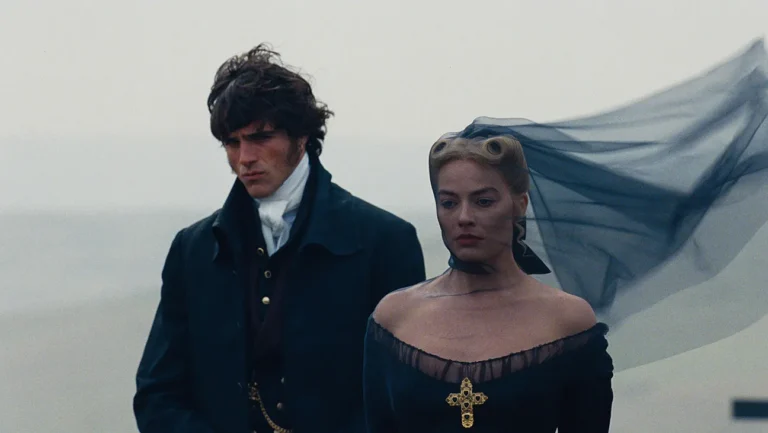
Wuthering Heights box office numbers are doing something nobody at Warner Bros. fully expected — and certainly not the critics who gave it mixed reviews.
Emerald Fennell’s R-rated, steamy, deliberately provocative adaptation of Emily Brontë’s 1847 novel — starring Margot Robbie as Catherine Earnshaw and Jacob Elordi as Heathcliff — opened to $83 million globally over the Presidents’ Day weekend (February 13–17, 2026) at 3,600 North American theaters. It crossed $100 million worldwide within 10 days. It hit $151.7 million in its second weekend. And as of March 1, 2026, it stands at $177.2 million worldwide — closing in on $200 million against an $80 million production budget, with China still to open.
It is currently the #1 film at the international box office. It has surpassed the lifetime gross of The Monuments Men. It delivered the strongest second-weekend hold for a post-COVID romance drama. And it has done all of this while sitting at a 58% on Rotten Tomatoes — making it one of the most commercially successful “rotten” films of the decade.
Critics are divided. Audiences are not. And the story of how a period romance with no franchise, no sequel setup, and a Charli XCX soundtrack ended up as one of February 2026’s defining box office stories is genuinely worth understanding.
Wuthering Heights Box Office — Numbers at a Glance
Cast: Margot Robbie (Catherine Earnshaw), Jacob Elordi (Heathcliff), Hong Chau, Shazad Latif, Alison Oliver
Release date: February 13, 2026 (theatrical worldwide)
Production budget: $80 million
Marketing budget: ~$100 million (estimated)
Break-even target: ~$350 million worldwide
Opening weekend (4-day Presidents’ Day): $38M domestic + $45M international = $83M global
10-day worldwide: $120M (domestic $45M, international $68M + $7M more)
After 2 weekends: $151.7M worldwide
Current worldwide total (as of Mar 1): $177.2M — North America $67.5M (38%) · International $109.7M (62%)
Top international markets: UK $22.5M · Italy $9.4M · Australia $8.3M
China release: Not yet opened (pending)
Rotten Tomatoes: 58% critics · 77% audience
IMDb: 6.3/10
The Numbers · Week by Week
Wuthering Heights Box Office Milestones: How It Got to $177M
The opening weekend told the first part of the story — and it was a story of two halves. Domestically, Wuthering Heights missed Warner Bros.’ own projection of $40 million for the four-day Presidents’ Day frame, coming in at $38 million. That’s a soft open by the studio’s internal metrics. But internationally, it beat expectations — $45 million from overseas markets in its opening frame was above the $30–40 million projection, and it signalled immediately that this film had stronger global legs than domestic ones.
The second weekend confirmed the pattern. While GOAT (Sony’s animated film) took the #1 domestic spot, Wuthering Heights held firm internationally — staying #1 at the international box office with $26.3 million from 76 markets. The UK drove $22.5 million of the total overseas run, followed by Italy ($9.4 million) and Australia ($8.3 million). This is a European and English-language international story above all else, which makes sense: Emily Brontë is Yorkshire’s most famous daughter, and the film shot in the actual Yorkshire Dales.
| Weekend | Domestic | International | Cumulative Global | Notes |
|---|---|---|---|---|
| Opening (Feb 13–17, Presidents’ Day) | $38M | $45M | $83M | Below domestic projection; above intl projection |
| Day 10 milestone | $45M | $75M | $120M | Budget recouped; record 2nd wknd for post-COVID romance |
| Weekend 2 | #2 domestic (lost top to GOAT) | #1 international ($26.3M, 76 markets) | $151.7M | Passed Monuments Men lifetime gross |
| Weekend 3 (Feb 28) | #3 domestic (Scream 7 opened) | #1 international | $177.2M | Approaching $200M; China still pending |
The trajectory tells a clear story: this is a film that is being carried internationally — specifically by audiences in English-speaking markets and Southern Europe — while performing solidly but not spectacularly in North America. The 62% international / 38% domestic split is unusually lopsided for a Hollywood wide-release production. Comparable titles that achieve this kind of overseas dominance are typically either animated films or franchise blockbusters. A period romance achieving it is genuinely notable.
The Decision That Made It Possible
The Netflix Deal They Turned Down — and Why It Changed Everything
The most interesting financial story behind the Wuthering Heights box office numbers isn’t the opening weekend. It’s the deal that Margot Robbie and Emerald Fennell didn’t take.
In 2024, Netflix offered $150 million to acquire Wuthering Heights as a streaming exclusive. Robbie and Fennell — both producers on the film through their respective companies — said no. They accepted a lower bid from Warner Bros. that offered two things Netflix couldn’t: a theatrical release in 3,600+ North American theaters, and a full global marketing campaign.
That decision meant Warner Bros. spent $80 million producing the film and a further estimated $100 million marketing it worldwide — far exceeding what a typical $150 million Netflix acquisition would have covered in promotional spend. But it also meant that Wuthering Heights could build the kind of cultural moment — the Valentine’s Day positioning, the Charli XCX soundtrack drops, the Vogue Australia cover, the TikTok moodboard virality — that a streaming drop simply cannot replicate.
The gamble appears to be paying off. The film recouped its production budget in its opening weekend and has since earned more than double that figure. More importantly, it sparked a conversation — about carnality in literary adaptations, about Emerald Fennell’s provocation, about Jacob Elordi’s casting — that has sustained media and social attention through three full weeks of release. Follow us on Instagram where we’ve been tracking the daily box office numbers and audience reaction since release day.
The Film Itself
What Emerald Fennell Actually Made — and Why Critics Split 58/77
The Rotten Tomatoes number is the most accurate single description of this film’s reception: 58% critics, 77% audience. That gap — 19 percentage points between professional critics and paying audiences — is the story of Wuthering Heights 2026 in a single data point.
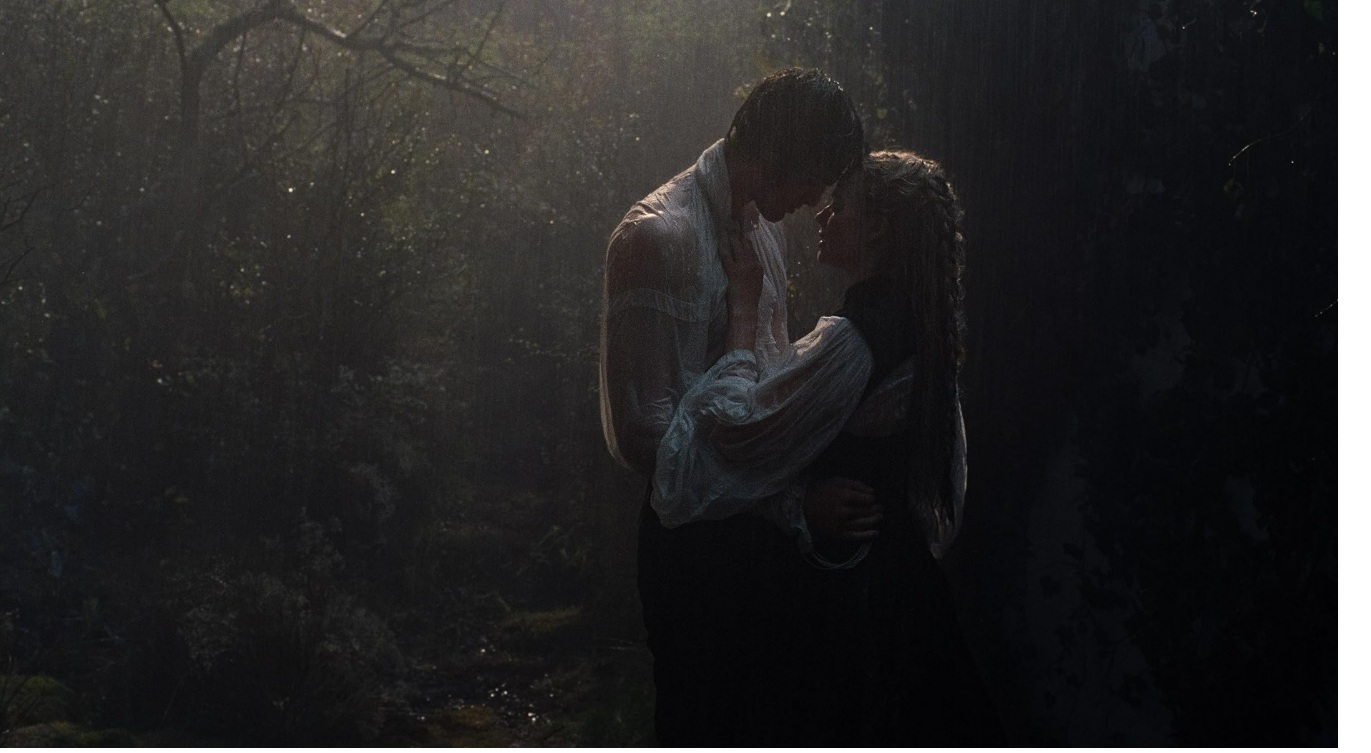
Fennell’s Wuthering Heights is not trying to be the definitive literary adaptation. She said as much explicitly — “I can’t say I’m making Wuthering Heights. It’s not possible. What I can say is I’m making a version of it.” Her version leans heavily into the novel’s most suppressed dimension: carnality. The relationship between Catherine and Heathcliff is rendered as explicitly physical, psychologically obsessive, and deliberately uncomfortable. The film was shot on 35mm VistaVision cameras in the actual Yorkshire Dales (Arkengarthdale and Swaledale), which gives it a visual authenticity and grain that CGI landscape substitutes can’t match. Anthony Willis composed the score. Charli XCX contributed an original album.
“Fennell seizes on something passionate in the material that was always there but never made explicit, amplifying what has gone largely unrequited all these years.”— Peter Debruge, Variety
“A jarring, vapid, and ultimately insulting experience.”— Therese Lacson, Collider
Both of those reviews are accurate descriptions of the same film — which tells you exactly what kind of film this is. Fennell made a version of Wuthering Heights for people who want intensity, visual excess, and erotic provocation from a Victorian novel that, in its own right, is one of the most psychologically violent love stories in the English canon. She did not make it for people who want narrative rigour or faithful adaptation. The critics who came in expecting the latter have largely left disappointed. The audiences who came in for the former have largely left satisfied.
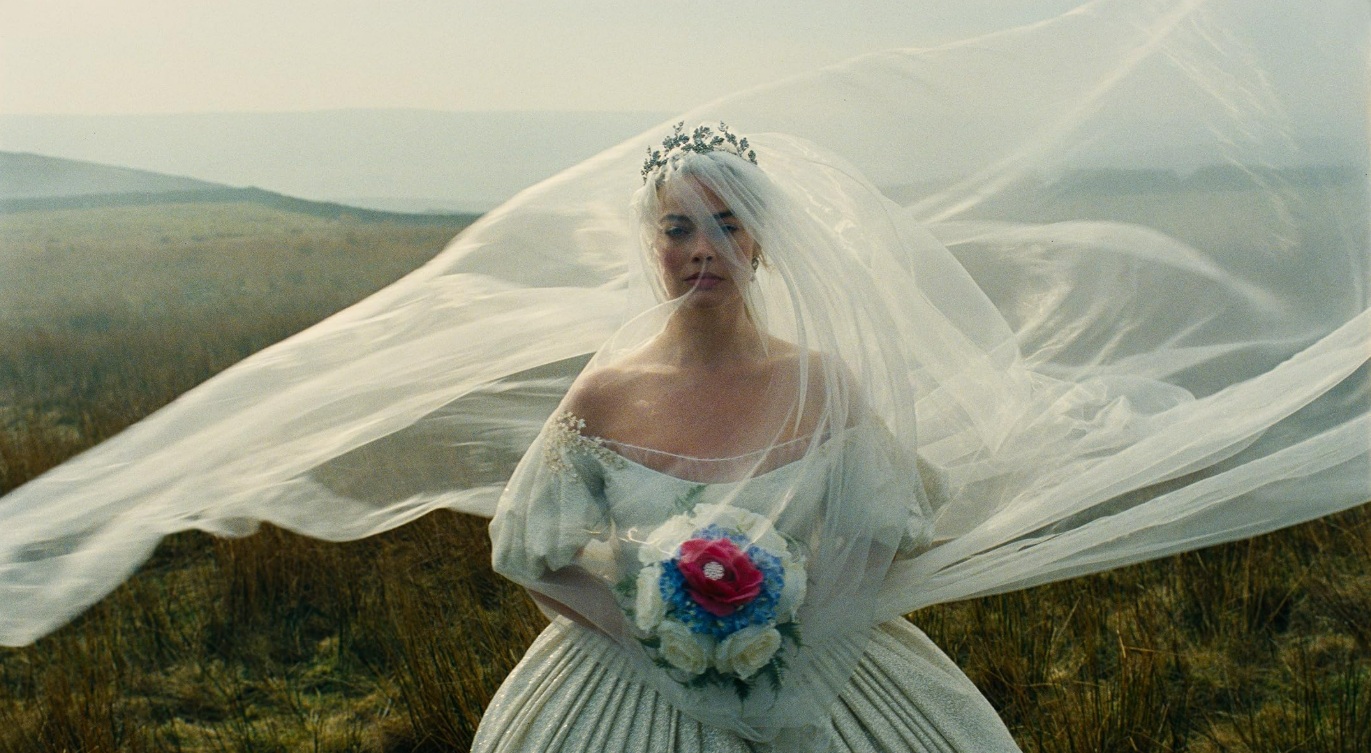
The supporting cast — Hong Chau, Alison Oliver (Saltburn), Shazad Latif — add texture that the central relationship’s intensity sometimes overwhelms. Robbie is broadly praised across both positive and negative reviews as fully committed to a physically and emotionally demanding performance. Elordi’s casting generated its own controversy (see below), but his brooding, physically imposing Heathcliff is credited with carrying the film’s earlier sections.
The Warner Bros. Story
Why This Is Also a Warner Bros. Story — and What It Means for the Studio
Warner Bros. has had a remarkable theatrical run. Wuthering Heights is the studio’s ninth consecutive #1 debut, following a 2025 slate that included A Minecraft Movie, Sinners (16 Oscar nominations), Final Destination: Bloodlines, Weapons, F1, Superman, and One Battle After Another. That streak — built deliberately after Warner Bros. lost Christopher Nolan to Universal — represents a strategic repositioning: the studio has marketed itself as the destination for visionary directors with genuine cinematic ambition.
Wuthering Heights fits that strategy perfectly. Emerald Fennell is the director of Promising Young Woman (Oscar-winning screenplay) and Saltburn (one of Netflix’s most-watched films of 2024). She brings a recognisable auteur identity — provocative, visually obsessive, morally uncomfortable — that generates precisely the kind of cultural conversation that sustains a film’s theatrical run beyond its opening weekend. The Wuthering Heights box office numbers are as much a vindication of Warner Bros.’ director-focused strategy as they are of Fennell’s specific vision.
The irony that Warner Bros. is currently at the centre of a $111 billion acquisition battle — with Paramount having outbid Netflix to acquire WBD — adds a layer of context to this story. Netflix, which offered $150 million for Wuthering Heights and was turned down, is now trying to buy the studio that beat it to the film. The entertainment industry in early 2026 is, genuinely, stranger than fiction.
Have you seen Wuthering Heights? Are you on Team “visually vibrant pleasure” or Team “jarring and vapid”? Tell us in the comments — and pin this box office tracker to your Pinterest board for weekly updates.
Frequently Asked Questions
Everything you need to know about the Wuthering Heights box office and the film itself.
How much has Wuthering Heights made at the box office worldwide?
As of March 1, 2026, Wuthering Heights has earned $177.2 million worldwide according to Box Office Mojo. North America has delivered $67.5 million (38.1% of the total), with international markets contributing $109.7 million (61.9%). The film opened to $83 million globally over the Presidents’ Day weekend (February 13–17), crossed $100 million in its first 10 days, and hit $151.7 million after two weekends. It is still in active theatrical release and has not yet opened in China — a major pending market.
Who stars in the 2026 Wuthering Heights film?
The 2026 Wuthering Heights stars Margot Robbie as Catherine Earnshaw and Jacob Elordi as Heathcliff. The supporting cast includes Hong Chau, Shazad Latif, and Alison Oliver (who also appeared in Fennell’s Saltburn). Three new actors — Charlotte Mellington, Owen Cooper, and Vy Nguyen — make their film debuts as the young versions of Catherine, Heathcliff, and Nelly. The film was produced by Margot Robbie, Tom Ackerley, Emerald Fennell, and Josey McNamara, and shot on 35mm VistaVision cameras in the Yorkshire Dales and Sky Studios Elstree.
Who directed the 2026 Wuthering Heights?
Emerald Fennell directed the 2026 Wuthering Heights. Fennell is the British filmmaker best known for Promising Young Woman (2020), for which she won the Academy Award for Best Original Screenplay — making her only the second woman ever to win that award as a solo writer. Her second film Saltburn (2023) became one of Netflix’s most-watched films and introduced audiences to her maximalist, provocative visual style. Wuthering Heights is her third feature, and the first she has directed from someone else’s source material — though her screenplay is a loose adaptation rather than a faithful one.
What is the Wuthering Heights 2026 Rotten Tomatoes score?
Wuthering Heights currently holds a 58% critics score on Rotten Tomatoes — placing it in “rotten” territory — alongside a 77% audience score. The IMDb rating is 6.3/10. The significant gap between critics and audience scores reflects a film that divides professional reviewers (many of whom find it narratively shallow and overly reliant on carnality) while landing well with the audience it is designed for — viewers who want intense, visually lush, erotically charged period drama rather than faithful literary adaptation. The RT critics’ consensus reads: “Liberally adapting Emily Brontë’s classic story with a heavy dose of carnality and chic stylization, Emerald Fennell’s Wuthering Heights might not be the stuff of high literature, but it is a visually vibrant pleasure.”
Why did Wuthering Heights turn down Netflix’s $150 million offer?
In 2024, Netflix offered $150 million to acquire Wuthering Heights as a streaming exclusive. Director Emerald Fennell and producer Margot Robbie declined the offer because they wanted a theatrical release and the full marketing infrastructure that comes with a major studio wide release. They accepted a lower production budget from Warner Bros. in exchange for theatrical distribution in 3,600+ North American theaters and a global promotional campaign. The decision has proved commercially sound — the theatrical run, combined with the Valentine’s Day positioning, the Charli XCX soundtrack publicity, and Robbie-Elordi media tour, generated cultural conversation that a streaming drop cannot replicate.
What is the controversy about Jacob Elordi being cast as Heathcliff?
In Emily Brontë’s novel, Heathcliff is described as resembling a “dark-skinned gipsy” or “Lascar” — 19th-century language that most modern scholars interpret as indicating the character is racially ambiguous, possibly of South Asian, Romani, or mixed-race heritage. Jacob Elordi is a white Australian actor. His casting drew criticism from readers and academics who felt the adaptation erases a significant dimension of the source text — Heathcliff’s otherness in Victorian English society is central to his character. Fennell defended the choice in September 2025, saying Elordi “looked exactly like the illustration of Heathcliff on the first book that I read.” The controversy became a recurring thread in critical coverage without significantly impacting ticket sales.
Does Wuthering Heights 2026 have a Charli XCX soundtrack?
Yes. Charli XCX contributed an original album of songs for Wuthering Heights, separate from the score composed by Anthony Willis (who also worked with Fennell on Saltburn). The lead single “House,” featuring Welsh musician John Cale, was released on November 10, 2025. A second track, “Chains of Love,” followed on November 13, coinciding with the theatrical trailer. Two further singles — “Wall of Sound” (January 16, 2026) and “Always Everywhere” (February 13, 2026, the film’s release date) — completed the album rollout. The Charli XCX association brought the film additional cultural visibility in music and pop audiences well before release.
How does the 2026 Wuthering Heights compare to previous adaptations?
Wuthering Heights has been adapted for screen more than a dozen times, with notable versions including the 1939 film starring Laurence Olivier and Merle Oberon (nominated for 8 Oscars), the 1970 version with Timothy Dalton, and Andrea Arnold’s unconventional 2011 adaptation which cast a mixed-race actor as Heathcliff — a creative decision Fennell’s casting directly contrasts with. The 2026 version is distinguished by its explicit carnality, its visual maximalism (35mm VistaVision, actual Yorkshire locations), and its deliberate positioning as an auteur interpretation rather than a faithful adaptation. Fennell is the first woman to direct a major theatrical Wuthering Heights adaptation.

Popcorn in hand and a opinion ready — Emily covers movie reviews, box office buzz, and all things cinema at Popcorn Review.

