

The best mind-bending Hollywood thrillers don’t just entertain you — they mess with your head for days afterward. They’re the films you replay in the shower, explain breathlessly to friends who haven’t seen them, and revisit years later to find layers you missed the first time around.
What separates a mind-bending thriller from a regular one? It’s the way these films weaponize perception. They feed you information in carefully controlled doses, establish a reality you trust, and then pull that reality out from under you at precisely the right moment. The best ones make you feel like an active participant, not a passive audience — which is why they linger where ordinary films don’t.
This guide ranks 25 of the greatest mind-bending Hollywood thrillers ever made — from Hitchcock’s foundational work through Nolan’s dream-architecture to 2025’s best psychological films — with IMDb ratings, Rotten Tomatoes scores, streaming platforms, and an honest explanation of exactly what makes each one worth your time. We also cover the best upcoming psychological thrillers expected in 2026.
⚠️ Light spoiler warnings are noted where needed — we explain why films work without ruining first-time experiences wherever possible.
Last updated: February 2026 | Streaming availability current as of Feb 2026.
📋 Table of Contents
- Quick Reference Table — All 25 Films
- 1. Inception (2010)
- 2. Fight Club (1999)
- 3. The Silence of the Lambs (1991)
- 4. Memento (2000)
- 5. Se7en (1995)
- 6. Shutter Island (2010)
- 7. Gone Girl (2014)
- 8. The Sixth Sense (1999)
- —
- 9. Black Swan (2010)
- 10. The Prestige (2006)
- 11. Parasite (2019)
- 12. Zodiac (2007)
- 13. Nightcrawler (2014)
- 14. The Machinist (2004)
- 15. Mulholland Drive (2001)
- 16. Oldboy (2003)
- 17. Annihilation (2018)
- 18. Nocturnal Animals (2016)
- 19. Prisoners (2013)
- 20. Donnie Darko (2001)
- 21–25. Honorable Mentions
- Best Upcoming Mind-Bending Thrillers in 2026
- FAQ
Quick Reference — 25 Best Mind-Bending Hollywood Thrillers of All Time
| # | Film | Year | Director | IMDb | RT | Stream On |
|---|---|---|---|---|---|---|
| 1 | Inception | 2010 | Christopher Nolan | 8.8 | 87% | Max |
| 2 | Fight Club | 1999 | David Fincher | 8.8 | 79% | Max |
| 3 | The Silence of the Lambs | 1991 | Jonathan Demme | 8.6 | 95% | Prime / Max |
| 4 | Memento | 2000 | Christopher Nolan | 8.4 | 93% | Prime / Peacock |
| 5 | Se7en | 1995 | David Fincher | 8.6 | 82% | Max / Peacock |
| 6 | Shutter Island | 2010 | Martin Scorsese | 8.2 | 69% | Peacock / Hulu |
| 7 | Gone Girl | 2014 | David Fincher | 8.1 | 88% | Max |
| 8 | The Sixth Sense | 1999 | M. Night Shyamalan | 8.1 | 86% | Hulu |
| 9 | Black Swan | 2010 | Darren Aronofsky | 8.0 | 85% | Hulu / Peacock |
| 10 | The Prestige | 2006 | Christopher Nolan | 8.5 | 76% | Max |
| 11 | Parasite | 2019 | Bong Joon-ho | 8.5 | 99% | Hulu / Max |
| 12 | Zodiac | 2007 | David Fincher | 7.7 | 89% | Hulu / Peacock |
| 13 | Nightcrawler | 2014 | Dan Gilroy | 7.9 | 95% | Prime / Hulu |
| 14 | The Machinist | 2004 | Brad Anderson | 7.7 | 77% | Tubi / VOD |
| 15 | Mulholland Drive | 2001 | David Lynch | 7.9 | 84% | Max / Criterion |
| 16 | Oldboy | 2003 | Park Chan-wook | 8.4 | 81% | Hulu / Criterion |
| 17 | Annihilation | 2018 | Alex Garland | 6.9 | 88% | Prime |
| 18 | Nocturnal Animals | 2016 | Tom Ford | 7.5 | 73% | Prime |
| 19 | Prisoners | 2013 | Denis Villeneuve | 8.1 | 81% | Prime / Peacock |
| 20 | Donnie Darko | 2001 | Richard Kelly | 8.0 | 86% | Prime / Peacock |
| 21 | Coherence | 2013 | James Ward Byrkit | 7.2 | 88% | Prime / Tubi |
| 22 | Primer | 2004 | Shane Carruth | 6.9 | 73% | Prime / Tubi |
| 23 | The Others | 2001 | Alejandro Amenábar | 7.6 | 83% | Prime |
| 24 | Uncut Gems | 2019 | Safdie Brothers | 7.4 | 92% | Netflix |
| 25 | I’m Thinking of Ending Things | 2020 | Charlie Kaufman | 6.7 | 80% | Netflix |
1. Inception (2010)
Director: Christopher Nolan | Cast: Leonardo DiCaprio, Joseph Gordon-Levitt, Elliot Page, Tom Hardy, Ken Watanabe, Marion Cotillard | Box Office: $837M worldwide
The defining mind-bending Hollywood thriller of the 21st century. Dom Cobb is a thief who operates in the architecture of other people’s dreams — stealing ideas from the subconscious for corporate espionage. When he’s offered a chance to have his criminal record erased, the price is inception: not stealing an idea, but planting one deep enough that the target believes it’s their own. The catch is that implanting an idea requires going so deep into layered dream-states that the line between dreaming and reality begins to dissolve — for the characters and for us.
What makes Inception the greatest in this genre isn’t its concept but its emotional architecture. Nolan doesn’t wrap the dream mechanics around a puzzle — he wraps them around a grief story. Cobb can’t go home to his children because of what happened to his wife Mal, and his inability to let go of her image means she haunts every subconscious space he enters. The spinning top isn’t just a reality test — it’s a symbol of denial itself. The film rewards viewers who engage with it as tragedy rather than brain teaser, and that emotional depth is why it has outlasted every imitator.
Nolan shot the rotating hotel corridor sequence with a real set mounted on a mechanical gimbal — the actors are genuinely performing in a room that spins 360 degrees. This practical approach to depicting psychological disorientation gives the film a physical texture that digital effects alone couldn’t achieve, and it remains among the most technically extraordinary sequences in modern cinema.
📺 Watch on Max
2. Fight Club (1999)
Director: David Fincher | Cast: Brad Pitt, Edward Norton, Helena Bonham Carter | Based on: Chuck Palahniuk’s novel
David Fincher’s adaptation of Chuck Palahniuk’s novel bombed at the box office in 1999 and became one of the most influential films of the next two decades. An unnamed insomniac narrator — white-collar, hollowed out by consumer culture, unable to feel — meets the charismatic soap salesman Tyler Durden and co-founds an underground fighting club that becomes something much darker and more organized than either man anticipated.
What positions Fight Club among the greatest mind-bending thrillers isn’t the twist — it’s the way Fincher uses every cinematic tool to embed clues about the truth in plain sight throughout the entire film. The first-time viewer and the rewatcher are watching fundamentally different films. On rewatch, almost every scene reads differently, and Fincher rewards the attentive viewer with dozens of planted visual signals. The film is genuinely subversive in form as well as content — the narrator literally addresses the audience at points, breaking the fourth wall to implicate us in the delusion we’re watching.
Its critique of masculinity, consumer identity, and the appeal of destructive order remains more culturally resonant in 2026 than it was in 1999. That’s the mark of a genuinely diagnostic work rather than a thriller with a clever gimmick.
📺 Watch on Max
3. The Silence of the Lambs (1991)
Director: Jonathan Demme | Cast: Jodie Foster, Anthony Hopkins, Scott Glenn, Ted Levine | Awards: Won all 5 major Academy Awards (Best Picture, Director, Actor, Actress, Screenplay)
The only horror-adjacent film to win all five major Academy Awards, and one of the few films where the villain is more psychologically complex, more intellectually alive, and more memorable than the hero — and the hero is exceptional. Clarice Starling is a young FBI trainee assigned to interview the incarcerated Dr. Hannibal Lecter, a brilliant psychiatrist and cannibalistic serial killer, in the hope that he can help profile Buffalo Bill, who is murdering women across the Midwest.
What makes The Silence of the Lambs a mind-bending thriller rather than a straightforward crime film is the relationship at its center. Lecter doesn’t give information — he trades it. He extracts psychological vulnerability from Clarice in exchange for insights about the killer, and the dynamic is impossible to look away from because we’re never entirely sure who is manipulating whom. Jodie Foster’s performance is an extraordinary act of controlled intelligence — we see Clarice calculating her exposure to Lecter in every scene, always aware she is being psychologically excavated.
Jonathan Demme’s direction is notable for using sustained direct-to-camera eyeline in Lecter’s scenes — he looks directly at us, implicating the audience in the exchange and making the viewing experience itself feel like a negotiation. It remains the foundational text of the psychological thriller as a prestige genre.
📺 Watch on Prime / Max
4. Memento (2000)
Director: Christopher Nolan | Cast: Guy Pearce, Carrie-Anne Moss, Joe Pantoliano | Budget: $9M | Gross: $40M
Made for $9M before Nolan had any studio resources, Memento remains the purest formal experiment on this list. Leonard Shelby has anterograde amnesia — he cannot form new long-term memories. Every time he loses consciousness, his slate resets. He’s hunting the man he believes killed his wife, navigating the world through a system of Polaroid photographs, handwritten notes, and tattoos on his own body, relying on trusting himself across gaps he can’t remember.
Nolan tells this story in reverse chronological order. We begin at the end of the story and work backward to the beginning, experiencing each scene without the context that preceded it — exactly as Leonard experiences his own life. The effect is disorienting in the most precise possible way: we share his condition. We piece together cause and effect in the same fragmented, backward fashion he does. And when the film finally reveals what Leonard has actually been doing — the full picture of who he is and what he’s choosing — it recontextualizes everything that came before.
The film proved that genuinely challenging narrative structure could succeed commercially and critically without franchise support or star power, and it influenced an entire generation of thriller directors who learned from its form-content alignment.
📺 Watch on Prime or Peacock
5. Se7en (1995)
Director: David Fincher | Cast: Morgan Freeman, Brad Pitt, Kevin Spacey, Gwyneth Paltrow, R. Lee Ermey
David Fincher’s breakout film remains one of the most atmospherically suffocating crime thrillers ever made. A veteran detective (Freeman) and his younger replacement (Pitt) investigate a serial killer constructing elaborate murders around the seven deadly sins — each crime scene more meticulously theatrical than the last. The unnamed city they operate in is perpetually rain-soaked, grimy, and lightless; Fincher designed the visual environment to make escape feel impossible before the story demands it.
What elevates Se7en above its procedural structure is the way Fincher uses the investigation to explore the philosophical gap between Somerset’s weary resignation and Mills’ furious idealism. The film is genuinely about whether it’s possible to do good work in a world that seems to be actively resisting goodness, and that question gives the thriller its moral weight. The ending is one of cinema’s most genuinely unsettling — not because of what happens but because of the choice it forces on the surviving character, and the film’s refusal to make the ethical calculus clear.
📺 Watch on Max or Peacock
6. Shutter Island (2010)
Director: Martin Scorsese | Cast: Leonardo DiCaprio, Mark Ruffalo, Ben Kingsley, Michelle Williams, Emily Mortimer, Patricia Clarkson
Critics were split on Shutter Island when it released in 2010 — the 69% on Rotten Tomatoes reflects that division — but audiences gave it an 8.2 on IMDb, and they’ve been right all along. It is not a simple twist thriller. It is a tragedy about grief, trauma-induced dissociation, and a man choosing delusion over a reality too devastating to inhabit.
US Marshal Teddy Daniels and his new partner travel to Ashecliffe Hospital for the Criminally Insane on Shutter Island to investigate a missing patient. The investigation spirals into something Teddy increasingly cannot account for within his own reality — the island, the doctors, and his own mind all seem to be working against him. Scorsese deliberately shoots the film as a genre exercise that the viewer can enjoy as a paranoid thriller on first watch and then revisit as a heartbreaking character study once the full picture is clear.
DiCaprio’s performance is among his finest — he plays Teddy’s righteous conviction with such commitment that we believe in it entirely, which makes the unraveling devastating rather than merely clever. The film is often dismissed as a twist vehicle, but the twist is just the doorway into what the film is actually about: the unbearable weight of certain kinds of guilt.
📺 Watch on Peacock or Hulu
7. Gone Girl (2014)
Director: David Fincher | Cast: Ben Affleck, Rosamund Pike, Carrie Coon, Neil Patrick Harris, Tyler Perry | Based on: Gillian Flynn’s novel
David Fincher’s third film on this list — which tells you something about why he is the defining director of the mind-bending thriller genre. Gone Girl is an adaptation of Gillian Flynn’s bestselling novel and arguably the most rewatchable film on this entire list, because what you see on first viewing and what you see knowing everything are two fundamentally different films.
On the morning of their fifth anniversary, Amy Dunne disappears. Her husband Nick becomes the prime suspect. The media circus, his suspicious behavior, and a string of evidence begin to form a damning picture. What the film does at its midpoint — the moment Amy’s full plan is revealed from her own perspective — is one of cinema’s great structural jolts. The genre shifts under your feet. The film you thought you were watching becomes something else entirely, and you realize you’ve been given every piece of information you needed to understand what was happening, if only you’d been paying attention to it correctly.
Rosamund Pike delivers one of the finest performances of the decade, constructing a character with the precision of an architect and the commitment of a method actor. The film’s examination of performed identity — in marriage, in media, in gender — is as sharp as anything produced in the 2010s.
📺 Watch on Max
8. The Sixth Sense (1999)
Director: M. Night Shyamalan | Cast: Bruce Willis, Haley Joel Osment, Toni Collette | Box Office: $672M on a $40M budget
The film that made “I see dead people” a cultural touchstone and established M. Night Shyamalan as the master of the recontextualizing twist. Child psychologist Malcolm Crowe begins treating a young boy named Cole Sear who claims to see and interact with dead people who don’t know they’re dead. What appears to be a supernatural drama about a gifted child reveals, in its final act, that the film’s emotional architecture has been built on a foundation the viewer never questioned.
The genius of The Sixth Sense is that it plays fair. Every clue is present. Shyamalan hides the truth not through misdirection but through the audience’s own assumptions — we see what we’re trained to see and miss what’s sitting in plain view. On rewatch, the film becomes an entirely different emotional experience, and many viewers find it more moving the second time than the first, once they understand what they were watching.
Haley Joel Osment’s performance is genuinely extraordinary — he carries the weight of a child navigating a secret most adults cannot process, and the scene where he finally tells his mother what he can do remains one of the most devastating emotional moments in any thriller.
📺 Watch on Hulu
9. Black Swan (2010)
Director: Darren Aronofsky | Cast: Natalie Portman, Mila Kunis, Vincent Cassel, Barbara Hershey | Awards: Natalie Portman — Academy Award for Best Actress
Darren Aronofsky’s immersion into the world of professional ballet is one of the most formally disciplined mind-bending thrillers ever made — a film where the subjective camera literally becomes the instrument of unreliable reality. Nina Sayers is a technically perfect but emotionally controlled dancer cast as both the White Swan and Black Swan in her company’s production of Swan Lake. The White Swan is natural for her — pure, controlled, technically flawless. The Black Swan requires her to access something she has suppressed so thoroughly that the process of releasing it begins to fracture her grip on what’s real.
Aronofsky shoots the film almost entirely in handheld close-up, rarely pulling back for objective distance. We see exactly what Nina sees, feel what Nina feels — which means that as her perception distorts, ours does too. Body horror elements appear with increasing frequency and then vanish, leaving us uncertain whether we hallucinated them alongside her. The film’s understanding of how perfectionism and external pressure interact with self-image is genuinely psychological rather than merely metaphorical.
📺 Watch on Hulu or Peacock
10. The Prestige (2006)
Director: Christopher Nolan | Cast: Hugh Jackman, Christian Bale, Michael Caine, Scarlett Johansson, David Bowie, Andy Serkis | Based on: Christopher Priest’s novel
The most structurally elegant film Christopher Nolan has ever made — which is saying something on a list that contains Inception and Memento. Two Victorian-era rival magicians destroy each other’s lives in escalating acts of competition and sabotage, each determined to create the ultimate stage illusion. The film is structured exactly like a magic trick: it tells you at the beginning that it will deceive you, and you still can’t prevent it.
Michael Caine’s opening narration explains the three stages of a magic trick — the pledge, the turn, and the prestige — and the film’s entire structure is built around this framework. Everything you see is the pledge. The film’s misdirections are the turn. The prestige — the moment of astonishment — arrives in the final act when you realize the film has been executing two separate illusions simultaneously, each concealing the other.
Christian Bale’s performance is one of his finest and the most rewardingly rewatch-able on this list. Hugh Jackman matches him with a fury that builds to tragedy. David Bowie’s cameo as Nikola Tesla is as memorable as any five minutes in Nolan’s filmography.
📺 Watch on Max
11. Parasite (2019)
Director: Bong Joon-ho | Cast: Song Kang-ho, Choi Woo-shik, Park So-dam, Lee Sun-kyun, Cho Yeo-jeong | Awards: Academy Award for Best Picture, Director, Original Screenplay, International Film
A 99% on Rotten Tomatoes and the first non-English-language film to win the Academy Award for Best Picture — Bong Joon-ho’s Parasite doesn’t fit neatly into any genre, which is precisely what makes it the most formally audacious film on this list. It begins as a social comedy: a poor South Korean family, living in a semi-basement, systematically infiltrates a wealthy family’s household by getting hired as their domestic staff through a chain of charming deceptions. Then the basement reveals its secret, and the film becomes something entirely different — a thriller so tense that audience members reportedly stopped breathing.
Bong Joon-ho structures the film as a genre implosion — it is simultaneously a class satire, a dark comedy, a thriller, and a tragedy, and it becomes each one completely in sequence without tonal incoherence. The architecture of the wealthy Park family’s house — with its below-ground level that nobody acknowledges — is the film’s central metaphor made literal: beneath every visible social arrangement, hidden things accumulate, and they don’t stay hidden forever.
📺 Watch on Hulu or Max
12. Zodiac (2007)
Director: David Fincher | Cast: Jake Gyllenhaal, Robert Downey Jr., Mark Ruffalo, Chloë Sevigny
Fincher’s most underrated film and the most patient thriller on this list. A procedural about the Zodiac killer case — America’s most famous unsolved serial murders — Zodiac runs nearly three hours and refuses to give its audience the conventional resolution a genre film typically provides, because the real case never provided one. Instead, Fincher documents how obsession spreads from the killer to the investigators to the journalist to the cartoonist who becomes convinced he knows the answer, and how proximity to an unknowable mystery corrodes the people trying to solve it.
📺 Watch on Hulu or Peacock
13. Nightcrawler (2014)
Director: Dan Gilroy | Cast: Jake Gyllenhaal, Rene Russo, Riz Ahmed
Jake Gyllenhaal’s most disturbing performance — and one of the finest of the decade. Lou Bloom is a charming, ruthless sociopath who discovers that he can film crime scenes and sell the footage to TV news stations. The film is a pitch-black satire of American hustler culture, the media appetite for violence, and the specific terror of a person who has genuinely internalized self-help language without any accompanying conscience. Lou doesn’t understand that he’s wrong — he understands that wrong is irrelevant if it isn’t caught.
📺 Watch on Prime or Hulu
14. The Machinist (2004)
Director: Brad Anderson | Cast: Christian Bale, Jennifer Jason Leigh, Aitana Sánchez-Gijón
Christian Bale lost 63 pounds for this role — down to 121 pounds from his usual 185 — in what remains the most extreme physical transformation for a film role in Hollywood history. Trevor Reznik hasn’t slept in a year. The world around him is beginning to fragment. Colleagues he can’t account for appear and disappear. Notes appear that seem to be from himself. A mystery that began as external conspiracy reveals itself as internal — one of the most elegantly constructed unreliable narrator structures in recent genre cinema.
📺 Available on Tubi or VOD
15. Mulholland Drive (2001)
Director: David Lynch | Cast: Naomi Watts, Laura Harring, Justin Theroux
David Lynch’s most complete and devastating work. An aspiring actress arrives in Los Angeles and befriends an amnesiac woman she finds in her aunt’s apartment. The mystery they pursue together shifts, collapses, and reforms in the film’s final act in a way that demands the viewer reconstruct everything they’ve seen. Lynch works in dream logic — cause and effect operate differently, time is malleable, identity is fluid — and he never provides a linear explanation, because the film’s subject is the gap between the life we fantasize about and the life we actually live. It is the most psychologically rich film on this list and the most resistant to single interpretation.
📺 Watch on Max or Criterion Channel
16. Oldboy (2003)
Director: Park Chan-wook | Cast: Choi Min-sik, Yoo Ji-tae, Kang Hye-jung
Park Chan-wook’s masterwork is the most emotionally devastating film on this list. A man is imprisoned for fifteen years without explanation. On his release, he’s given money, a phone, and five days to find out who imprisoned him and why. The revelation of the why is one of cinema’s most genuinely shocking — and the film refuses to flinch from its implications. The famous corridor fight sequence — a continuous, exhausted brawl that plays in a single extended shot — is the finest action sequence in thriller cinema. Oldboy is brutal and operatic and demands its audience meet it on its own terms.
📺 Watch on Hulu or Criterion Channel
17. Annihilation (2018)
Director: Alex Garland | Cast: Natalie Portman, Jennifer Jason Leigh, Gina Rodriguez, Oscar Isaac
Alex Garland’s follow-up to Ex Machina is the most polarizing film on this list — Paramount was so unsure of it that they gave Garland final cut rights and released it to streaming internationally rather than theatrically. For viewers on its frequency, it’s the most visually extraordinary mind-bending thriller of the past decade. Five women enter the Shimmer — a zone of reality distortion expanding from a mysterious lighthouse — and discover that space, time, biology, and identity operate differently inside it. Garland refuses to explain what the Shimmer is or what it wants, because the film is about the unknowable other and the inadequacy of human frameworks for understanding it.
📺 Watch on Prime Video
18. Nocturnal Animals (2016)
Director: Tom Ford | Cast: Amy Adams, Jake Gyllenhaal, Michael Shannon, Aaron Taylor-Johnson, Isla Fisher
Tom Ford’s second film as director operates on a dual timeline structure — an art gallery curator reads a violent revenge novel sent by her ex-husband, and the film oscillates between her present-day isolation and her lived experience of reading the story. The novel’s events mirror and comment on the real history between them. Ford’s immaculate visual precision — everything is beautiful, everything is controlled, everything is slightly wrong — creates an atmosphere of beautiful menace that makes the violence of the novel’s narrative feel like it’s happening to the reader as much as the characters. Michael Shannon’s supporting performance earned him a Golden Globe nomination.
📺 Watch on Prime Video
19. Prisoners (2013)
Director: Denis Villeneuve | Cast: Hugh Jackman, Jake Gyllenhaal, Viola Davis, Maria Bello, Paul Dano, Melissa Leo
Denis Villeneuve’s English-language breakthrough is a moral thriller as much as a crime one. Two young girls disappear from a Thanksgiving street. The police detective (Gyllenhaal) has a suspect but cannot hold him. The father (Jackman) decides to hold him himself and extract information through torture. Villeneuve constructs the film around the question of what desperation licenses — how far a parent can go, whether the right outcome excuses the method, whether certainty justifies the violence used to produce it. Roger Deakins’ cinematography is among his finest work.
📺 Watch on Prime or Peacock
20. Donnie Darko (2001)
Director: Richard Kelly | Cast: Jake Gyllenhaal, Jena Malone, Drew Barrymore, Patrick Swayze, Maggie Gyllenhaal
Richard Kelly’s debut bombed on its initial release and became one of the most influential cult films in DVD-era cinema history. A troubled teenage boy living in 1988 suburban America begins receiving messages from a giant, terrifying rabbit named Frank, telling him the world will end in 28 days, 6 hours, 42 minutes, and 12 seconds. What follows is a coming-of-age film, a time travel narrative, a surreal horror film, and a meditation on adolescent alienation — all simultaneously, without ever making the synthesis feel forced. Jake Gyllenhaal’s performance is the earliest and arguably the finest of his career.
📺 Watch on Prime or Peacock
21–25. Five More Mind-Bending Thrillers You Need to See
- Coherence (2013) — Prime / Tubi: Made for $50,000 in four nights with no script — actors were given only their character’s backstory and a set of instructions per scene. A quantum mechanics event causes reality to fracture at a dinner party, and the film becomes the most credible low-budget reality-distortion thriller ever made. IMDb: 7.2 | RT: 88%. Essential for fans of Primer and Inception.
- Primer (2004) — Prime / Tubi: Two engineers accidentally build a time travel device in their garage and then attempt to use it for personal gain, causing a cascade of temporal paradoxes that the film documents with absolute technical rigor and almost no exposition. It is the most genuinely confusing film on this list — audiences build flowcharts to follow its logic — and that difficulty is a feature, not a bug. IMDb: 6.9 | RT: 73%.
- The Others (2001) — Prime: Nicole Kidman in one of her finest performances — a mother waiting for her husband to return from WWII, isolated with her light-sensitive children in a remote manor that seems to be haunted. Alejandro Amenábar’s film constructs its atmosphere with Hitchcockian patience and delivers a revelation that renders the entire film unrecognizable on second viewing. IMDb: 7.6 | RT: 83%.
- Uncut Gems (2019) — Netflix: The Safdie Brothers’ jewel-box anxiety attack. Adam Sandler as a charismatic, catastrophically flawed New York jeweler in a continuous, escalating loop of high-stakes gambling, debt, and desperate improvisation. It is the most viscerally stressful film on this list — designed to keep the viewer in a state of sustained sympathetic anxiety for two hours. IMDb: 7.4 | RT: 92%. Sandler has never been better.
- I’m Thinking of Ending Things (2020) — Netflix: Charlie Kaufman’s most deliberately oblique film. A young woman accompanying her new boyfriend to meet his parents on a remote farm finds that details keep shifting — her name, their relationship history, her profession — in ways that suggest reality is not behaving according to rules. It is the most demanding film on this list and the most resistant to summary. Approach it as an experience rather than a puzzle and it rewards on a level almost nothing else does. IMDb: 6.7 | RT: 80%.
Best Upcoming Mind-Bending Thrillers to Watch in 2026
🎬 Verity (2026) — The One to Watch
Adapted from Colleen Hoover’s bestselling psychological thriller novel, Verity is the most anticipated mind-bending thriller of 2026. A struggling writer discovers a disturbing manuscript in a famous author’s home — a confession that may or may not be true — and the film’s entire tension rests on whether the narrative she’s reading is memoir, fiction, or manipulation. The novel’s built-in fanbase is enormous, and the Gone Girl-style unreliable narrator structure positions it as a potential major event. Director and full cast had not been officially announced as of February 2026 — check back for updates.
🎬 The Odyssey (July 17, 2026) — Christopher Nolan
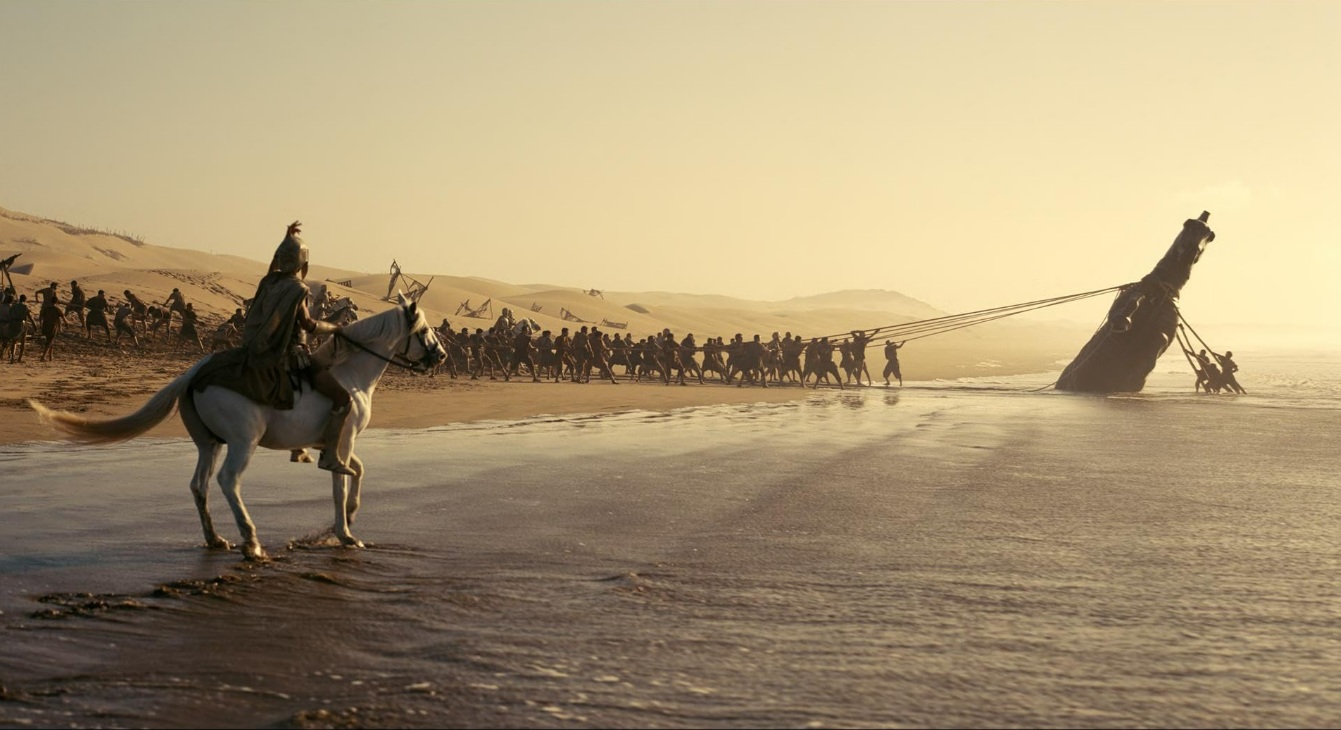
Not a thriller in the conventional sense, but Nolan’s adaptation of Homer’s Odyssey — shot entirely on IMAX and starring Matt Damon, Tom Holland, and Zendaya — will almost certainly deploy the psychological and perceptual complexity that defines his best work. For fans of Inception, Memento, and The Prestige, this is the 2026 release with the strongest case for genuine mind-bending ambition.
🎬 Psycho Killer (2026)
Details remain limited, but early production information suggests a psychological cat-and-mouse thriller playing with the familiar hunter-versus-hunted dynamic in ways that deliberately subvert genre expectations. Worth watching for as more information becomes available.
Release dates and casting for 2026 psychological thrillers are subject to change. Check our upcoming movies section for the latest updates.
FAQ — Mind-Bending Hollywood Thrillers
What is the best mind-bending Hollywood thriller of all time?
Inception (2010) and Fight Club (1999) share an IMDb rating of 8.8 — the highest on this list — and both have legitimate claims to the title. Inception edges ahead for most lists based on its formal ambition, box office success ($837M), and the breadth of its emotional and structural achievement. However, The Silence of the Lambs (1991) and Memento (2000) both make compelling cases for the top position depending on whether you weight critical consensus, rewatchability, or cultural influence most heavily.
What are the best mind-bending thriller movies on Netflix right now?
The best mind-bending thrillers currently on Netflix include Uncut Gems (2019), I’m Thinking of Ending Things (2020), and Parasite (2019 — check availability). Netflix’s catalogue shifts frequently. For a broader selection, Max currently carries Inception, Fight Club, Se7en, Gone Girl, and The Prestige. Hulu carries The Sixth Sense, Black Swan, Shutter Island, and Parasite. Prime carries Memento, Nightcrawler, Annihilation, Nocturnal Animals, and Prisoners.
What are the best mind-bending thriller movies with shocking plot twists?
The greatest plot twists in mind-bending thriller history belong to: The Sixth Sense (the ghost reveal), Fight Club (Tyler Durden’s identity), Shutter Island (Teddy’s full identity), Gone Girl (Amy’s midpoint reveal), The Prestige (the dual magician secret), Memento (Leonard’s full history), Oldboy (the captor’s motivation), Parasite (the basement), and The Others (the full household situation). All are best experienced having seen the film at least once without prior knowledge of the ending.
What mind-bending thrillers are coming in 2026?
The most anticipated mind-bending thriller of 2026 is Verity, the adaptation of Colleen Hoover’s psychological novel about an unreliable manuscript that may be a confession. Christopher Nolan’s The Odyssey (July 17, 2026) is also expected to contain the perceptual complexity that defines his best work. Check our upcoming movies section for the latest 2026 release updates.
What are some mind-bending thrillers like Inception to watch next?
If Inception is your benchmark, the closest matches in structural and perceptual ambition are: Memento (2000) — Nolan’s earlier non-linear masterpiece; The Prestige (2006) — Nolan’s obsession-and-deception thriller; Coherence (2013) — a low-budget quantum reality film; Primer (2004) — time travel at maximum technical rigor; Annihilation (2018) — reality distortion with existential dread; and Donnie Darko (2001) — dual-timeline emotional sci-fi.
What is the most confusing mind-bending thriller ever made?
Primer (2004) is the most technically confusing — a time travel film so rigorously constructed that audiences build flowcharts to follow its logic. Mulholland Drive (2001) is the most deliberately resistant to interpretation — David Lynch designed it to operate in dream logic that cannot be reduced to a linear explanation. I’m Thinking of Ending Things (2020) by Charlie Kaufman is the most recent film to achieve this level of productive confusion. All three are intentionally difficult and reward patient, repeated viewing over demanding resolution.
Is Parasite (2019) a psychological thriller?
Yes. While Parasite is often classified as dark comedy or social satire, it functions as a full psychological thriller in its second half — particularly after the basement revelation at the midpoint, when the film pivots into genuinely tense, violent territory. It won the Academy Award for Best Picture, Director, Original Screenplay, and International Film in 2020 — the first non-English-language film to win Best Picture. It currently has a 99% on Rotten Tomatoes and an IMDb rating of 8.5.
All streaming availability current as of February 2026 — check platforms for latest access. Related reading: Best Underrated Hollywood Films of 2024–2025 | Most Anticipated Hollywood Blockbusters 2026 | Best Bollywood Suspense Thriller Movies

Popcorn in hand and a opinion ready — Emily covers movie reviews, box office buzz, and all things cinema at Popcorn Review.

