
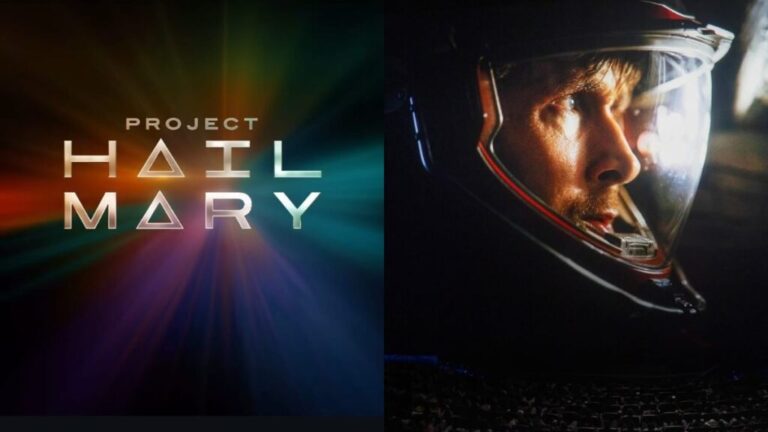
The Project Hail Mary box office story of 2026 is not just a movie story. It is a Hollywood earthquake. Nobody saw it coming. Analysts projected $45–55 million opening weekend. The film made $80.5 million in North America alone — and $140.9 million globally — before most people had even heard the title.
As of March 29, 2026, Project Hail Mary has crossed $223 million worldwide with no signs of slowing down. Its second weekend added another $53 million domestically — dropping just 34% from opening weekend. That number is extraordinary. It tells you this film has legs. Real, powerful, audience-driven legs.
So what exactly happened here? How does a $200 million original sci-fi film — no franchise, no superhero, no sequel safety net — walk into 2026 and become one of the most talked-about movies of the decade?
Buckle up. We’re going much deeper than every other entertainment site. Because the real story of the Project Hail Mary box office phenomenon is about the business of Hollywood, the psychology of audiences, the rebirth of original cinema, and one man named Ryan Gosling who bets everything on a story about a lonely astronaut and an alien made of rock.
Project Hail Mary Box Office: The Numbers That Shocked Hollywood
Let’s start with the raw data — because these numbers are genuinely historic.
| Milestone | Figure | Context |
|---|---|---|
| Opening Weekend (North America) | $80.5 million | Biggest 2026 debut; beat internal projections by 35% |
| Opening Weekend (International) | $60.4 million from 82 markets | Amazon MGM’s biggest international opening ever |
| Opening Weekend (Global) | $140.9 million | Largest global debut for an MPA title in 2026 |
| Second Weekend (North America) | ~$53.1 million | Only 34% drop — extraordinary hold for a sci-fi film |
| Worldwide Total (as of March 29, 2026) | $223+ million | 8th highest-grossing film of 2026 already |
| IMAX Contribution (Opening Weekend) | $27.6 million worldwide | Biggest non-franchise IMAX opening since F1 (2025) |
| Rotten Tomatoes Score | 95% (349 critics) | Best score for any wide release in 2026 |
| CinemaScore | A | Audience grade rarely given to original sci-fi |
| India Opening Day | ₹2.7–3 crore | Strong for original Hollywood sci-fi in limited release |
| India Total (Extended Opening) | ₹9+ crore | Growing rapidly as IMAX screens expanded from 6 to 60 |
To put the 34% second-weekend drop in perspective: the average Hollywood blockbuster drops 50–60% in its second weekend. Some franchise films have dropped over 70%. Project Hail Mary box office held like a film with genuine word-of-mouth firepower — people were actively recommending it to friends and family, which is the single most powerful marketing force in cinema.
The Amazon MGM Moment: What Was Really at Stake
To understand why the Project Hail Mary box office result matters beyond just ticket sales, you have to understand what Amazon was walking into.
In 2022, Amazon acquired MGM for $8 billion. That’s not a typo. Eight billion dollars for a historic studio with the James Bond franchise, the Rocky catalog, and decades of cinema heritage. Four years later, what did they have to show for it in theaters?
This January: Melania, a documentary that earned $16 million against a $40 million budget. A $24 million loss.
February: Crime 101, an R-rated caper that grossed $65 million against a $90 million budget. Another write-down.
Then came Project Hail Mary. A $200 million original sci-fi film starring Ryan Gosling, directed by the guys who made The Lego Movie and Spider-Man: Into the Spider-Verse. No IP protection. No guaranteed sequel audience. Just a brilliant book, a brilliant cast, and a bet that audiences still want something new.
“This is Amazon MGM’s first big hit. What makes the story work is the balance of science fiction and humanity. The Martian had similar heart, and it’s working again.” — David A. Gross, FranchiseRe
The stakes could not have been higher. And the film delivered. Not just commercially — culturally. Hollywood is paying attention.
From $45M Projections to $80M Reality: How It Happened
Six weeks before release, tracking data had Project Hail Mary earning $45–55 million in its opening weekend. Respectable — but not the industry-shaking number it needed to be for a $200 million investment.
Then something extraordinary happened. The reviews came in. 95% on Rotten Tomatoes. Critics used words like “miraculous,” “stunning,” and “the best film of the year.” Social media exploded — not just with praise, but with genuine emotion. People were crying in theaters. They were posting about Rocky — the alien character — with the same intensity that Marvel audiences post about their favorite superheroes.
Projections jumped from $55 million to $65 million in the final week. Then the opening-day numbers arrived: $31 million — including $12 million in Thursday previews — and the industry realized it was watching something rare happen in real time.
By Sunday, the Project Hail Mary box office domestic total sat at $80.5 million. An original sci-fi film. Not a sequel. Not a remake. Not based on a beloved superhero. Just a story about a man alone in space and the unlikely friendship that saves humanity.
Why Project Hail Mary Connected: The Psychology Behind the Phenomenon
Here’s what no one else is telling you: the Project Hail Mary box office success is not really about Ryan Gosling. It’s not about IMAX screens or Amazon’s marketing budget. It’s about what audiences are emotionally hungry for in 2026.
1. Sequel Fatigue Is Real — and Audiences Are Voting With Their Wallets
Look at the 2025–2026 box office graveyard. Major franchise films with built-in audiences have stumbled. The Bride!, a $90 million Warner Bros. release, lasted barely two weeks in the top 10 with $12.5 million domestically. Greenland 2: Migration had a similar collapse. Audiences aren’t showing up for sequels just because they liked the first one anymore.
Project Hail Mary offered something these films couldn’t: genuine surprise. You could not predict what happened next because there was no previous film to compare it to. That uncertainty — that feeling of not knowing what’s around the next corner — is exactly what cinema was built on.
2. The “Lonely Genius” Fantasy Resonates Globally
The film’s premise — a man wakes up in space alone, with no memory, and has to figure out how to save Earth using only his intelligence — taps into something deeply universal. It’s the same reason The Martian grossed $619 million globally in 2015. There’s a profound wish-fulfillment in watching one brilliant person solve impossible problems through knowledge and creativity, not strength or weapons.
In a world drowning in noise, complexity, and anxiety — there’s something deeply comforting about that fantasy.
3. Rocky Changed the Game
Without spoiling anything: there is a character in Project Hail Mary called Rocky. Rocky is not human. Rocky speaks in a language of musical chirps. Rocky is built from xenonite — solid xenon. And Rocky has become one of the most beloved characters in recent Hollywood history within two weeks of the film’s release.
Social media is flooded with Rocky fan art. Rocky reaction videos. Rocky merchandise requests. The Hollywood Reporter noted that Project Hail Mary has seen sky-high social media engagement driven by “debate around a number of themes that seem to be political” — but the real engine is emotional: people fell in love with an alien character in a way they haven’t fallen for a movie creation since Wilson the volleyball in Cast Away.
Rocky is the secret weapon of the Project Hail Mary box office story. Marketing campaigns couldn’t have manufactured that response. It happened organically — audience to audience, tear to tear.
Project Hail Mary in India: A Battle Against Dhurandhar 2
The India story within the Project Hail Mary box office narrative deserves its own section — because it’s genuinely remarkable.
When Dhurandhar 2: The Revenge hit Indian theaters on March 19, it was a cultural tsunami. The Ranveer Singh action epic dominated every multiplex chain in the country. When Project Hail Mary was scheduled to release globally on March 20, it was delayed in India by six full days — a clear concession to Dhurandhar 2’s overwhelming screen hold.
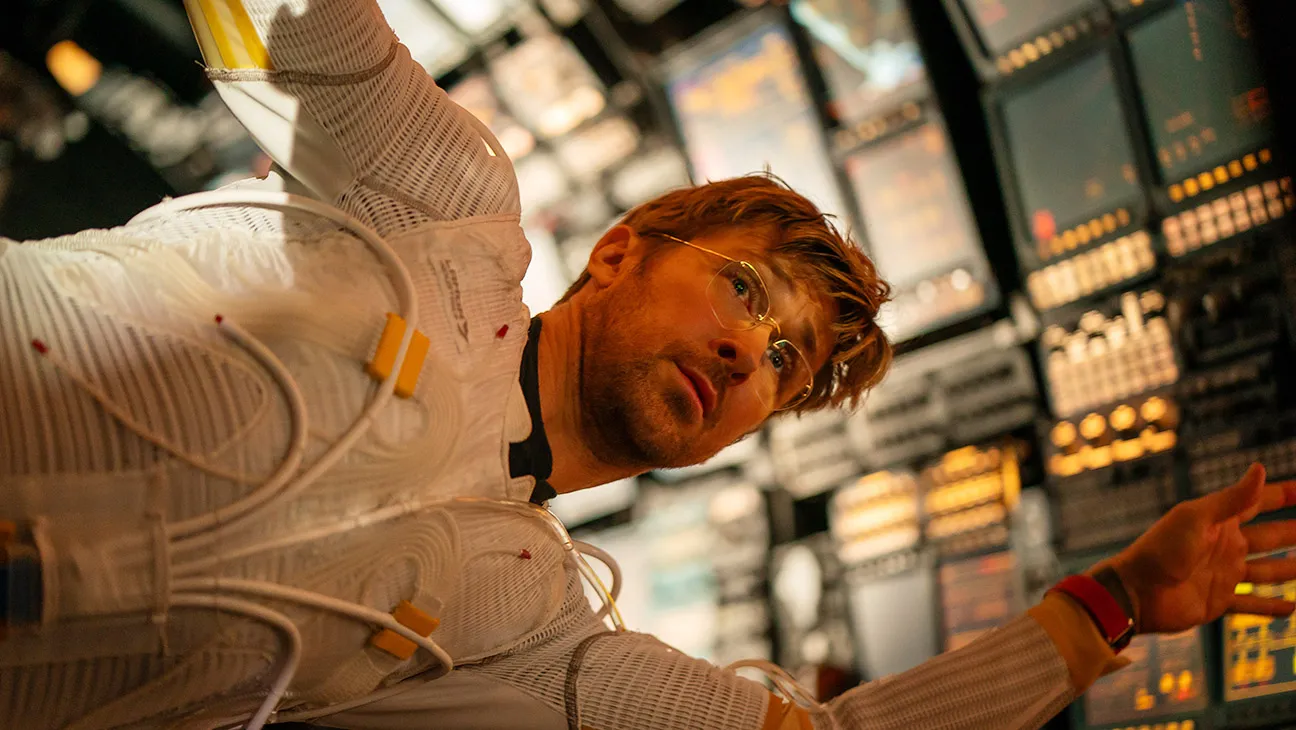
When it finally arrived on March 26? It was allocated just six IMAX shows across the entire country. Six. For a $200 million Hollywood film designed to be experienced in IMAX format. Indian fans took to social media in frustration, expressing outrage at the limited access.
And then the audience response kicked in. Word-of-mouth spread rapidly. Demand surged. Within two days, IMAX screens jumped from 6 to nearly 60 — a tenfold increase that is almost unheard of for a Hollywood film fighting for screen space against a domestic blockbuster.
The result: ₹2.7 crore on opening day, jumping to ₹3.5 crore on day 2, with the extended opening weekend pushing toward ₹9–11 crore. For an original Hollywood sci-fi film — not a Marvel, not an Avatar, not a Fast & Furious — those numbers are genuinely encouraging.
“Strong content and positive word-of-mouth can still carve out space, even during a full-blown box office tsunami.” — Sacnilk
India’s relationship with Hollywood sci-fi is complicated. Looking at the list of Hollywood films that crossed ₹100 crore in India, you’ll find Avatar, Avengers, Spider-Man — all franchise films with years of built-in brand equity. Project Hail Mary is trying to crack that market from scratch. Its early trajectory suggests it might be the rare original film that earns a genuine Indian audience over time.
The Record Books: What Project Hail Mary Has Already Beaten
Let’s talk benchmarks — because the Project Hail Mary box office numbers need context to land properly.
| Record | Details |
|---|---|
| Amazon MGM’s biggest opening ever | Surpassed Creed III ($100.4M global debut in 2023) |
| Biggest MPA global debut of 2026 | Ahead of Scream 7 ($97M worldwide) |
| 3rd non-sequel/non-franchise to open $50M+ overseas post-COVID | Joins Oppenheimer and F1: The Movie |
| Biggest non-franchise IMAX opening since F1 (summer 2025) | $27.6M IMAX worldwide opening weekend |
| Ryan Gosling’s biggest opening ever | Previous best: Blade Runner 2049 ($32.7M opening) |
| Fastest 2026 film to cross $100M domestically | Achieved in 6 days |
| Already surpassed Dune: Part One’s entire domestic run | In less than 11 days of release |
| Best Rotten Tomatoes score for a wide release in 2026 | 95% from 349 critics |
The Dune: Part One comparison is particularly striking. That film — which became a cultural milestone and spawned one of the biggest sequels of 2024 — grossed $108 million domestically in its entire theatrical run. Project Hail Mary matched it in under two weeks.
The Director Factor: Why Lord & Miller Were the Perfect Choice
You cannot tell the Project Hail Mary box office story without talking about Phil Lord and Christopher Miller. These are the directors who were asked to make a serious, emotional sci-fi film — and their track record is the most eclectic in Hollywood.
The 21 Jump Street reboot. The Lego Movie. Into the Spider-Verse (produced). Each one was a film that sounded, on paper, like it shouldn’t work. A movie about a toy brick? A meta-comedy remake of a forgotten TV show? A Spider-Man film with multiple parallel universes told in an animation style never seen before?
Every one became a cultural phenomenon. Every one redefined its genre.
With Project Hail Mary, Lord and Miller took Andy Weir’s beloved novel — a book with deeply technical scientific detail — and made it emotionally accessible, funny, warm, and spectacular. The same magic that made Emmet’s yellow brick adventure universally beloved works here on the vast canvas of interstellar space.
The script was written by Drew Goddard, who also adapted Weir’s previous novel into The Martian for Ridley Scott. That’s the same creative DNA — same author, same screenwriter — producing a film that’s already tracking to surpass The Martian’s $619 million global haul. The formula clearly works.
Ryan Gosling’s Reinvention: From Ken to Ryland Grace
The Ryan Gosling arc in this story is genuinely fascinating. Here is a man who spent three decades building one of Hollywood’s most interesting careers — from a teenage Notebook heartthrob to the Oscar-nominated jazz pianist of La La Land, to the silver-tongued action disaster of The Fall Guy, to the billion-dollar cultural meme of Barbie’s Ken.
But none of those films were his. Even in Barbie, it was Margot Robbie and the brand that carried the box office. Gosling was the brilliant supporting act.
Project Hail Mary is different. This is Ryan Gosling’s film. He’s in virtually every scene. He carries the emotional weight of the story alone for extended sequences. And he produced it — this is a project he fought to make happen, a story he believed in enough to stake his leading-man credibility on.
The result? His best performance in years. Author Andy Weir, who has seen every version of Ryland Grace imaginable in his own head, praised Gosling effusively after seeing the film: “Seeing Ryan add all these layers, I’m like, ‘Oh good, he’s covering the things that I didn’t do.'”
That is the highest compliment an author can give an actor. And audiences agree — the emotional connection to Gosling’s Grace is the engine of the extraordinary word-of-mouth that’s driving the Project Hail Mary box office to places nobody predicted.
Myth vs. Fact: What the Internet Got Wrong About Project Hail Mary
❌ MYTH: Project Hail Mary was always going to be a hit
✅ FACT: Early tracking had it at $45–55M opening weekend. It nearly doubled those projections. Nobody — not Amazon, not the directors, not the analysts — saw $80.5M coming.
❌ MYTH: It’s just another Ryan Gosling star vehicle
✅ FACT: Gosling produced this film for years. It was a personal passion project. He’s not a hired gun here — he’s the architect. That creative investment shows in every frame.
❌ MYTH: Original films can’t compete with franchises
✅ FACT: Project Hail Mary just became only the third non-franchise film to open to $50M+ overseas since COVID. The other two were Oppenheimer and F1. Original films can win — they just need to be excellent.
❌ MYTH: India doesn’t care about Hollywood sci-fi without franchise branding
✅ FACT: Despite launching against the Dhurandhar 2 tsunami with just 6 IMAX screens, audience demand forced a tenfold expansion within 48 hours. Indian audiences want good cinema — they just need access to it.
❌ MYTH: The film needs to cross $500M to be considered a success
✅ FACT: Variety estimated $500M as the break-even threshold. But streaming revenue, home video, and the long-tail value to Amazon Prime’s subscriber count are not included in that calculus. Amazon’s real goal is more complex than pure theatrical profit.
The Sequel Question: Will There Be a Project Hail Mary 2?
This is the question dominating fan forums right now — and the answer is genuinely complicated.
Variety estimated the film needs at least $500 million to break even theatrically, given the $200 million production budget plus marketing (typically 50–100% of production costs for a film of this scale, meaning total outlay could be $350–400 million). As of March 29, the film is at $223 million. It needs a strong run to close that gap.
But here’s the Hollywood business reality: Amazon does not need the film to profit purely from theater ticket sales. Amazon Prime Video gets the streaming rights. Every person who watches the film and then subscribes to Prime to watch it again at home generates recurring revenue. The cultural conversation around the film makes Amazon look like a studio that makes great movies — not just a delivery service for cardboard boxes.
SlashFilm reported that industry analysts believe the sequel math could work even at a lower theatrical total, given streaming economics. And with the passionate, emotional fanbase the film has generated — particularly around the Rocky character — there is massive commercial demand for a continuation.
Andy Weir’s novel does not have a direct sequel in print. Any sequel would require new storytelling. That could be a weakness — or it could be a creative opportunity to expand the universe in ways even book readers won’t see coming.
Watch this space.
The Bigger Picture: What Project Hail Mary Means for Hollywood
Step back from the numbers for a moment. The Project Hail Mary box office performance is not just about one film. It’s about a question Hollywood has been wrestling with since COVID decimated the industry:
Do audiences still want to go to movie theaters for original stories?
The industry’s answer, for years, has been “no.” Franchises, sequels, reboots, spinoffs, remakes — these were the safe bets. The IP-driven model. Don’t risk $200 million on something new when you can risk $200 million on something with a built-in audience.
Project Hail Mary just proved that assumption wrong. Spectacularly, financially, culturally wrong.
Ticket sales in 2026 are currently running 21% above the same period in 2025, according to Comscore. But revenues remain roughly 20% behind the pre-pandemic average. The industry needs films that bring people back to theaters — not just franchise completionists, but genuine moviegoers who want an experience they can’t get on their couch.
Project Hail Mary gave them that. IMAX screens. Alien creatures. A story told with real heart. And a 34% second-weekend drop that says people are telling their friends.
The films that save Hollywood are never the ones the industry bets on. They’re the ones audiences fall in love with on their own.
Oppenheimer. Everything Everywhere All at Once. The Martian. Top Gun: Maverick. These films were not safe bets. They were good bets — because they were great films that respected the audience’s intelligence.
Project Hail Mary belongs in that conversation. And 2026 is better for it.
Variety — Project Hail Mary Global Box Office Opening
Variety — Project Hail Mary Second Weekend Box Office
Deadline — Project Hail Mary Global Box Office Analysis
Rotten Tomatoes — Weekend Box Office: Project Hail Mary Big Win
Outlook India — Project Hail Mary Worldwide Box Office
India TV News — Project Hail Mary India Box Office
Sacnilk — Project Hail Mary India Collection Update
Wikipedia — Project Hail Mary (Film)
Koimoi — Project Hail Mary Worldwide Box Office
Frequently Asked Questions (FAQ)
Final Verdict: The Film That Changed Hollywood’s Conversation in 2026
The Project Hail Mary box office story is still being written. By the time this film finishes its theatrical run, it may well cross $400–500 million globally. It may spawn sequels. It may win awards during the next ceremony season. It has already won something more important: the argument.
The argument that original films can still dominate. That audiences will show up for science and emotion and a character named Rocky who communicates in musical chirps. That Ryan Gosling is not just a meme or a heartthrob — he’s a genuine movie star of the first order. That Amazon MGM’s $8 billion acquisition was not a white elephant, but a sleeping giant that has finally woken up.
In 2026, when every studio was playing it safe with established IP, Phil Lord, Christopher Miller, and Ryan Gosling threw the ball as far as they possibly could.
It landed. It landed beautifully.
And cinema is a little more alive today because of it.
Have you seen Project Hail Mary yet? Did Rocky make you cry — or are you still pretending you didn’t? Drop your thoughts in the comments below. 👇

Content writer at Popcorn Review, specializing in movie reviews, box office insights, and film analysis. Passionate about bringing cinema stories to life.

