
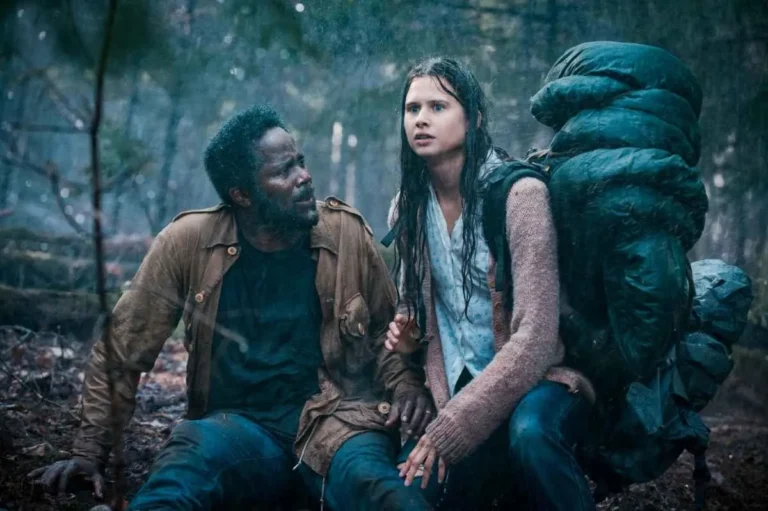
There are television shows that ask you to be patient. Then there is FROM.
Since its premiere in February 2022, FROM has operated on a covenant with its audience that almost no other modern streaming series has had the confidence — or perhaps the audacity — to attempt: it will give you almost nothing for a very long time, and you will keep watching anyway. Not because you are a pushover. Not because the show is stringing you along cynically. But because the show has made you genuinely care about the people trapped inside its nightmare, and you will wait as long as it takes to find out if they ever get out.
Now, three seasons and four years later, FROM Season 4 has arrived. And based on what the first two episodes have already delivered — and what critics who received advance screeners of the full season have written — this may be the most consequential, most answers-dense, and most emotionally devastating run of episodes the show has ever produced.
Season 4 premiered on Sunday, April 19, 2026, on MGM+, with new episodes dropping every Sunday. In India, all episodes are available to stream on Amazon Prime Video. The season consists of 10 episodes, with the finale set for June 28, 2026.
This is the complete guide: what FROM is, where it has been, where Season 4 takes it, and — in full spoiler-flagged reviews — exactly what happens in Episodes 1 and 2, and whether the show is still delivering on its extraordinary promise.
The short answer: it absolutely is.
What Is FROM? The Complete Beginner’s Guide
Before the episode reviews, let us establish what FROM actually is — because it is a series that rewards context enormously, and first-time readers deserve a proper orientation.
FROM is a science fiction horror series created by John Griffin, produced by Midnight Radio and the Russo Brothers’ AGBO production company, and originally developed for YouTube Red before being moved to Epix (later rebranded as MGM+). It first premiered on February 20, 2022. The series has since become the most-watched show in MGM+’s history, and has been confirmed to run for a fifth and final season — making Season 4 the penultimate chapter of its full story.
The premise is elegant in its simplicity and horrifying in its execution: somewhere in rural America — the exact location is never specified, and that ambiguity is part of the point — there is a town. The town looks, on approach, like any quiet American small town: houses, a diner, a church, roads that lead through trees. What makes it different from every other small town on earth is that those roads lead nowhere. Every road out of the town eventually curves back in. You cannot leave. You did not choose to come here. You simply drove down the wrong road one day and found yourself in a place that you will never escape from.
The show centres on two communities of trapped residents: the Township, which functions as the town’s more organised settlement, and Colony House, a former farmhouse where a separate group lives by different rules. Their relationship — sometimes collaborative, sometimes antagonistic — forms one of the show’s recurring dramatic tensions. Leading both, in an unofficial but uncontested capacity, is Boyd Stevens (Harold Perrineau): a retired US Army veteran, self-appointed sheriff, and the person on whom the entire fragile architecture of survival rests.
The show’s DNA will be immediately familiar to anyone who watched and loved Lost — and that familiarity is not accidental. Harold Perrineau starred in Lost as Michael. Executive producers Jeff Pinkner and director Jack Bender were central creative figures on Lost. FROM is, in many ways, the show that Lost’s most devoted fans always wanted: a mystery-box series that combines genuine human character drama with layered supernatural mythology, and that is now — in its final two seasons — actually beginning to provide answers.
“The show is figuratively darker and literally darker. Season 4 leans further into psychological horror than anything we’ve done before.” — Harold Perrineau, interview ahead of the Season 4 premiere
The Story So Far: Seasons 1–3 in Summary
For those catching up before Season 4, here is the essential context without which the new episodes will not fully land.
Season 1 established the premise and the characters. The Matthews family — Jim (Eion Bailey), Tabitha (Catalina Sandino Moreno), and their children Julie (Hannah Cheramy) and Ethan (Simon Webster) — arrive in the town after their RV takes a wrong turn. Over the season’s ten episodes, they learn the rules, encounter the creatures, form alliances and rivalries with existing residents, and begin to understand that the town’s horrors have a mythology that goes back decades. We meet Boyd, whose estrangement from his son Ellis (Corteon Moore) is one of the show’s central emotional relationships. We meet Victor (Scott McCord), a man who has been trapped in the town since he was a child and who holds — fragmented, traumatised — the deepest knowledge of what the town is.
Season 2 deepened the mythology significantly. A mysterious Boy in White begins communicating with select characters. Tabitha starts experiencing visions. Jade (David Alpay), a tech developer who arrived in town with the Matthews family, becomes increasingly obsessed with the symbols and patterns that seem to form a kind of language underlying the town’s design. Boyd, following a crisis of faith and will, begins to suspect that the town might have something like a purpose — and that they might be able to fight back rather than merely survive.
Season 3 ended with seismic revelations. At the Bottle Tree — a landmark in the woods with deep significance to the town’s history — Jade and Tabitha receive a revelation about the town’s true nature. Fatima (Pegah Ghafoori), Ellis’s wife, gives birth to Smiley — one of the nocturnal creatures, previously killed by Boyd and Kenny, now reborn through her body in one of the most disturbing sequences the show has produced. And the season finale delivers its most devastating blow: Jim Matthews is killed. His throat is ripped out by the Man in the Yellow Suit — a new and clearly non-creature entity who warned Jim, in the episode prior, that Tabitha should not have dug the hole.
Season 4 begins the morning after.
The Complete Cast of FROM Season 4
| Actor | Character | Role in Season 4 |
|---|---|---|
| Harold Perrineau | Boyd Stevens | The Sheriff, physically and mentally falling apart — Boyd enters Season 4 at his absolute lowest point after Smiley’s return shatters his last hope of escape |
| Catalina Sandino Moreno | Tabitha Matthews | Now revealed as a reincarnation of Miranda Kavanaugh — processing that revelation while grieving Jim and protecting her children |
| David Alpay | Jade Herrera | The show’s dedicated myth-cracker — Jade, revealed as a reincarnation of Christopher, pursues the town’s design with new urgency after the Bottle Tree revelation |
| Hannah Cheramy | Julie Matthews | Emerging as a major narrative force — her “story-walking” ability becomes central to Season 4’s plot engine |
| Simon Webster | Ethan Matthews | The child whose perceptions reach places adults cannot — Ethan’s experiences escalate dramatically in Season 4 |
| Corteon Moore | Ellis Stevens | Boyd’s son — the emotional anchor as both his father and wife Fatima are in crisis |
| Pegah Ghafoori | Fatima Hassan | Recovering from the traumatic birth of Smiley — one of the season’s most haunted characters |
| Ricky He | Kenny Liu | Boyd’s deputy — also reeling from Smiley’s reappearance after having helped kill it |
| Chloe Van Landschoot | Kristi Miller | The town’s doctor — maintaining medical and emotional sanity under impossible conditions |
| Elizabeth Saunders | Donna Raines | Colony House leader — pragmatic, increasingly aligned with Boyd’s hardening approach |
| Avery Konrad | Sara Myers | The town’s most volatile wildcard — capable of sainthood and destruction in the same hour |
| Scott McCord | Victor Kavanaugh | The town’s longest-surviving resident — his decades of buried memory become increasingly relevant |
| Julia Doyle | Sophia / Man in Yellow | New series regular — the season’s most dangerous new presence, introduced as a frightened pastor’s daughter before a chilling reveal changes everything |
| Eion Bailey | Jim Matthews | Guest role — Season 4 opens in the aftermath of his death at the end of Season 3 |
⚠️ SPOILER WARNING — Episode Reviews Below ⚠️
The following section contains full spoilers for Season 4, Episodes 1 and 2. If you have not watched these episodes, turn back now. The reviews are designed to be read after watching, or by those who want to know exactly what happens before they decide to watch.
📺 EPISODE 1 REVIEW — “The Arrival”
Season 4, Episode 1 · Aired April 19, 2026 · Directed by Jack Bender · Written by John Griffin
Episode Synopsis: A new arrival throws the town into chaos as Jade and Tabitha struggle to understand their revelation at the Bottle Tree. Boyd must deal with the consequences of his choice to save Fatima, even as he grapples with the implications of Smiley’s return.
What Happens
The Season 4 premiere picks up directly from the Season 3 finale’s emotional wreckage. Jim is dead — though the town does not yet know it. His body is in the woods. Tabitha is functioning in a stunned kind of grief-shock, while her children Julie and Ethan are living through their father’s absence without yet knowing it is permanent.
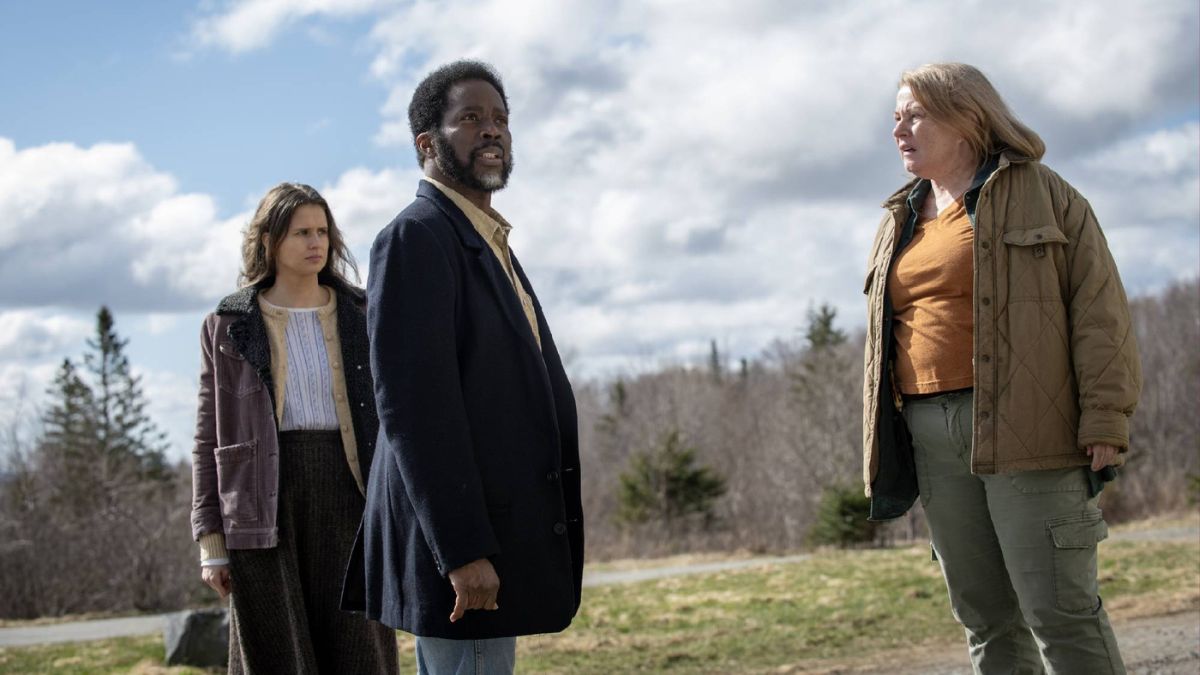
Boyd’s state is the episode’s most wrenching thread. Having watched Smiley — the creature he and Kenny killed, the one kill that felt like proof they could fight back — reborn from Fatima’s body, Boyd has arrived at a place of near-total despair. The episode finds him counting bullets. Not to shoot anyone else. To consider whether there is any point continuing. Harold Perrineau plays this moment with a quiet devastation that lands harder than any action sequence the show has produced. When he later shares his conclusion — that everyone in the town should have a gun and a single bullet for themselves — and Donna, Ellis, and Kristi have to talk him back from that edge, it is one of the show’s finest character moments.
Julie’s arc in this episode begins something that promises to be Season 4’s most narratively significant new thread. Her “story-walking” — the ability to move through different timelines or observe events across time — is presented here as something that cannot be fully controlled, but also cannot be ignored. The episode uses her experiences to hint that the town’s design involves cyclical repetition: events that have happened before and will happen again, stories that cannot be changed, only witnessed or understood differently. This becomes the episode’s governing thematic statement.
Ethan, meanwhile, is having experiences of his own — solo trips to places and encounters with things that the adults around him cannot or will not fully engage with. The show has always used Ethan as a kind of barometer for the town’s deeper reality, and Season 4 seems poised to move him from background indicator to active participant in the mythology.
What Works
Almost everything. The episode’s refusal to ease back into the story slowly — its insistence on landing in the middle of the aftermath with no grace period — feels like exactly the right choice. The show has been building to this level of consequence for three seasons, and treating it as a casual re-introduction would have been an insult to the audience.
Harold Perrineau is, as ever, the load-bearing wall of the entire production. His Boyd in this episode is a man whose fundamental orientation towards hope and service is fighting a losing battle against evidence that hope is irrational. The bullet-counting scene is a career-defining moment. And his eventual decision to keep going — not because he believes in success, but because stopping requires a positive act he cannot make himself perform — is character writing at its most precise.
Julia Doyle’s introduction is masterful. On a rewatch, the signals are there: her timing, her specific reaction to certain details, her almost imperceptible edge of pleasure when chaos occurs around her. But none of it is legible as threat until the moment it is meant to be. That is a performance of real subtlety in a role that could easily have been played too broadly.
What Doesn’t Quite Work
The show’s most persistent structural weakness — its characters’ reluctance to share information with each other — is still present and still occasionally frustrating. At this point in the story, three seasons deep with stakes this high, Tabitha’s continued pattern of processing revelations privately rather than sharing them with the people around her feels less like characterisation and more like a plot necessity the writers are unwilling to address directly. The town’s residents deserve better communication from their most informed people, and so do we.
Additionally, the question of why Sophia and the pastor are not given more immediate scrutiny — why the town’s residents, who have every reason to treat new arrivals with wariness, instead absorb them without significant interrogation — requires a certain charitable suspension of disbelief. You can construct a justification for it in terms of the Man in Yellow’s knowledge of how these people behave, but it asks the viewer to do more work than the show is doing itself.
— Episode Verdict: “The Arrival” is a commanding season opener. It refuses to soften the blow of what Season 3 ended with, gives Boyd the bleakest and most honest material in Perrineau’s four-season run, and introduces the season’s central new threat with a reveal that arrives at exactly the right moment and with exactly the right impact. FROM is back, and it remembers why we stayed.
Score: 8.5 / 10
📺 EPISODE 2 REVIEW — “Fray”
Season 4, Episode 2 · Aired April 26, 2026 · Written by John Griffin
Episode Synopsis: A gruesome discovery sends shockwaves through the town as Jade and Tabitha struggle with the weight of their revelation. Knowledge comes at a cost — and this episode is the bill arriving.
What Happens
If Episode 1 was the season’s throat-clearing — returning us to the world, establishing the new terms, introducing Sophia — then Episode 2, “Fray,” is the moment the season reveals how seriously it intends to take what it has set up. This episode hits, in the words of one critic who received advance access, like a truck. It does not ease you in. It opens with the consequences of Jim’s death finally reaching the people who love him, and it does not flinch from what that means.
The episode’s dark centrepiece is the discovery of Jim’s body — or rather, the discovery that leads to it. A bloody, dripping bag hung from the motel sign draws the town’s attention with maximum psychological cruelty. The bag does not contain Jim. That is a misdirection, and a brutal one: the show, demonstrating that even when the audience knows something the characters don’t, we still do not know as much as we think. Jim is in the barn. His body is there, and Tabitha eventually finds it. The episode does not make this clean or dramatic in a conventional sense. It is ugly and specific and devastating in the way that real grief is — not operatic, but bodily and immediate.
Boyd in this episode is colder. The decision he made in Episode 1 — to keep going, to stay in his role, to not break — has hardened into something less nurturing and more transactional. His handling of Elgin (Nathan D. Simmons) in this episode is, as multiple critics have noted, chilling. He is not protecting people anymore. He is protecting the system. The line he delivers to Elgin — about what did and did not happen — is the moment you fully understand that Season 4 Boyd is a different version of this man than we have known.
Jade’s theory board is expanding. His work in this episode involves pushing further into the town’s symbolic architecture — the patterns and repetitions that the Bottle Tree revelation gave him new vocabulary to interrogate. The episode uses his scenes to begin building out the season’s central intellectual proposition: that the town operates according to a story logic, that the story has happened before and is happening again, and that understanding the story’s rules is the only path to changing its ending.
Acosta’s breakdown in this episode — jumping into an ambulance and driving it in frantic laps, Kristi having tumbled in alongside him — is presented as something between tragic and darkly comic. It reads as the gesture of a person who has absorbed one impossible thing too many and is trying, physically, to express the impossibility of their situation. It is a very specific kind of psychological realism about what extended captivity and terror does to people who were not built for it.
Ethan, meanwhile, takes another of his solo trips — and what he encounters this time raises the episode’s emotional stakes in a direction the show has been pointing toward since Season 2. His experience in this episode suggests that his access to the town’s deeper reality is not passive observation but something more active — that he is, in some sense, meant to go where he goes and see what he sees.
What Works
The death of Jim and its ripple effects are handled with real emotional intelligence. The show understands — and this is harder than it looks — that a major character death’s true impact is not in the death itself but in the hours and days afterward, when everyone else has to keep living in the world the death has changed. “Fray” is a masterclass in that particular kind of grief writing.
Boyd’s transformation into something harder and colder is both organic and disturbing. Perrineau is doing something exceptional here: he is playing a man whose essential goodness is being warped by circumstance into something that does what goodness cannot, and the performance registers both the necessity and the horror of that transformation simultaneously. It is the kind of acting that earns award consideration.
The episode’s thematic statement — that knowledge always comes at a cost, that pushing for answers produces consequences — is unusually well-integrated into the episode’s plot mechanics. Nearly every storyline in the episode involves someone learning something they cannot unknow, or paying for having asked a question. FROM at its best operates on this kind of thematic coherence, where the big idea is not stated in a speech but lived in every scene.
What Doesn’t Quite Work
The secondary character drama in this episode — Acosta’s breakdown, some of the Colony House interactions — does not develop with the same emotional conviction as the central arcs. As the show’s mythology becomes more complex and more answered in Season 4, there is a risk that the characters who exist primarily in the human drama tier of the show feel like they are operating in a slightly different register. This is a structural tension rather than a writing failure, but it is noticeable.
The episode is also at its weakest when it leans on the show’s familiar information-withholding mechanics without adding new texture to them. By this stage, those mechanics need to be more interesting than the simple fact of withholding — they need to feel motivated by something specific rather than general caution.
— Episode Verdict: “Fray” is a devastating and intelligent hour of television. Jim’s death reaches the people who loved him with a specificity and emotional honesty that the show has rarely equalled. Boyd’s transformation is both logical and disturbing. And the episode’s thematic argument — that answers come at a price — is so thoroughly embedded in its plotting that it feels less like a message and more like a law of physics. FROM continues to be one of the best genre shows on television.
Score: 8.5 / 10
Season 4 Overview: What Critics Are Saying
Critics who received advance access to the full season — MGM+ made eight of ten episodes available to reviewers ahead of the premiere — have been unanimous in their assessment: Season 4 is the show’s strongest run yet.
“Season 4 is a triumph of the genre that rewards long-term viewers with answers while simultaneously weaving a more complex, terrifying web.” — Mama’s Geeky
“It is rare for a show to maintain this level of unpredictable, completely insane momentum four seasons in, but the creative team has managed to make the town feel even more claustrophobic and dangerous than ever before.” — Mama’s Geeky
The Season 4 Episode Schedule
| Episode | Title | Air Date |
|---|---|---|
| S4E1 | “The Arrival” | Sunday, April 19, 2026 |
| S4E2 | “Fray” | Sunday, April 26, 2026 ✅ (Today) |
| S4E3 | “Merrily We Go” | Sunday, May 3, 2026 |
| S4E4 | “Of Myths and Monsters” | Sunday, May 10, 2026 |
| S4E5 | “What a Long Strange Trip It’s Been” | Sunday, May 17, 2026 |
| S4E6 | “The Heart Is a Lonely Hunter” | Sunday, May 31, 2026 (one-week break) |
| S4E7 | “Best Laid Plans” | Sunday, June 7, 2026 |
| S4E8 | “Heavy Is the Head” | Sunday, June 14, 2026 |
| S4E9 | “The Calm Before” | Sunday, June 21, 2026 |
| S4E10 | “If a Tree Falls in the Forest” | Sunday, June 28, 2026 — Season Finale |
Where to Watch FROM Season 4
FROM Season 4 airs on MGM+ in the United States, with new episodes dropping every Sunday at 9 PM ET / 8 PM CT. In India and across most of South Asia, the series is available on Amazon Prime Video, where MGM+ content is accessible as part of the Prime Video add-on for ₹349/month. In the UK, the series airs on Sky Sci-Fi. In Australia, it streams on Stan. In Canada and Italy, it is available on Paramount+. All previous three seasons are currently streaming on their respective platforms and can be watched before Season 4.
For Indian viewers specifically: all four seasons of FROM are available on Amazon Prime Video India. If you have not watched the show yet, this is the moment to start — Season 4 is the beginning of the endgame, and watching it in real time, week by week, is the intended experience.
The Deeper Questions: What Season 4 Is Really About
FROM has always been a show about more than its surface horror. Its creatures, its town, its inescapable geography — these are the genre machinery. But underneath them, FROM is a show about the specific psychological costs of hope. About what it does to a person to believe, season after season, that escape is possible and then watch that belief be tested by evidence.
Season 4 makes this explicit in a way the previous seasons did not. The show’s season-level thematic statement — crystallised in the Season 4 premiere through the idea that you cannot change a story that has already been told — asks something sharp and uncomfortable of its long-term audience. What if the people we have been watching are not building toward escape? What if they are replaying a pattern that has played out before, and will play out again, because the town requires it? What if the answer, when it comes, is not a way out but a deeper understanding of why there is no way out?
These are not comfortable questions. They are the questions of a show that has earned, through four seasons of careful work, the right to ask them. And they are the questions that make Season 4 — in its first two episodes alone — feel like essential television rather than merely excellent horror entertainment.
“I think he almost breaks at the beginning of Season 4. When he goes to count those bullets, I think he’s right there. Boyd is through and through a man of service, and he is going to be of service even when he doesn’t know what he’s doing.” — Harold Perrineau on Boyd’s Season 4 arc
Frequently Asked Questions
Final Word: Is FROM Season 4 Worth Your Time?
Here is the honest answer: FROM Season 4 is not for everyone. It is a show that requires three seasons of investment before you can access what Season 4 is offering. It rewards patience in a way that modern streaming culture does not always support. It is dense, deliberate, and willing to sit in discomfort for extended periods.
But if you are willing to make that investment — if you are willing to start from Season 1 and watch 30 episodes before you arrive at where the show is now — then FROM is offering something that almost no other genre show on television can match: a mystery that has been carefully and consistently built, now entering its endgame, with a cast of characters you have come to love, fear for, and understand deeply, facing consequences that the show has spent years earning the right to impose.
Season 4, Episodes 1 and 2, have demonstrated that the show has not lost a single step. Boyd counting bullets is one of the great moments in FROM’s history. Sophia’s reveal is one of the great villain introductions the show has managed. Jim’s death and its ripple effects are being handled with the emotional intelligence the show has always brought to its human moments, even as it keeps escalating its supernatural ones.
The town does not let you leave. After two episodes of Season 4, it is abundantly clear that FROM does not either.
Episodes 1 & 2 Rating: 8.5/10 · “Confident, devastating, and still the best horror mystery on streaming.” · New episodes every Sunday on MGM+ and Prime Video.

Popcorn in hand and a opinion ready — Emily covers movie reviews, box office buzz, and all things cinema at Popcorn Review.

