
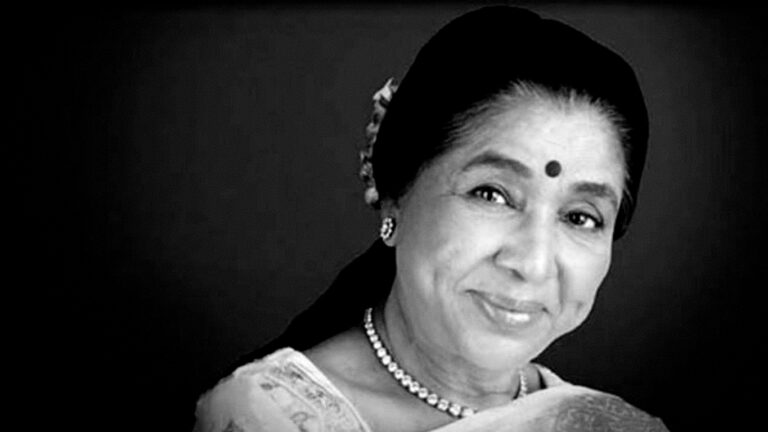
On April 12, 2026 — a Sunday morning in Mumbai — the voice went quiet.
Asha Bhosle, the woman who had sung more songs than any human being in recorded history, who had given voice to five decades of Bollywood’s leading ladies, who had moved from a broken home at sixteen to a Guinness World Record in her seventies, passed away at 92 at Breach Candy Hospital. The cause: multiple organ failure, following a cardiac arrest the previous evening.
Her granddaughter Zanai Bhosle had posted an update the night before: “My grandmother, Asha Bhosle due to extreme exhaustion and suffering a chest infection has been admitted to hospital. Treatment is ongoing and hopefully everything will be well.” By Sunday afternoon, her son Anand confirmed what millions of hearts could not quite process.
India’s greatest playback singer was gone.
What she leaves behind is not just a discography — though a discography of over 12,000 songs across 20+ languages and 80 years of uninterrupted work is staggering by any measure. What she leaves behind is something harder to quantify: the sound of an entire subcontinent’s emotional life. Joy, heartbreak, sensuality, devotion, mischief, longing — every register of human feeling, sung in a voice that could pivot between genres the way most people change rooms.
This is the complete story of Asha Bhosle — the girl who sang her first song at ten, the teenager who eloped against her family’s wishes, the woman who rebuilt herself in a profession that barely made space for her, and the legend who lived long enough to see the whole world recognise what India always knew.
Asha Bhosle: The Quick Facts
| Detail | Information |
|---|---|
| Full Name | Asha Mangeshkar (later Asha Bhosle) |
| Born | September 8, 1933 — Sangli, Maharashtra (then Bombay Presidency) |
| Died | April 12, 2026 — Mumbai (age 92) |
| Cause of Death | Multiple organ failure following cardiac arrest |
| Father | Pandit Dinanath Mangeshkar (classical vocalist & Marathi stage personality) |
| Sister | Lata Mangeshkar (legendary singer, died February 2022) |
| First Song | “Chala Chala Nav Bala” — Marathi film Majha Bal, 1943 (age 10) |
| Career Span | 1943–2026 — over 83 years |
| Songs Recorded | 12,000–12,500+ across 20+ languages |
| Guinness Record | Most-recorded artist in music history (2011) |
| Awards | Dadasaheb Phalke Award (2000), Padma Vibhushan (2008), 7 Filmfare Best Female Playback Awards, 2 National Film Awards, 2 Grammy nominations |
| Marriages | Ganpatrao Bhosle (1949–1960, divorced); Rahul Dev Burman (1980–1994, until his death) |
| Children | Hemant, Varsha, and Anand Bhosle |
| Estimated Net Worth | ₹80–100 crore |
| Last Rites | Shivaji Park, Mumbai — full state honours |
Asha Bhosle’s Origin: The Girl Who Had No Choice But to Sing
The story of Asha Bhosle does not begin in a recording studio. It begins in grief.
She was born Asha Mangeshkar on September 8, 1933, in a small hamlet called Goar in Sangli, Maharashtra. Her father, Pandit Dinanath Mangeshkar, was a celebrated Marathi stage actor and classical vocalist — a man who held court in the traditional arts and trained his children in music before they could fully understand what training meant. There were five siblings in the Mangeshkar household, each of whom would go on to make their mark in music and film. The eldest, Lata, would become India’s voice. The youngest who sang, Asha, would become its heartbeat.
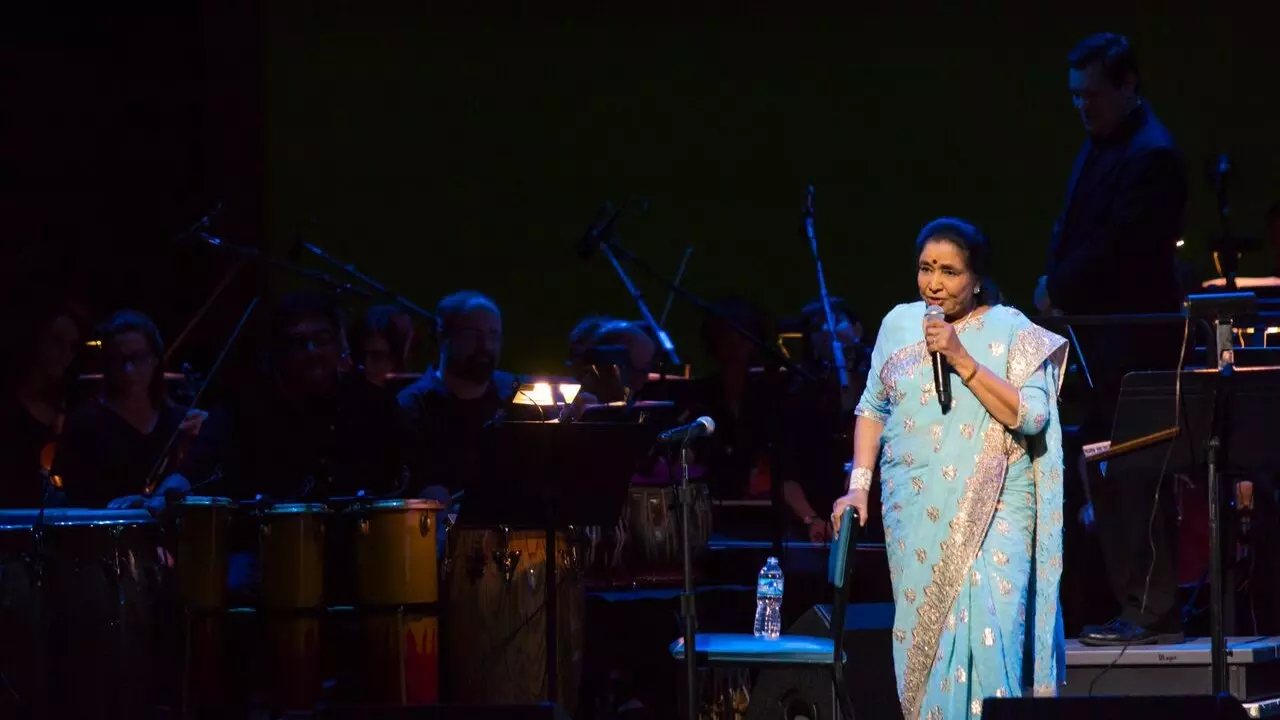
When Asha was nine years old, Dinanath Mangeshkar died. He was forty-one. The family was left without income, without stability, and without the patriarch whose artistic reputation had given them identity. What followed was a forced migration — from Pune to Kolhapur to Bombay — and a childhood in which work was not optional. Lata and Asha both began singing and doing small acting roles to help the family survive.
She recorded her first song at ten years old — “Chala Chala Nav Bala” for the Marathi film Majha Bal in 1943. It was not a debut born of ambition. It was born of necessity. But necessity, as it turned out, had handed her the only thing she would ever truly need.
The Elopement That Changed Everything
In 1949, at the age of sixteen, Asha Mangeshkar eloped with Ganpatrao Bhosle — a man fifteen years her senior who had served as Lata Mangeshkar’s personal secretary. The marriage was against every wish her family had, and the consequence was severe: the Mangeshkar family cast her out. At sixteen, she was a wife, an outcast from her own family, and soon a mother — with a career that barely existed.
The marriage was not a happy one. She later spoke about enduring domestic abuse. By 1960, after three children — Hemant, Varsha, and Anand — the marriage ended in divorce. She was twenty-six years old, a single mother of three, estranged from her family, and competing in a playback singing world where her own sister was the undisputed queen.
Most people who started with those odds did not become legends. Asha Bhosle became something more.
The Career That Defied Every Expectation
Between 1948 and 1957, Asha Bhosle sang more songs than any other playback singer in Bollywood. This is a fact that gets lost in the mythology. Most were in small, low-budget productions — not the prestigious films her sister commanded. She was working constantly, relentlessly, because she had no other option. Singing wasn’t artistry at that point; it was survival.
And then, in 1957, everything shifted.
The O.P. Nayyar Partnership: Finding Her Own Voice
The composer O.P. Nayyar made a deliberate choice that no other major composer had: he would not use Lata Mangeshkar. Instead, he chose Asha Bhosle as his primary female voice. For Asha, this was transformative. Nayyar’s music had swing and sass — a Western-influenced bounce that Lata’s classical purity was not built for, but that Asha’s instinctive range was perfectly suited to.
Their partnership produced landmark songs: “Ude Jab Jab Zulfein Teri” from Naya Daur (1957), songs from C.I.D. (1956), Johnny Walker (1957), and dozens more. For the first time in her career, Asha Bhosle was not a substitute for someone else. She was the choice. The deliberate, irreplaceable choice.
The R.D. Burman Era: When Asha Became Asha
If the O.P. Nayyar years gave her credibility, the Rahul Dev Burman years gave her immortality.
R.D. Burman — Pancham, as he was known — was the son of legendary composer S.D. Burman and the most adventurous musical mind of his generation. His approach to Bollywood music was almost reckless in its ambition: funk, jazz, rock, disco, classical, folk — nothing was off-limits. And Asha Bhosle was the only voice that could keep pace with him.
The songs they created together are not merely famous. They are embedded in India’s cultural memory at a cellular level. “Chura Liya Hai Tumne Jo Dil Ko” from Yaadon Ki Baaraat (1973). “Piya Tu Ab To Aaja” from Caravan (1971). “Dum Maro Dum” from Hare Rama Hare Krishna (1971). “Yeh Mera Dil” from Don (1978). Songs from Sholay, from Hum Kisise Kum Naheen, from Qurbani. Each one a distinct world. Each one unmistakably her.
In 1980, Asha married Pancham. He died in 1994. In an interview years later, she recalled what her sister Lata had once told her: “Sab chale gaye — Kishore Da is no more, Mukesh ji no more, Rafi Da no more. Now only the two sisters are left.” When Lata died in February 2022, Asha described feeling suddenly, completely alone. She carried that weight with characteristic dignity, right to the end.
The Asha Bhosle Timeline: 83 Years in Music
What Made Asha Bhosle Genuinely Impossible to Replace
There are great singers, and then there are singers who redefine what a voice can do. Asha Bhosle was the second kind — and to understand why, you have to understand the specific problem she solved that nobody else could.
Bollywood playback singing in the 1950s and 1960s was, in practical terms, dominated by two voices: Lata Mangeshkar for the pure, classical, devotional register, and Mohammad Rafi for the male side of everything. Asha Bhosle existed in the space no one had fully mapped: the sensual, playful, Western-influenced, cabaret-inflected territory that Lata’s purity of tone was not designed for.
She did not just fill a gap. She invented the genre she filled.
The cabaret numbers — “Aao Huzoor Tumko,” “Piya Tu Ab To Aaja,” “Mera Naam Chin Chin Choo” — are performances of such technical control and dramatic intelligence that they still feel genuinely alive fifty years later. She made the heroine’s best friend as interesting as the heroine. She made the vamp human. She made the nightclub singer heartbreaking.
And then, just when she was fully defined as the voice of sensuality and swing, she recorded “Dil Cheez Kya Hai” for Umrao Jaan (1981) and “In Aankhon Ki Masti” — ghazals of such refined classical depth that classical music scholars stopped dismissing her entirely.
She could do everything. Not competently. Supremely.
The International Dimension Nobody Talks About
Most Indian music fans know Asha Bhosle as a Bollywood institution. What gets discussed less is how deeply she was embedded in international music culture.
The British band Cornershop wrote the song “Brimful of Asha” (1997) directly about her — it became one of the defining indie pop hits of the late 1990s in the UK. British opera pop singer Sarah Brightman remixed Asha’s “Dil Cheez Kya Hai” in her song “You Take My Breath Away” on the album Harem (2005). The Black Eyed Peas sampled her songs in “Don’t Phunk with My Heart” (2005). The Kronos Quartet — a prestigious American string quartet — compiled the album You’ve Stolen My Heart: Songs from R.D. Burman’s Bollywood as a tribute to her and Pancham’s musical partnership. She recorded with Michael Stipe of R.E.M. She did a duet with Australian cricketer Brett Lee in 2006. In 2026, just weeks before her death, she featured on a Gorillaz album.
This is not a “crossover appeal” story. This is a 92-year-old artist who kept reaching, kept saying yes, kept surprising people, right until she could not.
Myth vs. Fact: What You Think You Know About Asha Bhosle
The Business Side: Asha Bhosle Beyond the Microphone
What most people don’t know about Asha Bhosle is that she built a second empire entirely outside of music.
In 2002, she opened the first “Asha’s” restaurant at Wafi Mall in Dubai — a venture born from a promise her son Anand made to her as a child. He would watch her cook in whatever brief gaps existed between recording sessions and tell her that when he grew up, he would open a restaurant in her name. He kept the promise. The food was hers. The concept was his. The success was mutual.
By the time of her passing, the Asha’s restaurant chain had expanded to ten locations worldwide — spanning Dubai, the UK, and other international cities. It was a culinary expression of the same personality that defined her singing: deeply rooted in Indian tradition, warm, generous, unafraid to travel.
Her estimated net worth at the time of her death was ₹80–100 crore — a figure built not just from decades of recording fees but from touring, brand endorsements, and the restaurant business that her son turned into an internationally recognised brand.
The Tributes: How India and the World Remembered Her
Asha Bhosle’s Most Iconic Songs: The Definitive List
| Song | Film / Year | Composer |
|---|---|---|
| Dum Maro Dum | Hare Rama Hare Krishna (1971) | R.D. Burman |
| Chura Liya Hai Tumne Jo Dil Ko | Yaadon Ki Baaraat (1973) | R.D. Burman |
| Piya Tu Ab To Aaja | Caravan (1971) | R.D. Burman |
| Yeh Mera Dil | Don (1978) | Kalyanji-Anandji |
| Dil Cheez Kya Hai | Umrao Jaan (1981) | Khayyam |
| In Aankhon Ki Masti | Umrao Jaan (1981) | Khayyam |
| Abhi Na Jao Chhod Kar | Hum Dono (1961) | Jaidev |
| Ude Jab Jab Zulfein Teri | Naya Daur (1957) | O.P. Nayyar |
| Aao Huzoor Tumko | Kismat (1968) | O.P. Nayyar |
| Mera Kuch Saaman | Ijaazat (1987) | R.D. Burman |
| Rangeela Re | Prem Pujari (1970) | S.D. Burman |
| Jhumka Gira Re | Mera Saaya (1966) | Madan Mohan |
| Pardah Hai Pardah | Amar Akbar Anthony (1977) | Laxmikant-Pyarelal |
| Raat Ke Humsafar | An Evening in Paris (1967) | Shankar-Jaikishan |
Related Posts from Popcorn Review
Follow Popcorn Review
- 📸 Instagram: @pop_cornreview
- 📌 Pinterest: Pinterest / PopcornReview
- 👍 Facebook: Popcorn Review on Facebook
- 🐦 X / Twitter: @popcorn_revieww
Sources
- Wikipedia — Asha Bhosle
- Encyclopaedia Britannica — Asha Bhosle Biography
- Republic World — Asha Bhosle Dies at 92 Live Updates
- Kathmandu Post — End of an Era in Indian Music
- Al Jazeera — Legendary Bollywood Singer Asha Bhosle Dies Aged 92
- The Week — Asha Bhosle: A Connoisseur of Fine Food
- The Siasat Daily — Asha Bhosle: Age, Life, Net Worth 2026
- ANI — Asha Bhosle Will Be Cremated With Full State Honours
FAQ: Asha Bhosle — Everything You Want to Know
The Farewell: What She Was, What She Gave, What Remains
There will be people who discover Asha Bhosle for the first time because of this article. Who look up “Dum Maro Dum” or “Dil Cheez Kya Hai” on a streaming platform and spend the next three hours lost in something they cannot fully explain. That is the only tribute that matters.
She was born into loss. She built herself from nothing — twice, from different kinds of nothing. She sang through divorce and estrangement and grief and widowhood and the deaths of almost everyone she had loved in music. And then she recorded a Gorillaz album at ninety-two, because why wouldn’t she?
The world has records and awards to document what she achieved. But what she gave cannot be archived. It lives in the way a particular melody can make the hair on your arms stand up. In the way you suddenly feel less alone at 2am with her voice in your earphones. In the specific quality of joy that her playful songs carry — the warmth that comes through even on the smallest speaker, even in the worst moment.
Over 12,000 songs. Over 20 languages. Over 80 years. A Guinness record. A restaurant chain. Two Grammys nominations. A Dadasaheb Phalke. A Padma Vibhushan. A son who kept his promise. A voice that reached from a Marathi village in 1943 to a British virtual band in 2026.
And somewhere right now, in a kitchen, in a car, in someone’s headphones at the end of a long day — one of those 12,000 songs is still playing.
That is what immortality sounds like.
Which Asha Bhosle song has meant the most to you — and when did you first hear it? Share it in the comments. Her music deserves to keep living in stories. 🕊️

Popcorn in hand and a opinion ready — Emily covers movie reviews, box office buzz, and all things cinema at Popcorn Review.

