
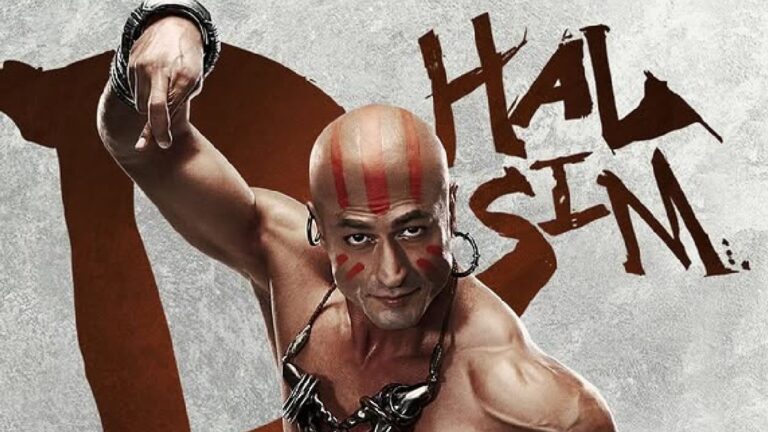
When the world thinks of the most iconic characters in video game history, a small number of names come up without debate. Mario. Link. Lara Croft. And somewhere in that shortlist — instantly recognisable by his bald head, his painted forehead, his impossibly elongated limbs, and his ability to breathe fire — stands Dhalsim.
For over three decades, Dhalsim has been one of the most distinctive, philosophically complex, and visually extraordinary fighters in the entire Street Fighter roster. A pacifist who fights. A man of deep spiritual practice who uses his body as a weapon. A yogi from India who channels his discipline into something that looks, to those who don’t understand it, like superhuman ability. He is, quite simply, one of the greatest video game characters ever created — and one of the most challenging to translate into live action.
Now, with the new Street Fighter live-action film, that challenge has been accepted. And the actor chosen to embody Dhalsim is someone who — the more you understand both the character and the man — seems less like a casting choice and more like an inevitability.
Vidyut Jammwal. Action star. Kalaripayattu master. Bollywood’s most technically gifted fighter. A man who has, across a career of extraordinary physical performance, consistently done things on screen that most people cannot believe a human body is capable of. The man who is, in virtually every way that matters, the right person on earth to play Dhalsim.
This is the complete guide to that casting — to who Dhalsim is, where he came from, what he means to the Street Fighter universe, and why Vidyut Jammwal is the most consequential piece of casting in this film’s entire lineup.
The Street Fighter Universe: What You Need to Know Before Anything Else
Before we can understand why Vidyut Jammwal as Dhalsim matters so much, we need to understand what Street Fighter is — not just as a game, but as a cultural institution.
Street Fighter was created by Capcom and first released as an arcade game in 1987. The original game was a modest success, but it was the 1991 release of Street Fighter II: The World Warrior that changed everything. Street Fighter II did not merely become a popular game — it became a phenomenon. It redefined what a fighting game could be, introduced the concept of choosing from multiple distinct characters with completely different fighting styles and backstories, and launched a cultural conversation about video game characters that has never fully stopped.
The game’s premise is elegantly simple: a global martial arts tournament in which fighters from different countries, traditions, and philosophies meet in one-on-one combat to determine who is the world’s greatest fighter. The organiser of this tournament — in the background, always, as the true antagonist — is M. Bison, the dictator who leads the criminal organisation Shadaloo, a shadow empire that uses the tournament as a front for its actual objectives: global domination, political manipulation, and the harvesting of a psychic energy called Psycho Power.
Opposing Bison is the protagonist Ryu — a wandering Japanese martial artist trained in the fictional art of Ansatsuken, driven by an obsessive need to become the strongest fighter in the world, haunted by a dark version of his power called the Satsui no Hado. At his side is his best friend and rival, the American air force pilot Guile, who joins the tournament to avenge the death of his friend Charlie Nash — killed by Bison. And supporting the cause of justice, in their various ways, are the other fighters of the tournament: each of them shaped by their own history, their own wounds, their own reasons for fighting.
Street Fighter II’s roster — Ryu, Ken, Chun-Li, Guile, Blanka, Zangief, E. Honda, and Dhalsim — became among the most recognisable character archetypes in all of popular culture. These were not just fighters. They were symbols. They were representations of something — national pride, personal obsession, family grief, philosophical commitment, the relationship between body and spirit. Street Fighter understood, in a way that no other game of its era fully did, that characters needed interiority. They needed a reason to fight that went beyond simply wanting to win.
The franchise has since expanded through Street Fighter III, IV, V, and Street Fighter 6, through animated films and series, through comic books and novels, through decades of competitive esports, and through the kind of sustained cultural presence that very few entertainment franchises ever achieve. Street Fighter is not a nostalgia property. It is a living mythology.
Dhalsim: The Complete Character History
Of all the original Street Fighter II roster, Dhalsim is perhaps the character with the most deliberately constructed spiritual identity. He was not designed as a fighter first. He was designed as a yogi first — a man whose entire existence is structured around spiritual practice — and the fighting ability is a consequence of that practice, not a goal in itself.
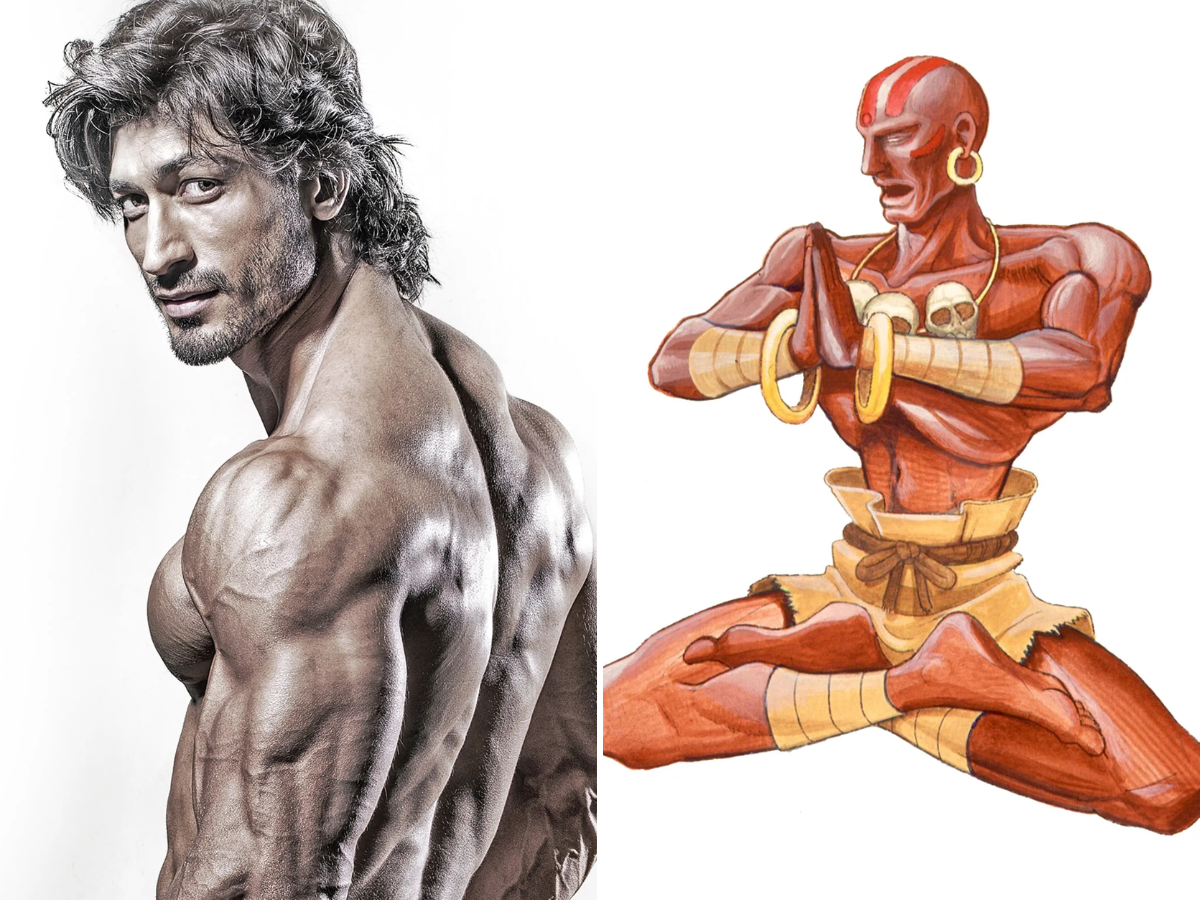
🔥 Origins: Who Created Dhalsim and WhyDhalsim was designed byAkira NishitaniandAkira Yasudafor Street Fighter II: The World Warrior (1991). The character was intended to represent India and Indian martial/spiritual traditions — specifically the ancient practice of yoga. His design drew on the visual iconography of ascetic sadhus: the painted forehead, the shaved head, the skull necklace (representing departed souls), the lean and stretched physique that suggests years of physical discipline. His fighting style is officially listed asYoga— a fictionalised, combat-adapted version of yogic practice that gives him his signature abilities: stretching his limbs to attack from unexpected distances, breathing fire (Yoga Fire), teleporting, and levitating.
📖 The Backstory: A Village, A Family, A War He Didn’t ChooseDhalsim’s canonical backstory is one of the most emotionally grounded in the entire Street Fighter universe. He is from a small village in India — traditionally identified as being in the south of the country. He is a devoted husband toSariand a loving father to their sonDatta. He is the village’s spiritual leader and protector. He did not want to fight in M. Bison’s tournament. He entered it for one reason: his village was suffering from drought and poverty, and the prize money from the World Warrior tournament could save it.
This is the core of what makes Dhalsim so compelling as a character: the absolute tension between his pacifist spiritual values and the violent context he places himself in. He meditates. He prays. He cares deeply for his family, his village, his community. He has achieved through years of yogic practice a level of physical and mental mastery that makes him extraordinarily dangerous in combat. And he uses that mastery reluctantly, purposefully, and always with the intention of returning to peace as soon as he can.
“I fight not because I wish to, but because my village needs me to. When this is done, I will pray for those I have defeated.” — Dhalsim, Street Fighter II
His skull necklace is not a fashion choice. In the canonical lore, the skulls represent children from his village who died of a plague. He carries them as a reminder of what he is fighting for, and as a form of memorial. This small detail is the whole character in miniature: a man who keeps grief close, who refuses to let suffering become abstract, who transforms loss into purpose.
Dhalsim’s Abilities and Fighting Style
Mechanically, Dhalsim is one of the most unusual fighters in the Street Fighter roster — and one of the most difficult to master. His defining characteristic is range. His limbs can stretch to attack from distances that no other character can reach, meaning that a skilled Dhalsim player can control space on the screen in ways that completely confuse opponents who expect conventional close-range or mid-range fighting. His tools include:
| Move | Description | Philosophical Reference |
|---|---|---|
| Yoga Fire | Dhalsim breathes a fireball of flame at his opponent | Tapas — the inner fire cultivated through ascetic practice |
| Yoga Flame | Close-range burst of fire that hits multiple times | The consuming heat of deep meditation |
| Yoga Teleport | Dhalsim dematerialises and reappears elsewhere on screen | Bilocation — the yogic ability to be present in multiple places |
| Yoga Float / Levitation | Dhalsim levitates above the ground, changing his movement options | Levitation as a siddhi (supernatural power) of advanced yoga |
| Stretching Limbs | All normal attacks extend to extraordinary range | The dissolution of physical limitation through disciplined practice |
| Yoga Catastrophe (Super) | A massive fireball that fills the screen | The unleashing of prana accumulated through lifelong practice |
In Street Fighter 6, Dhalsim’s moveset was refined further, adding more nuanced tools while retaining his identity as the game’s premier zoner — a character who controls space, manages distance, and wins through patience and precision rather than aggression. He is, in the vocabulary of competitive fighting games, a character for players who think several steps ahead. Which is, of course, exactly what a yogi does.
Dhalsim Across the Street Fighter Timeline
Across the canonical Street Fighter story, Dhalsim’s arc tracks the gradual deepening of his spiritual commitment alongside the impossible weight of the violence he continues to encounter.
In Street Fighter II, he enters the tournament to save his village and confronts Bison’s Shadaloo forces. In Street Fighter IV, he becomes aware that a new weapon — the S.I.N. corporation’s BLECE project — is causing suffering, and he enters the new tournament to investigate and stop it. In Street Fighter V, his village is threatened again, and his son Datta is in danger. By Street Fighter 6, Dhalsim is an elder figure — still fighting when necessary, still guiding others, still carrying the weight of every battle he has ever fought and every choice he has ever had to make.
Throughout all of this, his relationship with his wife Sari and his family remains the emotional core of who he is. He is not fighting for glory, for dominance, or for personal achievement. He is fighting because the world keeps producing threats to the things he loves. He would stop if it would let him. It never does.
Vidyut Jammwal: Who He Is and Why This Casting Is Perfect
To understand why Vidyut Jammwal is the correct choice to play Dhalsim, you need to understand who Vidyut Jammwal actually is — not just as a movie star, but as a martial artist, as a practitioner, and as a physical performer.
Vidyut Jammwal was born on October 10, 1990, in Srinagar, Jammu & Kashmir. He began training in Kalaripayattu — one of the world’s oldest martial arts, originating in Kerala, India, dating back over 3,000 years — when he was three years old. He trained under a traditional Kalari gurukul system for over two decades, reaching a level of mastery that places him among the foremost practitioners of the art in the world.
Kalaripayattu is not merely a fighting system. It is a complete science of the body: of flexibility, of strength, of breath control, of the relationship between physical practice and spiritual development. It incorporates marma — the science of the body’s vital pressure points, analogous to acupuncture meridians. It incorporates ayurvedic healing traditions. It involves weapons training with swords, shields, spears, and the flexible sword known as the urumi. And at its highest levels, it produces practitioners whose physical capabilities genuinely look superhuman to the uninitiated eye — because the body has been trained from childhood to do things that normally-trained bodies simply cannot do.
⚡ The Kalaripayattu–Yoga Connection: Why This Matters for DhalsimHere is the crucial link that makes Vidyut Jammwal’s casting so narratively and visually apt: Kalaripayattu and yoga sharedeep historical roots. Both traditions originated in the Indian subcontinent. Both involve extraordinary body control. Both incorporate breath work, flexibility, balance, and the cultivation of what practitioners call prana — the life force. In fact, many yoga scholars and Kalaripayattu masters argue that the two practices influenced each other significantly during their historical development, sharing techniques, philosophies, and teachers across centuries. When Vidyut Jammwal moves, he is moving in a tradition that is Dhalsim’s tradition — not as an approximation or a representation, but as an actual practitioner of its closely related discipline.
Jammwal made his Bollywood debut in Force (2011), directed by Nishikant Kamat. In his very first scene, he introduced Indian cinema audiences to Kalaripayattu in its full, extraordinary expression — a fight sequence that left viewers and critics genuinely unsure what they were watching, because nothing in Hindi cinema had looked like that before. He was not using the conventional Bollywood action vocabulary. He was using actual martial arts, and the difference was immediately, startlingly visible.
He followed that debut with Commando: A One Man Army (2013), which launched one of Bollywood’s most successful action franchises, and continued to build a career defined above everything else by physical authenticity. Where most action stars have their stunt doubles do the difficult work and then step in for the close-ups, Jammwal is famous for doing virtually everything himself — the flips, the jumps, the combat sequences, the falls. He does this because he can. Because twenty-plus years of Kalaripayattu training means his body is capable of things that most human bodies are not.
His Career: The Films That Built the Legend
| Year | Film | Role / Significance |
|---|---|---|
| 2011 | Force | Debut — introduced Kalaripayattu to mainstream Hindi cinema |
| 2013 | Commando: A One Man Army | Launched the Commando franchise — became action hero status |
| 2013 | Bullett Raja | Supporting role — demonstrated dramatic range |
| 2015 | Commando 2 | Franchise continuation — raised the action bar further |
| 2017 | Commando 3 | Third instalment — consistently raising physical standards |
| 2019 | Junglee | Directed by Chuck Russell — Hollywood-Bollywood crossover production |
| 2021 | IB 71 | Serious dramatic turn — intelligence thriller, critical acclaim |
| 2023 | Crakk | Extreme sports action — further expansion of physical performance |
What makes Jammwal extraordinary, and what makes him right for Dhalsim, is not simply that he can fight. It is that he fights with a visible philosophical grounding. Watch his action sequences carefully, and you will see something in his movement that goes beyond technique: a kind of stillness at the centre of motion. The ability to be completely explosive and completely controlled simultaneously. A physical vocabulary that has depth behind it — that comes from years of training that was always also years of practice in the spiritual sense of that word.
This is what Dhalsim is. This is what Vidyut Jammwal is. The casting is not just visually correct. It is philosophically correct.
The Street Fighter Film: Story, Characters, and Context
The new Street Fighter live-action film arrives at a moment when video game adaptations have become one of Hollywood’s most reliable and creatively fertile genres. The success of The Last of Us, the Sonic the Hedgehog films, and in particular the extraordinary cultural phenomenon of the Super Mario Bros. Movie have definitively established that game adaptations, when made with genuine respect for the source material and its audience, can be both massive commercial successes and critically satisfying works of cinema.
Street Fighter has been adapted before — and the history of those adaptations is instructive. The 1994 film starring Jean-Claude Van Damme as Guile and the late Raúl Juliá as M. Bison has achieved an affectionate cult status over the decades — primarily because Juliá’s performance as Bison is genuinely great, and because the film has the kind of extravagant, self-aware silliness that ages into camp charm. But it was not a faithful adaptation: it treated the characters as costumes rather than as people, and it sacrificed the emotional depth of the source material for spectacle.
The 2009 film, focused on Chun-Li and starring Kristin Kreuk, was less successful critically and commercially — largely because it narrowed the scope too aggressively, removing the ensemble dynamics that give Street Fighter its richness.
The new film has the benefit of these lessons. Based on early reports, it is approaching the material as the ensemble story it always was: a global cast of characters, each with their own arc, brought together by the shadow of Shadaloo and M. Bison’s ambition. The film is built around the tournament structure that made the games compelling — but with the understanding that tournaments are interesting only when the people in them matter to us.
The Core Story: Shadaloo, Bison, and the World Warrior Tournament
The narrative architecture of Street Fighter is, at its heart, a story about the relationship between power and corruption, between individual virtue and institutional evil. M. Bison is not merely a villain who wants to rule the world — he is a study in what happens when a person of extraordinary natural gifts abandons every ethical constraint in the pursuit of power. His Psycho Power — a form of dark psychic energy that he has cultivated by literally excising every positive emotion from his soul — is a metaphor for exactly that: the power you get when you remove your humanity.
Against him stand the fighters of the World Warrior tournament — each of them, in their own way, a counterargument to what Bison represents. Ryu fights because he is trying to understand himself and his power. Chun-Li fights because Bison murdered her father. Guile fights because Bison murdered his friend. And Dhalsim fights because his village is suffering, and because he has looked at the world Bison is building and recognised it as incompatible with everything he believes.
“The greatest act of war is to create conditions where peace cannot exist. That is what Shadaloo does. That is why I cannot simply meditate and look away.” — Dhalsim, expanded universe
The film is expected to follow the canonical Street Fighter II storyline most closely, with elements drawn from the expanded lore of Street Fighter Alpha and the character backstories developed across all six mainline games. This means the central conflict is Ryu and his allies vs. Shadaloo — with Dhalsim as one of the key supporting characters whose journey parallels and enriches the main narrative.
The Full Cast: India’s Fighter Among the World Warriors
The film assembles an ensemble that reflects Street Fighter’s global scope. Each character brings a different national context, fighting tradition, and personal stake. Dhalsim — played by Vidyut Jammwal — represents India, but he represents something more specific than mere national identity: he represents the question of what a deeply spiritual person does when the world forces them to be violent. That question has no comfortable answer. And that discomfort is exactly what makes him one of the most interesting characters to watch.
🌍 The World Warrior EnsembleStreet Fighter’s power as a franchise has always come from its ensemble — the way different characters, each shaped by radically different cultures and philosophies, interact, compete, and ultimately recognise what they share. The new film honours this by committing to a genuine ensemble structure, giving each character’s arc the space it needs to breathe. Dhalsim’s relationship with Ryu is particularly significant: both are practitioners of a deep physical and spiritual discipline; both are haunted by the gap between the ideals of their practice and the violence their practice makes them capable of. Their parallel is the film’s philosophical spine.
Dhalsim in the Film: What We Can Expect From Jammwal’s Performance
Translating Dhalsim to live action presents specific challenges that make Vidyut Jammwal’s involvement not just preferable but arguably essential. Let’s be direct about what those challenges are.
Dhalsim’s most iconic visual elements — his stretching limbs, his fire breathing, his levitation and teleportation — are, in their original game form, expressions of gameplay mechanics that only work in a 2D fighting game context. A live-action film cannot literally have a man’s arms stretch six feet. So the question is: how do you translate the essence of what those abilities represent — extreme range control, breath-based fire, apparent defiance of physical limitation — into a realistic, grounded, credible action performance?
The answer, and it is an answer that Jammwal’s specific training makes uniquely possible, is: Kalaripayattu.
Kalaripayattu training at its advanced levels produces practitioners who can extend their reach with kicks and strikes to distances that look impossible if you haven’t seen it. The marma knowledge means targeting exact points on an opponent’s body with surgical precision. The flexibility training — which begins in early childhood and involves daily stretching regimens that yogis and gymnasts would recognise — means that Jammwal can genuinely do things with his body that most adults cannot, regardless of their fitness level. His strikes can come from angles that don’t look physically possible. His recovery speed from extended positions is extraordinary.
And then there is the breath work. Kalaripayattu’s pranayama — breath control — is directly related to yogic breathing tradition. The idea of fire breathing, in its Dhalsim form, is an exaggeration of the real practice of generating extraordinary internal heat through breath discipline. Jammwal’s training means he understands that practice from the inside, not just as a concept.
🎬 The Action Sequences: What Kalaripayattu Looks Like on ScreenFor those unfamiliar with Vidyut Jammwal’s on-screen work, the closest reference point is his debut fight sequence in Force (2011) — a sequence that Indian film critics immediately identified as unlike anything they had seen in Bollywood. The movement is circular where conventional action is linear. The transitions between offensive and defensive positions are seamless and fast in a way that looks more like dance than combat. The footwork is constantly active — there is no standing still, no posing, no waiting. It is, in other words, exactly what Dhalsim’s fighting style, at its best, looks like in the games: fluid, surprising, controlled, and devastating.
Beyond the physical performance, Jammwal brings something equally important to Dhalsim: the stillness. One of the hardest things to capture in action performance is the quality of a person who is simultaneously completely capable of extreme violence and completely at peace. Dhalsim’s face in the games, during combat, has always registered as serene — not emotionless, but centred. He is not angry when he fights. He is focused. That is a very specific quality, and it is one that a genuine martial arts practitioner — someone who has spent decades training not just their body but their mind — is far more likely to be able to express authentically than an actor who has simply trained for a role.
The Deeper Resonance: Why Dhalsim Matters in 2025
Dhalsim was created in 1991. He arrived at a moment when Western popular culture was only beginning to grapple with the representation of South Asian characters in mainstream entertainment — and he arrived with a level of care and specificity that, frankly, much of the subsequent representation did not match.
He was not a stereotype. He was not a parody. He was a deeply conceived character whose entire design — visual, mechanical, narrative — was built around a genuine engagement with Indian spiritual and physical traditions. The skull necklace was not random decoration; it told his story. The yoga abilities were not just cool moves; they were an expression of a specific philosophy about the relationship between physical practice and inner development. His motivation — protecting his village, providing for his family — was human and specific and grounded in something real about how people actually live and what they actually fight for.
When Vidyut Jammwal plays this character in 2026, something significant happens that goes beyond the film itself. An Indian actor, trained in an Indian martial art with 3,000 years of history, plays a character from India who is defined by Indian spiritual practice. The representation is not exported or approximated — it is native. It comes from inside the tradition it is representing. And for the first generation of South Asian children who grew up watching Dhalsim on screen in the games and wondering if they would ever see someone like him portrayed with full seriousness in live action, that matters enormously.
“Kalaripayattu is not just a martial art. It is a way of knowing your body, a way of breathing, a way of being present in the world. When I fight on screen, I am not performing fighting. I am being myself.” — Vidyut Jammwal
The Yoga-Kalari Continuum: India’s Contribution to the World’s Martial History
It is worth pausing to understand the historical relationship between the arts that define Dhalsim and those that define Jammwal, because this relationship is the whole reason the casting works on a level that goes deeper than surface similarity.
Kalaripayattu is considered by many historians to be the world’s oldest surviving martial art. Its origins in Kerala date to at least the 3rd century BCE, though traditional accounts place its origins earlier. It is structured around the principle that the human body, properly trained from childhood, can achieve capabilities that appear superhuman. Its training methods — particularly the full-body oil massage and manipulation known as uzhichil, performed by the kalari guru on students — are designed to awaken every joint and muscle in the body, to remove blockages, and to create a body that is simultaneously maximally powerful and maximally flexible.
Yoga, in its historical forms, shares this goal. The hatha yoga tradition — the physical yoga most familiar to Western practitioners — was explicitly designed as a preparation of the body for deeper meditative states. The asanas are not exercises in the Western sense; they are tools for developing the body’s capacity to remain stable under conditions of extreme stillness, so that the mind can go beyond what the body’s discomfort would normally prevent.
Both traditions incorporate marma — the vital points science. Both incorporate pranayama — breath control. Both understand the body as a vehicle for something beyond the purely physical. And both, at their highest levels, produce practitioners who move with a quality that is best described as effortless effort: complete application of force without visible strain. This is what Dhalsim looks like when he fights. This is what Vidyut Jammwal looks like when he fights. The overlap is not a coincidence. It is a historical and philosophical continuity.
Street Fighter’s Previous Live-Action History: Context for the New Film
To fully appreciate what the new Street Fighter film is attempting, it helps to understand the specific failures and successes of what came before — because the creative team behind the new film has clearly studied that history.
The 1994 Film: The Cult Classic That Wasn’t Faithful
The 1994 Street Fighter film, directed by Steven E. de Souza, had a budget of $35 million and made $99 million at the box office — a commercial success, by the standards of 1994 video game adaptations. But it was not a Street Fighter film in any meaningful sense. It was a action comedy that used the characters’ names and visual identities as a framework for a story that had almost nothing to do with the games’ actual narrative or emotional content.
Dhalsim in the 1994 film was played by Indian-British actor Roshan Seth — cast not as a fighter at all, but as a scientist, Dr. Dhalsim, working as a prisoner of Bison’s. He only transforms into something resembling his game counterpart in the film’s climax. It is, to put it charitably, a considerable departure from the source material. The yoga abilities are absent. The family backstory is absent. The spiritual dimension — the entire point of the character — is absent.
The new film, based on everything we know about it, has made a fundamental choice that the 1994 version did not: it is treating each character as the character they actually are in the games, with their actual backstory, their actual fighting style, and their actual reason for being in the fight. This is not a small creative decision. It is the entire difference between a film that respects its audience and one that condescends to them.
The Animated Films: Getting It Right
In between the live-action attempts, the Street Fighter II: The Animated Movie (1994) and Street Fighter Alpha: The Animation (1999) demonstrated what faithful Street Fighter adaptation could look like. The animated film in particular is widely considered one of the best video game adaptations ever made — a film that took the characters seriously, gave them genuine interiority, and produced action sequences that remain impressive today. The new live-action film has clearly studied what those animated works did right.
What This Film Means for Indian Representation in Hollywood Action Cinema
Let us end by saying directly what has been implied throughout this piece: Vidyut Jammwal playing Dhalsim is a historic moment for Indian representation in Hollywood action cinema.
Indian martial arts have given the world two of its most profound physical traditions — yoga and Kalaripayattu — and yet the representation of Indian fighters and warriors in Western action cinema has been, for most of cinema history, minimal or stereotyped. The South Asian presence in Hollywood has been defined primarily by dramatic roles, comedic roles, and supporting characters. The action hero role — the person whose physical mastery is the film’s central spectacle — has almost never been occupied by an Indian performer in a major Western production.
Jammwal’s casting changes this. And it changes it not by placing an Indian actor in a generic action role, but by placing an Indian actor in a role that is specifically, canonically, and philosophically Indian — a role whose entire meaning depends on its connection to Indian spiritual and martial traditions. The representation is not cosmetic. It is structural.
When children in India, the UK, the United States, and across the diaspora watch this film and see Vidyut Jammwal’s Dhalsim — moving with the contained explosive precision of a Kalaripayattu master, carrying the quiet weight of a man who fights because the world demands it but longs for the day he can stop — they will see something that has not been available to them before at this scale: an Indian action hero, in a major Hollywood production, whose physical tradition is their physical tradition. Whose spiritual context is their spiritual context. Who moves like someone who learned to move the way their grandparents’ culture teaches people to move.
That is not a small thing. That is, in its own way, exactly what Dhalsim has always been about: the insistence that the Indian body, the Indian tradition, the Indian spirit — these things are not lesser. They are, in the right hands, extraordinary.
Frequently Asked Questions
Q: Who plays Dhalsim in the new Street Fighter film?Bollywood action starVidyut Jammwal, a master of Kalaripayattu — one of the world’s oldest martial arts — plays Dhalsim in the new Street Fighter live-action film. He is widely considered one of the most technically gifted action performers in the world, and his Kalaripayattu background makes him uniquely suited to this role.
Q: What is Dhalsim’s fighting style?Dhalsim’s fighting style is officially listed asYogain the Street Fighter games. His abilities include stretching his limbs to attack from extreme range, breathing fire (Yoga Fire), teleporting, and levitating. These abilities are exaggerated reflections of real yogic and Indian martial traditions.
Q: What is Dhalsim’s backstory in Street Fighter?Dhalsim is a yogi and spiritual leader from a small village in southern India. He is married to Sari and has a son named Datta. He entered the World Warrior tournament not for glory, but to win prize money to help his village, which was suffering from drought and poverty. He is a pacifist by conviction who fights only when necessary.
Q: What is Kalaripayattu?Kalaripayattu is one of the world’s oldest surviving martial arts, originating in Kerala, India. It dates back over 3,000 years and combines combat techniques, flexibility training, breath control, and the science of vital pressure points (marma). Vidyut Jammwal has been training in Kalaripayattu since the age of three.
Q: Has Street Fighter been made into a film before?Yes. The 1994 film starring Jean-Claude Van Damme and Raúl Juliá is the most well-known previous adaptation, though it departed significantly from the games’ story and characters. A 2009 film focused on Chun-Li was less successful. The new film is the most faithful live-action adaptation of the source material to date.
Q: Why does Dhalsim wear a skull necklace?In the canonical Street Fighter lore, Dhalsim’s skull necklace represents the skulls of children from his village who died in a plague. He wears them as a memorial and as a constant reminder of what he is fighting for. It is one of the most poignant pieces of character design in the franchise.
Q: Who is M. Bison and why is he the villain?M. Bison is the dictator who leads the criminal organisation Shadaloo and the primary antagonist of the Street Fighter series. He wieldsPsycho Power— a dark psychic energy cultivated by excising all positive emotions from his soul — and seeks global domination. The World Warrior tournament is his mechanism for finding, testing, and either recruiting or eliminating the world’s strongest fighters.
Final Word: The Yogi Takes the Screen
Dhalsim has spent thirty-four years waiting for this. For a version of him that takes seriously what he actually is: a man of profound spiritual depth, extraordinary physical capability, and genuine moral complexity. A man who carries his grief on his body. Who fights because the world forces him to, and who prays for the people he defeats. Who is, in every sense that matters, exactly the kind of hero that popular culture needs more of — and exactly the kind of hero that a man like Vidyut Jammwal was born to play.
The new Street Fighter film is many things: a celebration of one of gaming’s greatest franchises, a long-overdue faithful live-action adaptation, an ensemble action film with genuine narrative ambition. But for a significant part of its audience, it will be something more specific and more personal than any of that.
It will be the film where, finally, the yogi took the screen.
And the man playing him trained for this moment from the age of three.
The World Warrior Tournament. The Yogi of India. The Fight He Never Wanted. The Victory He Never Sought.

Popcorn in hand and a opinion ready — Emily covers movie reviews, box office buzz, and all things cinema at Popcorn Review.

