
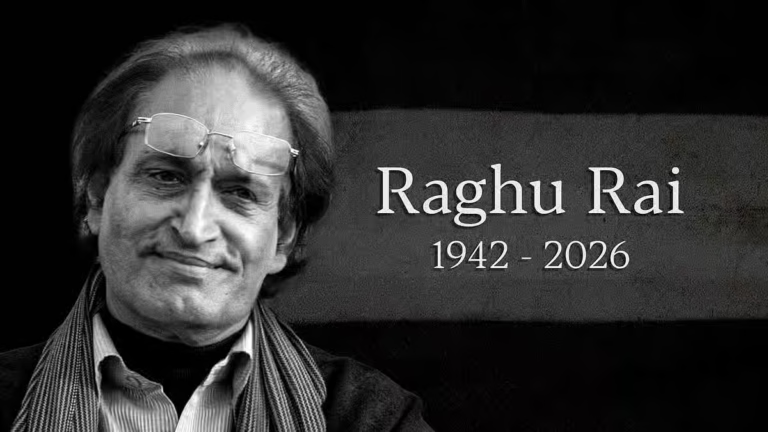
He did not just take photographs. He made decisions about what India would remember.
Every image Raghu Rai chose to take, to develop, to submit, to publish — every frame he pressed the shutter on in six decades of work across the subcontinent — was a decision about what mattered. What was worth preserving. What the future should know about the present. What the nation should be forced to look at.
Raghu Rai, widely regarded as one of the foremost chroniclers of independent India, passed away on Sunday, April 26, 2026, at a private hospital in Delhi. He was 83 years old. His son, fellow photographer Nitin Rai, confirmed that Rai had been battling cancer for nearly two years — initially diagnosed with prostate cancer, which was treated successfully, before the illness spread to his stomach and eventually to his brain.
He was, according to the Raghu Rai Foundation, working on his 57th book at the time of his death. That detail — that he was still making, still documenting, still insisting on adding to the record — is the most Raghu Rai thing possible about his final days. Some people rest at the end. He was taking notes.
India’s former main opposition leader, Rahul Gandhi, posted in his tribute on X: “He didn’t just take photographs, he preserved our nation’s memory.”
That is the simplest and most complete thing that can be said about what India has lost today.
The Beginning: From Jhang to the Statesman
Raghu Rai was born on December 18, 1942, in Jhang — a village in Punjab that is now part of Pakistan. He was the youngest of four children. A construction engineer by training, he came to photography not through formal art education but through the most human of pathways: a sibling’s influence.
Rai started learning photography in 1962 under his elder brother Sharampal Chowdhry — better known as S. Paul — who was himself a photographer. Three years later, in 1965, he joined The Statesman newspaper as its chief photographer.
The Statesman in the 1960s was one of India’s most prestigious and intellectually serious newspapers — a publication that understood photography not as illustration but as journalism in its own right. For a young photographer with a construction engineer’s eye for structure and a humanist’s instinct for people, it was the right place at the right time.
He stayed for a decade. And in that decade, he photographed India as it was becoming something — a democracy finding its shape, a society trying to honour its promises to its own people, a civilisation of extraordinary complexity and extraordinary contradiction. He photographed all of it.
The Cartier-Bresson Nomination: The Moment That Changed Everything
In 1971, Raghu Rai held an exhibition of his work in Paris. Among those who attended was Henri Cartier-Bresson — the French photographer who is widely considered the father of modern photojournalism, the man who invented the concept of “the decisive moment,” the co-founder of Magnum Photos. Impressed by the exhibit, Cartier-Bresson nominated Rai to join Magnum Photos in 1977.
To understand what this means: Magnum Photos is not simply an agency. It is the most prestigious collective of photojournalists in the history of the medium. Its members have included Robert Capa, Elliott Erwitt, Sebastião Salgado, and Cartier-Bresson himself. To be nominated by Cartier-Bresson — the man who defined what great photography was — is as close to the highest possible endorsement in the field as the field can offer.
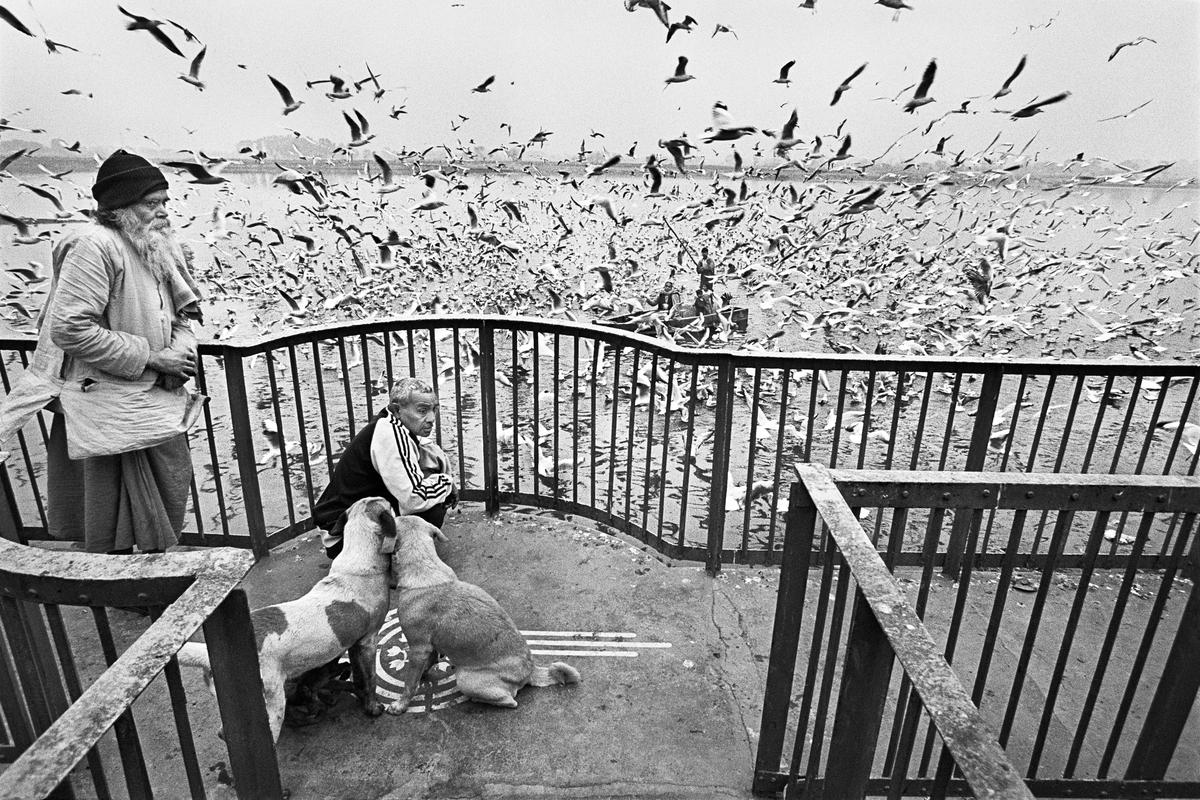
Raghu Rai was the first Indian photographer admitted to Magnum. And he got there because Henri Cartier-Bresson walked into a room in Paris, looked at his pictures of India, and recognised immediately what he was seeing: someone who understood what photography was actually for.
The Photographs That Defined India’s Memory
To list Raghu Rai’s most important photographs is to list some of the most important moments in post-independence Indian history. His camera was present, with extraordinary consistency, at the events that shaped the country — not because he was lucky, but because he understood that the photographer’s job is to be present at history and to keep his eyes open.
The Awards: A Life Counted in Recognition
| Award | Year | For |
|---|---|---|
| Padma Shri | 1972 | Coverage of the 1971 Bangladesh Liberation War |
| Magnum Photos membership | 1977 | Nominated by Henri Cartier-Bresson following 1971 Paris exhibition |
| Photographer of the Year (USA) | 1992 | Photo essay “Human Management of Wildlife in India” — National Geographic |
| Officier des Arts et des Lettres (France) | 2009 | Lifetime contribution to arts and letters — conferred by the French government |
| Académie des Beaux-Arts Photography Award (inaugural winner) | 2019 | First photographer to receive this prestigious French honour |
| Lifetime Achievement Award | — | India’s Ministry of Information and Broadcasting |
The India Today Years: Shaping How India Saw Itself
From 1982 until 1992, Rai was the director of photography for India Today. That decade — the 1980s through the early 1990s — was one of the most turbulent and consequential in modern Indian history: Indira Gandhi’s assassination, the Bhopal disaster, the Punjab insurgency, the Babri Masjid controversy building toward its 1992 demolition, the economic liberalisation of 1991. India Today, under Rai’s visual direction, covered all of it with a photographic seriousness that shaped how millions of middle-class Indians understood what was happening in their country.
He was not simply commissioning photographs. He was making editorial decisions about what Indian readers should see, and in what way. That role — director of photography for India’s most influential news magazine, at the most newsworthy decade in the country’s recent history — is itself a form of legacy that extends far beyond his own images.
The Raghu Rai Foundation: 50,000 Images, One Nation’s Memory
The Raghu Rai Foundation, established in 2010, houses over 50,000 of his images. That number is both a fact and a concept — 50,000 decisions about what was worth preserving, 50,000 moments of India’s post-independence life that would otherwise exist only in the imperfect memories of the people who lived them.
The Foundation is his most enduring institutional contribution: not just his photographs, but a structure for ensuring that those photographs continue to be accessible, studied, and drawn upon by historians, journalists, artists, and anyone who needs to understand what India looked like as it became the country it is.
The Tributes: India Speaks
“He didn’t just take photographs, he preserved our nation’s memory.”
— Rahul Gandhi, Leader of Opposition, on X (Twitter)
“Raghu Rai was a witness to history — from the birth of Bangladesh to the tragedy of Bhopal, his lens captured what words could never fully convey. India has lost a national treasure today.”
— Press Council of India statement
The photography community — from Magnum Photos to individual photographers across the subcontinent — began posting tributes immediately, many using the specific language of inheritance: what he made possible for Indian photography, how he demonstrated that an Indian lens could be a world-class lens.
— Photography and journalism communities globally
The Final Chapter: Working Until the End
Raghu Rai died at a private hospital in Delhi in the early hours of Sunday, April 26, 2026. He had been battling cancer for nearly two years. Initially diagnosed with prostate cancer, which was treated successfully, the illness later spread to his stomach and eventually to his brain, compounded by age-related complications.
His family informed the public of his passing through his Instagram profile.
And — the detail that will be cited alongside his name in every obituary and every tribute for the rest of time — he was working on his 57th book at the time of his death. Not resting. Not looking back. Working. Making the next thing. Adding to the record that he had spent sixty-plus years building.
He had 50,000 photographs in his foundation’s archive. He was working on book 57. He was 83 years old and fighting cancer in his brain. And he was still making photographs.
That is who Raghu Rai was. That is what he thought his job was. And the country that he photographed for six decades, with such rigour and such love and such refusal to look away — that country is quieter today for having lost him.
Al Jazeera — Raghu Rai, Legendary Indian Photographer, Dies at 83
Wikipedia — Raghu Rai
Onmanorama — Renowned Photographer Raghu Rai Passes Away at 83
The Researchers — Legendary Photographer Raghu Rai Dies at 83 After Cancer Battle
The Star — India’s Master Photographer Raghu Rai Dies Aged 83
Frequently Asked Questions (FAQ)
Final Word: He Was Working on Book 57
There are deaths that feel like endings. And there are deaths that feel like a light going out — not the end of something, but the sudden absence of something that had been constant for so long that you had stopped noticing it was there until it was gone.
Raghu Rai’s death feels like the second kind. For six decades, he was there — at the war, at the disaster, at the palace, at the slum, at the ashram with The Beatles, at the factory that killed 25,000 people, at the election campaigns and the funerals and the harvest festivals and the ordinary corners of the ordinary Indian day. He was there with his camera and his certainty that it mattered to look.
He was 83 years old. He had cancer in his brain. He was working on book 57.
What do you say about a man who worked like that? Only what Rahul Gandhi said, and what every photographer and journalist and historian who ever used his photographs already knew: he didn’t just take photographs. He preserved our nation’s memory.
The archive of 50,000 images in the Raghu Rai Foundation is not just a collection. It is a proof — that someone was paying attention. That someone thought it was worth recording what was happening. That someone stood in front of India, in all its complexity and grief and beauty and contradiction, and pressed the shutter.
Now India must look at itself with its own eyes. And remember what he taught it to see.
Om Shanti, Raghu Rai. 🙏
Share a memory, a tribute, or a photograph of his that has stayed with you — in the comments below. 👇

Popcorn in hand and a opinion ready — Emily covers movie reviews, box office buzz, and all things cinema at Popcorn Review.

